A tankless water heater that freezes overnight is a uniquely frustrating winter failure. The unit may have run perfectly the evening before, and then the morning shower produces nothing but cold water, a blinking error code, or a faint rumbling sound from the utility closet. Because tankless heaters have no stored hot water to fall back on, a freeze inside the unit stops hot water immediately and can damage components that are expensive to replace.
Tankless units are more vulnerable to freezing than tank-style heaters because their internal water passages are narrow. Water in a compact heat exchanger coil can freeze during a short period of extreme cold, especially overnight when demand drops and the unit sits idle. This guide explains why overnight freezes happen, the five causes worth checking first, how to thaw the unit without causing more damage, and the routine that prevents a repeat.
Why Tankless Water Heaters Freeze Overnight
A tankless heater heats water only when a hot tap opens, so the unit sits idle for hours during the night. Idle time is exactly when freezing conditions do the most damage. The water inside the heat exchanger and the connected supply lines is not moving, and still water freezes faster than flowing water.
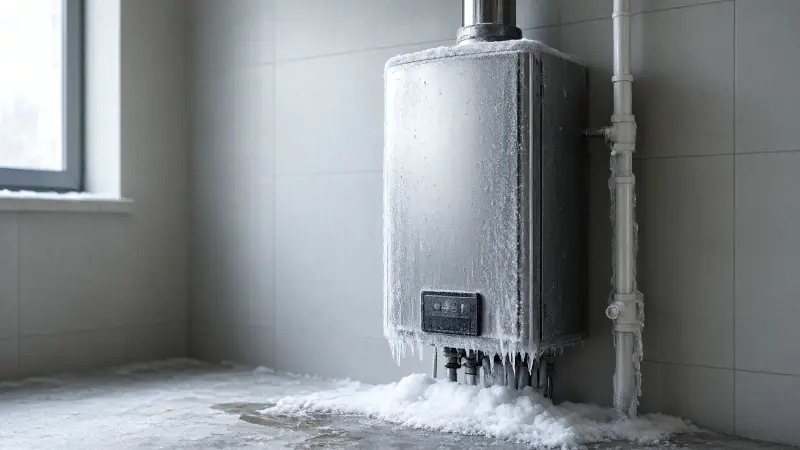
Most modern tankless models include built-in freeze protection. That system typically uses temperature sensors and small electric resistance heaters wrapped around the heat exchanger and water-carrying components. When a sensor detects a temperature approaching freezing, the heater activates to protect the internal parts. The key limitation is that this protection depends on uninterrupted electrical power.
If the power goes out, or if the unit is unplugged, the freeze protection cannot operate. Many manufacturers explicitly warn that freeze damage is not covered by warranty, which makes prevention a homeowner responsibility rather than an appliance guarantee. Outdoor installations and units in garages, attics, or crawl spaces face the highest risk because the surrounding air is not conditioned.
A tankless unit can also freeze during a power outage even when the outdoor temperature is only slightly below freezing. The narrow internal channels lose heat quickly, and the freeze protection that would normally intervene is unavailable. That is why a battery backup or a plan to drain the unit is worth considering in areas prone to winter outages.
Cause One: Lost Power and Failed Freeze Protection
The single most common reason a tankless heater freezes overnight is that the freeze protection did not have power. A tripped breaker, an unplugged cord, a failed outlet, or a utility outage can all leave the unit unprotected. Homeowners sometimes unplug a tankless heater to save standby electricity, not realizing that the small draw is the freeze protection circuit doing its job.
Check the power supply before anything else. Confirm that the unit is plugged in or that the breaker feeding it is on. If the breaker has tripped, reset it once and see whether it holds. A breaker that trips again immediately points to an electrical fault rather than a freeze, and it should be diagnosed before the unit is returned to service.
If the home lost power overnight, the unit may have frozen and then partially thawed as the house warmed. A unit in that condition can leak once the ice melts, because freeze damage often stays hidden while the water is still solid. Inspect the area around the unit and the connected pipes for moisture before assuming the heater survived.
For homes with frequent outages, a battery backup or a generator that can carry the tankless circuit is a practical investment. The alternative is to drain the unit whenever a prolonged outage is expected, which requires following the manufacturer’s winterizing procedure. A guide to a water heater not keeping up in winter covers the seasonal performance issues that often accompany cold-weather operation.
Cause Two: Exposed Pipes and Uninsulated Cabinets
Even a unit with working freeze protection can freeze if the pipes connected to it are exposed to cold air. The freeze protection inside the cabinet does not necessarily extend to the supply and outlet lines, especially where they run through an unheated garage, attic, or exterior wall. Ice forming in those lines can block flow and back pressure into the unit.
Insulate the hot and cold water lines connected to the heater, particularly the sections in unconditioned spaces. Foam pipe sleeves sized to the pipe diameter are the usual product, and the seams and ends should be sealed so air cannot circulate under the insulation. Pay attention to elbows, valves, and the short sections where the pipes enter the cabinet, because those are common freeze points.
Seal drafts around the cabinet and the wall penetrations. A tankless unit installed in a garage or utility closet can sit in a stream of cold air entering through a gap around the vent, a poorly sealed door, or an uninsulated rim joist. Air sealing is often more effective than adding more insulation, because it stops the cold air from reaching the pipe in the first place.
Outdoor units need particular attention. Manufacturers generally advise against installing a tankless heater outdoors in areas prone to freezing, and some recommend a sheltered location or an enclosure that blocks wind. If the unit is outdoors, a pipe cover over the gas, water, and power connections, combined with insulated lines, reduces the risk without trapping moisture against the cabinet.
Cause Three: Cold Air Backdrafting Through the Vent
Indoor tankless heaters can freeze because cold air is drawn backward through the exhaust vent. This is called backdrafting, and it happens when the building is under negative pressure. Exhaust fans, dryers, and other appliances can pull air out of the house faster than it is replaced, and the vent becomes an easy path for outside air to enter.
When cold air moves down the vent and across the heat exchanger, it can freeze the coil or the condensate drain even though the room itself feels warm. The symptom is often a unit that freezes on a windy night while the surrounding space stays above freezing. A direct vent system, with both the exhaust and intake pipes connected to the outdoors, minimizes air movement through the unit and reduces this risk.
Check the venting configuration and the termination outside. A vent that is partially blocked by snow, ice, or debris can change the pressure balance and increase the chance of backdraft. Clear the termination from the ground if it is safe to do so, and confirm that the vent is installed according to the manufacturer’s instructions rather than improvised during a renovation.
If the home has a tight building envelope, discuss makeup air with a qualified technician. A small supply of replacement air can reduce negative pressure and protect both the tankless heater and any other combustion appliance in the home. This is a building performance question, not a simple appliance adjustment.
Cause Four: The Condensate Line Freezes
Condensing tankless water heaters produce acidic water as a byproduct of combustion, and that water has to drain away. In freezing weather, the condensate line, trap, or outdoor termination can freeze. When the drain blocks, the unit may shut down on a safety fault, and water can back up into the cabinet.
A frozen condensate line can look like a frozen heater because the unit stops producing hot water and may display an error code. Check the visible drain line for ice, kinks, or standing water. If the line runs through an unheated space or terminates outdoors, the exposed section is the likely freeze point.
Thaw the line gently with warm water or a hair dryer on a low setting, and confirm that it drains freely before restarting the unit. Do not pour boiling water onto plastic condensate pipe, because thermal shock can crack it. If the line freezes repeatedly, insulate it or add a listed heat cable to the vulnerable section.
Other heating appliances have similar condensate vulnerabilities. A furnace or boiler that shuts down in cold weather may be dealing with a frozen drain rather than a failed burner, and the diagnostic logic overlaps with the checks in this guide.
Cause Five: Settings, Demand, and Overnight Habits
Sometimes the heater is working correctly and the overnight conditions are simply unfavorable. A unit set to a low temperature, a household that uses very little hot water, and a cold night can combine to let water sit in the lines long enough to freeze. Tankless heaters benefit from regular use because moving water resists freezing.
During extreme cold, leaving a pencil-width stream of hot water running from a faucet can help prevent internal freezing. The flow keeps water moving through the unit and the pipes, and it gives melting ice somewhere to go if a partial freeze begins. The small amount of water used is usually far less costly than a repair.
Check the temperature setting as well. A tankless heater set very low may not keep the internal components warm enough during idle periods in a cold space. The manufacturer’s recommended minimum setting exists for a reason, and raising it slightly during a cold snap can make a difference without creating a scalding risk.
If the household will be away overnight, do not simply turn the unit off and hope for the best. Either leave the power on so freeze protection can operate, or drain the unit following the manufacturer’s winterizing procedure. A unit that is powered off and full of water in an unheated space is the most likely candidate for a freeze.
How to Thaw a Frozen Tankless Heater Safely
If you suspect the unit is frozen, stop using it and shut off the power at the breaker or disconnect. Turn off the gas valve if the heater is gas-fired, and close the water valves feeding the unit. Do not operate a frozen tankless heater, because the internal components may be damaged and the unit may not be able to regulate temperature safely.
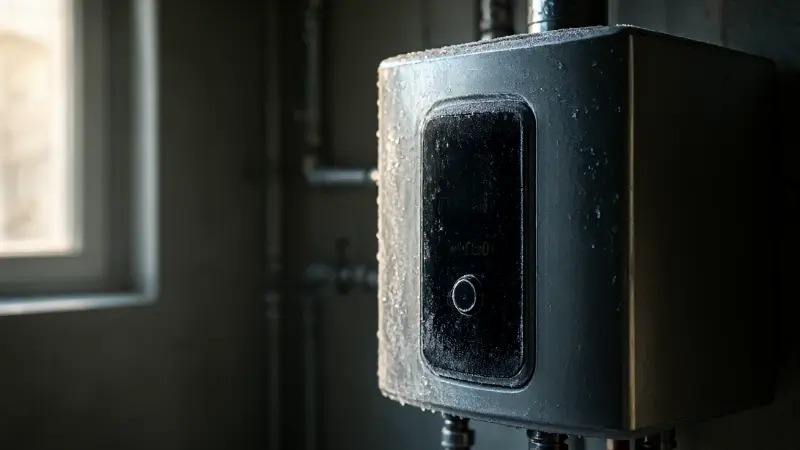
Open a hot water faucet nearby to relieve pressure in the system. As the ice melts, water needs an escape path, and an open faucet prevents pressure from building inside the unit. Leave the faucet open during the thawing process and watch for flow to return.
Apply gentle heat to the cabinet and the connected pipes. A small space heater placed near the unit, a hair dryer on a low setting, or warm towels wrapped around the pipes are all reasonable options. Keep the heat source moving and at a distance, and never use an open flame, a blowtorch, or boiling water. Extreme temperature changes can crack the heat exchanger or damage plastic components.
Allow the unit to thaw slowly. A freeze that has been in place for hours may take a while to clear, and rushing the process increases the risk of damage. Once the ice has melted, dry the area and inspect for leaks before restoring power and water. A unit that leaks after thawing has likely suffered freeze damage and should be assessed by a technician.
If the unit displays an error code after thawing or refuses to ignite, do not keep resetting it. A gas tankless heater that will not stay lit may have a freeze-related fault in the gas valve, the ignition system, or a sensor. A guide to a Rheem water heater burner won’t stay lit covers the ignition checks that apply to many gas models, but a freeze-damaged unit needs a proper inspection before it is returned to service.
Prevention: A Winter Routine for Tankless Heaters
Prevention starts with power. Leave the unit plugged in and the breaker on so the built-in freeze protection can operate. Do not close the gas valve except for maintenance, because some units use a small amount of gas for additional freeze protection. If a power outage is likely, have a plan to drain the unit or a backup power source ready.
Insulate the water lines and seal the drafts around the cabinet. Keep the area around the unit clear so air can circulate, and confirm that the vent termination is not blocked by snow or debris. For outdoor units, shelter the cabinet from wind and protect the connections with a proper cover.
During severe cold, run a trickle of hot water from a faucet and use hot water regularly to keep the lines warm. Check the condensate line for ice and clear it if necessary. If the unit is in a garage or unheated space, consider a thermostatically controlled space heater rated for the environment, provided it is used with proper clearance and never left unattended in a confined area.
If you are weighing a tankless unit against a storage tank for a cold-climate home, a comparison of tankless vs traditional water heater costs should include freeze protection, installation requirements, and the cost of backup power, not just the purchase price. A tankless heater can be an efficient choice, but it needs a thoughtful installation and a winter routine in freezing climates.
Schedule annual maintenance before the heating season. A technician can inspect the freeze protection circuit, clean the condensate trap, check the venting, and confirm that the unit is installed according to the manufacturer’s requirements. That service is the best opportunity to catch a problem before a cold night exposes it.
Quick Reference: Frozen Tankless Symptoms and Actions
The table below matches common overnight freeze symptoms with the likely cause and the safest first step. Use it to organize your response, and stop if a step involves gas components, live voltage, or a repair you are not trained to perform.
| Symptom | Likely Cause | Safe First Step | When to Call a Pro |
|---|---|---|---|
| No hot water, unit silent after a cold night | Power loss or tripped breaker disabled freeze protection | Check breaker and plug; restore power only if the unit is not frozen | Breaker trips again or unit stays silent |
| Error code and no hot water | Frozen heat exchanger or blocked condensate | Shut off power and gas; open a hot tap; thaw gently | Code returns after thawing |
| Ice visible on pipes or cabinet | Exposed lines in an unheated space | Thaw with warm towels or a low hair dryer | Pipe is split or water leaks after thaw |
| Rumbling or banging during startup | Ice moving or restricted flow | Shut off; allow to thaw; check for leaks | Noise continues after thaw |
| Water leaking after thawing | Cracked heat exchanger or fitting | Shut off water and power; contain the leak | Always, for freeze damage |
| Unit freezes only on windy nights | Backdraft through the vent | Check vent termination; reduce negative pressure | Venting or makeup air correction needed |
| Condensate line iced over | Frozen drain or termination | Thaw gently; confirm drainage | Line freezes repeatedly |
| Outdoor unit freezes despite protection | Wind exposure or insufficient pipe insulation | Shelter the unit; insulate lines; add a cover | Repeated freezes or damaged components |
FAQ
Can a tankless water heater survive freezing overnight?
It can if the freeze protection had power and the ice did not split the heat exchanger or a fitting. Many units thaw and resume normal operation, but freeze damage can stay hidden until the ice melts and water begins to leak. Inspect the unit and the surrounding area carefully after thawing before assuming it survived.
Should I leave my tankless water heater plugged in during winter?
Yes, in most cases. The built-in freeze protection requires electricity to operate, and unplugging the unit removes that protection. Follow the manufacturer’s guidance for your model, and have a plan to drain the unit if a prolonged power outage is expected.
Why does my tankless heater freeze only at night?
Overnight is when the unit sits idle and outdoor temperatures are lowest. Still water in the heat exchanger and pipes freezes faster than flowing water, and a power blip or a cold draft through the vent can be enough to start ice formation. Running a trickle of hot water and sealing drafts reduces the risk.
Can I pour hot water on a frozen tankless heater?
No. Pouring hot water onto the unit or its pipes can crack plastic components and damage the heat exchanger through thermal shock. Use a space heater at a distance, a hair dryer on a low setting, or warm towels, and never use an open flame.
Conclusion
A tankless water heater freezing overnight usually comes down to lost power, exposed pipes, cold air backdrafting through the vent, a frozen condensate line, or overnight conditions that let water sit still in the unit. Start with the power supply and the freeze protection circuit, then check the pipes and the venting before assuming the heater has failed.
If the unit has frozen, shut off the power and gas, open a hot tap, and thaw gently with warm air or towels. Never use an open flame or boiling water, and do not keep resetting a unit that will not ignite after thawing. A leak after thawing is a sign of freeze damage that needs professional assessment.
Prevention is a routine, not a single product. Leave the unit powered, insulate the lines, seal the drafts, protect the condensate drain, and run a trickle during severe cold. A little preparation keeps the hot water flowing and protects the components that make a tankless system efficient.