A thermostat that clicks but produces no heat is a specific and useful symptom. The click usually means the thermostat is responding to your settings and sending a signal to the heating equipment, so the display and the button presses are not the problem. What fails is everything downstream: the signal is not reaching the equipment, the equipment is not acting on it, or a safety device is stopping the sequence before the burners or boiler fire.
That distinction matters because it narrows the diagnosis. You are not chasing a dead thermostat or a blank screen. You are looking for an interruption between the thermostat and the heat source, and the interruption is often a tripped breaker, a blown low-voltage fuse, a safety lockout, or a wiring fault. This guide walks through those possibilities in a sensible order and marks the point where a technician should take over.
What the Click Actually Means
Many thermostats, especially older electromechanical and some digital models, contain a small relay or switch that closes when the temperature falls below the set point. The click you hear is that switch engaging. On a simple system, the closed switch completes a 24-volt circuit that tells the furnace or boiler to start its ignition sequence.
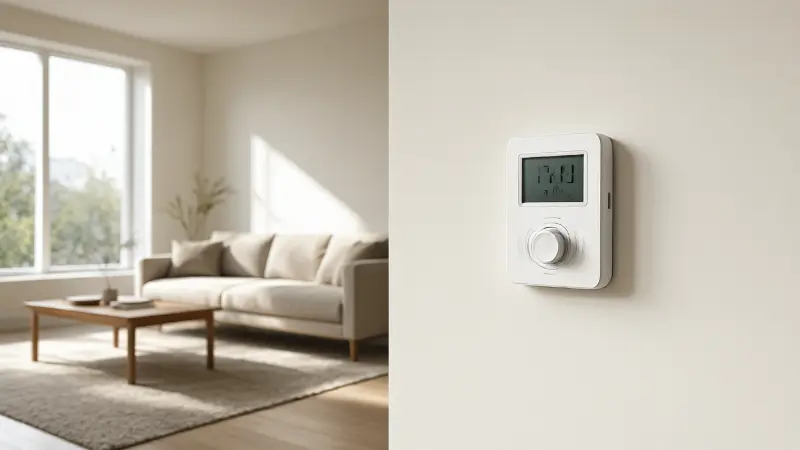
On a heat pump system, the thermostat may click more than once as it stages the compressor and the auxiliary heat. A single click followed by silence suggests the first stage was requested but the equipment did not respond. Multiple clicks with no heat can indicate that the thermostat is cycling between stages because the system is not keeping up.
The click does not prove that voltage actually left the thermostat. A worn contact inside the relay can click audibly without making a solid electrical connection. A loose wire at the terminal block can also produce a click at the thermostat while the signal never reaches the equipment. Testing at the equipment, not just listening at the thermostat, is what settles the question.
Start With the Thermostat Settings and Power
Confirm that the mode is set to Heat rather than Cool, Off, or Auto, and raise the set point several degrees above room temperature. Check that the fan setting is on Auto rather than On, because a fan that runs continuously can make it seem as though the system is trying to heat when it is only moving air. Replace the batteries if the model uses them, even if the display looks normal.
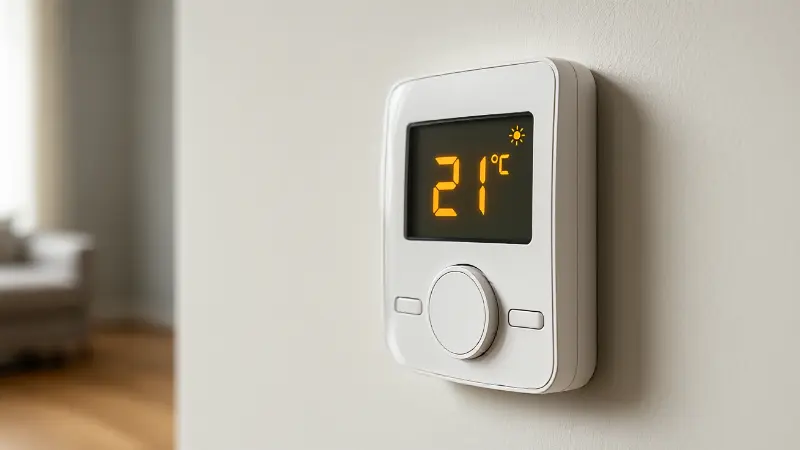
Look for indicators such as “Aux Heat,” “Emergency Heat,” or a wrench icon. A thermostat stuck in emergency heat mode will click and run only the backup source, which can leave a heat pump system without its main heating stage. Some thermostats also have a schedule or hold setting that is overriding your manual adjustment.
If the thermostat was recently replaced, the wiring and configuration deserve a close look. A guide to a replaced thermostat now no heat situation explains how a mismatched wire or a wrong equipment setting can leave a new thermostat clicking without results. Check the manual for the correct terminal assignments rather than assuming the old and new units match.
Check the Breaker, Service Switch, and Blower Door
A furnace or boiler needs line voltage to run its control board and blower, even when the thermostat circuit is only 24 volts. Find the breaker that feeds the heating equipment and reset it once if it is tripped. If it trips again immediately, stop and treat the issue as an electrical fault that needs diagnosis.
Look for the service switch near the furnace or boiler. It often looks like a light switch on the side of the unit or on a nearby wall or ceiling joist, and it can be flipped off accidentally during cleaning or service. Confirm that it is in the On position.
Check the blower compartment door. Many furnaces have a door switch that cuts power to the control board when the panel is removed. If the door is not fully seated, the thermostat can click and the furnace can sit completely silent. Push the door firmly into place and listen for a change.
Test the Low-Voltage Fuse and Transformer
The furnace control board typically includes a small blade fuse that protects the 24-volt circuit. A blown fuse will leave the thermostat clicking but unable to start the equipment, and it will also stop the board from running the ignition sequence. Locate the fuse, check it visually, and test it with a multimeter if you are comfortable doing so.
Replacing the fuse without finding the short that blew it often leads to a repeat failure. A shorted thermostat wire, a pinched cable behind a wall, or a failed component in the low-voltage circuit can all blow the fuse again within minutes. If a new fuse blows immediately, stop and call a technician rather than continuing to replace parts.
The transformer steps line voltage down to the 24 volts the thermostat and control board need. If the transformer has failed, the thermostat may still have enough residual power to click but not enough to hold the circuit. Testing the transformer involves live voltage and should be done by someone trained to work safely around it.
Look for a Safety Lockout at the Equipment
Modern furnaces and boilers shut down and lock out when a safety device detects a problem. A pressure switch that does not close, a flame sensor that does not confirm ignition, a high-limit switch that trips, or a blocked vent can all stop the sequence after the thermostat has called for heat. The thermostat keeps clicking, but the equipment refuses to fire.
Check the control board for a diagnostic LED and write down the flash pattern before resetting anything. The code often points to a specific system, such as the pressure switch, the limit circuit, or the ignition sequence. A code that clears when power is cycled may not return until the next call for heat, so note it while it is visible.
Look for obvious causes of a lockout. A clogged air filter can overheat a furnace and trip the limit switch. A frozen condensate line or a snow-blocked vent can prevent a high-efficiency furnace from proving draft. A flame sensor coated with residue can shut down the burners seconds after ignition. Each of these produces a click at the thermostat and no sustained heat.
Check the Gas Supply and Ignition Components
If the furnace is a gas model, confirm that the gas shutoff valve near the unit is open, with the lever parallel to the pipe. Check whether other gas appliances in the home are working, which helps distinguish a whole-house supply problem from a furnace-specific fault. If you smell gas, leave the area and contact your gas utility.
Listen and watch during a call for heat. You may hear the inducer motor start, then a click as the igniter energizes, then the sound of burners lighting. If the sequence stops at the inducer or the igniter, the fault is in that part of the system. If the burners light and then go out after a few seconds, the flame sensor is the more likely suspect.
A weak or dirty igniter can click audibly without reaching ignition temperature. A failed gas valve can open the circuit without releasing gas. Neither is a homeowner repair, because both involve gas components and combustion safety. Recording what you hear and see gives the technician a head start.
Consider Heat Pump and Auxiliary Heat Behavior
If the home has a heat pump, the click may be the thermostat calling for the compressor, the auxiliary heat, or both. A heat pump that runs but delivers lukewarm air in cold weather can feel like no heat at all, especially when the outdoor temperature drops below the system’s balance point. If the auxiliary heat never engages, the house will fall behind even though the compressor is running.
Check the thermostat for an auxiliary heat indicator and confirm that the balance point or lockout setting is configured correctly. A guide to auxiliary heat not coming on explains the common causes, including thermostat configuration, a failed heat strip, and a tripped auxiliary breaker.
If the thermostat clicks but the outdoor unit never starts, the problem may be in the low-voltage control circuit, the contactor, or the defrost board. Those components require line-voltage testing and should be handled by a technician. Do not open the outdoor unit’s electrical panel unless you are trained to work around capacitors and high voltage.
Investigate Zone Valves and Boiler Controls
On a hydronic system, the thermostat may click and open a zone valve rather than directly starting a burner. If the zone valve fails to open or its end switch does not close, the boiler never receives the call for heat and the circulator may not run. The thermostat behaves normally while the room stays cold.
Check whether other zones in the home are heating. A single cold zone points to that zone’s valve, relay, or circulator. A whole-house failure points to the boiler, the main circulator, or the shared power supply. Listening at the zone valve for a motor sound when the thermostat clicks is a quick way to confirm whether the valve is responding.
Boilers have their own lockout conditions, including low water pressure and failed ignition. If the boiler pressure gauge reads very low, the low-water cutoff may prevent firing. Do not repeatedly reset a boiler that locks out; note the pressure reading and the fault code, then arrange service.
Check Wiring and Terminal Connections
With the power to the heating equipment off, inspect the thermostat terminal block for loose wires, corrosion, or a conductor that has slipped out of its terminal. Check the corresponding connections at the furnace or boiler control board. A wire that is loose at either end can produce a click at the thermostat while the signal never arrives.
Look for a broken conductor in the visible portion of the thermostat cable, such as a staple driven through the jacket or a pinch behind trim. A short between wires can blow the low-voltage fuse, which is why a clicking thermostat and a blown fuse often appear together. Tracing a fault inside a wall is a job for a technician with the right test equipment.
A thermostat that clicks but also behaves erratically, running the heat longer than expected or cycling on its own, may have a wiring or configuration problem rather than a failed relay. A guide to a Honeywell thermostat heat runs constantly issue covers the wiring mistakes that produce that pattern.
Quick Reference: Click Patterns and Likely Causes
The table below matches common clicking-but-no-heat situations with the conditions that most often produce them. Use it to organise your checks, and stop if a step involves live voltage, gas components, or a part you are not trained to service.
| Situation | Likely Cause | Safe First Step | When to Call a Pro |
|---|---|---|---|
| Single click, furnace completely silent | Tripped breaker, service switch off, or blower door not seated | Check breaker, switch, and door | Power is present but unit stays silent |
| Click with a blown low-voltage fuse | Short in thermostat wire or control circuit | Replace fuse once with the correct rating | Fuse blows again immediately |
| Click, inducer runs, no ignition | Failed igniter or gas supply issue | Confirm gas valve is open; note the sequence | No ignition after gas is confirmed |
| Burners light, then shut off in seconds | Dirty or failing flame sensor | Note the run time and diagnostic code | Repeated shutdowns or lockout |
| Click, furnace runs briefly, then stops | Clogged filter or high-limit trip | Replace filter; clear registers and returns | Cycling continues after airflow fixes |
| Click, heat pump outdoor unit silent | Low-voltage control or contactor fault | Check thermostat mode and aux heat indicator | Outdoor unit does not start |
| Click, boiler does not fire | Zone valve, low water pressure, or ignition fault | Check pressure gauge and zone valve response | Boiler locks out or pressure stays low |
Use the table to narrow the likely cause, but remember that the click only confirms the thermostat is trying. Whether the signal reaches the equipment, and whether the equipment acts on it, is the real diagnostic question. Measurements at the control board settle it faster than guessing.
When to Call a Technician
Call a qualified HVAC technician if the thermostat clicks but the equipment stays silent after the breaker, switch, door, and fuse checks. Also call if the low-voltage fuse blows repeatedly, if you see scorched wiring, if you smell gas or burning, or if the furnace or boiler locks out with a diagnostic code. Those conditions involve components and voltages that are not safe for untrained hands.
A technician can measure the 24-volt signal at the control board, test the transformer, verify the ignition sequence, and check the safety switches in order. Those measurements separate a thermostat problem from a control board, transformer, or gas valve fault without unnecessary parts replacement.
Do not bypass safety switches or jumper terminals to force the equipment to run. A furnace or boiler that is prevented from firing by a safety device is telling you something important. Restoring heat by defeating that device can create a carbon monoxide or fire hazard, which is a much worse outcome than a cold night.
FAQ
Why does my thermostat click but the furnace does not start?
The click means the thermostat is closing its internal switch to call for heat. If the furnace stays silent, the 24-volt signal may not be reaching the control board, or the board may be without power because of a tripped breaker, an open service switch, or a blown low-voltage fuse. A safety lockout can also prevent the ignition sequence from starting.
Can a bad thermostat still click?
Yes. The relay inside a thermostat can click audibly while the contacts are worn and no longer making a solid electrical connection. A thermostat can also click and send a signal that the equipment ignores because of a fault downstream. Testing the signal at the furnace control board is the reliable way to tell which one is happening.
What should I check first when the thermostat clicks but there is no heat?
Check the thermostat mode and set point, then the breaker, service switch, and blower compartment door at the heating equipment. Inspect the low-voltage fuse on the control board next. If those are all fine, look for a diagnostic code and a safety lockout before assuming the thermostat has failed.
Is it safe to keep resetting the furnace when it locks out?
Repeated resets can hide the underlying fault and may allow a safety issue to continue. Reset once, record the diagnostic code, and check obvious items such as the filter, condensate drain, and vent. If the lockout returns, arrange service rather than continuing to cycle the equipment.
Conclusion
A thermostat clicking but not bringing on heat usually means the signal is being sent but something downstream is interrupting it. Start with the settings and batteries, then check the breaker, service switch, blower door, and low-voltage fuse. If those are fine, look for a safety lockout, a gas supply problem, or a wiring fault at the equipment.
Heat pumps and boilers have their own specific failure modes, so knowing which system you have keeps the diagnosis focused. Auxiliary heat configuration matters on a heat pump, and zone valves and water pressure matter on a boiler. Note any diagnostic code before resetting anything, and do not repeatedly reset equipment that locks out.
Check the simple items first, respect the electrical and gas limits of the system, and call a qualified technician when the fault points beyond the thermostat. A methodical approach restores heat safely and avoids replacing parts that were never the problem.