A fireplace not drawing smoke during a holiday fire is more than an inconvenience. Smoke that rolls into the room instead of rising up the chimney carries fine particulates, carbon monoxide, and odor into the living space, and it can leave upholstery and clothing smelling like a campfire for days. The problem is common when a fireplace sits idle for months and then gets used heavily during a gathering.
Draft problems are rarely random. They usually trace back to a cold flue, a closed or stuck damper, a blockage, house depressurization, or a fire that is built in a way the chimney cannot support. This guide walks through a logical diagnostic order so you can find the cause instead of guessing at repairs.
Why Holiday Fires Expose Draft Problems
A fireplace that worked well last winter may behave differently after a long idle period. The chimney has cooled, debris may have fallen into the flue, and the house may be sealed tighter than it was during the previous heating season. Holiday gatherings add another variable: kitchen exhaust fans, bathroom fans, and clothes dryers running at the same time.
Cold outdoor temperatures can help draft once the flue is warm, but they can also make a cold chimney harder to start. A masonry chimney on an exterior wall loses heat quickly, and the dense cold air inside the flue can act like a plug. Until that air begins moving upward, smoke has nowhere to go but into the room.
A busy kitchen adds its own distractions during the holiday, and noticing an oven heating unevenly before holiday baking is easy to miss while you are tending the fire. Both systems affect how the room feels and how much time you spend troubleshooting instead of visiting. Address the smaller issues early so the big day stays calm.
The first fire of the season is also a test of the whole system, not just the firebox. The damper, the smoke shelf, the flue liner, the chimney cap, and the termination height all affect whether smoke rises or spills. A single weak link can cause backdraft even when the fire itself is built correctly.
Safety First: Protect the House Before You Troubleshoot
Before you investigate anything, confirm that working carbon monoxide alarms are installed and tested. Smoke spillage can be a warning sign of a venting problem that also affects gas appliances. If anyone in the home feels dizzy, nauseated, or unusually sleepy while a fire is burning, leave the house and call for help.
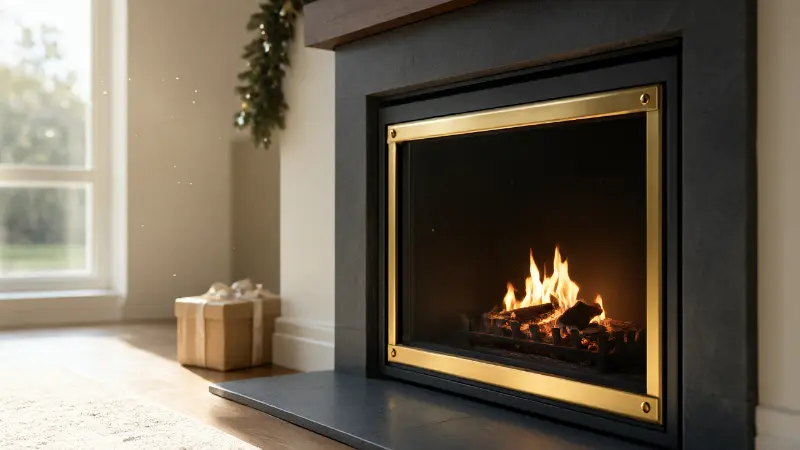
Open a nearby window slightly before you experiment with the fire. This is both a safety measure and a diagnostic clue. If the draft improves immediately when a window is cracked, the problem likely involves house pressure or air supply rather than a completely blocked flue.
Do not use a fireplace that spills smoke continuously. A fire that smokes only at startup may be manageable with better technique, but chronic spillage points to a defect that needs professional evaluation. Keep a fire extinguisher nearby and make sure the smoke alarms are working on every level of the home.
Check the Damper Before Anything Else
The damper is the first thing to verify because it is simple to check and easy to overlook. A throat damper that is closed, partly closed, rusted, or warped will choke the flue and push smoke into the room. Open it fully and look up into the firebox to confirm that the passage is clear.
Some dampers operate with a lever or a chain, and the handle may move without actually opening the plate. Shine a flashlight upward and watch the damper plate as someone operates the control. If the plate does not move through its full range, the linkage may be disconnected or the damper may be stuck.
A top-sealing damper, common on some modern fireplaces, closes at the chimney top rather than at the throat. These are operated by a cable or a handle and can fail in the closed position. If you cannot confirm that the damper is fully open, do not light a fire until it is inspected.
Damper maintenance notes
Rusted dampers can sometimes be freed with a penetrating lubricant applied to the pivot points, but avoid spraying lubricant onto the firebox surfaces where it can burn and produce odor. If the damper is warped or the frame is damaged, replacement is usually the better path. This is a job a chimney professional can handle during an inspection.
Warm the Flue to Break the Cold Plug
A cold flue is one of the most common reasons a fireplace smokes at startup, especially on the first fire of the season. Cold air is dense and sinks, creating a reverse draft that pushes smoke back into the room. The fire has to overcome that column of cold air before the chimney can establish an upward flow.
Prime the flue before you build the main fire. Open the damper fully, then hold a tightly rolled sheet of newspaper or a long fireplace match near the damper opening for a minute or two. The goal is to warm the air in the flue gently, not to create a large flame in the firebox.
Watch the smoke from the paper. When it begins to rise steadily toward the damper instead of drifting into the room, the draft has reversed and you can start the kindling. If the smoke continues to spill, stop and investigate other causes rather than building a larger fire.
Use dry kindling and a small initial fire
A small, hot fire warms the flue faster than a large, smoldering one. Start with dry kindling and a few split pieces of seasoned wood, then add larger logs once the chimney is pulling. Wet or unseasoned wood produces more smoke and less heat, which makes a weak draft worse.
Rule Out Blockages in the Flue and Chimney Cap
A blocked flue cannot draw smoke no matter how well the fire is built. Creosote buildup, animal nests, leaves, twigs, and collapsed liner sections are all common obstructions. A chimney cap that is clogged with debris or damaged can restrict flow at the top just as effectively as a blockage lower down.
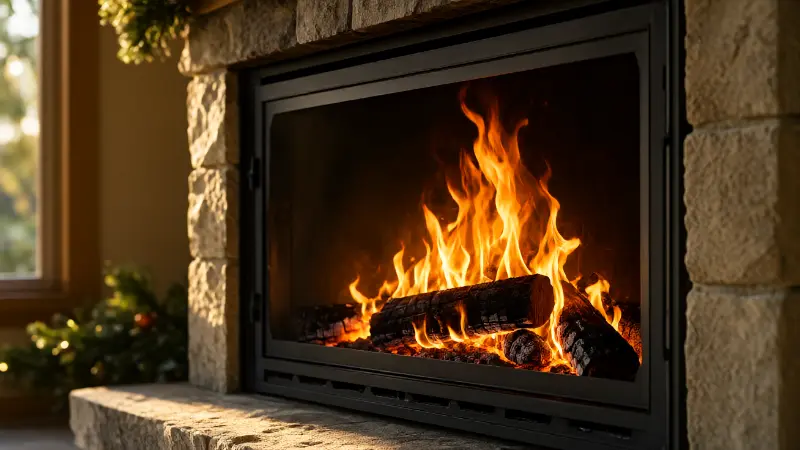
Look up into the firebox with a flashlight and check the smoke chamber and the damper area for visible debris. From outside, inspect the chimney cap and the top of the flue if you can do so safely from the ground with binoculars. Do not climb onto a roof in wet, icy, or windy conditions to check a chimney.
Signs of a blockage include smoke that fills the room from the moment the fire is lit, a smoky odor even when the fireplace is not in use, difficulty getting the fire to establish, and soot staining around the firebox opening. If you suspect a blockage, stop using the fireplace and arrange a professional inspection and cleaning.
Creosote deserves particular respect because it is flammable as well as obstructive. A restricted flue not only causes smoke spillage but also raises the risk of a chimney fire. Annual sweeping is a baseline practice for wood-burning fireplaces, and it is especially important after a season of heavy use.
Address House Pressure and Competing Exhaust Fans
Modern homes are sealed tightly for energy efficiency, which can leave a fireplace competing for air. A fire needs a substantial volume of air to burn, and if the house cannot replace that air easily, the chimney may lose the pressure battle. The result is backdraft: air rushes down the chimney instead of up.
Kitchen range hoods, bathroom exhaust fans, clothes dryers, and whole-house fans all remove air from the home. When several of these run at once during a holiday gathering, the combined effect can overwhelm a marginal chimney. The house draws replacement air from the easiest available opening, and an idle or recently lit chimney is often that opening.
Test the pressure theory by turning off the exhaust fans and cracking a window in the same room as the fireplace before lighting the fire. If the draft improves, the issue involves air supply rather than a chimney defect. A permanent solution may involve makeup air, adjusted fan use, or a professional assessment of the home’s ventilation balance.
Watch for other vented appliances
Backdrafting can affect gas water heaters and furnaces as well as fireplaces. If smoke spillage from the fireplace coincides with a gas appliance problem, treat it as a combustion safety issue and call a qualified technician. A guide to gas fireplace flame adjustment can help you understand how vented gas fireplaces behave, but it does not replace an inspection.
Evaluate Firebox and Chimney Design Limits
Some fireplaces smoke because of design rather than maintenance. An oversized firebox opening relative to the flue diameter, a short chimney, or a chimney termination that sits below nearby rooflines or trees can all weaken draft. Exterior chimneys are also more vulnerable to cold-plug problems than chimneys that run through the center of the house.
Opening the firebox doors or using a fire screen changes the airflow dynamics. Glass doors that are closed during startup can restrict the air the fire needs, while fully open doors can sometimes reduce spillage. Follow the manufacturer’s guidance for your specific fireplace rather than assuming one approach fits every unit.
If the fireplace has a history of smoking in windy weather, the chimney termination may be affected by downdrafts. A chimney cap designed to reduce downdraft, or an extension of the chimney height, may help in some cases. These are design changes that should be evaluated by a chimney professional rather than chosen at random.
Check Fuel Quality and Fire-Building Technique
Wet wood is a frequent contributor to poor draft and excess smoke. Seasoned firewood has lower moisture content and burns hotter and cleaner, which helps the chimney stay warm and pull steadily. Wood that hisses, steams, or resists ignition is likely too wet for a clean fire.
Fire-building method matters as much as the fuel. A fire that is packed tightly with large logs smolders and produces dense smoke before the flue is warm. Start with small, dry kindling and a modest amount of split wood, and let the fire build gradually as the draft strengthens.
Do not overload the firebox. Too much fuel at once can produce more smoke than the flue can carry, especially during startup. Add logs in stages and keep the firebox doors or screen arranged according to the manufacturer’s instructions. Ash buildup should be managed so it does not block the air supply to the fire.
Manage ash and airflow
A thick bed of ash can restrict airflow to the coals, but some ash is useful for insulation. Follow the fireplace manufacturer’s guidance on ash depth rather than removing all of it or letting it pile up. Keep the ash pit door closed if your fireplace has one, because an open ash pit can create a false draft path.
When to Stop Troubleshooting and Call a Chimney Sweep
Stop using the fireplace and call a qualified chimney sweep or fireplace technician if smoke spillage persists after the damper is open, the flue is warmed, and obvious blockages are ruled out. Chronic spillage can indicate liner damage, a failed smoke chamber, a chimney fire, or a pressure problem that requires diagnostic equipment.
Professional inspection is also warranted if you have never had the chimney inspected, if the home is new to you, or if the fireplace has not been used in several years. A camera inspection can reveal hidden defects that are not visible from the firebox or the roof. The cost of an inspection is modest compared with the risk of a chimney fire or carbon monoxide exposure.
Any repair involving the chimney structure, liner, damper mechanism, or venting system should be done by someone qualified for that work. Cosmetic fixes and fire-building adjustments are reasonable DIY territory, but structural and venting repairs are not. This is also a good time to confirm which breaker controls your smoke detectors with a guide on finding the smoke detector breaker.
Quick Reference: Symptoms and Likely Causes
The table below matches common smoke-draw symptoms with the conditions that most often produce them. Use it to narrow the diagnosis, then confirm with a professional inspection before making structural changes. The guidance is general and does not replace the manufacturer’s instructions for your fireplace.
| Symptom | Likely Cause | First Step | When to Call a Pro |
|---|---|---|---|
| Smoke spills only at startup, then draws | Cold flue or cold plug | Prime the flue with rolled newspaper before lighting | Spillage continues despite priming |
| Smoke fills the room immediately | Closed or stuck damper | Open damper fully and verify plate movement | Damper will not open or is damaged |
| Smoke appears after the fire grows | Partially blocked flue or creosote buildup | Stop use; inspect firebox and cap visually | Schedule chimney cleaning and inspection |
| Draft improves when a window is opened | House depressurization or air starvation | Turn off exhaust fans; crack a window during startup | Recurring pressure problems need assessment |
| Smoke spills when the range hood runs | Competing exhaust creating negative pressure | Reduce fan speed or use a window for makeup air | Consider makeup air or ventilation review |
| Smoke rolls out in windy weather | Downdraft or termination design issue | Note wind direction and conditions | Evaluate chimney cap or height with a pro |
| Smoky odor even when not burning | Blockage, liner defect, or pressure reversal | Stop use; inspect for debris and damper seal | Professional inspection recommended |
Use the table to organize your observations, then act on the safest first step. If a symptom points to a blockage or a damper failure, do not light another fire to test it. Smoke exposure is a health issue, and repeated testing in a closed room adds to the risk.
FAQ
Why does my fireplace smoke only when I first light it?
Startup smoke usually points to a cold flue. The air inside the chimney is dense and sinking, so the first heat cannot establish an upward draft immediately. Priming the flue with a rolled newspaper flame for a minute or two before lighting the kindling often solves it.
Can a kitchen exhaust fan really pull smoke down my chimney?
Yes. A powerful range hood or bathroom fan can create negative pressure in a tight home, and the chimney can become the easiest path for replacement air to enter. The result is a reversed draft that brings smoke and combustion gases into the room. Turning off the fan or cracking a window can confirm the cause.
How do I know if my chimney is blocked?
Common signs include smoke filling the room from the moment the fire is lit, a smoky odor when the fireplace is idle, difficulty establishing a fire, and soot staining around the opening. A visual check from the firebox and the ground can reveal some debris, but a professional camera inspection is the reliable way to confirm a blockage.
Conclusion
A fireplace not drawing smoke during a
holiday fire usually comes down to one of a few causes: a closed damper,
a cold flue, a blockage, house depressurization, or a fire that is too
large or too wet for the chimney to handle. Start with the damper, prime
the flue, and rule out obvious obstructions before assuming the chimney
is defective.
Pay attention to what else is running in the house.
Exhaust fans, dryers, and range hoods can reverse a marginal draft, and
cracking a window during startup is a useful diagnostic test. If the
problem persists after these checks, stop using the fireplace and
arrange a professional inspection.
Safety should guide every
decision. Do not ignore chronic smoke spillage or a smoky odor, and do
not attempt structural chimney repairs as a holiday DIY project. A warm,
well-drawn fire is worth the preparation, and a qualified sweep can
confirm that the system is safe before the next gathering.