A Snow Joe snow blower that stops working can usually be traced to power delivery, a safety interlock, or a jammed auger rather than a failed motor. Because these machines are electric, the diagnostic path is different from a gas snowblower: there is no carburetor, fuel line, or spark plug to check. Instead, you work from the outlet inward — cord, connection, switch, safety lever, auger, and finally the motor and wiring.
This guide covers both corded and battery-powered Snow Joe models. It starts with safety and a logical sequence so you can find the fault without guessing or replacing parts that are still good. It also explains the symptoms that point to a specific cause, when a repair is reasonable, and when service or replacement makes more sense.
Start With Safety and a Calm Diagnostic Sequence
Unplug a corded model before you inspect anything near the auger, impeller, or chute. For a battery model, remove the battery and keep it away from the machine while you work. Electric snow blowers can start unexpectedly if the trigger is bumped, and the auger can keep rotating briefly after power is cut. Waiting for all movement to stop is part of the process, not an optional step.
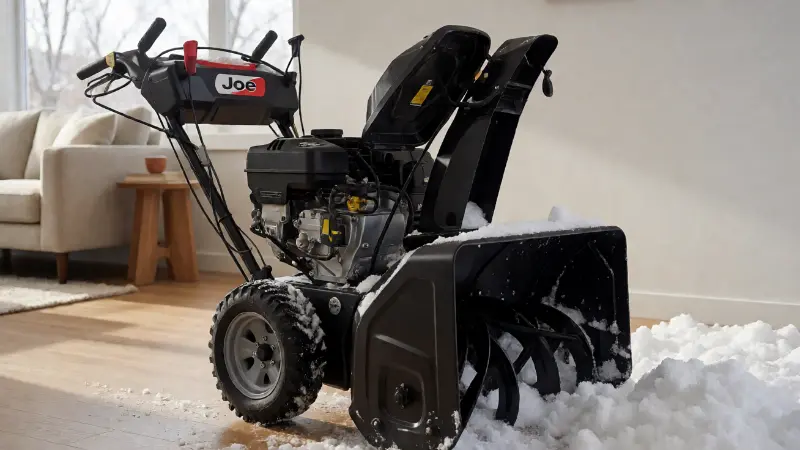
Work outdoors or in a well-ventilated area, and keep the cord away from standing water. Wear gloves when clearing snow or debris, and use a tool rather than your hands to probe the auger housing. If you smell burning insulation or see exposed wires, stop and treat the machine as unsafe until it is inspected. Water and electricity are a poor combination, so dry the machine and your hands before testing anything.
Diagnose in order: power source, cord and connection, safety switch, auger and impeller, then motor and wiring. This sequence avoids the common mistake of opening the motor housing when the real problem is a tripped GFCI or a loose cord at the handle. It also helps you describe the fault accurately if you later call for service.
Check the Power Source, Outlet, and Breaker
Start at the wall. Confirm the outlet is live by plugging in a small tool or lamp, and reset any GFCI outlet that has tripped. Check the house breaker panel for a tripped circuit, and reset it once. If the breaker trips again immediately, stop and look for a short, water intrusion, or a damaged cord rather than repeatedly resetting it.
Inspect the extension cord along its full length for cuts, crushed spots, and damaged plugs. Use an outdoor-rated cord in the gauge and length specified in your owner’s manual. A cord that is too long or too thin can cause a voltage drop that keeps the motor from starting or makes it run weakly. Avoid daisy-chaining cords, and make sure the connection at the machine is fully seated and locked if the model has a cord lock.
Check the connection at the handle or switch housing. Some models use a plug-in connection between the lower and upper handle sections, and that joint can work loose over a season. Push it together firmly and test again. If the machine has a reset button or thermal overload protection, check the manual for its location and reset procedure. A motor that stopped after heavy use may simply need time to cool before it resets.
Test the Safety Switch and Control Lever
Most Snow Joe models require you to hold a safety switch or bar and squeeze the auger control lever before the motor will run. If the interlock is not fully engaged, the machine will appear dead even with good power. Check that the lever moves freely, that the cable or linkage is connected, and that the switch is not stuck or broken.
Inspect the cable adjustment if your model uses one. A cable that is too loose may not actuate the switch, while one that is too tight can bind. Follow the manual for adjustment rather than guessing. If the switch feels loose or the lever does not return, the switch or spring may need replacement.
Do not bypass the safety switch to test the machine. It exists to keep your hands away from the auger, and a bypassed switch creates a serious injury risk. If you suspect the switch is faulty, test it with a multimeter only if you are comfortable with electrical testing, or have a qualified technician check it.
Inspect for Auger Jams, Impeller Blockage, and Drive Problems
A sudden stop during use often points to a jam. Wet, heavy snow, ice chunks, newspaper, or a foreign object can bind the auger or impeller. Unplug the machine or remove the battery, then clear the housing with a wooden broom handle or a plastic scraper. Do not use your hands, and do not use a metal tool that can damage the auger or create a spark.
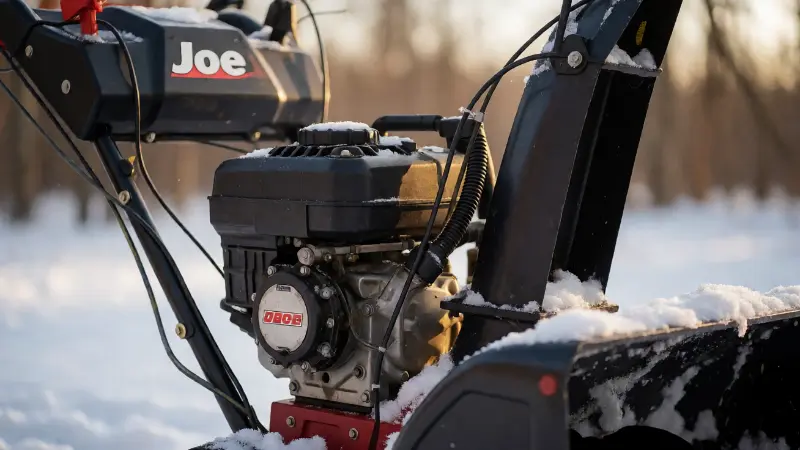
Check the chute and impeller area as well as the auger. A blockage in the chute can stop snow from discharging and make the machine seem underpowered. Clear it completely and confirm the auger turns freely by hand with power disconnected. If it does not turn, look for a bent auger, a broken belt on models that use one, or a stuck shear pin if your machine is equipped with one.
If the auger will not turn and your model uses a shear pin, the pin may be broken or seized. A guide to stuck shear pin removal covers safe methods for freeing a pin without damaging the shaft. If the machine uses a belt, inspect it for wear, glazing, or slipping according to the manual.
Drive problems can also make the machine seem dead. On models with powered wheels, a stuck drive or a broken belt can prevent movement even when the auger runs. If you are also working on a different machine with a drive fault, the Cub Cadet reverse fix is a separate diagnostic path for transmission and linkage issues.
Battery-Powered Snow Joe Models: Check the Battery and Charger
Battery models add a few specific checks. Confirm the battery is fully seated and that the contacts are clean and dry. A battery that is cold, depleted, or overheated may not deliver power until it warms or cools. If you have a second battery, swap it in to see whether the machine runs, which quickly separates a battery problem from a machine problem.
Check the charger and its indicator lights. A charger that does not light up may have a tripped outlet, a bad cord, or an internal fault. Charge the battery according to the manual, and avoid charging in extreme cold or heat. If the battery shows physical damage, swelling, or a burning smell, stop using it and follow local disposal rules.
Inspect the battery compartment for moisture, corrosion, and debris. Clean the contacts gently and let everything dry before reinstalling the battery. If the machine runs with one battery but not another, the issue is likely the battery or its charge state rather than the snow blower itself.
Motor, Switch, and Wiring Checks
If power reaches the machine and the safety switch works but the motor does not run, the fault may be in the switch, wiring, or motor. Look for a burned smell, discolored wiring, or a loose terminal. Do not open a sealed motor housing unless you have the tools and experience; electric motor service is often best left to a technician.
A motor that hums but does not turn can indicate a jam, a failed starting component, or a weak power supply. Recheck the cord and outlet first, then confirm the auger turns freely by hand with power disconnected. If the auger is free and the motor still hums, the motor or switch may need service.
A machine that starts and then stops after a short run may be hitting thermal overload, a failing switch, or a cord problem. Let it cool, check the cord and connections, and try a different outlet on a separate circuit. If the problem repeats, stop using the machine until it is inspected.
Symptoms and Likely Causes at a Glance
The table below maps common symptoms to the checks that are most likely to find the fault. Use it as a guide, then confirm with a visual inspection and the owner’s manual for your specific model.
| Symptom | Likely cause | First checks | Notes |
|---|---|---|---|
| No sound, no movement | No power or safety switch not engaged | Outlet, GFCI, breaker, cord, safety lever | Test the outlet with another tool and confirm the lever fully engages |
| Motor hums but auger does not turn | Jam, belt, or shear pin issue | Clear housing, check auger by hand, inspect belt or pin | Disconnect power before reaching into the housing |
| Starts then stops after a short run | Thermal overload, weak cord, or failing switch | Cord gauge and length, cooling time, switch feel | Try a different outlet and follow the manual reset procedure |
| Breaker trips repeatedly | Short, water intrusion, or damaged cord | Cord inspection, dry connections, motor smell | Stop testing if the breaker trips again immediately |
| Battery model runs with one battery only | Battery or charger fault | Contacts, charge state, second battery | Check charger lights and battery temperature |
When to Stop and Seek Service
Stop using the machine if you see smoke, smell burning insulation, find exposed wiring, or notice water inside the switch or motor housing. Repeated breaker trips are also a stop sign. These symptoms can indicate a fault that is not safe to diagnose without electrical testing experience. A qualified small-engine or appliance repair shop can test the switch, cord, and motor more safely.
Weigh repair against replacement using the machine’s age, the cost of the suspected part, and your comfort with the work. A cord, switch, or shear pin is often an economical fix. A failed motor or sealed control board on an older unit may cost enough that a new machine is the better value. Check the warranty before disassembling anything, since opening the housing can affect coverage.
If you also maintain gas-powered equipment, keep fuel problems separate from this electric diagnosis. A gas machine with a fuel smell needs different safety steps, and the primer bulb gas leak fixes are not applicable to a Snow Joe electric model.
Prevention and Seasonal Maintenance
Store the machine dry and indoors when possible. Moisture in the switch, cord connection, or motor housing is a common cause of electrical faults. Inspect the cord before each season and replace it if the jacket is damaged. Keep the auger and chute clear of debris, and avoid forcing the machine through snow faster than it can handle.
For battery models, follow the manual for storage charge level and temperature. Do not leave a battery on the charger indefinitely if the manual advises against it, and bring batteries indoors during extreme cold. Check the auger and impeller for free movement at the start of the season, and confirm the safety switch operates smoothly before the first storm.
Use the correct extension cord and avoid overloading the circuit with other high-draw tools. If the machine stops in deep snow, clear the housing before restarting rather than repeatedly cycling the switch. A few minutes of prevention at the start of the season can avoid a dead snow blower in the middle of a storm.
FAQ
Why did my Snow Joe snow blower stop suddenly while running?
A sudden stop often points to a jam in the auger or impeller, a thermal overload, or a power interruption. Disconnect power, clear the housing, and check the cord and outlet. If the machine restarts and stops again, stop using it until the cause is found.
Can I use any extension cord with a corded Snow Joe?
Use an outdoor-rated cord in the gauge and length specified in your owner’s manual. A cord that is too long or too thin can cause voltage drop and starting problems. Avoid daisy-chaining cords and keep connections dry.
How do I reset a Snow Joe snow blower?
Some models have a thermal overload reset button, while others reset after cooling. Unplug the machine, clear any jam, and let it cool before following the manual’s reset procedure. If the breaker trips again immediately, stop and have the machine inspected.
Why does my battery Snow Joe run with one battery but not another?
That pattern points to the battery or charger rather than the machine. Check the contacts, charge state, and temperature, and try a known-good battery. If the charger indicator is abnormal, test the outlet and charger according to the manual.
Is it worth repairing a Snow Joe that will not start?
It depends on the fault and the machine’s age. A cord, switch, or shear pin is often worth fixing. A failed motor or sealed control component on an older unit may cost enough that replacement makes more sense. Check the warranty before opening any housing.