
A space heater that smells like burning plastic is one of those warnings you should never talk yourself out of. Plastic odor usually means a polymer surface is being heated beyond its design limit, and that can be a sign of a failing component, a blocked airflow path, or a cord and plug connection that is overheating. Unlike the faint dusty smell a heater gives off on its first use of the season, a sharp chemical or burning-plastic odor is a reason to stop and investigate.
The response should be immediate and simple: turn the heater off, unplug it, and let it cool before you look at anything. This guide explains the difference between normal first-use odor and a genuine hazard, walks through the causes in a sensible order, and covers what to inspect, what to replace, and when the right answer is to stop using the unit entirely.
Normal First-Use Smell vs a Burning Plastic Warning
Many new heaters produce a light odor during their first few hours of operation. Manufacturing residue, protective oils, and dust settled on the heating element burn off as the unit reaches temperature. That smell is usually faint, fades within a short period, and does not return once the heater has been used a few times.
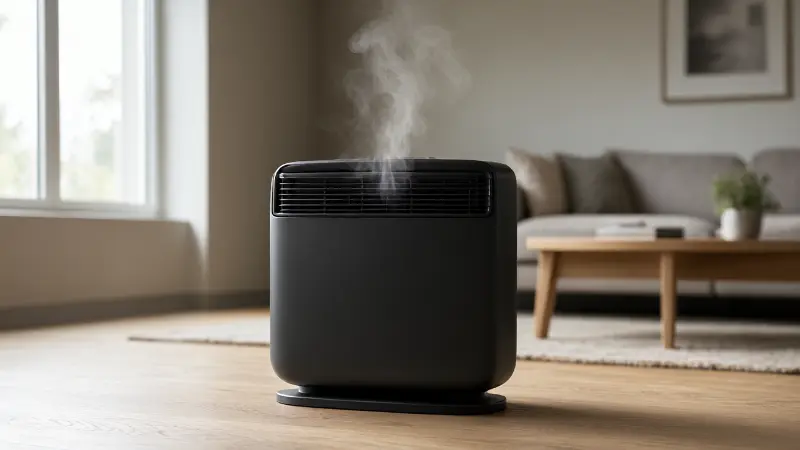
A burning plastic smell is different. It tends to be sharper, more chemical, and persistent rather than fading. It may appear only when the heater reaches a high setting, or only after the unit has run for a while. If the odor returns every time the heater is used, the heater is not simply burning off residue.
Context matters too. A heater that smelled fine last winter and now smells like plastic has developed a change, which is more concerning than a new unit’s break-in odor. A heater that smells only when a specific outlet or extension cord is used points to the connection rather than the appliance. Note the pattern before you decide what to fix.
The distinction between harmless and hazardous odors is not unique to space heaters. Furnaces produce a similar first-start smell, and a guide to furnace burning dust smell causes explains how to tell a seasonal burn-off from a condition that needs service.
Stop, Unplug, and Let the Heater Cool First
Before any inspection, switch the heater off at its controls and unplug it from the wall. Do not rely on the thermostat or a remote to keep it off. If the plug or outlet feels hot, turn off the circuit breaker that feeds the outlet before you touch the cord.
Let the unit cool completely. Plastic housings, grilles, and internal components can stay hot long after the fan stops, and a heater that has been running on high may take a while to reach room temperature. Rushing this step risks a burn and makes it harder to inspect for heat damage.
Move the heater to a well-ventilated area away from curtains, bedding, and other combustibles while it cools. If the smell was strong, open a window and run a fan to clear the room. A persistent plastic odor can leave residue in the air and on nearby surfaces, so ventilate before spending time in the space.
If you see flames, smoke, sparks, or scorch marks, do not attempt to troubleshoot. Move away, keep others out of the room, and call the fire department if there is any active fire. A heater that has visibly burned should be removed from service permanently rather than repaired by an untrained person.
Cause One: Dust and Debris on the Heating Element
Space heaters pull air through a grille and across a heating element. Dust, pet hair, lint, and fibers collect on the element and the internal surfaces over time, especially in a bedroom or near carpet. When the heater runs, that debris scorches and produces an odor that can be mistaken for burning plastic.
Inspect the intake and exhaust grilles for a visible mat of dust. Shine a light into the grille to see whether the element or fins are coated. Many heaters include a removable or washable filter, and cleaning it according to the manufacturer’s instructions is a reasonable first step.
Do not spray cleaning products into the heater or immerse the housing in water. Unplug the unit, use a vacuum with a brush attachment on the exterior grilles, and follow the manufacturer’s guidance for any deeper cleaning. If the internal surfaces are heavily coated, a qualified appliance technician or a replacement unit is the safer path.
After cleaning, run the heater outdoors or in a well-ventilated garage for a short period to burn off any remaining dust before bringing it back into a living space. A brief smell during that test is normal; a sharp plastic odor that persists is not.
Prevent future buildup
Vacuum the grilles monthly during heavy use, and keep the heater away from areas with heavy pet hair or lint. Store the unit covered during the off-season so dust does not settle inside. A clean heater runs cooler and produces far fewer odors.
Cause Two: Overheated Cord, Plug, or Outlet
A burning plastic smell is often traced to the plug or the receptacle rather than the heater body. Resistance at a loose connection generates heat, and that heat can melt the plastic around the plug face or the outlet. A plug that feels warm, looks discolored, or smells like burnt plastic is a fire risk.
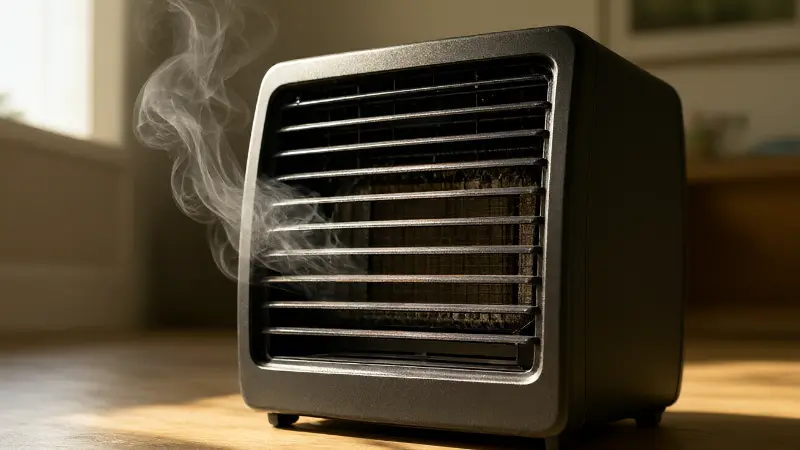
Unplug the heater and inspect the plug prongs for discoloration, pitting, or melted plastic. Check the outlet face for browning, a loose fit, or a burning smell near the wall plate. If either shows heat damage, stop using that outlet and have an electrician evaluate it before plugging anything else in.
Extension cords and power strips are a common contributor because many are rated well below what a heater draws. A cord that is warm, soft, or smells hot under load is being asked to carry more current than it can handle. Heater manufacturers generally advise a direct connection to a wall receptacle for exactly this reason.
Overloading a circuit also produces heat at the panel and at the outlet. If the heater shares a circuit with other high-draw appliances, the wiring runs warmer than it should. A guide to a space heater tripping breaker causes explains how load, cord gauge, and circuit capacity interact, and the same factors drive the plastic smell.
Cause Three: Internal Component Failure
If the grilles are clean and the cord and outlet are in good condition, the odor may originate inside the heater. Wiring insulation, a terminal block, a fan motor winding, or a control board can overheat and give off a plastic or chemical smell. These failures are not visible from the outside in most cases.
Listen to the heater as it runs. A fan that scrapes, a motor that hums without spinning, or a rattle that changes with temperature can indicate a mechanical fault. A heater that shuts off unexpectedly and then restarts may be cycling on a thermal protector, which is a sign that something inside is running hotter than intended.
Look for a bulge in the housing, a grille that has warped, or a discolored patch on the plastic case. Any of these suggest that heat has escaped its intended path. Do not open the housing to investigate unless you are qualified for appliance electrical work; the combination of high current and high temperature makes internal repairs risky.
For most portable heaters, an internal failure means replacement rather than repair. The parts cost and labor rarely justify a repair on a relatively inexpensive appliance, and a repaired heater that fails again poses the same hazard a second time.
Watch for safety device cycling
Many heaters include a tip-over switch and a thermal cutout. If the heater shuts down and restarts repeatedly, the thermal protector may be cycling because of restricted airflow or a failing component. That cycling is a symptom worth taking seriously rather than a quirk to work around.
Cause Four: Blocked Airflow and Poor Placement
Space heaters depend on airflow to carry heat away from the element and into the room. A heater pushed against a wall, tucked behind furniture, or placed with its intake blocked will run hotter than designed. The plastic housing and internal components can reach temperatures they were never intended to withstand.
Check the manufacturer’s clearance requirements and give the heater more space than the minimum. Keep the front, back, and sides clear of curtains, bedding, sofa backs, and storage bins. Do not place a heater under a desk, inside a cabinet, or in a narrow alcove where heated air cannot escape.
Place the heater on a hard, level surface unless the manufacturer specifies otherwise. Carpet can block a bottom intake, and an unstable surface increases the risk of a tip-over. Keep the cord fully uncoiled and routed away from foot traffic.
Room conditions matter too. A heater working in a cold, drafty room runs longer and hotter than one in a space that is already close to the target temperature. If the heater is the only heat source for a large room, it may be running at its limit continuously, which accelerates wear on components and insulation.
Cause Five: Wrong Settings, Wrong Heater, or Wrong Use
Some plastic odors come from using a heater in a way it was not designed for. A model rated for a small room, run on high in a large space for hours, will operate at the edge of its capability. A heater placed in a damp bathroom when it is not rated for wet locations can develop moisture-related faults.
Check the rating plate for the heater’s intended use and wattage. Confirm that the settings you are using match the manufacturer’s guidance. Some heaters have a high setting intended for short warm-up periods and a lower setting for continuous use, and running high continuously can overheat the housing.
Also check for accessories or modifications. A heater with a replacement cord, an aftermarket plug, or a homemade repair is a risk. Cords that are too thin, plugs that do not match the original rating, and taped connections can all produce heat and odor at the connection point.
Household odors can also be misattributed. A plastic smell in a room may come from a nearby appliance, a lamp with a failing socket, or a cooking mishap. If the odor appears only when the heater runs, the heater is the likely source, but it is worth checking other devices on the same circuit before replacing a healthy unit.
What to Do If the Smell Returns After Cleaning
If you have cleaned the grilles, confirmed the cord and outlet are sound, given the heater adequate clearance, and the plastic smell still returns, stop using the heater. Persistent odor after those steps points to an internal fault that is not safe to ignore or work around.
Remove the heater from the room, unplug it, and store it away from combustibles until you can dispose of it or have it evaluated. Do not put it back into service for a cold night just because it is the only heat source available. A blanket, a properly rated alternative heater, or a temporary stay elsewhere is a better answer than a unit that may be failing.
If the heater is under warranty, contact the manufacturer before discarding it. Some brands will inspect a unit that produced a burning smell, and the information helps them track defects. Keep the receipt and the model number available.
When the odor is in a bathroom or near a drain rather than a heater, the cause is entirely different. A shower drain sewer gas smell is a plumbing issue with its own diagnostics, and treating it as an appliance problem wastes time.
Safe Habits to Prevent the Next Odor
Inspect the heater and its cord before the first use of each season. Look for cracks in the housing, a frayed cord, a loose plug, and dust on the grilles. Clean the exterior and any filter according to the manual, and test the unit on a low setting in a ventilated space before relying on it overnight.
Plug the heater directly into a wall outlet on a circuit that is not already carrying heavy loads. Avoid extension cords and power strips, and never run a cord under a rug or through a doorway. Keep the cord uncoiled and check the plug for warmth after the first hour of use.
Maintain clearance around the heater and keep it away from anything that can burn. Never leave a space heater running unattended or while you sleep. Turn it off before leaving the room, and keep children and pets at a safe distance.
A space heater is a supplemental appliance, not a permanent heating solution. If a room is consistently too cold, the better answer is usually an insulation, airflow, or heating system fix rather than a larger or more powerful portable unit.
Quick Reference: Odor Patterns and Likely Causes
The table below matches common space heater odor situations with the conditions that most often produce them. Use it to organise your checks, and stop if a step involves the housing interior, live voltage, or a part you are not trained to service.
| Odor Pattern | Likely Cause | Safe First Step | When to Replace or Call a Pro |
|---|---|---|---|
| Faint smell on a brand-new heater that fades | Manufacturing residue and dust burn-off | Run in a ventilated space until the odor clears | Odor persists after several uses |
| Dusty smell after months of storage | Debris on the element and grilles | Unplug; vacuum grilles; clean filter per manual | Smell returns after cleaning |
| Sharp plastic smell at the plug or outlet | Resistance at a loose or worn connection | Unplug; stop using that outlet | Outlet or wiring inspection by an electrician |
| Plastic smell with an extension cord | Cord underrated for the heater’s draw | Plug directly into a wall receptacle | Cord is warm, soft, or discolored |
| Smell only on the high setting | Heater at the edge of its capability or blocked airflow | Increase clearance; try a lower setting | Odor returns with proper clearance |
| Smell with rattling or a scraping fan | Internal component or motor fault | Turn off and unplug; do not open housing | Replace the unit |
| Smell with warped or discolored housing | Heat escaping its intended path | Stop using; remove from service | Replace; do not repair |
Use the table to narrow the likely cause, but treat any burning-plastic odor as a stop signal until you have identified the source. The heater, the cord, the outlet, and the surrounding placement are the four areas that explain most cases.
FAQ
Is it normal for a new space heater to smell like burning plastic?
A light odor during the first few uses is common and usually comes from manufacturing residue and dust burning off. It should fade within a short period. A sharp, chemical, or persistent plastic smell is not normal and is a reason to stop using the heater and investigate.
Can a burning plastic smell from a heater make you sick?
Burning plastic can release irritating compounds, and the smell itself may cause headaches or nausea in sensitive people. Ventilate the room, move the heater out of the living space, and seek medical advice if anyone experiences breathing difficulty, dizziness, or persistent symptoms.
Should I repair a space heater that smells like burning plastic?
For most portable heaters, replacement is the safer and more practical choice. Internal repairs on a high-current, high-temperature appliance carry risk, and the cost rarely justifies the work. If the unit is under warranty, contact the manufacturer before discarding it.
Why does my heater only smell when I plug it into a certain outlet?
The outlet or the connection is the likely cause. A loose receptacle, a worn plug, or a shared circuit running near capacity can generate heat and a plastic odor. Stop using that outlet, inspect the plug and the wall plate for discoloration, and have an electrician check the circuit if the problem continues.
Conclusion
A space heater that smells like burning plastic is warning you about heat where it should not be. Turn it off, unplug it, and let it cool before checking the grilles for dust, the cord and plug for heat damage, the outlet for discoloration, and the surrounding clearance for blockages. Many odors trace back to those four areas.
If the smell returns after cleaning and a placement check, treat it as an internal fault and replace the unit rather than continuing to use it. Do not attempt to open the housing or repair the internal wiring unless you are qualified. A heater that has warped, discolored, or smoked should be retired permanently.
Good habits prevent most of these problems. Clean the heater regularly, plug it directly into a suitable wall outlet, keep clearance around it, and never leave it running unattended. A little attention before the cold season keeps the appliance working and the room safe.