Choosing between Sherwin Williams Emerald and Duration is one of the most common dilemmas for homeowners who have decided to invest in a premium paint but are not sure which tier actually earns its price. Both are top-shelf products from a major manufacturer, both carry strong warranties, and both will outperform budget paint by a wide margin. The real question is which one suits your specific project, substrate, and budget.
This comparison breaks down the formulation, performance, coverage, pricing, and ideal applications for each line. It covers both interior and exterior versions, because the same names are used for products that behave quite differently depending on where they are applied.
What Emerald and Duration Are Designed For
Sherwin Williams positions Emerald as its flagship line. It is the product the company recommends when maximum durability, washability, and color retention matter most. Duration sits one tier below and is marketed as a premium workhorse for high-traffic areas and everyday repaints.
Both are acrylic latex formulations. Both are paint-and-primer-in-one products with advanced stain-blocking technology. Both include anti-microbial agents that inhibit mould and mildew growth on the paint film. The differences show up in film hardness, burnish resistance, color retention, and how each product handles demanding substrates and deep colors.
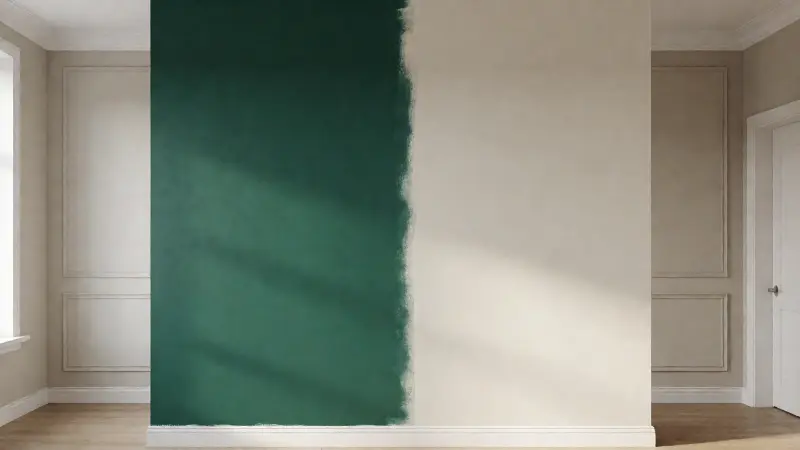
Interior versions
Emerald Interior is formulated for exceptional hide, scrub resistance, and resistance to burnishing and water spotting. It is designed to deliver a smooth, uniform finish even in dark or saturated colors. Duration Home Interior emphasises washability and stain blocking, with moisture-resistant technology that allows a quick return to service in damp environments such as bathrooms.
Both are now available in a cleanable flat finish, which is a significant development for homeowners who want the flat look without sacrificing washability. Traditional flat paints mark and burnish easily. The cleanable flat from both lines resists burnishing and can be washed, making it suitable for high-traffic areas that would normally require a satin or eggshell finish.
Exterior versions
Emerald Exterior is the most durable exterior product in the Sherwin Williams lineup, with a longer expected lifespan and better performance on dark or saturated body colors. Duration Exterior is a high-build, flexible coating that performs well on a wide range of siding materials and handles freeze-thaw cycles effectively.
The exterior versions share the paint-and-primer-in-one convenience, but their film chemistry differs. Emerald cures to a harder film with better color retention. Duration cures to a slightly softer, more flexible film that forgives lap marks and stays workable longer in humid conditions.
Head-to-Head Comparison
The table below summarises the key differences across the factors that matter most when choosing between these two lines.
| Factor | Emerald | Duration |
|---|---|---|
| Position in lineup | Flagship / top tier | Premium / one tier below |
| Interior durability | Best-in-class scrub and burnish resistance | Excellent washability and stain blocking |
| Exterior durability | Longer expected lifespan; better on dark colors | Flexible film; strong freeze-thaw performance |
| Hide and coverage | Exceptional, especially in deep colors | Excellent on light-to-mid tones |
| Burnish resistance | Outstanding | Good |
| Water spotting resistance | Excellent | Good |
| Mould and mildew inhibitors | Yes | Yes |
| Cleanable flat option | Yes | Yes |
| Sheen options (interior) | Flat, matte, satin, semi-gloss | Flat, matte, satin, semi-gloss |
| Sheen options (exterior) | Flat, satin, gloss | Flat, satin, gloss |
| Typical interior list price | Approx. $101 to $106 per gallon | Approx. $96 to $101 per gallon |
| Typical sale price | Approx. $61 to $64 per gallon | Approx. $58 to $61 per gallon |
| Best interior use | Deep colors, high-abuse areas, bathrooms | Hallways, kids’ rooms, kitchens, general repaints |
| Best exterior use | Dark body colors, harsh climates, tannin-prone wood | General repaints, humid climates, one-coat coverage on sound siding |
Interior Performance: Where Emerald Pulls Ahead
The interior difference between these two products comes down to three things: burnish resistance, hide in deep colors, and water spotting resistance.
Burnish resistance
Burnishing is the shiny mark that appears when a flat or matte painted surface is rubbed or scrubbed. It is one of the most common complaints about flat paint, and it is why many homeowners avoid flat finishes in hallways and busy rooms. Emerald Interior is specifically formulated to resist burnishing, and the difference is noticeable when compared side by side with standard flat latex.
In practical terms, this means you can use a flat or matte finish in a hallway or living room without worrying that every brush against the wall will leave a permanent shiny patch. Duration Home also resists burnishing reasonably well, but Emerald holds the advantage.
Hide and coverage
Coverage is measured by how well a paint obliterates the color underneath. Both products cover well on light-to-mid tones, and both are paint-and-primer-in-one. The gap opens up with deep or saturated colors. Emerald includes a high-hiding accent base in its matte and satin sheens, designed to boost the hiding power of ultra-deep shades.
If you are painting a room in a deep navy, charcoal, or rich red, Emerald is more likely to achieve full coverage in fewer coats. With Duration, you may need an extra coat to reach the same depth and uniformity.
Water spotting
Water spotting occurs when a drop of water sits on the paint film and leaves a mark after it dries. Emerald Interior resists water spotting better than Duration, which makes it a sensible choice for bathrooms, kitchens, and laundry rooms where splashes are common.

Interior Performance: Where Duration Holds Its Own
Duration Home is not a compromise product. For many interior projects, the differences between it and Emerald are hard to detect in everyday use.
Washability and stain blocking
Duration Home’s strength is its stain-blocking formula and its washability. It hides fingerprints and scuffs well, and most stains wipe clean with water or mild soap. In hallways, kids’ rooms, and other high-traffic areas, this is exactly what you need.
The moisture-resistant technology also allows a quick return to service in damp environments, which matters if you need the room back in use quickly.
Value for general repaints
For a guest room, a living room in a light or mid-tone color, or any space that sees normal use, Duration Home delivers excellent results at a lower price than Emerald. The premium you pay for Emerald buys better performance in specific conditions, but in a room that is repainted every few years, that premium may not pay for itself.
Contractors often recommend Duration for the bulk of interior work and reserve Emerald for the spaces where its advantages matter most: bathrooms, deep-color feature walls, and high-abuse areas.
Sheen considerations
Both lines offer flat, matte, satin, and semi-gloss sheens. One practical difference is that Duration’s matte finish is slightly shinier than Emerald’s matte. If sheen consistency across a room matters, be aware that matching a Duration matte wall to an Emerald matte ceiling may show a subtle difference in reflectivity.
Exterior Performance: A Different Set of Trade-Offs
The exterior versions of these products compete on different ground. Here, the decision is less about washability and more about film flexibility, color retention, and how the coating handles weather.
Emerald Exterior strengths
Emerald Exterior is the more durable option in harsh conditions. It handles dark or saturated body colors better, retaining color and resisting fading over a longer period. On tannin-prone substrates such as cedar and redwood, Emerald manages tannin bleed more effectively than Duration.
The harder film also resists dirt pickup and maintains a cleaner appearance over time. For south- and west-facing walls in full sun, or for homes in climates with intense UV exposure, Emerald is the stronger choice.
Duration Exterior strengths
Duration Exterior cures to a slightly softer, more flexible film. This flexibility is an advantage in climates with repeated freeze-thaw cycles, because the coating can move with the substrate rather than cracking. It also has a higher film build, which means a single coat can deliver coverage approaching what you would expect from two coats of a standard acrylic.
Duration flows out well, forgives lap marks, and stays workable longer in humid conditions. For large expanses of siding and for general repaints on sound surfaces, it is faster and more forgiving to apply.
Coverage on different substrates
On smooth surfaces such as fibre cement siding, both products spread at roughly similar rates. On rough-sawn cedar, heavily textured stucco, or weathered wood, both products will cover less area per gallon because the texture consumes more paint. Duration’s higher film build can partially offset this by delivering more coverage in a single pass.
Pricing and Value
Emerald sits at the top of the Sherwin Williams pricing ladder, with Duration one step below. The difference is not enormous on a per-gallon basis, but it adds up on a whole-house project.
Interior pricing
At list price, Emerald Interior typically runs several dollars per gallon more than Duration Home. Both lines are frequently included in storewide promotions, which can reduce the gap to a few dollars per gallon. Even at sale prices, Emerald remains the more expensive option.
Exterior pricing
Exterior pricing follows the same pattern, with Emerald commanding a premium over Duration. Contractor pricing narrows the gap further, but the tier order does not change.
Is the premium worth it?
For interior work, the answer depends on the room. If you are painting a bathroom, a kitchen, or a room in a deep color, Emerald’s advantages in water spotting, hide, and burnish resistance justify the extra cost. If you are repainting a bedroom or living room in a light tone, Duration will look just as good and last just as long.
For exterior work, the answer depends on the climate and the color. If your house has dark siding, faces harsh sun, or uses tannin-prone wood, Emerald is the more sensible investment. If you are repainting a light-colored house in a moderate climate, Duration delivers excellent results at a lower price.
Common Mistakes When Choosing Between Them
- Assuming the more expensive product is always better. For many rooms and surfaces, Duration performs indistinguishably from Emerald.
- Ignoring sheen when comparing. A Duration matte and an Emerald matte are not identical in reflectivity.
- Choosing Emerald for a room that will be repainted soon. The longevity advantage is wasted if the color will change in a few years.
- Skipping the tinted primer. Deep colors in either line benefit from a tinted primer to reduce the number of topcoats.
- Applying exterior paint outside the temperature window. Both products have minimum application temperatures and a 48-hour rule that many homeowners overlook.
- Using the wrong sheen for the location. Bathrooms and kitchens benefit from a more washable sheen regardless of which product line you choose.
Making the Decision
If you want the single best product Sherwin Williams makes for interior walls, choose Emerald. It resists burnishing, hides deep colors well, and stands up to water spotting better than anything else in the lineup. It is the right call for bathrooms, kitchens, feature walls, and any surface that takes a beating.
If you want a premium paint that delivers excellent results across a wide range of everyday interior projects, choose Duration Home. It is washable, stain-blocking, and durable, and for most rooms the difference in appearance and longevity is marginal.
For exteriors, match the product to the conditions. Emerald for dark colors, harsh sun, and tannin-prone wood. Duration for general repaints, humid climates, and situations where one-coat coverage and easy application matter.
A broader view of paint selection
If you are weighing other Sherwin Williams products as well, it helps to understand how the lines relate to each other. For exterior work, comparing Everlast versus Emerald clarifies where Emerald sits against the brand’s other exterior options. For interior work, a comparison of Showcase versus Emerald can show what you give up by moving down a tier. And if you are considering the exterior version of Duration, a Latitude versus Duration comparison explains how those two products differ in climate performance.
FAQ
Is Emerald better than Duration?
Emerald is the higher-tier product with better burnish resistance, water spotting resistance, and hide in deep colors. Duration is a premium paint in its own right and performs very well in most everyday situations. The better choice depends on the specific room or surface.
Can I use Duration in a bathroom?
Yes. Duration Home has moisture-resistant technology and anti-microbial agents, and it performs well in bathrooms when paired with a washable sheen such as satin. Emerald also works well in bathrooms and offers better water spotting resistance.
Which lasts longer, Emerald or Duration?
For exterior applications, Emerald has a longer expected lifespan, particularly on dark colors and in harsh climates. For interior applications, both are durable, and the difference in lifespan is more dependent on prep and usage than on the product line.
Do I need a primer with Emerald or Duration?
Both are paint-and-primer-in-one products. However, for deep colors, bare drywall, or significant color changes, a tinted primer can improve coverage and reduce the number of topcoats needed.
Is Emerald worth the extra cost?
For bathrooms, kitchens, deep-color walls, and high-abuse areas, yes. For general repaints in light or mid-tone colors in normal-use rooms, Duration delivers comparable results for less money.
Which is better for exterior siding?
Emerald is better for dark colors, harsh sun, and tannin-prone wood. Duration is better for general repaints, humid climates, and large surfaces where its flexible film and higher build are an advantage.
Bottom Line
Emerald and Duration are both excellent paints, and neither is a bad choice. Emerald is the flagship product with better burnish resistance, superior hide in deep colors, and stronger water spotting resistance. Duration is the premium workhorse that delivers washability and stain blocking at a lower price, and for many interior and exterior projects it is the smarter buy.
Choose Emerald when the conditions are demanding: bathrooms, kitchens, deep colors, harsh climates, tannin-prone wood. Choose Duration when you want a premium paint that performs beautifully across everyday surfaces without paying flagship prices. In either case, prep the surface properly, use the right sheen, and apply within the manufacturer’s temperature window. The paint is only part of the result — the preparation is what makes it last.