A Craftsman snowblower that refuses to start often has nothing wrong with the engine. The problem is frequently the choke position. Set it correctly, and a cold engine can fire in two or three pulls.
Set it incorrectly, and you may flood the carburetor, foul the spark plug, or smell raw gas. This guide explains exactly where the choke should be on a Craftsman snowblower, how to move it as the engine warms, and how to fix common choke-related start failures.
Why the Choke Position Matters on a Craftsman Snowblower
The choke is a movable plate inside the carburetor. When closed, it restricts air entering the engine. That creates a richer fuel-air mixture, which a cold engine needs to ignite.
Once the engine warms, that rich mixture becomes too much. The choke must open so normal air can flow. A Craftsman snowblower choke position is therefore not a permanent setting; it is a sequence.
Many homeowners treat the choke lever like an on/off switch. In reality, the best position changes with temperature, engine behavior, and how many pulls you have made. That is where most cold-start trouble begins.
How to Find the Choke Control on a Craftsman Snowblower
Craftsman snowblowers have used several control layouts over the years. Most two-stage models have a lever on the dashboard or control panel. Some single-stage and older models use a remote choke cable mounted near the engine.
The lever may be labeled CHOKE, or it may show a symbol. If the icons are confusing, this guide to the snowblower choke symbol can help you decode them before you pull the starter.
Look for a lever that moves between two or three detents. Common labels include FULL, HALF, and RUN. On some Craftsman models, the choke is combined with the throttle, so the control may read CHOKE, RUN, or STOP.
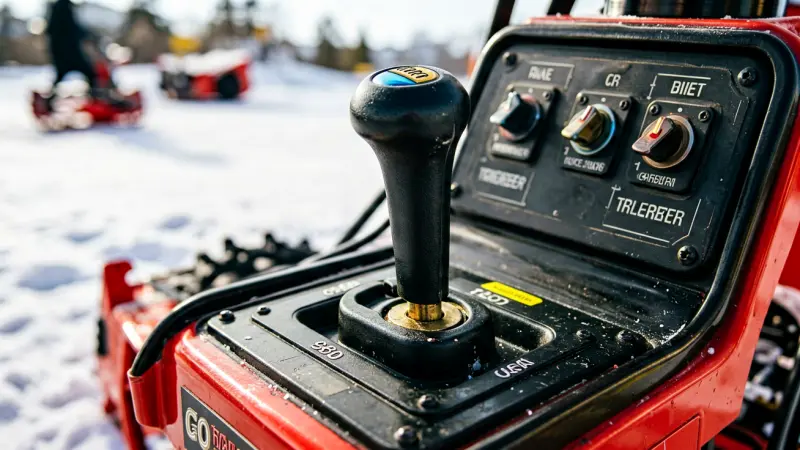
If you cannot find a choke lever, your Craftsman may have an automatic choke or a primer-only system. Check the manual for your exact model. Do not assume every snowblower has a manual choke.
The Three Main Craftsman Snowblower Choke Positions
Most manual choke systems use three functional positions, even if only two are marked. Understanding what each position does helps you avoid flooding and hard starts.
Full choke closes the carburetor plate. This is the cold-start position. Use it only when the engine is cold and only until the engine begins to fire.
Half choke partially opens the plate. It keeps the mixture rich enough to run while the engine warms. Many Craftsman control panels do not have a labeled half-choke detent, but you can often hold the lever between FULL and RUN.
Run or open choke lets full air flow. This is the normal operating position. Leaving the choke here when cold usually causes a no-start or lean pop.
| Choke Position | When to Use It | What You May Hear or See | Next Action |
|---|---|---|---|
| Full Choke | Cold engine, first start of the day | Engine may pop, sputter, or start rough | Move to half choke as soon as it fires |
| Half Choke | Engine is running but not yet warm | Rough idle, slight surging, light smoke | Move to run after 20 to 60 seconds |
| Run / Open | Normal operation and warm restart | Smooth, steady engine sound | Leave it here while clearing snow |
| Flooded Position | Engine is flooded after too many choked pulls | Strong gas smell, wet plug, no start | Open choke fully, hold throttle, pull several times |
The table is a starting point, not a rigid rule. Cold temperature, fuel quality, and engine condition change how long each position should be used.
Step-by-Step Cold-Start Procedure for a Craftsman Snowblower
Follow a repeatable sequence so you are not guessing. The goal is to give the engine enough fuel to start, then quickly lean the mixture as it warms.
Step 1: Prepare the machine. Check oil, fuel, and the auger housing. Make sure the auger and impeller are clear. Set the throttle to fast or run if your model has a separate throttle.
Step 2: Set the choke to full. Move the lever to the FULL CHOKE position. If the lever is stiff, do not force it; cold grease or a binding cable may be the issue.
Step 3: Prime correctly if equipped. Press the primer bulb three times when the engine is cold. Use one press when the engine is warm. Overpriming is a common cause of flooding.
Step 4: Pull the starter or use electric start. Pull firmly or press the electric start button. Do not yank repeatedly without pause. Give the engine a moment between attempts.
Step 5: Move to half choke when it fires. As soon as the engine sputters or starts, move the choke to half. If it dies, return to full for one more pull, then try half again.
Step 6: Move to run. After 20 to 60 seconds, push the choke to RUN. The engine should smooth out. If it only runs on half choke, the carburetor may be dirty or the fuel mixture may be too lean.
Step 7: Stop after three failed pulls. If the engine does not fire after three choked pulls, stop. More pulling can flood the engine. Switch to the flooded-start procedure before trying again.
Common Mistakes With the Craftsman Snowblower Choke Position
The most common mistake is leaving the choke on full. The engine may start, but it will run rough, blow black smoke, and eventually foul the spark plug.
Another mistake is using full choke on a warm engine. A warm engine already vaporizes fuel well. Adding more fuel through the choke often floods it and makes restarting harder.
Some owners also forget the throttle position. On many Craftsman snowblowers, the throttle should be at fast or run during startup, not idle. Idle settings can make a cold engine impossible to keep running.
Old fuel is another hidden cause. Ethanol-blended gas can absorb moisture and leave gum in the carburetor. Even a perfect choke position cannot overcome a clogged pilot jet.
A Temperature-Based Choke Strategy That Works
Choke position is not just about full, half, or off. Temperature changes how long each stage should last. A strategy based on ambient temperature can reduce flooding and hard starts.
Above 32°F: Use full choke for one or two pulls. Move to half as soon as the engine pops, then to run within 30 seconds. Warm-weather starts need very little choke.
Between 15°F and 32°F: Use full choke for two or three pulls. Keep half choke for 30 to 60 seconds. If the engine surges, move to run sooner.
Below 15°F: Use full choke and expect a longer warm-up. Keep half choke for up to two minutes. If the engine dies when moved to run, return to half briefly, then try run again.
Below 0°F: Cold metal, thick oil, and weak spark make starting difficult. Use full choke, prime according to the manual, and use electric start if available. Move to half as soon as it fires, but allow a longer warm-up.
This temperature-aware approach treats the choke as a timed sequence. That is more reliable than leaving it in one position and hoping for the best.
Troubleshooting When the Correct Choke Position Still Fails
If the choke is set correctly and the engine still will not start, the problem may be mechanical. The choke lever can move while the internal plate does not.
A stretched or binding choke cable is common on older Craftsman snowblowers. Cold weather stiffens grease inside the cable. The lever may feel normal, but the carburetor plate may stay open or closed.
To verify the choke plate, remove the air filter housing and look into the carburetor throat. Move the choke lever. The plate should close fully at full choke and open fully at run. A phone camera can help if the opening is hard to see.
If the plate does not move, inspect the cable and linkage. Adjust or replace the cable if it is stretched. Do not bend linkage parts aggressively; they can break easily in cold weather.
Engine Floods Easily
Flooding happens when too much fuel enters the cylinder. Symptoms include a strong gas smell, a wet spark plug, and a engine that will not fire even with a good spark.
To clear a flood, move the choke to RUN or OFF. Hold the throttle wide open if the model allows it. Pull the starter several times to pull air through the engine. Wait a few minutes, then try again with no choke.
If flooding happens often, check the primer procedure, the choke plate, and the carburetor needle and seat. A leaking float needle can flood the engine even when the choke is off.
Engine Only Runs on Choke
An engine that dies when the choke is opened is running too lean. It is getting enough fuel only because the choke restricts air. Common causes include a clogged carburetor jet, a vacuum leak, or stale fuel.
Start by draining old fuel and adding fresh gasoline. If that does not help, clean the carburetor. Pay special attention to the pilot jet and emulsion tube. These small passages control fuel at low speed.
On some Craftsman models, the carburetor has a fixed mixture and cannot be adjusted. In that case, a thorough cleaning or replacement is usually the fix.
Choke Lever Is Stuck or Stiff
A stuck choke lever is often a cable problem, not a carburetor problem. Moisture can enter the cable sheath and freeze. Dirt and old grease can also make the cable drag.
Warm the machine in a garage if possible. Work the lever gently. Apply a cable-specific lubricant, not a heavy grease. If the cable is kinked or frayed, replace it.
Never force a frozen choke lever. Forcing it can bend the carburetor linkage or break the plastic lever on the control panel.
Craftsman Model Differences to Keep in Mind
Craftsman snowblowers have been built by several manufacturers, including MTD, Husqvarna, and Briggs & Stratton. The choke layout can vary widely between models and production years.
MTD-built two-stage models often have a dashboard choke lever with primer. Briggs & Stratton engines may use a engine-mounted choke or an automatic choke. Some newer models have an auto-choke system with no manual lever.
Single-stage Craftsman snowblowers often use a primer and a simple on/off choke. Two-stage models may have separate choke and throttle controls. Always check the model number and manual before assuming a universal procedure.
If the manual is lost, search for the model number on the machine. It is usually on a sticker on the frame or engine. The exact choke position procedure for that model is the most reliable reference.
Maintenance That Prevents Choke Problems
Most choke problems start long before winter. Fuel left in the carburetor over summer can evaporate and leave varnish. That varnish restricts fuel flow and makes the choke work harder.
Use fresh fuel with a fuel stabilizer. Run the engine for a few minutes after adding stabilizer so it reaches the carburetor. For long storage, drain the fuel system or run the engine until it stops.
Inspect the choke cable and linkage before the first snow. Move the lever through its full range. Listen for smooth operation. Look for rust, kinks, or loose clips.
Replace the spark plug at the start of each season. A weak spark makes cold starts harder and can mimic a choke problem. A clean air filter also helps the engine breathe correctly once the choke opens.
When to Call a Professional
Some choke-related problems require professional tools and experience. If the carburetor needs a rebuild, the cable must be replaced, or the engine has low compression, a small-engine technician is the safer choice.
Signs that professional service is needed include repeated flooding after a carburetor cleaning, a choke plate that will not seal, and an engine that will not start even with starting fluid. These point to deeper fuel or ignition issues.
A professional can also verify compression and ignition timing. Those checks are difficult without specialized equipment and service data.
Frequently Asked Questions About Craftsman Snowblower Choke Position
What position should the choke be in on a Craftsman snowblower?
For a cold start, set the choke to FULL. Once the engine fires, move it to HALF for 20 to 60 seconds. Then move it to RUN for normal operation.
For a warm restart, leave the choke in RUN or OFF. Using full choke on a warm engine often causes flooding.
Should the choke be up or down?
That depends on the lever design. On most Craftsman control panels, moving the lever toward CHOKE or the closed-choke symbol sets full choke. The RUN position is the opposite direction.
Do not guess by direction alone. Look for the label or symbol, then confirm the carburetor plate moves correctly.
How long should you leave the choke on?
Leave full choke only until the engine fires. Leave half choke for 20 to 60 seconds in mild cold. In very cold weather, half choke may be needed for up to two minutes.
If the engine smokes heavily or runs rough, open the choke sooner. Black smoke usually means the mixture is too rich.
Why does my Craftsman snowblower only run on half choke?
An engine that only runs on half choke is usually getting too little fuel when the choke opens. A dirty carburetor jet, stale fuel, or a vacuum leak are common causes.
Clean the carburetor and replace old fuel. Check for loose intake gaskets or cracked hoses that let extra air into the engine.
Does every Craftsman snowblower have a choke lever?
No. Some newer Craftsman models use an automatic choke. Others use a primer-only starting system. If no choke lever is visible, check the manual for your model.
Automatic chokes still depend on correct temperature and fuel delivery. If an auto-choke model is hard to start, the issue may be the thermostatic choke mechanism or the carburetor.
What if the choke is stuck on full?
If the choke is stuck on full, the engine will run rich. You may see black smoke, smell gas, and foul the spark plug. Stop the engine and inspect the cable and linkage.
Do not run the snowblower for long with the choke stuck closed. The excess fuel can dilute the oil and damage the engine.
Final Thoughts on the Craftsman Snowblower Choke Position
The correct Craftsman snowblower choke position is not a single setting. It is a sequence: full for cold start, half for warm-up, and run for normal operation.
Adjust the timing based on temperature and engine behavior. If the machine floods, stop pulling and open the choke. If it only runs on choke, clean the carburetor and check for fuel restrictions.
With a little practice, the choke lever becomes a predictable cold-start tool. That means fewer pulls, less frustration, and more time clearing snow.
Cold weather also affects other home systems. While cold water is fine for many laundry cycles, it has nothing to do with a cold engine; for that separate topic, see running a washing machine with just cold water. For snowblowers, the choke remains the key to a reliable cold start.