Grinding asphalt is a real technique used on driveways, parking areas, and roads, but the phrase covers a few different operations that are easy to confuse. It can mean milling the surface to remove a failed layer, grinding down a raised edge to create a smooth transition, or grinding stumps and roots that have pushed the pavement upward. Each one uses different equipment and has different limits.
The short answer is that yes, asphalt can be ground, but whether it makes sense for your project depends on what you are trying to achieve. This guide explains what grinding does, when it is the right approach, when it is a waste of money, and what the safety and disposal considerations look like for a homeowner.
What Grinding Asphalt Actually Means
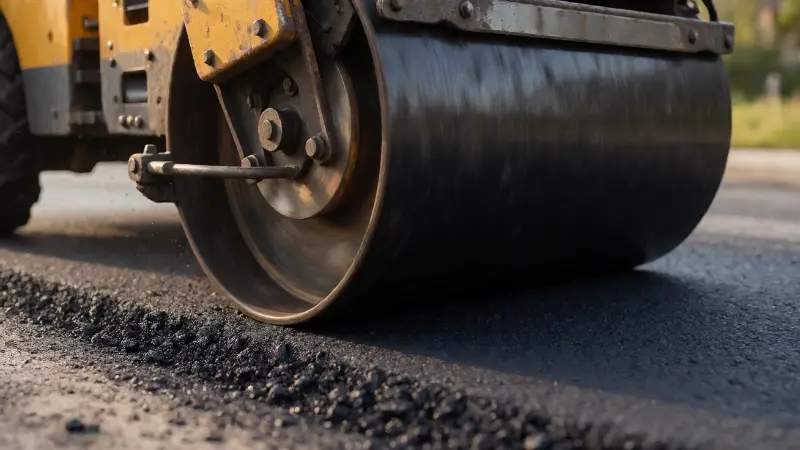
In paving terms, the professional version of grinding is called cold planing or milling. A machine with a rotating drum fitted with carbide teeth shaves off a controlled depth of asphalt, leaving a textured surface behind. The removed material is called millings or reclaimed asphalt pavement.
Milling is used to remove a worn or cracked surface layer before a new overlay is placed. It restores the profile of the pavement, removes ruts and high spots, and creates a bondable surface for the new asphalt. It also produces material that can be reused.
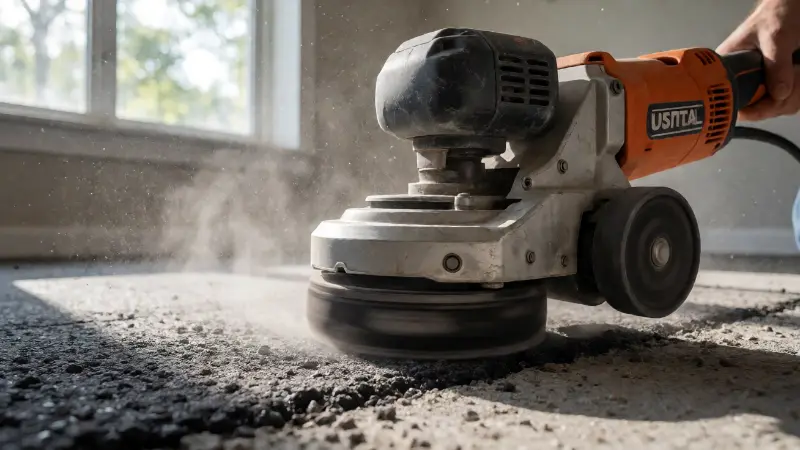
A different operation is edge grinding. This uses a smaller machine or a hand-held grinder to reduce a raised lip where a driveway meets a garage slab, a sidewalk, or a street. It removes a small amount of material to eliminate a trip hazard or a drainage dam.
Stump and root grinding is a third category. When tree roots lift a driveway or walkway, grinding the root or the stump removes the obstruction so the pavement can be repaired or replaced without the root pushing it up again.
The Equipment Involved
The equipment determines whether a job is realistic for a homeowner or requires a contractor. The categories below cover the main options.
Walk-Behind Cold Planers
These are the smallest true milling machines. They are available at some equipment rental yards and can cut a controlled depth over a narrow width. They are heavy, loud, and produce a lot of dust unless water is used for suppression. They suit small areas such as a failed patch, a utility trench, or a transition at a garage apron.
Skid-Steer and Compact Track Loader Attachments
Cold planer attachments for skid steers are common on larger residential projects. They cut a wider path and remove material faster than a walk-behind unit. These are contractor machines, and renting one usually requires a trailer, a tow vehicle, and experience operating the host machine.
Hand-Held Grinders and Cut-Off Saws
A diamond cup wheel on an angle grinder can dress down a small raised edge or smooth a rough patch. A cut-off saw with a diamond blade is used to cut a clean line rather than to grind a surface. Both produce silica dust and require respiratory protection and water or dust extraction.
Stump Grinders
Stump grinders are designed for wood, not pavement, but they are sometimes used to grind roots that have lifted asphalt. The root is reduced below the surface, the debris is removed, and the void is filled before the pavement is patched or replaced.
What Not to Use
A standard angle grinder with a masonry blade will not remove asphalt efficiently and will clog quickly. A lawn mower, a tiller, or a pressure washer will not grind asphalt. Trying to improvise with the wrong tool wastes time and creates a genuine injury risk from kickback and flying debris.
When Grinding Is the Right Approach
Grinding has specific advantages that other methods cannot match. Recognising the situations where it applies saves money and produces a better result.
- Removing a failed surface layer: Milling takes off the cracked, oxidized top layer while leaving the sound base beneath intact.
- Correcting ruts and high spots: Planing restores the profile so water drains correctly and the new surface sits flat.
- Creating a bondable surface: The textured finish left by milling helps a new overlay adhere better than a slick, aged surface.
- Lowering a raised edge: Grinding a lip at a garage apron or sidewalk removes a trip hazard without replacing the whole slab.
- Transitioning between materials: Where asphalt meets concrete or another surface, grinding can create a smoother joint.
- Removing roots without full demolition: Grinding a lifting root and repairing the affected area is cheaper than replacing an entire driveway.
- Utility trenching repairs: After a trench is backfilled, milling the edges allows a clean patch that ties into the existing surface.
In each case, the underlying base must still be sound. Grinding removes surface material, but it does not fix a failing subbase, poor drainage, or a soft spot caused by water. If the base is the problem, grinding only delays the failure.
When Grinding Is the Wrong Approach
Grinding is not a universal fix, and using it in the wrong situation wastes money and creates new problems.
If the asphalt is deeply deteriorated across the full thickness, milling off the surface leaves nothing sound to build on. In that case, full removal and replacement is the more reliable answer.
If the problem is water, grinding does not solve it. Water that pools because the driveway slopes toward the house, or because the base has settled, will continue to cause damage regardless of how smooth the surface is. Grading and drainage corrections come first.
If the damage is a large alligator-cracked area, grinding may remove the visible cracking but the failure usually extends into the base. Patching or full-depth repair is more appropriate.
If the area is small and shallow, a simple patch may be faster and cheaper than renting a planer. Grinding makes sense when you need a controlled depth over a meaningful area, not for a pothole the size of a dinner plate.
Comparing Asphalt Removal and Repair Methods
The table below compares the main methods for dealing with damaged asphalt, along with the situations each one suits. Use it as a decision aid rather than a price list, since equipment rental and contractor rates vary by region.
| Method | What It Removes | Equipment Needed | DIY Feasibility | Best Suited To | Main Limitation |
|---|---|---|---|---|---|
| Cold planing (milling) | Controlled depth of surface asphalt | Walk-behind or skid-steer planer | Low to moderate for small areas | Failed surface layer, ruts, overlay prep | Does not fix base or drainage problems |
| Edge grinding | Small amount of material at a lip or transition | Hand grinder with diamond cup wheel | High for small areas | Trip hazards, garage apron lips | Only addresses a limited area |
| Saw cutting and breaking out | Full-depth section of pavement | Cut-off saw, pry bars, breaker | Moderate | Potholes, utility repairs, full-depth patches | Labour intensive; requires a clean base for the patch |
| Infrared patching | Nothing removed; existing asphalt is reheated and reworked | Specialist infrared unit | Not practical for homeowners | Seamless repairs to sound pavement | Equipment cost; limited to compatible asphalt |
| Remove and replace | Full pavement thickness | Excavator or skid steer, compaction equipment | Low | Widespread failure, base problems | Highest cost and disruption |
| Root grinding and patch | Root or stump below the surface | Stump grinder, hand tools, patch material | Low to moderate | Localised lifting from tree roots | Roots may regrow; pavement may lift again |
| Crack filling and sealcoating | Nothing removed; surface is cleaned and sealed | Hand tools, squeegee, sealcoat | High | Maintenance on otherwise sound pavement | Cosmetic; does not repair structural damage |
Can You Do It Yourself?
Some grinding work is genuinely within reach for a homeowner, and some is not. The dividing line is usually the size of the area and the type of machine required.
Edge grinding with a hand-held grinder and a diamond cup wheel is manageable for a confident DIYer. The work is small in scale, the tool is affordable, and the technique is straightforward. Dust control is the main challenge, and water or a vacuum shroud makes a significant difference.
Milling a driveway section with a walk-behind planer is possible but demanding. The machine is heavy, it must be controlled precisely to maintain a consistent depth, and it produces a large volume of material that has to be handled. Rental yards may require proof of experience before releasing one.
Full-scale planing with a skid-steer attachment is contractor territory. The machine is expensive, the learning curve is real, and a mistake can gouge the pavement or damage the base. The cost of fixing a botched job usually exceeds what a professional would have charged.
Stump and root grinding is a middle case. Small roots can sometimes be cut and removed with hand tools, but grinding is faster and cleaner. Stump grinders are available for rent, though they are powerful machines that require care.
Costs and Rental Considerations
The cost of grinding depends on whether you hire a contractor or rent equipment. A paving contractor typically charges by the square foot for milling, with a minimum charge for small jobs because the equipment mobilisation is a fixed cost.
Equipment rental is priced by the day or half-day, plus fuel, blades or teeth, and a damage waiver. A walk-behind planer rental is a fraction of a contractor’s invoice for a small job, but it only makes sense if you have the time, the transport, and the confidence to operate it.
Additional costs to plan for include:
- Disposal or reuse of millings: Material has to go somewhere, and hauling it away carries a cost.
- Replacement teeth or blades: Worn cutting edges cut poorly and can overheat the machine.
- Dust control: Water supply, hoses, and containment add setup time.
- Compaction equipment: If you are patching, you need a plate compactor or roller.
- Patch material: Cold patch, hot mix, or a replacement asphalt layer.
- Protective equipment: Respirators, hearing protection, and eye protection are not optional.
Getting three quotes for a contractor job and comparing them against the true cost of a DIY rental is the sensible way to decide. Many homeowners find that for anything beyond a small area, the professional option is competitive once equipment, disposal, and time are counted.
What to Do With the Millings
Milled asphalt is not waste. It is a useful material that can be reused for a variety of purposes.
Common uses include temporary driveway surfacing, farm lanes, construction entrances, and base material under a new surface. It can also be mixed with a binder or compacted in place to create a firm surface.
Millings are not the same as a finished asphalt surface. They are loose when first placed and rely on compaction, fines, and time to lock together. In wet conditions or on a slope, they can migrate. The behaviour of the material depends on how it is placed and compacted, and understanding why asphalt millings wash away in some installations helps you avoid placing them where they will erode.
If you do not have a use for the material, a local paving contractor may take it. Some yards accept clean millings, and some charge a fee. Do not dump millings on a neighbour’s property or in a storm drain, because that creates a drainage and environmental problem.
Dust, Silica, and Safety
Grinding and cutting asphalt and concrete generates fine dust that contains crystalline silica. Inhaling silica dust can cause serious lung disease, and the risk is highest in enclosed spaces or when the material is dry and the dust is airborne.
Controls include water suppression, dust extraction shrouds on the tool, and respiratory protection rated for fine particulate. A standard dust mask is not adequate for prolonged exposure to silica dust. Use a properly fitted respirator and change the filter as recommended.
Other safety considerations include:
- Hearing protection: Planers and grinders are loud enough to cause hearing damage over time.
- Eye and face protection: Flying chips are common, especially when cutting near edges.
- Kickback: A grinder that binds in the material can jump suddenly. Keep a firm grip and a stable stance.
- Fuel handling: Planers and stump grinders run on petrol or diesel. Refuel only when the engine is off and cool.
- Hot surfaces: Exhaust components and freshly ground material can be hot.
- Traffic and visibility: If you are working near a street or driveway entrance, use cones and high-visibility clothing.
- Underground utilities: Before cutting or grinding near a trench line, confirm the location of gas, water, electrical, and communications lines. Contact the local utility locating service.
Working around outbuildings and garages brings its own considerations. If you are powering equipment from a detached garage, an older circuit may not be up to the load, and electrical mistakes are genuinely dangerous. A guide to what happens when a light is wired wrong explains how small wiring errors create shock and fire risks, which is worth reviewing before plugging a heavy machine into a workshop circuit.
Alarm and detection systems in a garage or shop also deserve attention if the space is being used for dusty work. A panel showing a persistent trouble condition should be resolved before you fill the air with dust. Guidance on troubleshooting an FTC trouble receiver covers a common fault code on home fire alarm panels and how to address it.
Permits, Utilities, and Local Rules
Grinding a private driveway is usually a homeowner’s decision, but there are situations where permission or notification is required.
Work that affects a public sidewalk, a curb, or the apron where a driveway meets the road may fall under municipal control. Some jurisdictions require a permit for curb cuts and driveway approaches, and the work must meet specific standards.
Stormwater rules matter as well. Grinding produces dust and fines that can wash into storm drains. Containing and collecting the material prevents a violation and keeps the drainage system clear.
If you are milling near a utility trench, a locate request protects you from hitting a line. Hitting a gas or electrical line is a serious hazard, and the repair cost is substantial.
Finally, check whether your area has noise restrictions. Planers and grinders are loud, and running one early in the morning or late in the evening may cause complaints.
Alternatives to Grinding
Grinding is one tool among several. Depending on the problem, another approach may be faster, cheaper, or more durable.
For a small pothole or a localised failed patch, cutting out the damaged area and filling it with hot mix or cold patch is often the better route. The repair is full-depth, so it addresses the cause rather than just the surface.
For a surface that is sound but faded or lightly cracked, sealcoating and crack filling are maintenance tasks that protect the pavement without removing material. These are genuinely DIY-friendly and inexpensive.
For a driveway that has settled or slopes incorrectly, mudjacking or foam lifting can raise the slab without replacement. This is a specialist service, but it is less disruptive than a full rebuild.
For widespread cracking and structural failure, full removal and replacement is usually the honest answer. Grinding a failed driveway produces a smoother failed driveway, and the new surface will crack in the same pattern within a few seasons.
FAQ
Can you grind asphalt yourself?
Small edge grinding with a hand-held tool is manageable for a confident homeowner. Milling larger areas requires a walk-behind planer or a skid-steer attachment, which is heavy, loud, and demanding to operate. Many homeowners hire a contractor for anything beyond a small area.
What is the difference between grinding and milling asphalt?
They describe the same core operation. Milling is the professional term for removing a controlled depth of asphalt with a rotating drum. Grinding is a broader term that also covers edge work and root removal. The equipment and the depth of cut differ.
Can you grind asphalt to level a driveway?
Milling can remove high spots and restore the profile of a driveway, which helps with drainage and surface flatness. It will not correct a settled base or a slab that has dropped. Those problems need a different repair, such as lifting or full-depth replacement.
Can you grind tree roots out of a driveway?
Roots that have lifted pavement can be ground below the surface, and the affected area is then patched or replaced. The root may regrow over time, and the pavement may lift again. In some cases, removing the tree or installing a root barrier is the longer-term solution.
How much does asphalt grinding cost?
Contractors typically charge by the square foot for milling, with a minimum charge for small jobs. Equipment rental is priced by the day, plus blades or teeth and disposal. Local rates vary widely, so get several quotes before deciding.
Is grinding asphalt dusty?
Yes. Grinding and cutting generate fine dust that may contain crystalline silica. Water suppression, dust extraction, and a properly fitted respirator are important controls. Working outdoors helps, but it does not eliminate the hazard.
What can you do with the millings?
Millings can be reused as temporary driveway surfacing, farm lanes, construction entrances, or base material. They need proper compaction and placement to perform well. On slopes or in wet areas, they can migrate if not contained.
Do you need a permit to grind a driveway?
Grinding on private property usually does not require a permit. Work that affects a public sidewalk, curb, or driveway approach may fall under municipal rules. Check with your local authority before starting work near the road.
Asphalt can be ground, and in the right situation grinding is a precise, cost-effective way to remove a failed surface layer, correct a raised edge, or eliminate a lifting root. The limits matter just as much as the capability. Grinding does not fix a bad base, poor drainage, or widespread structural failure, and using it in those situations wastes money. Match the method to the problem, control the dust, and confirm what is buried before the blade goes in.