A gas fireplace should respond when the flame height button is pressed or the hi/lo knob is turned. When the flame stays low, jumps to high, or ignores every command, the problem is usually in the control chain rather than the logs or glass.
This guide explains why gas fireplace flame adjustment not working happens and how to troubleshoot it safely. It covers remote settings, batteries, pilot strength, thermopile voltage, gas pressure, valves, and control boards.
Why Flame Adjustment Fails More Often Than Ignition
Many homeowners expect ignition and flame height to fail together. In reality, a fireplace can light perfectly while the modulation function is stuck.
Ignition proves the pilot and main valve can open. Flame adjustment requires a second layer of control: the remote, receiver, thermopile, modulating valve, or control board must all work together.
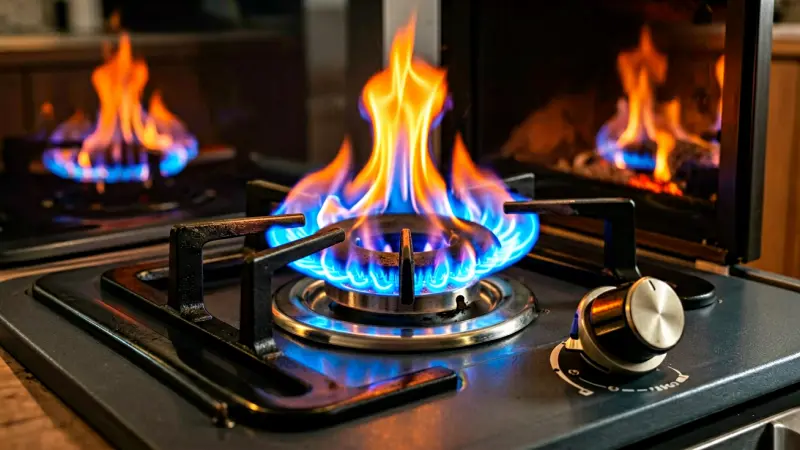
If any part of that chain is weak, the fireplace may default to a fixed flame height. That default is often low for safety.
Safety Checks Before You Troubleshoot
Turn off the fireplace and let it cool completely before removing any access panel. Gas fireplaces can remain hot long after the flames disappear.
If you smell gas, hear a hissing sound, or see soot buildup, leave the area and call a licensed gas technician. Do not try to adjust valves or wiring in that situation.
Keep carbon monoxide alarms working, and never bypass a safety switch to force a higher flame. A stuck flame control is inconvenient, but a bypassed safety device can be dangerous.
Before opening the control compartment, locate the manual gas shutoff and the breaker that powers the fireplace. This simple step protects both the home and the person doing the repair.
Identify Your Fireplace Control Type
Different gas fireplaces adjust flames in different ways. The correct fix depends on whether the unit uses a standing pilot, intermittent pilot, or electronic ignition.
Millivolt Standing Pilot Systems
Millivolt fireplaces use a pilot flame to generate a small voltage. That voltage powers the gas valve and sometimes the flame height modulation.
These systems often have a manual HI/LO knob behind the access panel. If the knob turns but nothing changes, the valve or thermopile may be weak.
Homeowners who have dealt with a Peerless boiler pilot light may recognize the concept. A clean, steady pilot is the foundation for reliable gas control.
Intermittent Pilot Ignition Systems
IPI systems use an electronic spark to light the pilot only when needed. They rely on a control module, flame sensor, and often a remote receiver.
In these units, flame adjustment may be disabled if the module does not detect a stable flame. The burner may still light, but the modulation command can be ignored.
Remote-Controlled and Smart Fireplaces
Modern remotes can control flame height, fan speed, accent lights, and thermostat cycling. The remote may look simple, but it often has hidden modes.
If the remote is in thermostat or smart mode, the fireplace may decide the flame height automatically. Manual flame adjustment may appear broken when it is actually locked out by the mode.
How the Flame Adjustment Signal Travels
The remote sends a radio signal to a receiver near the fireplace. That receiver then tells the control module what flame height is requested.
The module sends voltage to the modulating gas valve, which changes gas flow to the burner. A break anywhere in that path can make flame adjustment stop working.
Some valves use a stepper motor that moves in small steps. Clicking sounds may mean the valve is trying to move, even if the flame does not change right away.
What the HI/LO Knob Actually Controls
A manual HI/LO knob changes pressure inside the gas valve. It is not a dimmer for flame color or log glow.
If the knob feels loose, spins freely, or has no resistance, the valve stem may be damaged. If it turns normally but the flame ignores it, the valve or module may be faulty.
Compare manual knob control with remote control. If neither adjusts the flame, the issue is likely at the valve or gas supply. If only the remote fails, focus on the remote, receiver, or batteries.
Check the Wall Switch and Master Switch
Some fireplaces have a wall switch that can override the remote. If the wall switch is left in the wrong position, remote flame commands may be ignored.
A master switch may also exist inside the fireplace cabinet or a nearby control panel. This switch can cut power to the receiver or control module.
A stuck wall switch can send a continuous on or off signal. Test the switch for continuity, and replace it if it does not change state correctly.
Remote Pairing and Radio Interference
Remote systems often use radio frequency, similar to garage openers and wireless thermostats. Interference can cause missed commands and stuck flame settings.
Re-pair the remote to the receiver and move closer during testing. If the fireplace responds only up close, the receiver antenna or battery strength may be weak.
Some remotes have a channel switch or code setting. Confirm that the remote and receiver match, then clear any old pairing memory.
Can Altitude Affect Flame Height?
High altitude reduces oxygen density, which can affect combustion. Some gas fireplaces require a different orifice or derating kit for higher elevations.
If the fireplace was moved from a low-altitude home to a mountain home, the flame may be lazy and unresponsive. Check the manual or contact the manufacturer before modifying anything.
Never drill out a burner orifice to make the flame larger. That changes the gas-to-air ratio and can create dangerous carbon monoxide levels.
Common Cause 1: Remote or Thermostat Mode Is Locking Flame Height
This is one of the most common reasons for gas fireplace flame adjustment not working. The remote is not broken; it is following a different instruction set.
In thermostat mode, the fireplace cycles on and off to maintain room temperature. It may also limit flame height to prevent overheating.
Switch the remote to manual mode, then press the flame up or down button. If the display shows a lock icon, disable the child lock or key lock.
Some remotes require a long press instead of a quick tap. Hold the flame button for three to five seconds and watch for a change in the burner.
Common Cause 2: Weak Batteries in the Remote, Receiver, or Module
Low batteries can cause strange behavior. The remote may transmit, but the receiver may not receive the full command.
Replace batteries in every part of the system, not just the handheld remote. Many fireplaces also have a battery pack in the receiver or control module.
Use fresh alkaline batteries of the correct size. Clean any corrosion with a dry cloth, and make sure the battery contacts are tight.
If the fireplace lost power recently, the receiver may need to relearn the remote code. Follow the pairing steps in the owner’s manual.
Common Cause 3: Pilot Flame Is Weak, Dirty, or Misaligned
A lazy pilot flame can cause weak thermopile output. The main burner may light, but the valve may not modulate correctly.
Inspect the pilot assembly after the unit is cool. A yellow, floating, or noisy pilot often needs cleaning or adjustment.
Use a soft brush or compressed air to remove dust from the pilot orifice. Do not enlarge the orifice with a pin or drill bit.
If the pilot flame does not cover the thermopile properly, flame adjustment will remain unreliable. A qualified technician can adjust the pilot hood and flame strength.
Common Cause 4: Thermopile or Thermocouple Voltage Is Too Low
The thermopile generates millivolts that tell the gas valve the pilot is safe. If voltage drops, the valve may open but fail to modulate.
A thermocouple usually handles pilot safety only. A thermopile often handles both safety and valve operation, including flame height in millivolt systems.
A multimeter can test thermopile output. Compare the reading to the manufacturer’s specification, because acceptable voltage varies by model.
If the reading is low, replace the thermopile and clean the pilot assembly. A weak thermopile is a common hidden cause of stuck flame height.
Common Cause 5: Gas Supply or Pressure Problems
Gas pressure affects flame size more than any remote setting. If the supply is low, the burner cannot reach a higher flame even when commanded.
For propane fireplaces, check the tank level and outdoor temperature. Cold weather can reduce pressure and make the flame appear stuck on low.
For natural gas, a shared line or faulty regulator can drop pressure when other appliances run. Test another gas appliance while the fireplace is on.
Manifold pressure testing should be done by a licensed gas technician. Do not adjust the gas valve regulator without the correct instruments and training.
Common Cause 6: Blocked Burner, Orifice, or Air Shutter
Dust, lint, and spider webs can block burner ports and the main orifice. A partially blocked burner may produce a weak flame that will not rise.
Turn off the gas and power before cleaning. Use a soft brush and vacuum to remove debris from the burner area.
Do not poke the orifice with wire, because that can change the gas flow. If the orifice is clogged, have it cleaned or replaced by a professional.
The air shutter changes flame color and shape, not total height. Adjust it only according to the manual, and only after gas pressure is confirmed correct.
Common Cause 7: Valve, Control Board, or Wiring Fault
If the remote sends a signal and the pilot is strong, the fault may be in the valve or control board. Loose wiring can also interrupt the modulation signal.
Inspect wire connections at the valve, receiver, and module. Look for corrosion, melted insulation, or loose spade terminals.
A technician can test the valve coils and control board outputs. If the board does not send voltage to the valve, replacement may be needed.
Gas valve replacement is not a DIY job for most homeowners. It requires leak testing and proper combustion checks after installation.
Common Cause 8: Safety Lockout or High-Limit Switch
Gas fireplaces have safety limits that reduce or stop flames when conditions are unsafe. A blocked vent or overheating firebox can trigger a lockout.
Check the vent termination for snow, nests, or debris. Confirm that the fireplace glass and internal baffles are installed correctly.
Some units require a full reset after a lockout. Turn off the fireplace, wait several minutes, and restore power according to the manual.
If the lockout returns every time the flame is raised, stop using the fireplace until it is inspected. The problem may be venting, airflow, or a failing limit switch.
Quick Troubleshooting Table
| Symptom | Likely Cause | First Check | Next Step |
|---|---|---|---|
| Flame stays low in every mode | Remote stuck in thermostat or smart mode | Switch to manual mode | Press and hold flame button |
| Remote buttons do nothing | Dead remote or receiver batteries | Replace all batteries | Re-pair remote to receiver |
| Flame changes only sometimes | Weak pilot or dirty thermopile | Inspect pilot flame | Clean pilot and test thermopile |
| Flame will not go high | Low gas pressure or propane supply | Check tank level and other appliances | Call a gas technician for pressure test |
| Flame goes out when adjusted | Safety lockout or vent blockage | Inspect vent and limit switch | Reset unit and call a professional |
| Knob turns but no change | Faulty valve, module, or wiring | Check wire connections | Test valve and control board |
Step-by-Step Fixes You Can Try Safely
These steps are suitable for basic troubleshooting. Stop at any point if gas smells, wiring looks damaged, or the fireplace behaves unpredictably.
Step 1: Reset the Fireplace and Remote
Turn the fireplace off at the remote and wall switch. Wait at least five minutes for the control module to reset.
Remove the batteries from the remote and receiver. Wait one minute, then reinstall fresh batteries and pair the remote again.
If the fireplace has a wall switch, confirm it is in the correct position. Some remotes are overridden when the wall switch is left on or off.
Step 2: Clean the Pilot and Burner Area
Shut off the gas and power, then let the unit cool. Remove the access panel and glass only if the manual permits it.
Use a soft brush or vacuum to remove dust from the pilot assembly and burner ports. Avoid touching the thermopile with bare fingers.
Reassemble the fireplace carefully and restore gas and power. Test ignition before trying flame height adjustment.
Step 3: Test the Thermopile and Wiring
A multimeter can measure thermopile voltage while the pilot is lit. The reading should match the manufacturer’s range.
Check the wiring from the thermopile to the valve or module. Tighten loose terminals and replace any corroded wire.
If voltage is low, replace the thermopile. If voltage is normal, move on to the remote, valve, or control board.
Step 4: Confirm Gas Pressure and Supply
Check propane tank levels and reset the tank regulator if the manual allows it. For natural gas, note whether other appliances are running.
Low pressure can affect flame height without affecting ignition. A gas technician can test inlet and manifold pressure accurately.
Do not drill or modify the burner orifice to increase flame height. That can create dangerous carbon monoxide levels.
Step 5: Re-Pair the Remote and Set Manual Mode
Follow the pairing sequence in the owner’s manual. It often involves holding a button on the receiver while pressing a remote button.
After pairing, set the remote to manual mode. Then test each flame level from low to high.
If the remote has a thermostat schedule, clear it. A schedule can override manual flame commands without warning.
Step 6: Inspect Venting and Safety Switches
Check the exterior vent for blockages, including snow, leaves, and bird nests. A blocked vent can cause the fireplace to reduce flame or shut down.
Inspect the high-limit switch and spill switch if accessible. These safety devices may need replacement if they fail open.
Never jumper a safety switch to keep the fireplace running. The switch exists to prevent overheating and carbon monoxide risks.
Flame Appearance vs Flame Height: What Adjustment Cannot Fix
Flame height adjustment changes gas volume, not the air-to-fuel ratio. If the flame is dark, sooty, or uneven, the issue may be combustion or log placement.
Adjusting the remote to high will not fix a blocked air shutter or improperly placed logs. It can even make soot worse if airflow is already poor.
This is a key distinction that many troubleshooting guides skip. The control can be working perfectly while the flame still looks wrong.
Check log positioning, ember media, and venting before replacing expensive control parts. Correct combustion is more important than a taller flame.
Manufacturer Quirks That Surprise Homeowners
Some remotes require the flame button to be held for several seconds. A quick press may only turn the unit on or off.
Certain control modules ignore flame height changes for the first few minutes after ignition. This warm-up period allows the flame sensor to stabilize.
Other models have a maximum flame timer. After a set period, the fireplace may automatically reduce to low for safety.
If the remote display shows a padlock, thermostat icon, or schedule symbol, manual adjustment may be locked out. Check the manual for the exact unlock sequence.
When to Call a Qualified Gas Fireplace Technician
Call a professional if gas pressure, valve replacement, or control board testing is needed. These tasks require specialized tools and liability coverage.
Also call for a gas smell, carbon monoxide alarm, repeated shutdowns, soot, or damage to the firebox. Do not rely on internet advice when safety is uncertain.
A technician will test combustion, verify venting, and confirm that flame adjustment works across all settings. That service is worth the cost for a whole-home heating feature.
How to Prevent Future Flame Adjustment Problems
Schedule annual service for the fireplace, especially before winter. A technician can clean the pilot, test the thermopile, and inspect the vent.
Replace remote and receiver batteries at the start of each heating season. Keep a spare set near the fireplace so low batteries never become a surprise.
Keep the fireplace area free of dust, pet hair, and crafts materials. Airborne debris can clog burner ports and pilot assemblies over time.
If the hearth room is being remodeled, use careful removal methods for nearby cabinetry. The guide to how to remove glued drawer fronts can help prevent damage to finished wood.
Household pest control is separate from fireplace service, but termite prevention still matters for the structure around the chimney chase. Homeowners comparing bait systems can review Trelona vs Sentricon before choosing a provider.
Frequently Asked Questions
Why does my gas fireplace flame not get higher?
Common causes include thermostat mode, weak batteries, low gas pressure, a dirty pilot, or a weak thermopile. The remote may also be locked or in a schedule mode.
Start by switching to manual mode and replacing all batteries. If that fails, have the pilot and gas pressure checked.
Why does the flame adjust by itself?
The fireplace is likely in thermostat or smart mode. These modes raise and lower the flame automatically to maintain a set temperature.
A remote schedule or low batteries can also cause random changes. Clear schedules and reset the remote to manual operation.
Can I adjust flame height manually if the remote is lost?
Some fireplaces have a manual HI/LO knob behind the access panel. Others require the remote or a wall control to change flame height.
Check the owner’s manual for a manual override. If none exists, a replacement remote or receiver may be needed.
Is it safe to use the fireplace if flame adjustment is stuck on low?
A low flame is often a default safety setting, not an immediate hazard. Still, the cause should be checked before regular use.
If the fireplace vents properly and carbon monoxide alarms are working, short use may be acceptable. Any soot, odor, or shutdown means it should be serviced first.
Why did flame adjustment stop after a power outage?
A power outage can reset the control board or receiver memory. The remote may need to be re-paired, and the fireplace may need a full reset.
Replace batteries and follow the pairing instructions. If the issue continues, the control module may have been damaged.
Final Thoughts
Gas fireplace flame adjustment not working is usually a control, pilot, or pressure issue. Start with the simplest checks: manual mode, fresh batteries, and a proper reset.
If those steps do not work, move to pilot cleaning, thermopile testing, and gas pressure inspection. Know when to stop and call a licensed technician.
A safe, responsive fireplace adds comfort and atmosphere to a home. With the right troubleshooting order, most flame adjustment problems can be solved without guesswork.