A toilet tank that sweats in winter can leave a ring of water on the floor, stain flooring, and make the bathroom feel damp. The water usually comes from condensation on the outside of the tank rather than from a crack inside it. Cold water in the tank meets warmer, more humid room air, and moisture forms on the porcelain surface.
Winter tends to make the problem more noticeable because incoming water is colder and homes stay closed up. The fix is not always a new toilet. It often involves reducing humidity, insulating the tank, correcting a running toilet, or installing a tempering valve. The key is to identify whether you are dealing with condensation, a leak, or both.
What Causes Toilet Tank Sweating in Winter?
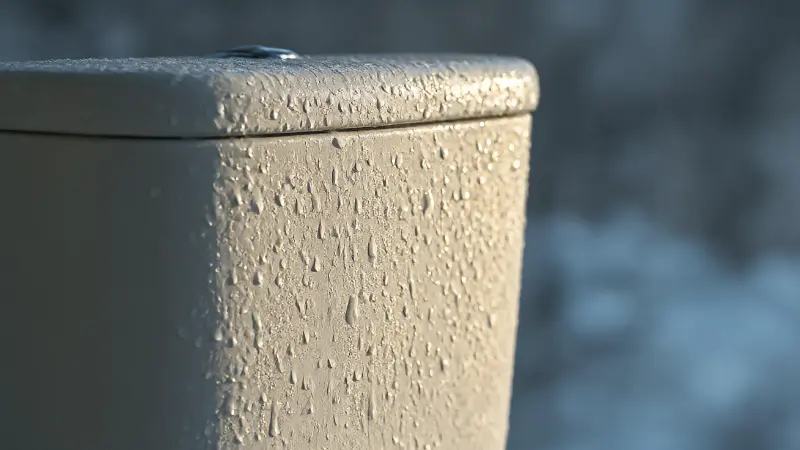
Condensation happens when a surface is colder than the dew point of the surrounding air. The toilet tank holds cold water, so its outer surface can drop below that dew point. Moisture in the air then condenses on the tank, runs down the porcelain, and collects on the floor. This is the same process that makes a cold glass sweat on a humid day.
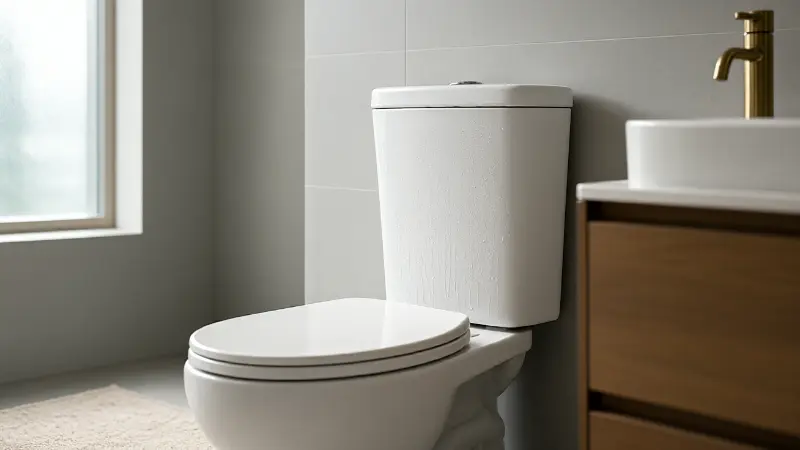
In winter, the water entering the tank can be colder than it is in summer because the ground and exterior lines are cold. At the same time, bathrooms and basements can stay humid from showers, laundry, cooking, and damp foundations. A closed-up house traps that moisture, so the air around the toilet may hold more water vapor than it did during warmer months.
Several conditions make tank sweating more likely. A toilet that runs or refills frequently keeps replacing water with cold supply water. A bathroom with poor exhaust ventilation stays humid after showers. A basement bathroom with a damp floor or unsealed crawlspace can have elevated humidity. Even a small drip from the supply line can add moisture near the tank.
It also helps to know what tank sweating is not. It is not a sign that the porcelain is porous or that the tank is failing in most cases. Porcelain is glazed and fairly water-resistant. If water appears only on the outside and the tank does not refill on its own, condensation is the leading suspect.
Is It Condensation or a Leak?
The first diagnostic step is to watch the toilet when no one is using it. If water beads on the outside of the tank and drips after a flush, condensation is likely. If the tank refills by itself without a flush, a flapper, fill valve, or overflow issue may be allowing water to escape and cold water to keep entering.
A running toilet can make sweating worse because the tank stays filled with fresh cold water. It also wastes water and can raise the humidity slightly. Lift the tank lid and look at the water level. If water is flowing over the overflow tube or the flapper is not sealing, repair those parts before assuming the sweating is only a humidity problem.
Look for water on the tank lid, the bowl exterior, and the floor. Condensation often appears evenly across the tank and may be heavier near the bottom. A leak from a fitting or a crack may be more localized. A cracked tank is uncommon but serious, and it can release water continuously. If you see a steady trickle from the tank itself, shut off the supply valve and call a plumber.
Also check the supply line and shutoff valve. A slight weep at the connection can run down the outside of the tank and look like sweating. Dry the area thoroughly, wait, and watch for the first point where moisture appears. That simple step separates a plumbing leak from condensation.
Why Winter Makes the Problem Worse
Cold weather affects both sides of the condensation equation. The water in the supply line is colder, so the tank surface stays colder. Meanwhile, the indoor air may be more humid because windows are closed and exhaust fans may run less. When warm, moist air touches the cold tank, condensation forms quickly.
Basement bathrooms are especially vulnerable. Basements can hold moisture from the foundation, laundry equipment, water heaters, and stored items. If the basement is heated only intermittently, the air can be cool and damp. A toilet in that space may sweat even when the rest of the house feels dry.
Cold-water plumbing is not the only winter moisture source. If you notice sweating on other cold surfaces, the cause may be broader than the toilet. For a related diagnosis, see cold water pipe sweating causes, which covers the same condensation process on pipes and fittings.
Fix 1: Reduce Humidity Around the Toilet
Lowering the humidity in the bathroom or basement is often the simplest way to reduce tank sweating. Run the bathroom exhaust fan during and after showers, and keep it running long enough to remove moist air. Make sure the fan actually moves air and is vented to the outside, not into an attic or crawlspace.
In a basement bathroom, a dehumidifier can help during humid periods. Set it to a reasonable level and empty the reservoir regularly, or connect a drain line if the unit supports it. Fix any foundation dampness, gutter problems, or plumbing drips that add moisture to the space. A dry basement is less likely to produce condensation on cold surfaces.
Check the dryer vent and any other exhaust appliances near the bathroom. A dryer that vents indoors or a loose duct can raise indoor humidity. If you also use a wood stove or fireplace and notice draft or smoke issues, review wood stove not drafting for related ventilation concerns. Combustion appliances need proper venting and should not be used to dry out a damp basement.
Fix 2: Insulate the Toilet Tank
An anti-sweat insulation kit wraps the outside of the tank with a foam or closed-cell layer. The insulation separates the cold porcelain from the moist room air, which reduces condensation on the surface. Kits are available for many standard tank shapes, but fit matters. A loose or incomplete wrap can leave cold spots that still sweat.
Before installing insulation, clean and dry the tank exterior. Follow the manufacturer’s instructions and avoid covering the tank vent, the flush mechanism, or any openings. Do not stuff insulation into the tank or around the fill valve. Insulation works on the outside surface; it is not a repair for a leak or a running toilet.
Some homeowners use a foam blanket or reflective wrap as a DIY alternative. That can work, but it may look uneven and can trap moisture if the edges are not sealed. Keep the area behind and under the tank dry, and check periodically for hidden drips. If the insulation becomes wet, remove it and find the source before reinstalling.
Insulation is most effective when the humidity is already under control. If the bathroom is very damp, insulation may reduce sweating but not eliminate it. Combine insulation with ventilation and leak repairs rather than relying on the wrap alone.
Fix 3: Consider an Anti-Sweat Valve or Mixing Valve
An anti-sweat valve, sometimes called a mixing valve, blends a small amount of warm water with the cold supply to the toilet tank. That raises the tank water temperature slightly and reduces the temperature difference between the tank and the room. Less temperature difference means less condensation on the porcelain.
These valves are not a universal DIY install. They involve the water supply, can affect warranty terms, and may be regulated by local plumbing codes. A mixing valve that is set too warm can cause the tank to sweat less but may increase the risk of scalding at other fixtures if it is installed incorrectly. Have a licensed plumber evaluate whether the valve suits your toilet and plumbing layout.
Do not connect a toilet to hot water directly. That can damage the tank, warp internal parts, and create a scald hazard. The goal is a slight tempering of the cold water, not a hot-water flush. If you are unsure how the valve works or where it should be installed, stop and call a professional.
In some cases, a plumber may recommend adjusting the supply temperature at the water heater or installing a tempering device at the fixture. Those changes should be made with the whole plumbing system in mind. A toilet tank is not an isolated appliance, and a change at one fixture can affect pressure and temperature elsewhere.
Fix 4: Repair Running Toilets and Faulty Fill Valves
A toilet that runs intermittently keeps the tank filled with cold water and can make sweating worse. The most common culprit is a flapper that does not seal. Mineral buildup, a warped flapper, or a dirty valve seat can let water leak into the bowl. Replacing the flapper is a relatively simple repair for many toilets.
The fill valve can also fail. If the valve does not shut off at the correct level, water may run continuously or spill into the overflow tube. Adjust or replace the valve according to the manufacturer’s instructions. Turn off the supply valve before working on the tank, and keep a towel and small bucket nearby.
Check the supply line and shutoff valve while you are there. A corroded fitting or a loose nut can weep and add moisture around the base of the tank. Tighten gently, and replace any part that looks cracked or badly corroded. If the shutoff valve does not close fully, the repair becomes more involved and may be a job for a plumber.
If your home has a septic system and winter conditions are already a concern, a running toilet adds unnecessary water to the system. Review septic tank freezing in winter for related cold-weather issues, and fix toilet leaks promptly to avoid extra load.
Fix 5: Manage Overall Winter Moisture
Toilet tank sweating is often a symptom of a broader moisture pattern. Keep basement windows closed during humid weather but ventilate when outdoor air is drier. Use exhaust fans in bathrooms and kitchens, and make sure the dryer vents outside. Fix roof leaks, gutter overflow, and grading problems that push water toward the foundation.
A crawlspace that is open to damp soil can send moisture upward into the basement. A vapor barrier and proper drainage can reduce that source. If the basement smells musty or feels clammy, a dehumidifier may be part of the solution. Aim for a balanced approach rather than sealing the house tightly without any ventilation.
In winter, heating systems dry the air in many homes, but basements can remain damp because they are cooler and less ventilated. That combination can produce condensation on cold surfaces even when the upstairs feels dry. A hygrometer is an inexpensive way to monitor relative humidity and confirm whether moisture control is needed.
If you use a humidifier in the bathroom or elsewhere, check that it is not adding more moisture than needed. High indoor humidity can worsen condensation on toilet tanks and cold pipes. Keep the humidity in a reasonable range and address the source of excess moisture rather than masking the symptom.
Quick Comparison of Causes and Fixes
| Sign or Cause | What You May See | Suggested Fix | Urgency |
|---|---|---|---|
| Cold tank and humid air | Even condensation on the tank exterior, drips after flushing | Ventilate, dehumidify, or add an insulation kit | Low to moderate; start with humidity control |
| Running toilet or faulty flapper | Tank refills without a flush, water sound between uses | Replace flapper or fill valve and check the overflow | Moderate; repair promptly to save water |
| Very cold supply water | Sweating is worst in winter and on cold mornings | Ask a plumber about an anti-sweat or mixing valve | Moderate; professional install is advisable |
| High basement humidity | Damp air, musty smell, condensation on pipes or walls | Dehumidifier, exhaust ventilation, fix water entry | Moderate; combine with other fixes |
| Loose supply fitting or crack | Localized wet spot, steady drip, water on the floor | Shut off water and repair or replace the part | High; call a plumber if the tank is cracked |
When to Call a Plumber
Call a plumber if the tank cracks, if water runs continuously, if the supply valve will not shut off, or if you are considering a mixing valve installation. A cracked tank can fail suddenly and cause water damage. A running toilet may be a simple flapper, but repeated repairs that do not hold suggest a deeper issue.
Also call for help if the sweating is accompanied by a musty smell, visible mold, or persistent dampness in the basement. Those signs point to moisture problems that may extend beyond the toilet. A plumber can address the fixture, while a moisture or foundation specialist may be needed for the building envelope.
Do not drill into the tank or modify the porcelain to install insulation or a valve. Do not block the tank vent or seal the lid in a way that traps moisture. Keep electrical devices away from wet floors, and use caution when working around the supply line. If you are not comfortable with the repair, the safer choice is professional help.
FAQ
Why does my toilet tank sweat only in winter?
Winter brings colder supply water and closed-up, sometimes humid indoor air. That combination lowers the tank surface temperature and raises the chance that moisture in the air condenses on the porcelain. The same toilet may not sweat in summer because the water and air temperatures are closer together.
Can I wrap my toilet tank in a blanket or foam?
An insulation kit made for toilet tanks is a better choice than a household blanket. It is designed to fit around the tank without blocking the vent, fill valve, or flush mechanism. A loose blanket can stay damp and may hide a leak, so use a product intended for the purpose and check it regularly.
Does a running toilet make tank sweating worse?
It can. A running toilet keeps replacing water in the tank with fresh cold supply water, which can keep the porcelain colder. Fixing a flapper or fill valve often reduces both water waste and condensation. It is one of the first checks to make before adding insulation or a mixing valve.
Is an anti-sweat valve safe to install myself?
It depends on your plumbing skills and local codes. The valve connects to the water supply and can affect temperature and pressure, so a licensed plumber is often the safer choice. An incorrectly set valve can create a scald risk or damage the toilet. Ask a professional if you are unsure.
Conclusion
Toilet tank sweating in winter is usually condensation, not a cracked tank. Cold supply water and humid indoor air combine to form moisture on the porcelain, and the problem is often worst in basements and bathrooms with limited ventilation. Start by checking for a running toilet and reducing humidity around the fixture.
If the sweating continues, an insulation kit or a professionally installed anti-sweat valve may help. Repair leaks and faulty fill valves before adding accessories, and keep the area dry so you can tell whether the fix is working. Persistent moisture or a cracked tank calls for a plumber.
The practical approach is to treat the toilet as one part of the home’s winter moisture picture. Control humidity, fix plumbing leaks, and insulate cold surfaces where appropriate. That combination usually reduces the sweating and protects the floor and subfloor from repeated moisture exposure.