A sewer smell in the basement during winter is more than an unpleasant nuisance. It can point to a dried-out drain trap, a venting problem, a failing seal, or a backup that gets worse when the ground freezes and household routines change. Cold weather often exposes weak points that stayed hidden during warmer months.
The useful approach is to treat the smell as a diagnostic clue. Start with the simplest and most common winter-related causes, rule them out one by one, and then decide whether the issue is a quick DIY fix or a job for a licensed plumber or sewer contractor.
Why Winter Makes Basement Sewer Odors More Noticeable
Homes tend to be closed up tightly in winter. Windows stay shut, exhaust fans run less, and the heating system keeps indoor air moving. That combination can concentrate odors that would otherwise drift away. A faint drain smell in summer can become a strong basement odor in January.
Winter also changes how plumbing traps and vents behave. Heated indoor air is drier, and floor drains in unused basement rooms may lose their water seal faster. Frozen ground and snow cover can affect exterior drainage, sump pits, and vent termination areas. None of these changes creates sewer gas on their own, but they can reveal a path for it to enter the basement.
It helps to separate a true sewer smell from other winter odors. Sewer gas often has a rotten-egg or sulfur-like note. Musty, earthy smells suggest mold or damp materials. Oily or exhaust-like smells can come from combustion appliances or heaters. If the odor resembles a heater problem, review kerosene heater smell causes before assuming the drain is at fault.
Safety First: When a Basement Sewer Smell Needs Immediate Action
Sewer gas can contain hydrogen sulfide and methane, and it can displace oxygen in a poorly ventilated space. A faint, occasional odor is a reason to investigate. A strong, persistent smell, dizziness, headache, nausea, or a smell near a gas appliance is a reason to leave the area and call the appropriate professional.
Open a window or door for ventilation if it is safe to do so, and keep flames, sparks, and smoking materials away from the area. Do not try to mask the odor with air fresheners before you find the source. Masking agents can hide the clue you need and may make a serious problem harder to recognize.
If you smell gas near a furnace, water heater, boiler, or other fuel-burning appliance, treat it as a potential gas leak. Leave the building and contact your gas utility or emergency service. Sewer odors and fuel-gas odors can be confused, and the cautious response is the right one.
Check the Floor Drain Traps First
The most common winter sewer smell in a basement comes from a floor drain, laundry sink, or other fixture with a dry trap. A plumbing trap holds a small amount of water that blocks sewer gas from rising into the room. In a heated basement, that water can evaporate, especially in a drain that sees no use for weeks.
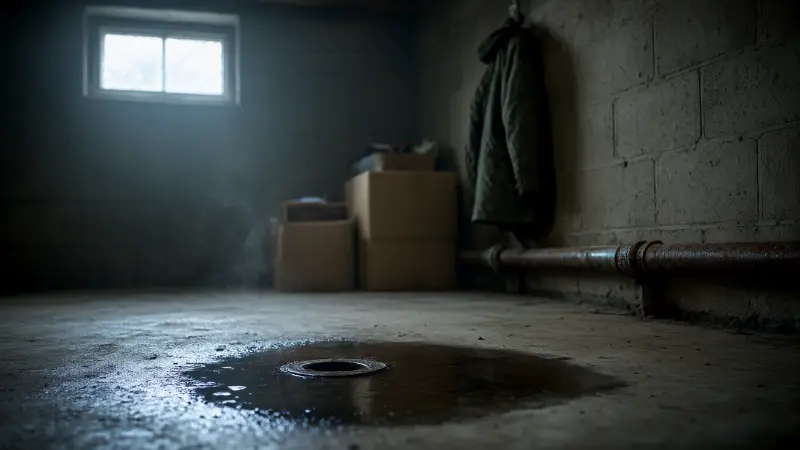
Pour water into each floor drain and unused fixture trap, then wait and smell again. If the odor fades, the trap was likely dry. Refill it with water and consider adding a small amount of mineral oil or a trap primer if the problem returns. Avoid pouring drain chemicals into a dry trap as a first step; the issue may be a missing water seal rather than a clog.
Look for drains hidden under laundry tubs, water softeners, humidifiers, condensate lines, and old basement sinks. A trap that is cracked, loose, or poorly connected can leak gas even when it holds water. Check for slow drainage and gurgling as well, since those can indicate a partial blockage or a venting problem.
Toilets are another common source. A toilet that is rarely used can lose its bowl water seal through evaporation. A failing wax ring or loose closet bolt can also let sewer gas escape at the base. If the smell is strongest near a toilet, flush it, check the water level, and look for rocking or moisture around the base.
Inspect the Sump Pit and Ejector Pump Area
A sump pit can develop a sewer-like odor when it collects stagnant water, debris, or backup from a floor drain. In winter, a sump pump that cycles less often or sits idle can leave water standing longer. A dry or poorly sealed sump pit cover can then let odors rise into the basement.
If your basement has a sewage ejector pump, check for a loose lid, a failing gasket, or a venting issue. These systems handle wastewater and need a properly sealed basin and vent. A smell that is strongest near the ejector pit deserves prompt attention from a plumber who services those systems.
Winter thaw and freeze cycles can also affect sump performance. If the pump has stopped running or is cycling oddly, review sump pump not running during winter thaw before assuming the odor is only a dry trap. Standing water and a failed pump can create both moisture and odor problems.
Look at Vent Stacks, Cold Air, and Snow Blockage
Every plumbing system needs air to balance pressure and allow traps to work properly. If a vent stack is blocked by snow, ice, bird nests, or debris, traps can gurgle and sewer gas can find another path. A vent problem can also cause smells to appear only when fixtures are used or when the furnace and exhaust fans run.
On the roof, check for visible snow or ice buildup around the vent termination if you can do so safely from the ground. Do not climb onto a snowy or icy roof. A qualified roofer or plumber can inspect the vent if you suspect a blockage. Interior signs include slow drains, gurgling, and odors that worsen after running water.
Cold air entering through an open vent can cool a trap or fixture, but the bigger issue is usually pressure imbalance. When a powerful exhaust fan, dryer, or furnace pulls air out of the house, replacement air may be drawn through the plumbing system. That can pull sewer gas past a weak trap seal.
Consider Negative Pressure and Combustion Air
Modern homes are built tighter than older houses, and winter weather keeps windows and doors closed. Bathroom fans, kitchen hoods, dryers, and heating equipment can create negative pressure in the basement. If the plumbing traps are marginal, that pressure difference can draw odors into the living space.
Check whether the smell appears when a specific fan or appliance runs. Try running the bathroom fan briefly with a nearby window slightly open, and see whether the odor changes. Do not block combustion air openings or seal around heating equipment as a DIY odor fix. Fuel-burning appliances need proper air and venting.
Heating controls can also affect how often air moves through the basement. If the home is unusually cold or the heating system is not responding, a smart thermostat or control issue may be part of the puzzle. For heating-control problems during cold weather, see smart thermostat offline during cold snap and address the HVAC issue separately from the sewer odor.
Rule Out a Cracked Sewer Line or Failed Seal
If the simple checks do not solve the problem, the odor may come from a cracked pipe, a failed joint, a deteriorated cast-iron fitting, or a loose toilet flange. These problems can be intermittent because they depend on water use, temperature, and pressure. A smell that returns after every trap refill is a warning sign.
Look for damp spots, stained concrete, soft flooring, or a depression near the main sewer line. In a finished basement, smell near a wall or under carpet can point to a hidden leak. Avoid opening a sewer line or breaking concrete without a clear plan and proper permits if required by your local authority.
A plumber can perform a smoke test or camera inspection to locate an open connection or break. Those tests are more reliable than guessing, especially when the odor has persisted through repeated trap refills. If the smell is accompanied by a backup, call a sewer professional rather than continuing to pour water and chemicals into the system.
Compare Likely Causes and Urgency
| Symptom or Location | Likely Cause | What to Check | Urgency |
|---|---|---|---|
| Odor near an unused floor drain | Evaporated trap seal | Pour water into the trap and smell again | Low; fix with water and a trap primer plan |
| Smell near a rarely used toilet | Dry bowl seal or failing wax ring | Flush, check water level, look for rocking | Moderate; repair soon if the seal is suspect |
| Odor strongest at sump pit or ejector basin | Stagnant water or loose cover | Check pump operation, lid gasket, and basin seal | Moderate; address promptly if wastewater is present |
| Gurgling drains with odor | Vent blockage or pressure imbalance | Note which fixtures cause gurgling and when | Moderate; have the vent inspected if it persists |
| Smell appears when exhaust fans run | Negative pressure pulling gas through weak traps | Test fans one at a time and check trap water levels | Moderate; improve venting and trap maintenance |
| Persistent odor after trap refills | Cracked pipe, failed joint, or hidden leak | Look for damp concrete and call for a smoke or camera test | High; use a qualified plumber or sewer contractor |
Repair Options and Prevention Before the Next Cold Snap
Once you identify the source, match the repair to the cause. A dry trap needs a refill schedule and possibly a trap primer. A loose toilet needs a new wax ring and a secure flange. A sump pit needs a sealed cover and a pump that runs when needed. A vent blockage needs clearing by someone who can work safely.
For minor concrete or floor-drain issues, use materials intended for plumbing and concrete repair, and follow the manufacturer’s instructions. Do not seal a floor drain completely unless you understand the plumbing design. A sealed drain can solve one odor and create a drainage or pressure problem elsewhere.
Prevention is mostly about keeping water in the traps and air moving correctly. Run water in unused basement fixtures every few weeks during heating season. Keep floor drains clean and visible. Check the sump pit before winter and after heavy rain or thaw. Make sure the basement has a source of replacement air when exhaust fans run.
If you are repairing concrete around a drain or steps, remember that water management and sealing details matter. Problems in one area can affect another, just as flashing where siding meets concrete can direct water toward a foundation. Keep exterior water away from the basement and fix gutter or grading issues before they worsen interior odors.
Conclusion
A sewer smell in the basement during winter usually has a practical explanation. Start with dry floor drains, rarely used toilets, sump pits, and venting, because those are the causes a homeowner can check without opening walls or pipes. Refill traps, note when the odor appears, and look for gurgling or damp areas.
If the smell returns after trap refills or appears near a sewage ejector pit, call a qualified plumber or sewer contractor. Persistent odor can indicate a failed seal, a cracked line, or a vent problem that needs proper testing. Treat strong odors and any smell near fuel-burning equipment as a safety issue.
The final recommendation is simple: rule out the low-cost causes first, keep a written record of what you checked, and bring in a professional when the pattern points to the sewer line or vent system. That approach protects your home and gives you a clear next step.