Removing snow from a roof is one of those winter tasks that looks simple from the ground and turns dangerous the moment you climb a ladder. Every year, homeowners are injured falling from roofs and ladders while trying to clear snow, and many more cause expensive damage by using the wrong tool or the wrong technique. The snow itself is heavy, the surfaces are slippery, and the cold makes materials brittle.
The good news is that most roof snow removal can be done safely from the ground, and much of it does not need to be done at all. This guide explains how to assess the risk, the tools that make the job safer, the ground-based techniques that work, the mistakes that cause injuries and roof damage, and the point at which a professional should take over. Safety comes first, and a roof that is left alone is often safer than one that is attacked with a shovel.
Assess the Snow Load and the Risk Before You Start
Not every snowy roof needs to be cleared. A few inches of light, dry snow is not a structural concern for most homes, and it insulates the roof from temperature swings. The risk rises with depth, with wet or icy snow, and with repeated accumulation that has not melted between storms. A roof that has carried several feet of snow for weeks deserves attention; a roof with a fresh six inches usually does not.
Look for warning signs that the load is becoming a problem. Sagging in the roof line, cracks in the ceiling, doors that suddenly stick, and creaking sounds from the framing are reasons to keep people out of the affected area and call a professional. Do not climb onto a roof that is showing structural stress, because your weight adds to the load and the surface may be unstable.
Consider the roof design as well. A steep roof sheds snow more readily than a low-slope roof, and a roof with valleys, dormers, and multiple levels collects snow in places that are hard to reach safely. A low-slope roof may hold snow and water for longer, which increases the load and the chance of a leak. The shape of the roof should influence whether you attempt the work yourself.
Check the weather forecast before you plan anything. A mild day with temperatures near or slightly above freezing is safer than a deep cold snap, because the shingles are more flexible and the snow is more likely to slide rather than stick. Wind is another factor: a windy day makes ladder work and roof raking unpredictable, and falling snow can be blown back onto the roof.
Safety First: Ladders, Roofs, and Falling Snow
The most important safety decision is whether to go up at all. For most single-story homes, a roof rake used from the ground can clear the critical areas without anyone leaving the ground. For taller roofs, steep roofs, or roofs with complicated shapes, the risk of a fall outweighs the benefit of clearing the snow yourself. A fall from a ladder or a roof can cause lifelong injury, and the cost of a professional service is modest compared with that risk.
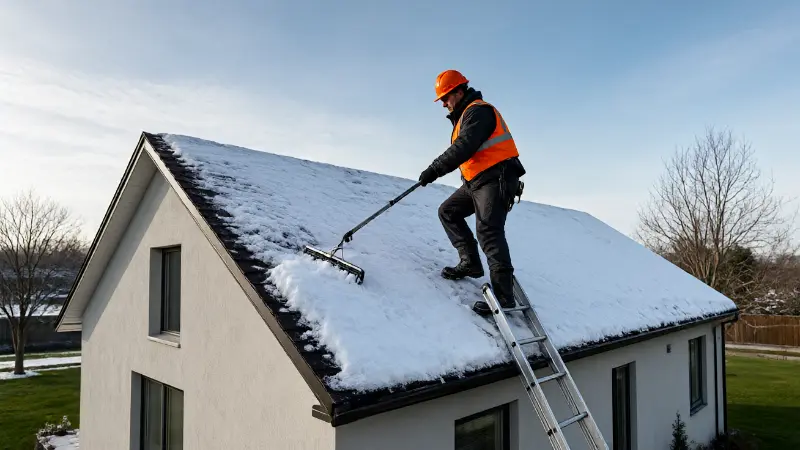
If you do use a ladder, place it on firm, level ground that is free of ice and snow. Use a ladder with a stable base and have a helper foot it while you work. Keep the ladder at a safe angle and do not overreach; move the ladder rather than leaning out to reach a distant section. Never stand on the top rung or on the roof itself to extend your reach.
Keep everyone else clear of the area below. Snow and ice that release from the roof can fall in heavy chunks, and a person standing below is at risk of injury. Keep children and pets indoors, and park vehicles away from the drip line. If the roof has icicles, do not stand under them, because they can break loose without warning.
Watch for electrical hazards. Snow removal near overhead power lines, service drops, or rooftop equipment is a job for a professional. Do not use a metal rake or pole anywhere near electrical lines, and do not climb onto a roof that has electrical equipment or solar panels without specific training and safety equipment.
Tools That Make Roof Snow Removal Safer
The right tool reduces the risk of both falls and roof damage. A roof rake with a long handle and a smooth plastic blade is the standard tool for ground-based removal. The blade should be wide enough to move snow efficiently but light enough to control, and the handle should be long enough to reach the lower roof without climbing. Avoid metal blades, sharp edges, and heavy tools that are hard to control.
A snow rake with a roller or a bumper can help keep the blade off the shingle surface, which reduces granule loss. Some models have a curved blade that pulls snow more effectively without digging in. Whatever the design, the blade should be used flat against the snow rather than pressed into the shingles, and the pull should be smooth rather than jerky.
For the areas you can reach safely from the ground, a snow shovel with a plastic blade can clear the snow that has piled up against the foundation and the lower walls. That is not roof work, but it reduces the moisture that can contribute to ice dams and basement dampness. Keep the shovel away from the roof edge and the gutter, because prying at the edge can damage the drip edge and the fascia.
Other winter equipment deserves attention at the same time. A snow blower that stalls under load can leave the driveway half cleared, and the snow that gets piled near the house adds to the moisture problem. A guide to a Snow Joe snow blower stopped working covers the common fixes for that machine, and keeping it running reliably makes the whole winter easier to manage.
Ground-Based Removal With a Roof Rake
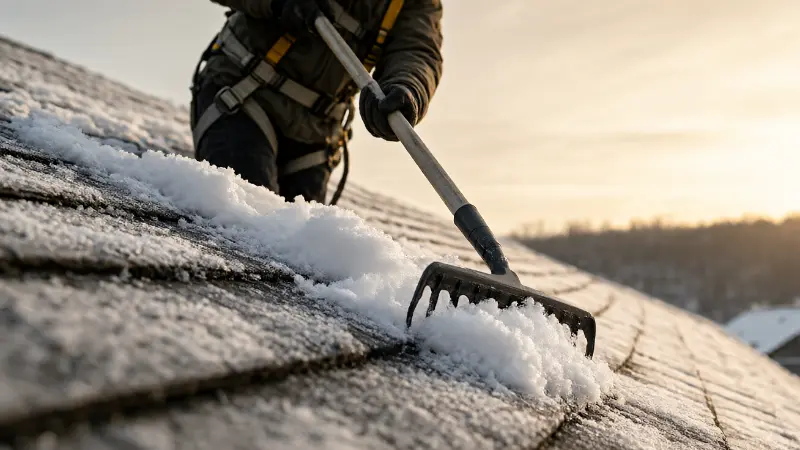
The safest approach is to work from the ground with a roof rake. Start at one end of the lower roof and pull the snow down in a controlled motion. Keep the blade flat and let the snow slide rather than pushing the tool into the shingles. Work in small sections and stop frequently to check the roof surface and the snow that is falling.
Focus on the lower three to four feet above the eave. That is where ice dams form and where the snow load is most likely to stress the gutter and the roof edge. Clearing that zone reduces the meltwater that feeds the ice dam and limits the weight on the gutter. The upper roof can often be left alone unless the snow load is unusually heavy or the roof is showing signs of stress.
Do not pull the rake toward your body in a way that brings the snow onto you. Stand to the side of the fall line and let the snow slide past you. If the snow is wet and heavy, it may come down in large chunks, so keep your footing clear and wear boots with good traction. Stop if the snow starts to slide in an uncontrolled way.
Watch for granules in the snow as you work. Granule loss is a sign that the blade is abrading the shingles, and continuing will make the damage worse. If you see a lot of granules, stop and switch to a gentler technique or a different tool. A roof rake that is used correctly removes snow; a roof rake that is used aggressively removes the roof’s protective surface.
When to Use a Snow Rake vs Leave It Alone
Roof raking is most useful when the snow is deep, when an ice dam is already forming, or when the roof has a history of leaks. It is less useful, and sometimes counterproductive, when the snow is light and dry, when the roof is steep and sheds snow on its own, or when the temperature is so cold that the shingles are brittle. In those conditions, the risk of damage from the rake may be greater than the benefit of removing the snow.
Leave the roof alone if the snow is fresh and fluffy and the forecast shows a thaw in the next few days. Natural melting is gentler on the roof than any tool, and the water will drain away if the gutters and downspouts are clear. Check the gutters and the downspouts from the ground and clear what you can reach safely, because a blocked drainage path is what turns a normal melt into an ice dam.
Do not rake a roof that is covered in ice rather than snow. The rake cannot grip ice, and the blade can slip and damage the shingles. Ice is better handled by addressing the attic heat loss and by calling a professional ice dam removal service that uses steam. Chipping at ice with a tool is a reliable way to damage the roof.
What Not to Do When Removing Roof Snow
Do not climb onto the roof with a shovel. A snowy roof is a serious fall hazard, and a shovel on a sloped surface is difficult to control. Do not use a ladder on icy ground, and do not lean a ladder against a gutter that may be loose or full of ice. Do not work alone, and do not work in high wind or poor visibility.
Do not use a blowtorch, a heat gun, or an open flame to melt snow or ice on the roof. Those methods can ignite the roof materials and are a serious fire risk. Do not pour chemicals on the roof to melt snow; many de-icers damage shingles, stain siding, and harm plants. Do not chip at ice with an axe, a hammer, or a chisel, because those tools can puncture the shingles and the flashing.
Do not block the soffit vents or pile snow against the foundation in an attempt to insulate the house. Snow piled against the wall can contribute to basement moisture and foundation movement. Keep the snow away from the foundation and the crawl space vents, and clear a path for drainage away from the house.
Ice Dams and Leaks After Snow Removal
Removing snow reduces the meltwater that feeds an ice dam, but it does not eliminate the heat loss that causes the dam in the first place. If the roof is already leaking, the snow removal may not stop the water, and the interior damage needs to be addressed. Watch for stains on the ceiling, dampness at the top of the wall, and ice on the siding or the fascia.
If water is entering the house during a melt, the steps for a roof leak during snow melt cover the common causes and the containment measures. The leak may be from an ice dam, from failed flashing, from a damaged shingle, or from condensation in the attic. Snow removal is only one part of the solution, and the underlying cause needs to be identified.
After the snow is cleared and the ice has melted, inspect the roof from the ground with binoculars. Look for lifted shingles, bent flashing, and loose gutters. Check the attic for wet insulation, frost on the nails, and dark stains on the sheathing. Those signs tell you whether the snow removal was enough or whether a repair is needed.
When to Call a Professional
Call a professional snow removal service if the roof is steep, high, or complicated, if the snow load is heavy, or if the roof is showing signs of structural stress. A service that specializes in roof snow removal has the equipment, the training, and the insurance to do the work safely. The cost is almost always less than the cost of a fall injury or a damaged roof.
Call a roofing contractor if you find damaged shingles, lifted flashing, or a leak after the snow is cleared. A small repair now is much less expensive than water damage later. If the roof has a history of ice dams, a contractor can also assess the attic insulation and ventilation and recommend improvements.
Other winter tasks around the house are safer to handle yourself, but they still deserve attention. A guide to removing wax from tablecloth after a holiday dinner covers a low-risk cleanup that can wait for a warm afternoon. Roof snow removal is not that kind of task, and the decision to hire help should be based on safety rather than cost.
Preventing Heavy Snow Load Next Winter
The durable solution to heavy snow load and ice dams is a cold roof. Air seal the attic ceiling plane, insulate to the recommended depth, and keep the soffit-to-ridge ventilation clear. Those steps reduce the heat that melts snow on the roof and refreezes it at the eave. A cold roof sheds snow more naturally and produces fewer ice dams.
Clean the gutters and downspouts before winter so meltwater can drain away. Repair the flashing and the shingles while the weather is workable, and add an ice-and-water shield during a re-roof if the home is in a cold climate. Those roof-level details protect the deck if water does back up.
Keep a roof rake in the garage and use it early, before the snow becomes deep and icy. A light pass after each storm is easier and safer than a major removal after several feet have accumulated. Work from the ground, use a gentle technique, and stop if the roof shows any sign of damage.
Quick Reference: Snow Removal Methods and Safety
The table below compares common roof snow removal approaches with their best use, their risks, and when a professional should be called. Use it to plan the work before the next storm.
| Method | Best Use | Risks | When to Call a Pro |
|---|---|---|---|
| Roof rake from the ground | Lower roof edge, ice dam prevention, light to moderate snow | Granule loss, lifted tabs, falling snow | Roof is steep, high, or already damaged |
| Professional roof snow removal | Heavy snow load, complicated roofs, structural concerns | Cost, scheduling | Always, for high or steep roofs |
| Snow shovel from the ground | Snow piled against the foundation and lower walls | Damage to siding or foundation plants | Snow is against the roof edge or gutter |
| Snow blower for the driveway | Clearing access and reducing snow piled near the house | Machine jams, thrown objects | Machine will not start or stalls under load |
| Ice dam steam removal | Thick ice at the eave that is causing leaks | None when done by a trained technician | Always, for ice removal |
| Chemical de-icer on the roof | Not recommended | Shingle damage, staining, plant harm | Choose a safer method instead |
| Climbing onto the roof with a shovel | Never recommended | Fall hazard, roof damage | Do not attempt |
FAQ
Do I need to remove snow from my roof after every storm?
No. Light, dry snow is usually not a structural concern and insulates the roof. The priority is the lower roof edge where ice dams form, and that area can be cleared with a roof rake after heavier storms. Leave the upper roof alone unless the load is heavy or the roof is showing stress.
Can I use a shovel to remove snow from the roof?
Do not climb onto the roof with a shovel. A snowy roof is a serious fall hazard, and a shovel is hard to control on a slope. Use a roof rake from the ground for the lower roof, and hire a professional for the rest.
Is it safe to use a roof rake on asphalt shingles?
A roof rake can be used safely if the shingles are not brittle and the blade is kept flat against the snow rather than pressed into the surface. Work on a milder day, pull slowly, and stop if you see granules in the snow. Avoid raking near valleys, flashing, and vents.
What should I do if the roof is already leaking?
Contain the water inside, protect electrical fixtures, and document the damage. Snow removal may reduce the meltwater, but the underlying cause needs to be found. If the leak is from an ice dam, a roofing contractor or ice dam service can assess the roof and the attic.
Conclusion
Removing snow from a roof safely comes down to three decisions: whether the roof needs clearing, which tool and technique to use, and when to stop and call a professional. Most homes can be handled from the ground with a roof rake focused on the lower edge, where ice dams and gutter stress begin. Climbing onto a snowy roof is a risk that is rarely worth taking.
Use gentle technique, watch for granules and lifted shingles, and keep the area below clear. Do not use flames, chemicals, or metal tools on the roof, and do not chip at ice. If the roof is high, steep, or showing signs of stress, hire a professional snow removal service.
The lasting fix is a cold roof. Air sealing, insulation, and ventilation reduce the meltwater that causes ice dams, and clean gutters let the water drain away. Those improvements, combined with a careful snow removal routine, protect the roof and the house through the heaviest winter weather.