
A washing machine drain that freezes in a garage is one of those winter problems that seems impossible until it happens. The washer runs, the drum fills, the cycle advances, and then the machine stops with an error code and a drum full of soapy water. Or the drain appears to work, but water backs up into the standpipe and spills onto the garage floor. The garage is often unheated, the drain line is often shallow or exposed, and the residual water in the hose and trap freezes solid.
This guide explains why garage laundry drains freeze, how to recognize the symptoms on common washer brands, the safe way to thaw the hose, the standpipe, and the trap, and the prevention steps that keep the drain working through the coldest weeks. Safety comes first: a washer combines water and electricity, and a frozen drain can lead to an overflow near outlets, cords, and the machine’s control board.
Why Garage Washing Machine Drains Freeze
A washing machine drain is different from a supply line. It carries water only during the drain and spin portions of the cycle, and the rest of the time it holds a small amount of residual water in the drain hose, the standpipe, and the P-trap. In a heated laundry room, that residual water stays liquid. In a garage that drops below freezing, it can turn to ice.
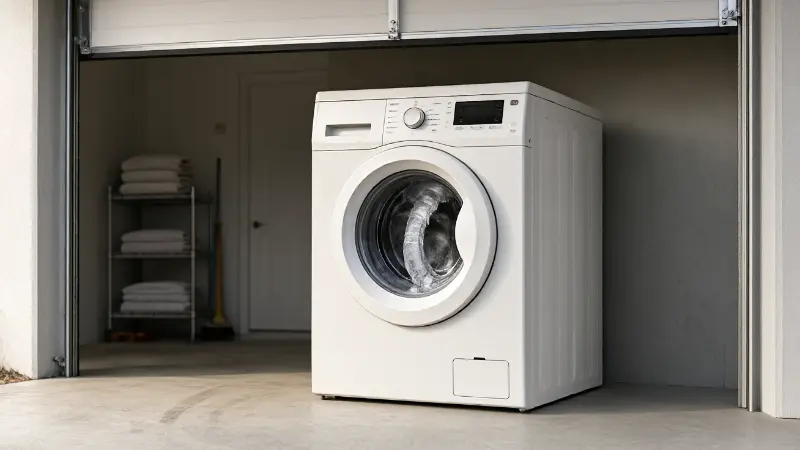
The garage environment is the main culprit. Attached garages are often unheated or only partially heated, and the wall shared with the house may be insulated while the exterior walls are not. A drain line that runs along an exterior wall, through the slab, or to a exterior drain can freeze from the outside in. A standpipe that is shallow or poorly insulated loses heat quickly.
The shape of the drain hose matters too. A hose that is pushed too far into the standpipe, looped into a U-shape, or allowed to sag creates a low spot where water collects. That trapped water freezes first and blocks the rest of the drain. Manufacturers specifically warn that a bent or U-shaped drain hose is more likely to freeze in cold conditions.
Residual water in the pump and the machine’s internal passages adds another freeze point. Even if the drain hose is clear, the drain pump and the filter housing can hold water that freezes and prevents the machine from emptying. That is why some washers display a freeze-related error even when the standpipe itself looks clear.
Recognize the Symptoms on Common Washers
The most direct sign is an error code. Many LG and Samsung washers display an OE code for a drain failure or an FF code for a freeze detection, and the manual typically explains that the drain hose or the water supply is frozen. Other brands use different codes, so check the owner’s manual rather than assuming the meaning.
Standing water in the drum after a cycle is another clear symptom. If the machine completes the wash but cannot pump out the water, the drain path is blocked. Water backing up out of the standpipe and onto the garage floor is a sign that the drain line is blocked downstream of the standpipe, often in the trap or the line to the main drain.
The machine may also make unusual noises during the drain cycle. A pump that hums without moving water, or a gurgling sound from the standpipe, suggests a partial blockage. If the washer pauses repeatedly and then stops with an error, the control board may be detecting that the water level is not dropping as expected.
Check the garage temperature and the drain route. If the garage has been below freezing for several hours and the drain line runs along an exterior wall or exits through the slab, a freeze is likely. If the garage is heated and the error persists, the cause may be a clog rather than ice, and the diagnostic steps change.
Safety First: Power and Water Before You Investigate
Unplug the washing machine before you open the drain hose, the filter, or any access panel. A washer combines 120-volt power with water, and a leak onto the control board or the motor can create a shock hazard. If the machine is hardwired, turn off the circuit at the breaker.
Shut off the hot and cold water supply valves behind the machine if you will be disconnecting hoses or moving the unit. A supply line that is under pressure can spray when it is disconnected, and the water is cold enough to be uncomfortable and to damage nearby items. Label the hoses or take a photo before removing them so you can reconnect them correctly.
Keep electrical cords, outlets, and extension cords out of any standing water on the garage floor. If water has reached an outlet or a power strip, turn off the circuit before you touch anything. If the garage floor is wet and you cannot identify the source, treat the area as an electrical hazard until it is dry.
Do not use an open flame, a blowtorch, or a heat gun on high near the washer, the plastic drain hose, or the standpipe. Plastic components deform or melt, and a flame in a garage with stored items is a fire risk. Warm water, warm towels, and a hair dryer on a low setting are the safe tools.
Thaw the Drain Hose First
The drain hose is the easiest component to remove and thaw. Disconnect it from the standpipe and from the back of the washer, following the manufacturer’s instructions for your model. Drain any water into a bucket or a shallow pan, and take the hose to a sink or a utility tub.
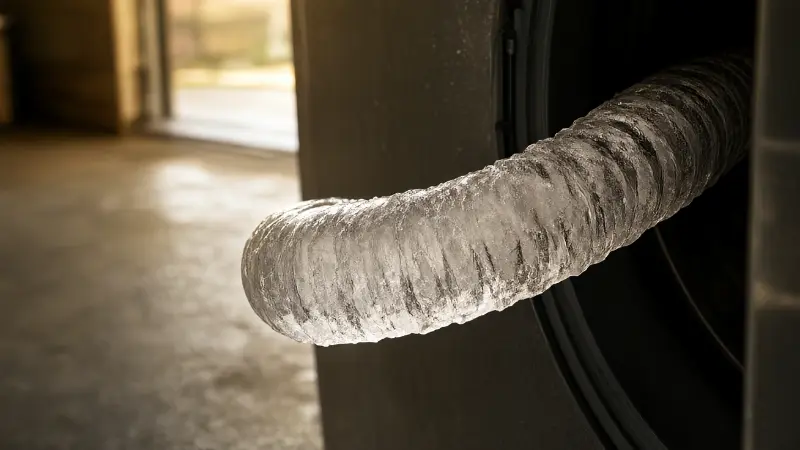
Soak the hose in warm water, not boiling water. A temperature around 50 to 60°C (roughly 122 to 140°F) is hot enough to melt ice without deforming the plastic. Let it soak until the ice is gone, then flex the hose gently to confirm that it is clear and that no ice remains in the corrugations or the bends.
If the hose is a corrugated type, pay attention to the low spots and the ends. Ice can hide in the ribs and the connector cuffs even when the main length feels clear. Hold the hose up to a light or run warm water through it to confirm that it flows freely before you reinstall it.
While the hose is off, check the standpipe opening for ice. Shine a flashlight down the pipe and look for a reflective surface or a visible ice plug. If the standpipe is frozen at the top, the thawing steps in the next section apply before you reconnect the hose.
Thaw the Standpipe and P-Trap
The standpipe is the vertical pipe that receives the drain hose, and it usually leads to a P-trap below the floor. If the ice is in the standpipe or the trap, warm the pipe gradually from the top down. A hair dryer on a low or medium setting, held several inches away and kept moving, is the most controllable method.
Wrap warm, damp towels around the standpipe if the hair dryer is not practical. Refresh the towels as they cool. If the standpipe is accessible and the trap has a cleanout plug, you can open the cleanout and use a small funnel to pour warm water into the trap, but be prepared for water to back up if the line is still blocked downstream.
Do not pour boiling water into the standpipe. Thermal shock can crack PVC or CPVC fittings, and the water may not reach the ice if the blockage is deep. Do not use a plumber’s snake on a frozen line until the ice has been thawed, because the cable can damage the pipe or push the ice deeper into the trap.
If the standpipe and trap are clear but the drain still backs up, the blockage may be in the line between the trap and the main drain. That line is often buried or concealed, and thawing it may require a plumber with a steamer or a jetter. Do not dig up a slab or a buried line without professional guidance.
Check for a frozen vent
A blocked vent can make a drain slow or gurgle even when the pipe is clear. If the vent terminates on the roof and is covered with snow or ice, the drain may not flow properly. That is a separate problem from a frozen trap, but it can produce similar symptoms. A plumber can confirm vent operation during the repair.
Check the Washer’s Internal Drain Path
If the drain hose and the standpipe are clear but the washer still will not drain, the freeze may be inside the machine. The drain pump, the filter housing, and the internal hoses can hold water that freezes. Many manufacturers recommend pouring warm water into the drum and waiting for the pump to thaw.
For a top-load washer, pour a gallon or two of warm water (around 50 to 60°C) into the drum, close the lid, and wait for an hour or two. The warm water surrounds the pump and the internal passages and melts the ice. For a front-load washer, follow the manufacturer’s guidance, which may involve pouring warm water into the drum or using a thaw cycle if the model has one.
Clean the drain pump filter if your washer has one. The filter is usually behind a small access panel at the bottom front of the machine, and it can trap lint, coins, and debris that blocks drainage. Place a towel and a shallow pan under the filter before opening it, because water will flow out. A frozen filter housing can also prevent the pump from emptying.
Once the machine is thawed, run a short rinse and spin cycle with the drain hose connected to the standpipe and watch for proper drainage. If the machine still errors out, the pump or the pressure sensor may have been damaged by the freeze, and a technician should inspect it.
Prevent the Next Freeze
Insulate the drain hose and the standpipe. Foam pipe insulation sized to the standpipe, sealed at the seams, slows heat loss. For the flexible drain hose, keep it as short and straight as possible, avoid U-shaped loops, and make sure it does not sag into a low spot where water can collect.
Keep the garage above freezing. A small thermostatically controlled heater rated for the space can protect the plumbing and the washer, provided it is installed with proper clearance and on a circuit that can handle the load. Do not use an unvented combustion heater in a garage where fuel vapors may be present.
Seal the drafts around the garage door, the wall penetrations, and the pipe where it exits the building. Cold air entering through a gap can freeze a drain line even when the garage air temperature is marginal. Weatherstripping and caulk are inexpensive and effective.
Winterize the washer if the garage will be unheated for an extended period. Shut off the water supply valves, disconnect the hoses, and drain the machine according to the manufacturer’s instructions. Remove the drain hose, drain it completely, and store it indoors if possible. A washer that is fully drained has nothing in it to freeze.
Correct the slope of the drain line if it holds water. A standpipe that drains slowly or a trap that retains water is more likely to freeze. A plumber can confirm that the trap and the line to the main drain are properly sloped and vented.
When to Call a Plumber or Appliance Technician
Call a plumber if the standpipe and trap are clear but the drain still backs up, if the blockage is in a buried or concealed line, if the vent is blocked, or if you cannot reach the frozen section. A plumber can use a steamer or a jetter to clear the line and confirm that the drain is properly installed.
Call an appliance technician if the washer still displays a drain or freeze error after the hose, standpipe, and pump have been thawed. A pump that was damaged by ice, a pressure sensor that is reading incorrectly, or a control board fault may be the cause. Those repairs require parts and diagnostic tools.
Other winter drain problems follow similar logic. A frozen septic line needs professional thawing rather than chemicals or an open flame, and a guide to a septic line frozen how to thaw explains the safe approach. A sump pump discharge line that freezes can back water into a basement, and a guide to a sump pump discharge line frozen covers the slope and insulation fixes. A leaking drain pipe under a sink is a different problem but shares the same warning about water damage, and a guide to holes in sink drain pipe covers the repair options.
Quick Reference: Symptoms and Fixes
The table below matches common frozen garage drain symptoms with the likely cause and the safest first step. Use it to organize your checks, and stop if a step involves live voltage, a buried line, or a repair you are not trained to perform.
| Symptom | Likely Cause | Safe First Step | When to Call a Pro |
|---|---|---|---|
| Washer shows OE or FF error, drum full of water | Frozen drain hose, standpipe, or pump | Unplug; disconnect and soak the drain hose in warm water | Error returns after thawing the hose |
| Water backs up out of the standpipe | Frozen trap or blocked line downstream | Thaw the standpipe and trap gently | Backup continues after thawing |
| Drain hose feels stiff and icy | Residual water frozen in the hose | Remove and soak in warm water (50–60°C) | Hose is cracked or deformed |
| Washer hums but does not pump out | Frozen pump or blocked filter | Pour warm water into the drum; clean the filter | Pump still does not run after thawing |
| Garage below freezing, drain line on exterior wall | Exposed line with no insulation | Insulate the standpipe; seal drafts; add heat | Freeze recurs every winter |
| Drain slow but not fully blocked | Partial ice or debris in the trap | Thaw gently; check the cleanout if accessible | Slow drain persists after thawing |
| Washer drains but the floor is wet | Loose hose connection or cracked hose | Unplug; tighten or replace the hose | Water reaches electrical components |
FAQ
How do I know if my washing machine drain is frozen or clogged?
A freeze is likely if the garage has been below freezing and the drain line runs along an exterior wall or through the slab. Error codes such as OE or FF often point to a frozen hose or pump on many brands. A clog is more likely if the garage is heated and the drain has been slow for a while. If you are unsure, thaw the hose first and see whether the problem clears.
Can I pour hot water down the standpipe to thaw it?
Boiling water can crack PVC or CPVC fittings through thermal shock. Use warm water around 50 to 60°C, or warm the pipe with a hair dryer on a low setting or with warm towels. If the trap has a cleanout, you can pour warm water into it slowly, but be ready for water to back up if the line is still blocked.
Why does my washer show a freeze error but the standpipe looks clear?
The freeze may be inside the machine rather than in the standpipe. The drain pump, the filter housing, and the internal hoses can hold water that freezes. Pour warm water into the drum and wait for an hour or two, and clean the pump filter if your model has one. If the error persists, the pump or a sensor may need service.
Should I disconnect the drain hose every winter?
If the garage will be unheated for an extended period, removing and draining the drain hose is a sensible winterizing step. Store it indoors if possible, and follow the manufacturer’s instructions for draining the washer and the pump. A fully drained system has nothing in it to freeze.
Conclusion
A washing machine drain that freezes in a garage usually involves the drain hose, the standpipe, the P-trap, or the water held inside the machine’s pump. Start by unplugging the washer and shutting off the supply valves, then remove and soak the drain hose in warm water. Thaw the standpipe and trap gently, and use warm water in the drum to free a frozen pump if the machine still will not drain.
Never use a flame, boiling water, or a high-setting heat gun on plastic drain components. A cracked hose or a damaged pump turns a simple thaw into a repair. If the standpipe and trap are clear but the drain still backs up, the blockage is likely downstream and needs a plumber.
Prevention is the durable fix. Insulate the standpipe, keep the drain hose straight and short, seal the drafts in the garage, keep the space above freezing, and winterize the washer if the garage will be unheated. Those habits keep the laundry running and protect the garage floor from an icy overflow.