A holiday tree full of lights and extension cords is a magnet for curious toddlers and crawling babies. The outlets behind the tree, the power strip on the floor, and the dangling cords all sit at exactly the height and location that small hands explore. Childproofing those outlets is not about making the tree less festive; it is about removing the temptation and adding layers of protection so that a moment of curiosity does not become an emergency.
This guide explains practical ways to secure holiday tree outlets without damaging your home or your holiday display. It covers tamper-resistant receptacles, outlet covers, power strip enclosures, cord management, barriers, and smart plugs. It also explains which methods are genuinely effective, which create new risks, and when an electrician should be involved.
Why Holiday Tree Outlets Deserve Extra Attention
Standard household receptacles are designed for adult use, and a young child can often insert fingers, toys, or small objects into the slots. The risk is higher around a holiday tree because the outlet is usually low, partly hidden, and surrounded by cords that invite pulling. A child who pulls a cord can bring a lamp, a tree, or a power strip down on themselves, and a child who reaches behind the tree may find an exposed plug or a loose connection.
The holiday season adds other hazards. Trees are often placed near curtains, gifts, and wrapping paper, and the space behind the tree becomes a tangle of cords and connectors. Extension cords may run across the floor where a toddler can trip or chew on them. A power strip may sit on the carpet with unused receptacles exposed. Each of these conditions is manageable, but each one needs a deliberate solution rather than a temporary fix.
Childproofing works best when it combines several layers. A tamper-resistant receptacle protects the outlet itself. An outlet cover adds a physical barrier. Cord management reduces the chance of a pull. A barrier keeps the child away from the whole arrangement. No single product solves every risk, but a combination of sensible measures makes the display much safer without making it difficult for adults to use.
Start With Tamper-Resistant Receptacles and Outlet Covers
Tamper-resistant receptacles, often abbreviated as TRRs, have internal shutters that block foreign objects from entering the slots unless a proper plug is inserted. They are widely available and are a durable upgrade for any outlet that a child can reach. If the outlet behind the tree is an older standard receptacle, having it replaced with a tamper-resistant model is one of the more reliable long-term improvements. An electrician can confirm whether the wiring and box are suitable for the replacement.
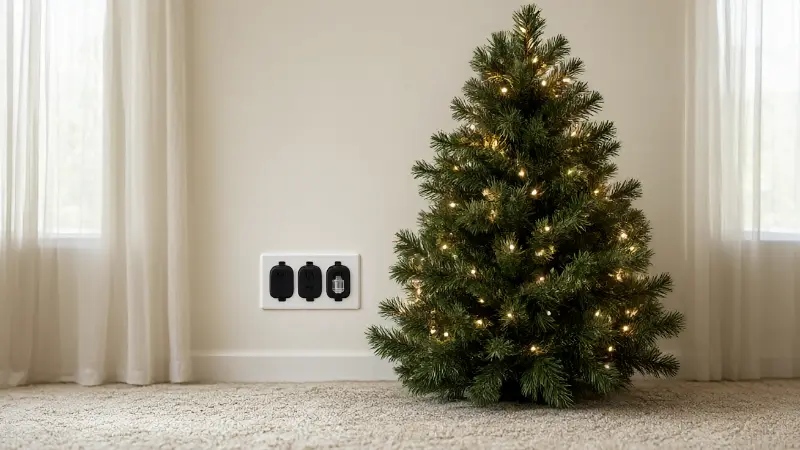
Outlet covers add another layer, especially for outlets that are not in use. There are several types, and they are not equally effective. A simple plastic plug-in cap covers one receptacle but can be pulled out by a determined child. A sliding plate cover stays attached to the wall and slides closed when the outlet is not in use. A self-closing cover springs shut when a cord is removed. A box-style cover encloses the plug and the cord connection, which is useful behind a tree where plugs are often loose.
Choose covers that fit the specific outlet and the plug you are using. A cover that is too tight can strain the cord, and a cover that is too loose can fall off. If the outlet must stay in use for the tree lights, a box cover or a weather-resistant in-use cover provides more protection than a simple cap. Check the cover periodically to confirm that it is still seated and that the cord is not pinched.
Do not rely on a cover alone if the outlet is easily reachable. A child who is motivated can work at a cover for several minutes, and some covers are easier to defeat than others. Combine the cover with a barrier or a cord management plan so that the outlet is not the first thing a child encounters. If the outlet is damaged, loose, or warm to the touch, stop using it and have it inspected before the tree is plugged in.
Secure Power Strips and Surge Protectors
Power strips are convenient, but they concentrate several receptacles in one place and often sit on the floor where a child can reach them. A strip with unused outlets is an invitation to poke, and a strip with several plugs can be pulled over by a cord. The safest approach is to mount the strip off the floor, inside a protective enclosure, or behind a barrier that the child cannot move.
Power strip covers are available in several designs. Some are rigid boxes with a lid and cord exits; others are flexible covers that wrap around the strip. Choose a cover that allows the plugs to sit fully inserted and does not trap heat. A cover that is too tight can cause overheating, especially if the strip is carrying a load. Check the cover after the lights have been on for a while to confirm that it is not warm.
Only use power strips that have a built-in circuit breaker or surge protection, and avoid daisy chaining one strip into another. Keep the total load within the strip’s rating. If the strip feels warm, smells unusual, or trips its breaker, reduce the load and investigate. A strip that is damaged or has a loose receptacle should be replaced rather than repaired with tape.
If the tree lights trip a breaker, do not keep resetting it without investigating. A guide to holiday lights tripping a breaker explains common causes such as overload, damaged strings, and moisture. Addressing the cause is part of childproofing too, because a tripped breaker often leads to improvised extension cords and exposed connections.
Manage Cords to Reduce Pull and Chew Risks
Cords are the most visible part of the display, and they are also the most tempting. A dangling cord invites a pull, and a cord on the floor invites chewing, tripping, and tugging. Route cords along walls and behind furniture where possible, and secure them with clips that do not damage the cord jacket. Avoid running cords across walkways or under rugs, where they can overheat and where a child may trip.
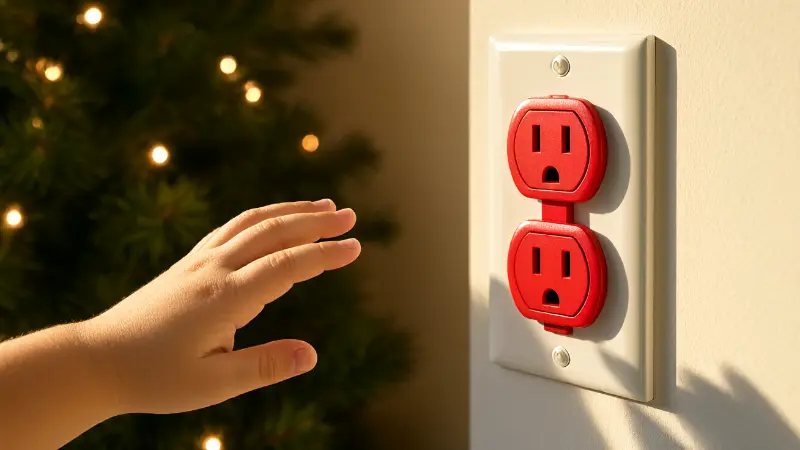
Use cord shorteners or reusable ties to take up slack, but do not coil a cord tightly while it is in use. A tightly coiled cord can trap heat. Leave the coil loose and keep it away from the outlet and the power strip. If a cord is too long, choose a shorter cord or route the excess along a wall rather than bundling it behind the tree. A cord that is under tension can pull a plug partly out of the outlet, creating a shock and fire risk.
Check cords for damage before the season starts and again after the tree is decorated. Look for cracked insulation, bent prongs, and loose connectors. A cord that has been chewed, pinched, or crushed should be replaced. Do not repair a damaged cord with tape, and do not let a child play with a cord that has exposed conductors. If a pet chews cords, use cord protectors or route the cords where the pet cannot reach them.
For outdoor displays, similar principles apply. If you are planning lights outside the house, a guide to hanging lights without an outlet can help you plan a safer power route that avoids long, exposed cords. And if you are working on the roofline, review hanging lights without roof damage before you climb the ladder. Safe installation at height reduces the chance of a loose cord falling within a child’s reach.
Use Furniture and Barriers to Limit Access
A physical barrier is one of the most effective childproofing tools because it keeps the child away from the entire outlet and cord arrangement. A playpen, a gate, or a sturdy piece of furniture can block access to the area behind the tree. The barrier does not need to be permanent; it only needs to be stable enough that a toddler cannot push it aside.
Arrange the tree so that the outlet side faces a wall or a corner that is difficult to reach. Keep gifts and decorations from creating a step or a climbing route to the cords. If the tree is in a high-traffic area, consider a corner placement with a gate across the opening. Avoid stacking boxes near the outlet, because a child may climb them to reach the cords.
Furniture anchors are also relevant. A child who pulls on a cord can pull a lamp, a television, or a piece of furniture toward themselves. Anchor heavy furniture to the wall where possible, and keep cords from lamps and electronics out of the reach path. The holiday tree itself should be stable, with a stand that does not tip easily. A tree that falls can cause injuries and can expose cords and outlets.
Barriers are not a substitute for outlet protection, but they reduce the number of opportunities a child has to interact with the electrical setup. Combine a barrier with tamper-resistant receptacles and cord management so that the protection does not depend on a single measure. Reassess the arrangement as the child grows and becomes more mobile or more capable of climbing.
Consider Smart Plugs and Remote Switching
Smart plugs and remote-controlled outlets can reduce the need to reach behind the tree to switch the lights on and off. That convenience is useful for adults, and it can also reduce wear on the outlet and the plug. A smart plug does not replace a tamper-resistant receptacle or a cover, but it can be part of a safer routine.
Choose a smart plug that is rated for the load and suitable for indoor use. Keep the plug itself out of reach or inside a protective cover. A smart plug with a short cord should be secured so that it does not dangle. If the plug has a manual button, confirm that a child cannot easily press it or pull the plug out of the outlet.
Remote switching also makes it easier to turn the lights off when the tree is unattended. That reduces the time the cords and connectors are energised, which is a sensible safety habit. Do not rely on the remote as the only way to disconnect power; the plug should still be accessible to an adult for maintenance and emergencies.
Water, Heat, and Pet Considerations
If the tree has a water reservoir, keep the outlet and cords away from the water. A spill or a leak can create a ground fault, especially if the outlet is on a GFCI-protected circuit. Route cords so that water cannot run down them toward the plug, and keep the power strip off the floor. If the outlet is near the tree stand, use a drip loop and a cover that keeps water away from the connections.
Heat is another consideration. Keep cords and power strips away from heater vents, radiators, and fireplace surrounds. Do not place a power strip on a heated floor or against a heat source. If a cord or plug feels warm during normal use, stop and investigate. Warmth can indicate an overload, a loose connection, or a damaged conductor.
Pets add another layer of risk. Cats may chew cords, and dogs may knock over a tree or pull on a cord while investigating. Use cord protectors, route cords out of reach, and consider a barrier that keeps pets away from the outlet area. A pet that chews a live cord can suffer a serious injury, and a pet that pulls a cord can bring a lamp or a tree down.
Comparison Table: Childproofing Methods and Their Limits
| Method | Best use | Limitations |
|---|---|---|
| Tamper-resistant receptacles | Permanent protection for reachable outlets | Requires replacement; does not protect cords or plugs |
| Sliding plate covers | Outlets that are sometimes in use | Can be defeated by a determined child; check fit |
| Box-style in-use covers | Outlets with plugs and cords behind the tree | May be bulky; confirm the cord is not pinched |
| Power strip enclosures | Power strips on the floor or behind furniture | Must allow ventilation; check for heat buildup |
| Barriers and gates | Keeping children away from the entire arrangement | Must be stable; not a substitute for outlet protection |
| Smart plugs and remotes | Reducing reach and switching time | Does not protect the outlet or cord by itself |
| Furniture anchors | Preventing pulls and tip-overs | Requires proper installation; check the wall type |
What Not to Do
Do not tape an outlet cover in place and assume it is childproof. Tape can peel, and a cover that is not designed for the outlet can be pulled off. Do not stuff a blanket or a gift bag over a power strip to hide it; that traps heat and creates a fire risk. Do not run cords under rugs or furniture where they can be damaged and where a child may trip.
Do not use a broken or damaged cover, and do not force a plug into an outlet that is loose or damaged. Do not modify a plug to fit a cover, and do not use an adapter that defeats the tamper-resistant shutters. If an outlet is warm, buzzing, or discolored, stop using it and have it inspected. These signs can indicate a wiring problem that childproofing products cannot fix.
Do not rely on a single product. A tamper-resistant receptacle is useful, but it does not protect the cords. A gate is useful, but it does not protect the outlet if the gate is left open. Layered protection is more reliable than any one measure, and it gives you time to intervene if a child finds a new way to explore.
When to Call an Electrician
Call an electrician if an outlet is loose, warm, buzzing, or discolored, or if a cover does not fit securely. An electrician can replace an older receptacle with a tamper-resistant model, install a GFCI where required, and check the wiring for damage. If the tree lights trip a breaker repeatedly, an electrician can assess the circuit capacity and confirm whether the load is too high.
If you are unsure whether an outlet is properly grounded or protected, have it checked before the holiday season. A ground fault can be especially dangerous near a tree stand or a wet area. An electrician can also advise on the best cover type for the outlet and the plug you are using, and can confirm that the box is suitable for the replacement device.
Childproofing is a shared responsibility, and the electrical work should be done by someone qualified. Once the outlet and covers are in place, the rest of the plan is about routine and supervision. Keep the area tidy, check the cords, and reassess the setup as the child becomes more mobile.
FAQ
Are tamper-resistant outlets enough to childproof a holiday tree outlet?
Tamper-resistant receptacles add a useful layer of protection, but they do not protect the cords, plugs, or power strip. Combine them with an outlet cover, cord management, and a barrier for a more complete approach.
Can I use a standard babyproofing outlet cap behind the tree?
A plug-in cap can help, but it can be pulled out by a determined child. A sliding or self-closing cover that stays attached to the wall is generally more secure. Check that the cover fits the outlet and does not strain the cord.
What should I do if my child keeps pulling the tree lights cord?
Route the cord out of reach, secure it with clips, and add a barrier that keeps the child away from the outlet area. Do not rely on a single measure. If the cord is damaged, replace it rather than repairing it with tape.
Conclusion
Childproofing holiday tree outlets is a layered task. Tamper-resistant receptacles and well-fitted covers protect the outlet, power strip enclosures and cord management protect the plugs and cords, and barriers and furniture anchors keep small hands away from the entire arrangement. Smart plugs and remotes can reduce the need to reach behind the tree, but they do not replace physical protection.
The most reliable plan combines several measures and avoids shortcuts such as taping covers, hiding power strips under blankets, or running cords under rugs. Check the cords and covers regularly, keep water and heat away from the electrical setup, and replace damaged components rather than repairing them with tape. If an outlet is loose, warm, or damaged, call an electrician before the tree is plugged in.
With a thoughtful setup, you can keep the holiday display bright and the area safer for children and pets. The goal is not to make the tree off-limits, but to make the electrical parts behind it difficult to reach and easy for adults to manage.