Blinds.com and Blindster are both online-only custom window treatment retailers, and both promise made-to-measure blinds at prices that undercut a local showroom. The similarities end at the checkout page. Blinds.com is the larger catalog, backed by The Home Depot since 2014, with a house brand, name-brand lines like Bali and Levolor, and a design-consultant phone team. Blindster is the smaller, value-focused specialist that leads with faux-wood pricing, a lifetime warranty on every order, and a remake guarantee that allows more attempts to get the fit right.
The choice is not about which company is better in the abstract. It is about which set of trade-offs matches your project. A homeowner who wants a specific Levolor cellular shade and a human to check the measurements has a different need from a landlord buying six faux-wood blinds for a rental unit. This comparison covers pricing, warranty terms, remake policies, product selection, and the complaint patterns that show up in public reviews, so you can pick the retailer that fits the job rather than the marketing.
Company Background and Ownership
Blinds.com has been owned by The Home Depot since 2014, and that relationship shapes its catalog. It sells a house brand alongside Bali, Levolor, and a long list of designer and specialty lines. The breadth is the pitch: if a shade type exists, Blinds.com probably carries several versions of it, including drapes and curtains, which Blindster does not offer.
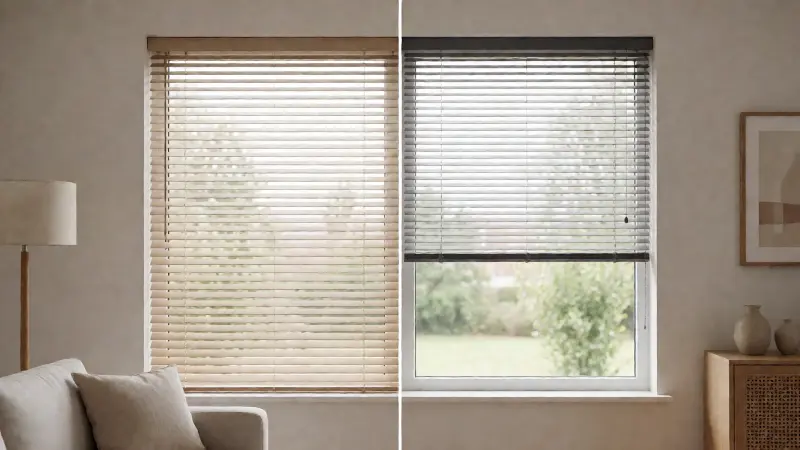
Blindster is an independent, Houston-based online retailer that has been selling custom blinds, shades, and shutters for over a decade. It positions itself as a value-lane specialist, and its deepest pricing competition is in two-inch faux-wood blinds. The catalog is smaller than Blinds.com’s, but the company argues that the selection skews toward higher-end options rather than entry-level commodity products.
Both companies sell exclusively online and ship directly to the customer. Neither has showrooms in the traditional sense, which means you are responsible for measuring and installation unless you hire a local installer. Blindster will help you find a local installer if you do not want to install the blinds yourself, and Blinds.com offers phone-based design consultations with a team it describes as more than one hundred consultants.
Pricing: Closer Than the Marketing Suggests
A side-by-side comparison of five similar products on each site found prices to be very close for almost every item, varying by only a few dollars in most cases. Blindster averaged slightly higher overall, which the reviewer attributed to minor differences in materials and shipping costs. That is a more useful picture than the headline claims from either company.
The structure of the pricing is where the real difference sits. Blinds.com’s house brand anchors the value end and trends cheaper than the other brands it sells, including the brands available on Blindster. If you are shopping strictly on entry price and you are comfortable with a house-brand product, Blinds.com can be the lower-cost route.
Blindster’s pricing strength is concentrated in faux-wood. Published starting prices put two-inch cordless faux-wood blinds in the sixty-dollar range for small windows, with representative pricing around seventy to ninety-five dollars at a thirty-five by forty-eight inch opening and roughly one hundred thirty to one hundred eighty dollars at a seventy-two by forty-eight inch opening. Premium and real-wood lines sit higher, and cordless cellular shades run in a similar range to the faux-wood tier.
Both retailers run frequent sales, and both offer free samples so you can inspect the material before committing. The sample programs are a genuine advantage for online buying, because color and texture on a screen rarely match the real product. Ordering samples from both companies is the cheapest way to compare quality before you spend hundreds of dollars on a full order.
Warranty: Three Years vs. Lifetime
This is one of the sharpest differences between the two retailers. Blinds.com’s standard warranty on most products is three years from the date of delivery, covering manufacturer defects only. The company offers the option to upgrade to a lifetime warranty for an additional cost, but that upgrade is not automatic and the terms vary by product line.
Blindster includes a limited lifetime warranty on all of its products against manufacturing defects. The company states that if something breaks that should not break, it will replace or repair the blind. That is a meaningful structural advantage for a homeowner who plans to stay in the home long enough to see a three-year warranty expire.
The caveat is the word “limited.” Reviewers have reported disputes over what the lifetime warranty actually covers, including one complaint that a replacement was refused because the breakage occurred past a two-year window. That is a reminder that a lifetime warranty is only as good as its exclusions and the company’s willingness to honor them. Ask for the written warranty terms for the specific product before you order, and keep your order documentation.
| Comparison Area | Blinds.com | Blindster |
|---|---|---|
| Ownership | Owned by The Home Depot since 2014 | Independent, Houston-based retailer |
| Catalog breadth | Very wide, including house brand, Bali, Levolor, designer lines, and drapes | Smaller, focused on blinds, shades, and shutters, with strength in faux-wood and higher-end options |
| Standard warranty | Three years on most products; lifetime upgrade available for a fee | Limited lifetime warranty included on all products |
| Fit guarantee | SureFit: one remake per item, four item remakes per household per lifetime, within 30 days; remakes only, no refunds | Fit-or-Free: up to three free remakes per order, one on shutters; you pay shipping and any upward size price difference |
| Satisfaction guarantee | 30-day satisfaction guarantee with remake or replacement paths | 60-day satisfaction guarantee with a capped refund path |
| Free samples | Yes | Yes, shipped within about a day |
| Design help | Phone consultations with a large in-house design team | Phone and email support; can help locate a local installer |
| Typical price position | House brand anchors the low end; name brands sit mid to high | Slightly higher average, with strong faux-wood value |
| Common complaints | Warranty disputes after three years; SureFit is a remake, not a refund | Slow remake process; warranty coverage disputes; occasional shipping delays |
Fit Guarantees: SureFit vs. Fit-or-Free
Both companies understand that measuring error is the biggest risk in online blind buying, and both have built remake programs around it. The details differ enough to matter.
Blinds.com’s SureFit guarantee remakes an item if you mis-measure. The limits are specific: one remake per item, four item remakes per household per lifetime, same-product exchanges only, within thirty calendar days of receiving the package, and changes restricted to size and mount. There are no refunds under the guarantee. It is a remake program, not a return. If the error is Blinds.com’s own, the company states it will make it right outside those caps.
Blindster’s Fit-or-Free guarantee allows up to three free remakes per order, dropping to one free remake on shutters. You pay shipping and any price difference if you change the size upward. That three-remake allowance is more headroom per order than several larger sellers provide, and it is a genuine safety net for a first-time measurer who is worried about getting a window wrong.
The practical difference is the number of attempts and the household cap. Blinds.com’s four-remake-per-household lifetime limit means a large whole-house order can exhaust the allowance quickly. Blindster’s three-remakes-per-order structure resets with each order, which is more forgiving for multi-room projects. Neither policy refunds your money for a measuring error, so the measuring guide still matters more than the guarantee.
Measuring Rules That Apply to Both
Both retailers use the standard inside-mount workflow: you enter the exact window opening, and the factory applies the deduction. The critical instruction is to submit the raw opening and let the company subtract. If you subtract a fraction yourself, you double-deduct and end up with gaps at the edges. For outside mounts, you add overlap for coverage. Both companies publish measuring guides by product type, and both offer phone support to walk through the numbers.
The deduction rules are not identical across product categories, and faux-wood is less forgiving than fabric because it is heavier and thicker. Depth and clearance matter more for two-inch faux-wood than for a cellular shade, and Blindster’s published guides include those notes. Read the guide for the specific product you are ordering rather than relying on a general measuring video.
Product Selection and Quality
Blinds.com wins on breadth. It carries its own house brand alongside Bali, Levolor, and a stack of designer lines, plus drapes and curtains that Blindster does not sell. If you need a specific brand, a specific lift system, or a shade type that is not common, Blinds.com is more likely to have it. The trade-off is that the house brand is positioned as budget-friendly, and reviewers note that it is lower in quality than the name-brand lines. That is not a defect; it is a tiering strategy. You get what you pay for within the catalog.
Blindster’s smaller catalog is described as skewing toward higher-end options, and its quality reviews are generally positive for the price. Trustpilot ratings for Blindster sit around 4.6 out of 5, and reviewers frequently mention easy installation, accurate fit, and good value. One long-term reviewer who tested blinds for over two years said they would buy again. A common caveat is that the faux-wood can look more like thick vinyl than real wood, which is a fair expectation at the value tier.
Both companies source from multiple manufacturers, so quality varies by product line rather than by retailer. A Bali shade from Blinds.com and a comparable Blindster shade may come from different factories with different tolerances. The brand name on the box matters less than the specific product’s specifications and the warranty attached to it.
Customer Service and Complaint Patterns
Independent comparisons describe both companies as evenly matched on customer service, with knowledgeable phone staff and solid support for exchanges, samples, and general questions. That matches the general pattern in reviews: most customers on both sides report helpful interactions, and a minority report frustrating ones.
Blinds.com’s complaints cluster around warranty and guarantee expectations. Reviewers describe being told that a blind failed just outside the three-year warranty window, or that the SureFit guarantee would remake an item but not refund it. One reviewer noted that the company refused a refund and offered a remake instead, which is consistent with the published policy. The lesson is to read the guarantee language before you order, not after something goes wrong.
Blindster’s complaints cluster around the remake process and communication. Some reviewers describe a two-month remake cycle and difficulty getting a response, while others describe fast, helpful support and replacements sent free of charge. The spread is wide enough that the experience appears to depend on the specific issue and the representative handling it. Blindster’s Trustpilot profile shows the company responds to negative reviews, which is a better sign than silence but not a substitute for getting the order right the first time.
Neither company is a outlier in this regard. Custom window coverings are made-to-size products, and the industry norm is that measuring errors and remake disputes are common. The retailer that handles those disputes well is worth more than the one with the lowest sticker price. If you are comparing service models across the category, our review of Lowe’s blinds installation shows how a big-box installation program handles the same risks, and the trade-offs are instructive.
Brand Comparisons Within the Category
Buying from Blinds.com or Blindster does not settle the brand question. Both retailers sell products that compete with specialty brands, and the value calculation changes depending on the line. Our analysis of whether Hunter Douglas blinds are worth it covers the premium end of the market, where dealer-installed systems and proprietary fabrics command a much higher price. If you are weighing a mid-tier brand, our Graber reviews guide covers the blinds, shades, and value proposition for a line that sits between the online retailers and the premium showroom brands.
The honest framing is that Blinds.com and Blindster are convenience and price plays, not luxury plays. They make custom sizing accessible without a showroom visit, and they back it with remake programs that reduce the risk of a measuring mistake. They do not replace the design service, installation, and warranty support that a local dealer provides. If you want someone to measure, install, and service the product, a dealer relationship is still the better fit, and the price reflects that.
Who Should Choose Blinds.com
Blinds.com is the stronger choice if you want the widest selection, you need a specific name brand such as Bali or Levolor, you want drapes or curtains alongside your blinds, or you want access to a large phone-based design team before you order. It is also a reasonable choice if you are shopping on entry-level price and are comfortable with a house-brand product.
It is a weaker fit if a long warranty matters to you, because the standard coverage is three years and the lifetime upgrade costs extra. It is also a weaker fit if you expect a refund for a measuring error, because SureFit remakes the item rather than returning your money. Homeowners who want a remake safety net should read the four-item household cap carefully before placing a whole-house order.
Who Should Choose Blindster
Blindster is the stronger choice if faux-wood value is the priority, if you want a lifetime warranty included rather than purchased as an upgrade, or if you are ordering multiple rooms and want the three-remake-per-order cushion. It is also a good fit for a DIY installer who is comfortable measuring and mounting and who wants free samples and straightforward phone support.
It is a weaker fit if you need a specific designer brand or a product category that Blindster does not carry, or if you want the reassurance of a large parent company behind the transaction. It is also a weaker fit if a slow remake cycle would disrupt your project timeline, because the complaint pattern suggests the remake process can take longer than expected. Buyers on a tight schedule should order samples early and measure twice.
Practical Buying Advice for Either Retailer
- Order samples from both companies. Free samples are the cheapest way to compare color, texture, and slat quality before committing.
- Read the measuring guide for the specific product. Submit the raw opening and let the factory apply the deduction; do not pre-subtract.
- Confirm the warranty terms in writing. Ask what is covered, for how long, and who pays shipping on a remake or replacement.
- Photograph your order confirmation and window measurements. Documentation makes a remake or warranty claim faster.
- Check the remake cap before a whole-house order. Blinds.com’s household lifetime cap and Blindster’s per-order cap behave differently on large projects.
- Install with a helper on large blinds. Two-inch faux-wood and wide roller shades are awkward to handle alone, and a dropped blind can bend the headrail.
- Keep the packaging until the blinds are hung and operating correctly. A remake or return is easier if the original carton is intact.
FAQ
Is Blindster the same company as Blinds.com?
No. Blinds.com is owned by The Home Depot, while Blindster is an independent, Houston-based retailer. They are separate companies with different catalogs, warranty terms, and remake policies. The similar names cause confusion, but the businesses are unrelated.
Which has a better warranty, Blinds.com or Blindster?
Blindster includes a limited lifetime warranty on all products, while Blinds.com’s standard coverage is three years with an optional paid lifetime upgrade. On paper, Blindster’s included lifetime warranty is the stronger default. In practice, read the exclusions and the claim process for the specific product, because “limited” terms vary and disputes happen with both companies.
Is the Blinds.com SureFit guarantee a refund?
No. SureFit is a remake program, not a return or refund. It allows one remake per item, up to four item remakes per household per lifetime, within thirty days of delivery, with changes restricted to size and mount. If the error is Blinds.com’s own, the company states it will make it right outside those caps.
How many remakes does Blindster allow?
Blindster’s Fit-or-Free guarantee allows up to three free remakes per order, and one free remake on shutters. You pay shipping and any price difference if you increase the size. That is more headroom per order than Blinds.com’s four-remake household lifetime cap.
Are Blinds.com and Blindster prices similar?
For comparable products, prices are often within a few dollars of each other. Blindster averages slightly higher, but Blinds.com’s house brand trends cheaper than the brands Blindster carries. The better value depends on the specific product, the current promotion, and whether you value the included lifetime warranty.
Can I install custom blinds myself?
Yes. Both companies design their products for DIY installation and include mounting hardware and instructions. The main risks are measuring errors and handling large blinds alone. If you are not comfortable drilling and leveling brackets, Blindster can help you find a local installer, and Blinds.com’s design team can walk you through the process by phone.