A snowblower that pulls to one side can make clearing a driveway feel like wrestling a shopping cart with a bad wheel. The machine may veer left or right under load, drift when you release the handles, or fight you on straight runs. In most cases the cause is mechanical rather than mysterious, and the fix is often simpler than replacing the machine.
This guide covers the seven most common reasons a snowblower pulls to one side and the practical fixes for each. Work through them in order, starting with the easiest checks, and confirm each repair with a short test run on a flat, clear surface. Safety comes first: shut off the engine, remove the key, and disconnect the spark plug before reaching near the auger or tires.
Start With Safety and a Simple Diagnosis
Park the snowblower on a level, dry surface and shut it down completely. Remove the key on electric-start models, disconnect the spark plug wire, and wait for all moving parts to stop. Never probe the auger housing with your hands, even with the engine off, because a jammed auger can release suddenly.
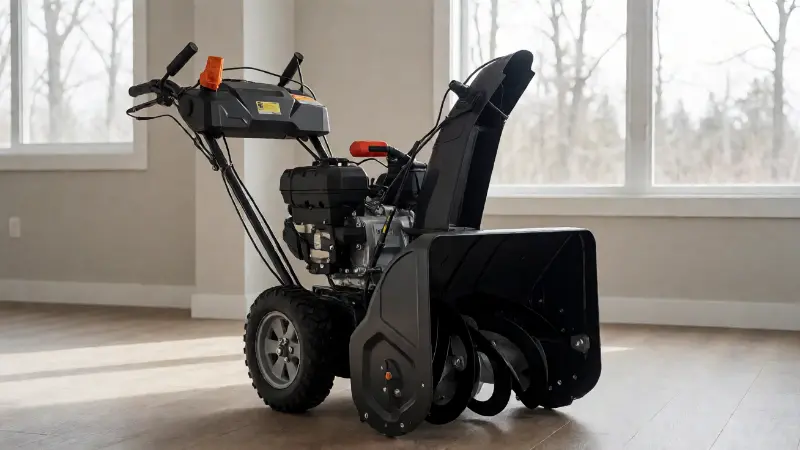
Before you touch any parts, check the obvious. Look at both tires, both skid shoes, and the auger housing for snow, ice, or debris packed unevenly. A chunk of ice on one side can change the machine’s attitude and make it pull. Clear the machine and test again before assuming a mechanical fault.
Next, note when the pull happens. Does it pull only when the auger is engaged, only when the drive is engaged, or all the time? Does it pull harder in deep snow or on bare pavement? That pattern narrows the cause quickly. A pull that appears only under auger load points toward the auger or housing, while a constant pull points toward tires, drive, or chassis.
Cause 1: Uneven Tire Pressure
Tire pressure is the most common and easiest cause. If one tire is softer than the other, that side sits lower and rolls with more resistance, so the machine steers toward the soft tire. The effect is subtle on grass but obvious on pavement, and it can feel like the machine has a mind of its own.
Check both tires with a gauge when they are cold and equalize them to the pressure listed in your owner’s manual. Do not guess at a pressure or copy a number from a different machine. If one tire keeps losing pressure, inspect the valve stem and the tire bead for leaks, and repair or replace as needed.
After setting the pressure, test the machine on a flat, clear area. If the pull is gone or reduced, you have found at least part of the problem. Recheck pressure periodically through the season, because temperature swings can change it and a slow leak can return.
Cause 2: Uneven Tire Wear, Damage, or Wheel Bearings
If the pressures match but the machine still pulls, look at tire condition. A tire with uneven wear, a flat spot, or a damaged sidewall can roll differently from the other side. Compare tread depth and look for bulges, cuts, or embedded debris. A tire that is visibly different from its partner can cause a steady pull.
Lift each wheel and check for play or roughness in the wheel bearings and axle. A worn bearing can add drag on one side, and a dry or damaged bearing can feel rough when you spin the wheel. Replace worn bearings and damaged tires in pairs when practical so the machine tracks evenly.
Also check that both wheels are the same size and type. A previous owner may have replaced one tire with a different size, which can cause a persistent pull that no amount of pressure adjustment will fix. Matching tires are part of keeping the machine straight.
Cause 3: Wheel Drive Engagement or Differential Issues
Many snowblowers drive both wheels through a friction disc and axle system, and some have a differential or wheel-locking feature. If one wheel is not engaging properly, the machine can pull toward the side that is driving. Check the wheel drive pins, keys, or locking collars on each wheel according to your manual.
On models with a differential, confirm that the locking feature is working as intended. A differential that is stuck or a drive pin that has fallen out can make one side freewheel while the other pulls. Inspect the axle keys and sprockets for wear, and replace any missing or damaged parts.
If your machine has separate left and right drive controls, check that both cables or linkages move freely and engage evenly. A cable that is loose or stretched can cause one side to engage later or weaker than the other, which feels like a pull. Adjust the linkage per the manual rather than forcing it.
Cause 4: Skid Shoes and Auger Housing Adjustment
Skid shoes set the height of the auger housing above the surface, and they need to be adjusted evenly. If one shoe is set higher or lower than the other, the housing sits at an angle and the machine can steer to one side. This is especially noticeable on smooth pavement.
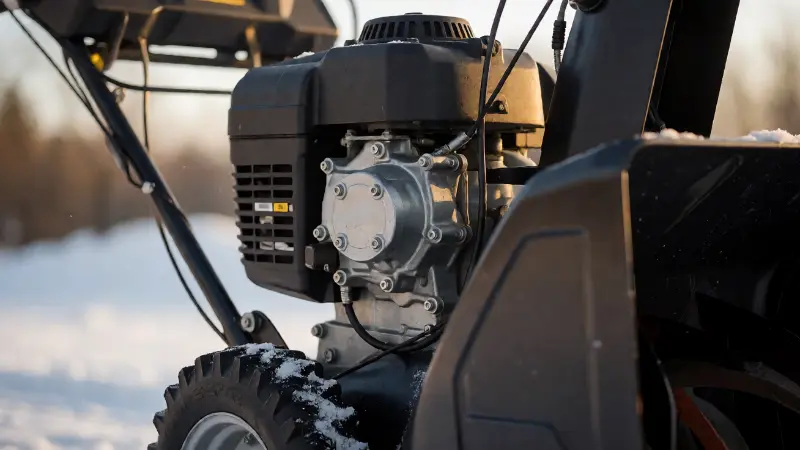
Put the machine on a level surface and measure the clearance under each side of the housing. Adjust both skid shoes to the same height according to your manual, and tighten the hardware securely. Check that the shoes are not worn unevenly or bent, since a worn shoe can change the effective height even when the adjustment looks correct.
Inspect the auger housing and scraper bar for bends or damage. A housing that is twisted or a scraper bar that is worn unevenly can cause the machine to drag on one side. Straighten or replace damaged parts, and confirm that the housing is mounted squarely to the frame.
Cause 5: Auger Jam, Shear Pin, or Imbalance
If the pull appears only when the auger is engaged, suspect the auger system. A partial jam, a broken shear pin, or an auger that is not turning on one side can create uneven resistance and make the machine pull. Clear the housing with a wooden tool after shutting down, and check both auger sides for free movement.
Inspect the shear pins on each auger side. A missing or broken pin can let one auger spin freely while the other works, which changes the load and can cause a pull. Replace pins with the correct part for your model, and check the auger shaft for bends or damage that could cause binding.
Look for bent auger flighting or a foreign object wrapped around the shaft. Even a small amount of rope, wire, or ice can create drag on one side. Remove debris carefully, and confirm that both augers turn smoothly by hand with the engine off and the spark plug disconnected.
Cause 6: Drive Belt, Friction Disc, or Transmission Trouble
A worn or misadjusted drive belt can cause inconsistent power delivery, and a slipping friction disc can make the machine feel like it is pulling or surging. Check the belt for glazing, cracks, or fraying, and confirm that it is routed correctly and tensioned per the manual. A belt that is too loose can slip under load and create uneven drive.
Inspect the friction disc and drive plate for wear, oil contamination, or uneven contact. A friction disc that is worn on one side can engage unevenly and cause the machine to track poorly. Clean or replace contaminated components, and adjust the drive linkage according to the manual.
If the transmission or gearbox is noisy or feels rough, stop using the machine until it is inspected. Internal damage can cause binding on one side and may worsen with use. This is a job for a qualified technician on most models, especially if parts are not readily available.
Cause 7: Bent Axle, Chassis Damage, or Operator Technique
A bent axle or a tweaked frame can make the machine pull even when tires and adjustments are correct. Look for fresh paint cracks, bent brackets, or a housing that sits crooked relative to the handles. Impact damage from hitting a curb or a buried object is a common cause. A bent axle often needs replacement rather than straightening.
Operator technique also matters. Pushing down on one handle, standing off-center, or fighting the machine on a side slope can create the feeling of a pull. Try a flat, clear test area and keep both hands even on the handles. If the pull disappears on flat ground, the issue may be technique or terrain rather than the machine.
Finally, check the tire chains if you use them. A chain that is installed unevenly or has a damaged cross-link can add drag on one side. Reinstall chains evenly and confirm that both tires have matching tension and pattern.
Comparison of Causes and Fixes
The table below summarizes the seven common causes, the symptoms that point to each, and the typical fix. Use it to prioritize your checks, then confirm with a visual inspection and your owner’s manual.
| Cause | Typical symptom | Typical fix | Difficulty |
|---|---|---|---|
| Uneven tire pressure | Steady pull toward the softer tire | Inflate both tires to the manual specification | Easy |
| Tire wear or wheel bearings | Pull with matching pressure; rough or loose wheel | Replace worn tires or bearings; match tire sizes | Moderate |
| Wheel drive engagement or differential | One wheel freewheels; pull under drive load | Check pins, keys, cables, and differential lock | Moderate |
| Skid shoes or housing adjustment | Pull on smooth pavement; uneven housing height | Adjust both skid shoes evenly; repair bent housing | Easy |
| Auger jam, shear pin, or imbalance | Pull only with auger engaged; one side not turning | Clear jam; replace correct shear pin; check shaft | Moderate |
| Drive belt, friction disc, or transmission | Slipping, surging, or uneven drive under load | Adjust or replace belt and friction disc; service transmission | Moderate to hard |
| Bent axle, chassis damage, or technique | Constant pull; visible damage; disappears on flat ground | Replace bent parts; even hand pressure; reinstall chains | Varies |
Other Symptoms That Can Confuse Diagnosis
Engine and fuel problems can make a snowblower feel like it is pulling because the machine surges or loses power under load. If the engine is also running rough, address that separately so you are not chasing a steering fault that is really a fuel delivery issue. A guide to snowblower engine surging causes covers the common carburetor and fuel-system explanations.
If you notice a fuel smell or a visible leak while working on the machine, stop and fix the leak before continuing. A guide to Craftsman snowblower gas leak causes explains the common sources and safe repair steps. Fuel leaks are a fire risk and should not be ignored.
Hard starting or a primer that does not seem to work can also distract from a steering repair. If the machine is difficult to start after sitting, the guide to primer not working on snowblower covers the common causes and fixes. Get the engine running reliably first, then test the pull on a flat surface.
When to Stop and Seek Service
Stop using the machine if you find a bent axle, a cracked frame, or internal transmission damage. These repairs can be safety-critical, and a temporary fix may fail under load. If the pull is severe enough that you cannot control the machine on a slope, park it until it is repaired.
Also stop if you smell burning rubber or hear grinding from the drive system. A slipping belt can overheat, and internal gear damage can worsen quickly. A qualified small-engine shop can diagnose the drive system and confirm whether a repair is economical compared with replacement.
Weigh the cost of parts against the machine’s age and overall condition. Tires, bearings, skid shoes, and shear pins are reasonable DIY repairs. Transmission work on an older machine may cost enough that a new unit is the better value, especially if other systems are also worn.
Prevention and Seasonal Checks
Check tire pressure, skid shoe height, and wheel hardware at the start of each season and again mid-season. Keep the auger and housing clear of ice and debris, and replace shear pins with the correct part. Inspect belts and friction discs for wear before the first storm rather than waiting for a failure in deep snow.
Store the machine on a level surface and avoid leaving it with one tire in a puddle or on soft ground, which can cause uneven tire wear. Use tire chains evenly if you need them, and confirm that both sides have matching tension. A few minutes of maintenance can prevent a pull from developing in the first place.
FAQ
Why does my snowblower pull to one side only when the auger is engaged?
A pull that appears only with the auger engaged often points to a jam, a broken or missing shear pin, or an auger that is binding on one side. Clear the housing, check both auger sides for free movement, and replace any damaged shear pin with the correct part.
Can tire pressure really make a snowblower pull?
Yes. A softer tire sits lower and rolls with more resistance, so the machine steers toward that side. Check both tires cold and set them to the pressure listed in your owner’s manual. If one tire keeps losing pressure, inspect the valve stem and bead for leaks.
What should I check first if my snowblower veers to the right?
Start with tire pressure and skid shoe adjustment, since both are easy to check and often responsible. Then inspect the wheel drive engagement and auger system. If the pull remains, look for a bent axle, chassis damage, or drive belt issues.
Can a bent axle be straightened?
Some axles can be straightened by a shop, but replacement is often the more reliable fix. A bent axle can affect wheel alignment and bearing life, and a straightened axle may not hold under load. Inspect related brackets and bearings as well.
Is it safe to use a snowblower that pulls to one side?
It depends on how severe the pull is. A mild pull from tire pressure is usually safe once corrected. A strong pull that makes the machine hard to control on slopes or near obstacles should be repaired before use. Stop using the machine if you find a bent axle or transmission damage.