A septic system installed in 1975 sits at a fascinating crossroads in residential wastewater history. It came after decades of largely unregulated construction and just as states and manufacturers were beginning to standardize materials, sizing, and soil testing. If you own a home with a mid-1970s septic system, or you are buying one, understanding what was typical for the era helps you interpret inspection reports, plan maintenance, and decide whether repair or replacement makes sense. This guide walks through the materials, configurations, drainfield practices, and regulatory context that shaped 1975 septic tank design, along with the practical checks that matter most today.
What Defined 1975 Septic Tank Design
The mid-1970s were a transitional period rather than a single uniform standard. Many jurisdictions had adopted percolation testing and basic sizing rules, while others still relied on local health department judgment. Construction during the 1971 to 1980 period gradually shifted toward more durable materials and designs that recognized soil drainage capacity, according to risk assessments of older systems. That means a 1975 tank could be a well-built concrete unit sized to the home, or it could reflect older habits, such as undersized single-chamber construction or a seepage pit instead of a proper drainfield.
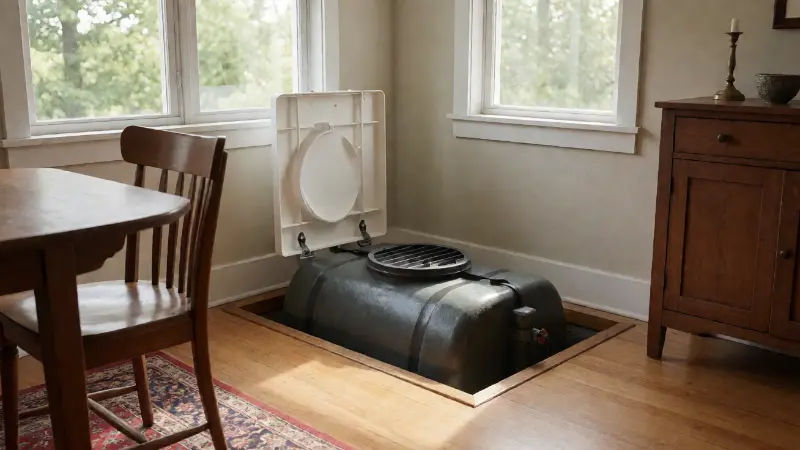
A 1975 design also predates many modern requirements that homeowners now take for granted. Effluent filters, risers to grade, and advanced treatment units were not common. Two-compartment tanks were gaining favor in guidance documents, but single-compartment tanks remained widespread. The practical result is that no two 1975 systems are identical, and the age alone does not tell you whether the system is sound. The material, the installation, the soil, and the maintenance history matter more than the calendar.
Materials Used in Mid-1970s Septic Tanks
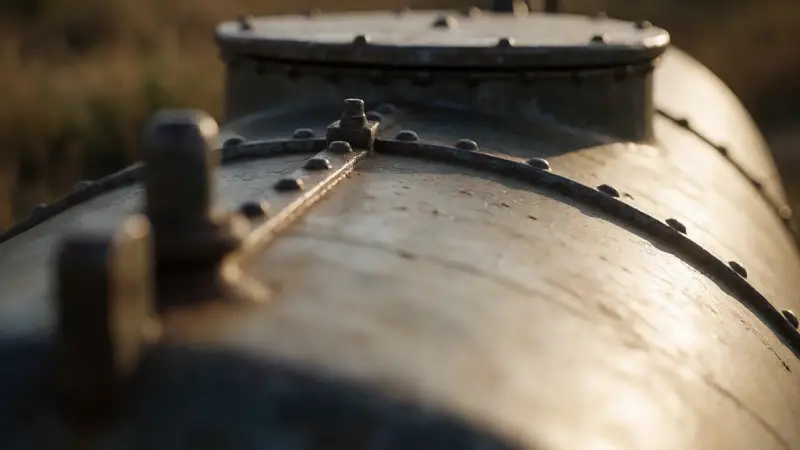
Concrete was the dominant material for septic tanks in 1975, and precast concrete remains the benchmark for durability. A well-made concrete tank from that era can still be in service, though walls may have cracked, baffles may have deteriorated, and the lid may be showing wear. Steel tanks were also common, particularly in some regions, but steel has a well-documented weakness: corrosion. Historical guidance notes that steel tanks have a relatively short operational life in corrosive sewage conditions, often measured in a small number of years rather than decades.
Fiberglass and other plastic tanks were emerging in the early 1970s as a lightweight, corrosion-resistant alternative. A 1974 patent describes a fiberglass septic tank designed to resist corrosion and simplify installation, which shows that the technology was commercially available around the time many 1975 systems were built. Fiberglass tanks from that era can still function, but older fiberglass may become brittle, and baffles or fittings can degrade. If your home has a 1975 fiberglass tank, an inspection that includes the baffles and outlet is worth prioritizing.
Why the Material Matters for Today’s Inspection
Concrete can crack but is generally repairable. Steel may have rusted through at the water line or near the lid, creating a collapse risk. Fiberglass may have developed stress cracks or separated fittings. A professional inspection should identify the tank material and assess its condition, not just pump it out. If the tank is steel and shows significant corrosion, planning for replacement is prudent even if it is still holding liquid, because failure can be sudden. The same logic applies when you check how much an empty R410a tank weighs: understanding the container’s condition and specification tells you more than assuming it is fine because it is still in place.
Typical Sizing and Capacity
Sizing in 1975 generally followed bedroom-count rules that varied by state. Common guidance from the era pegged a two-bedroom home at roughly 750 to 900 gallons, a three-bedroom home at about 900 gallons, and a four-bedroom home at around 1,000 gallons. Some jurisdictions set minimums of 1,000 gallons for one- to three-bedroom homes and added capacity for each additional bedroom. These figures are not universal, and a 1975 tank may be smaller than what current rules would require for the same house.
Undersizing is one of the most consequential legacies of older systems. A tank that is too small for the household’s water use has less sludge and scum storage, which means solids can carry over into the drainfield more quickly. That does not automatically mean the system will fail, but it shortens the interval between pump-outs and increases the load on the soil absorption area. If your 1975 tank is on the small side, water conservation and careful attention to what goes down the drain become more important, not less.
Single-Compartment vs. Two-Compartment Design
Many 1975 tanks were single-compartment units, but two-compartment tanks were already recognized as a better design. In a two-compartment tank, the first compartment does most of the settling and is usually larger, while the second compartment provides additional separation before effluent leaves the tank. Guidance from the period notes that a two-compartment tank is generally preferred because the suspended solids concentration in the effluent is lower than with a single compartment.
If your 1975 tank is single-compartment, it is not defective by definition, but it may benefit from an effluent filter on the outlet to reduce solids reaching the drainfield. Some single-compartment tanks can be retrofitted with a filter or a baffle upgrade, depending on the outlet configuration and access. A septic professional can advise whether a retrofit is practical or whether the tank’s condition makes replacement the better investment. Do not assume that adding a filter solves every problem; it reduces solids carryover but does not increase tank capacity or repair a failing drainfield.
Baffles, Inlets, and Outlets
Baffles are the internal fittings that slow the flow of sewage and prevent scum and sludge from leaving the tank. In 1975, inlet and outlet baffles were often made of concrete, fiberglass, or plastic, and some tanks used sanitary tees. A properly functioning inlet baffle directs incoming waste below the scum layer, while the outlet baffle draws effluent from the clear middle zone. If a baffle has fallen off, deteriorated, or was never installed, solids can short-circuit to the drainfield.
Older baffles are a common finding during inspections. Concrete baffles can crack or break off, and plastic or fiberglass baffles can become brittle. A missing outlet baffle is a genuine concern because it allows scum to escape directly into the absorption area. Replacing a baffle is often far less expensive than replacing a drainfield, but access matters. If the tank lid is buried, exposing it and adding a riser can make future inspections and baffle checks much easier. Electrical work around any pump or aerator should be done safely, and if you are adding a circuit for a pump or blower, it is worth understanding whether lights should be on their own circuit as a comparison for how dedicated circuits are planned.
Drainfield and Soil Absorption Practices
The drainfield, also called a leach field or soil absorption area, is where most older systems ultimately succeed or fail. In 1975, common drainfield materials included vitrified clay tile, perforated plastic pipe, and gravel-filled trenches. Clay tile was widely used and can still be found in functioning systems, but it is brittle and joints can separate. Perforated plastic pipe gradually replaced clay tile in many areas, and the shift was well underway by the mid-1970s.
Seepage pits, also called dry wells, were still used in some regions in 1975, particularly where soil conditions or space constraints made trenches difficult. Guidance from the period sometimes discouraged seepage pits in favor of proper percolation areas, but practice lagged behind the recommendation. A seepage pit can function for years, but it concentrates effluent in a smaller volume of soil and can be harder to inspect. If your 1975 system uses a seepage pit, regular pumping and careful water use are important, and a professional evaluation should consider whether the pit is still accepting effluent adequately.
Percolation Testing and Soil Considerations
By 1975, many jurisdictions required percolation tests to size the drainfield, but enforcement and standards varied. A system designed with a proper percolation test and adequate soil depth has a better chance of lasting than one installed in marginal soil without testing. Soil with slow permeability, seasonal high water tables, or shallow depth to bedrock is less forgiving, and a 1975 drainfield in such conditions may be nearing the end of its useful life. Inspectors look for standing water, surfacing effluent, and odors as signs of failure, but a failed percolation test on a replacement field is a bigger project than a simple repair.
Regulatory Context Around 1975
Regulations in 1975 were a patchwork. Some states adopted comprehensive septic rules around that time, while others relied on county health departments and informal guidance. Massachusetts, for example, adopted its Title 5 regulation in 1975, and Ireland’s first national septic tank standard, SR6:1975, appeared in January 1976 with the goal of uniform practice in design, construction, and maintenance. Kansas published a manual of recommended standards for rural homeowners in January 1975 that covered soil suitability, percolation tests, absorption fields, tank design, inspection, and maintenance.
These documents show that the technical knowledge existed, but adoption was uneven. That is why a 1975 system in one state may look very different from a 1975 system in another. When you are evaluating a property, local records are more useful than national generalizations. Ask the local health department for the permit history, any as-built drawings, and the results of past inspections. If records are missing, an inspection by a qualified septic professional is the next best source of information.
What to Check on a 1975 System Today
Start with the tank itself. Confirm the material, size, number of compartments, and condition of the baffles. A pump-out is a good opportunity to inspect, but pumping alone is not an inspection. Ask the pumper to note cracks, deteriorated baffles, high sludge levels, and any signs of backup. If the tank has a lid at grade or a riser, the inspection is easier and safer. If the lid is buried, consider adding a riser for future access.
Next, evaluate the drainfield. Look for soggy spots, odors, or unusually lush grass over the absorption area. These can indicate that the field is receiving more liquid than the soil can accept. Do not drive heavy vehicles over the drainfield, and keep roof drains and surface water away from it. If the field is failing, options range from repairing a distribution box or individual line to replacing the entire absorption area. The right choice depends on the soil, the space available, and local rules. Upgrading to a more efficient system may also connect to broader decisions about home infrastructure, similar to how homeowners compare tankless vs. traditional water heater long-term savings when planning equipment upgrades.
| Component | Common in 1975 | What to Watch For Today | Practical Implication |
|---|---|---|---|
| Tank material | Precast concrete, steel, some fiberglass | Concrete cracks; steel corrosion; fiberglass brittleness or fitting separation | Material and condition drive repair-versus-replace decisions |
| Compartments | Often single; two-compartment designs gaining favor | Single-compartment tanks may allow more solids carryover | An effluent filter can help but does not add capacity |
| Baffles | Concrete, fiberglass, plastic, or sanitary tees | Cracked, missing, or deteriorated baffles | Replacing baffles is usually cheaper than drainfield repair |
| Drainfield | Clay tile, perforated pipe, gravel trenches, some seepage pits | Brittle tile, separated joints, soil clogging, concentrated loading | Soil conditions and water use determine remaining life |
| Sizing | Often based on bedroom count, roughly 750 to 1,000 gallons | May be undersized for current household water use | Conservation and regular pumping become more important |
Maintenance Priorities for an Older System
Pump the tank on a schedule based on size, household size, and solids accumulation, not on a fixed number of years. A 1975 tank that is smaller than modern standards may need more frequent pumping. Avoid treating the system as a garbage disposal for wipes, grease, coffee grounds, and harsh chemicals. Even “flushable” wipes can accumulate and contribute to clogs. Spread out laundry loads across the week rather than doing several loads in one day, because a sudden surge of water can push solids into the drainfield.
Watch for warning signs: slow drains, gurgling fixtures, odors near the tank or drainfield, and backups during heavy rain. Any of these warrant a professional inspection rather than a DIY additive. Chemical additives marketed as septic enhancers are not a substitute for pumping and do not repair a failing drainfield. If the system has an effluent filter, clean it according to the manufacturer’s instructions. If there is a pump or aerator, confirm that it is on a properly protected circuit and that alarms are working.
Repair, Retrofit, or Replace?
The decision depends on the tank’s condition, the drainfield’s performance, the available space, and local regulations. A sound concrete tank with good baffles and a functioning drainfield may only need routine maintenance. A steel tank with significant corrosion may warrant replacement before it collapses. A single-compartment tank that is otherwise sound might benefit from an effluent filter and more frequent pumping. A failing drainfield in marginal soil may require a larger replacement area, which can be expensive and may not be possible on a small lot.
Do not assume that a 1975 system must be replaced simply because of its age. Many older systems continue to function when they were well built, properly sized, and maintained. Conversely, do not assume it is fine because it has not backed up yet. A professional evaluation that includes the tank, baffles, and drainfield gives you the information to make a reasoned decision. If replacement is likely, plan it before a failure becomes an emergency, because emergency replacements are almost always more expensive and more disruptive.
Frequently Asked Questions
How long does a 1975 septic tank last?
There is no single lifespan. A well-built concrete tank that has been pumped regularly can remain structurally sound for decades, while a steel tank from the same era may have already corroded through. Drainfield performance often determines the practical life of the system more than the tank itself. An inspection is the only reliable way to judge the condition of a specific system.
Was a two-compartment tank required in 1975?
Requirements varied by jurisdiction. Two-compartment tanks were recognized as more effective and were increasingly recommended, but many 1975 homes received single-compartment tanks. Local records and a physical inspection can tell you which configuration you have.
What size septic tank was typical in 1975?
Common guidance linked capacity to bedroom count, with figures often in the range of roughly 750 to 1,000 gallons for typical homes. Some jurisdictions used different minimums, and some tanks were undersized by modern standards. The actual size can be estimated from the tank dimensions during an inspection.
Can a 1975 septic system be brought up to current standards?
In some cases, yes. Adding risers, replacing baffles, installing an effluent filter, and repairing a distribution box can improve performance. In other cases, the drainfield or tank may need replacement to meet current requirements. Local health department rules determine what is allowed and what permits are required.
Are clay tile drainfields from 1975 still usable?
Some are still functioning, especially if the soil is suitable and the system has been maintained. Clay tile is brittle, and joints can separate over time. If the field is accepting effluent without surfacing or backups, it may continue to work, but an inspection should assess the field’s condition and the soil’s acceptance rate.