There are few home improvement moments more frustrating than this one. You’ve found the perfect new light fixture or ceiling fan, you’ve turned off the power, unboxed your purchase with excitement, and then you discover the included mounting bracket doesn’t fit the junction box in your ceiling or wall. The screw holes don’t align, the bracket is too wide or too narrow, and your simple upgrade just became a major headache.
This is an incredibly common problem, but rest assured, it is almost always fixable without calling a professional. This guide will walk you through why this happens and provide clear, actionable solutions to get your new fixture installed safely and securely.
Why Your Mounting Bracket and Junction Box Are Mismatched
Understanding the root cause of the misfit is the first step toward finding the right solution. Several factors can lead to this frustrating incompatibility, from differing manufacturing standards to issues with the junction box itself.
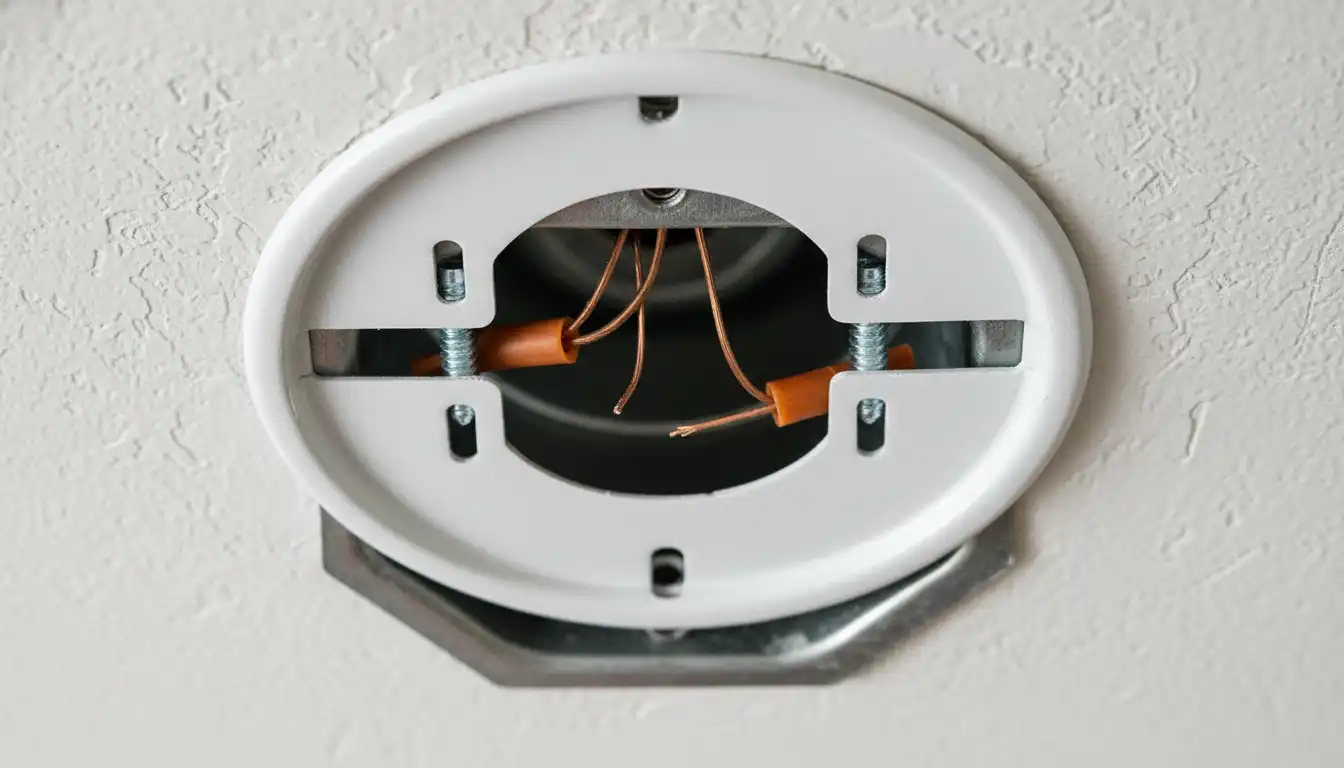
Mismatched Screw Spacing: The Most Common Culprit
The primary reason a bracket won’t fit is a mismatch in screw hole spacing. Not all junction boxes are created equal. Over the years, different standards have been used, leading to variations in the distance between the threaded holes where the bracket attaches.
Older homes might have 3.5-inch boxes, while many modern fixtures are designed for 4-inch octagonal or round boxes. The bracket supplied with your fixture is often designed for the most common modern setup, which may not match what’s in your ceiling.
Incorrect Bracket Type for the Fixture’s Weight
Safety is paramount when it comes to electrical work. A standard plastic or metal junction box is only rated to hold a light fixture up to a certain weight, typically 50 pounds. Heavier fixtures, and especially all ceiling fans, require a special fan-rated box and bracket that is anchored directly to a ceiling joist.
If you are trying to install a heavy chandelier or a ceiling fan on a standard junction box, the bracket may not fit because it’s the wrong type for the box, and the installation would be dangerously insecure. Always verify your junction box is rated to support the weight of your new fixture.
Junction Box Recess and Depth Issues
Sometimes the screw holes line up perfectly, but you still can’t get a secure fit. This often happens when the junction box is either too recessed into the wall or ceiling, or it protrudes slightly. Drywall or plaster may sit in front of the box’s screw tabs, making the included screws too short to reach.
Conversely, if the box sticks out past the wall surface, the mounting bracket and the fixture’s canopy won’t sit flush against the ceiling. This creates an unsightly gap and an unstable installation.
Step-by-Step Solutions: From Simple Fixes to Full Replacement
With the problem diagnosed, it’s time for the solution. Start with the easiest and most common fixes first. For any of these solutions, always begin by turning off the power at the circuit breaker and verifying it is off with a non-contact voltage tester.
Solution 1: The Universal Mounting Bracket (The Hero Fix)
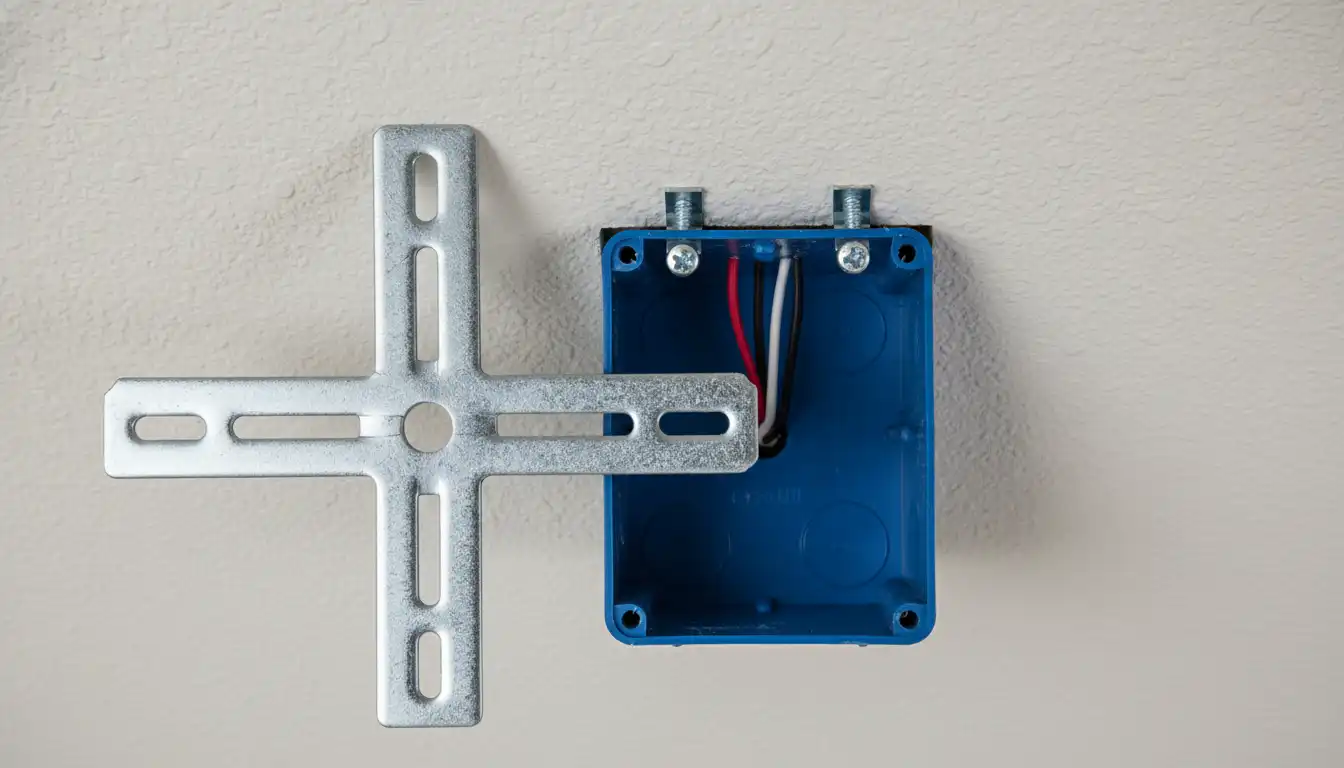
For nearly all cases of misaligned screw holes, the easiest and best solution is a universal mounting bracket, also known as a crossbar. These are inexpensive metal plates with a variety of slots and threaded holes designed to adapt to virtually any junction box and fixture combination.
To install a universal bracket, simply use the original screws from your old fixture to attach the crossbar to the junction box through a set of slots that align. Then, you can use the various threaded holes on the crossbar to attach your new fixture’s mounting screws at the correct width.
Solution 2: Using Longer Screws for Recessed Boxes
If your junction box is set too far back into the ceiling or wall, the fix is often as simple as a trip to the hardware store. The standard machine screws used for this purpose are 8-32 thread size (or occasionally the larger 10-32 for ceiling fans).
Purchase a pair of 8-32 machine screws that are long enough to pass through the bracket and securely engage the threads in the junction box. Be sure not to get wood screws or drywall screws, as their threads are incompatible and will damage the box.
Solution 3: When to Replace the Junction Box
In some cases, the junction box itself is the problem and must be replaced. This is a more involved task, but it is necessary if you find stripped screw holes, cracks in a plastic box, or if the box is not weight-rated for your new fixture (e.g., installing a ceiling fan).
Replacing a box may involve cutting a slightly larger hole and installing a remodel-rated or “old work” box that anchors to the drywall. If complex wiring is present, understanding electrical basics is key. For instance, handling larger circuits requires specific knowledge, much like knowing how to splice 6 gauge wire is a specialized skill.
The Track Rail Solution: Slide and Click
Try to avoid the hassle of aligning individual mounting brackets to junction boxes. Instead, you can utilize a ceiling-mounted track rail system.
- Positioning: Set up a ladder in the living room (and later stand on the island in the kitchen) to reach the pre-installed black track rail.
- Insertion: Holding the woven pendant light, lift the fixture up to the track. The light might be attached to a specific track adapter rather than a standard canopy.
- Locking Mechanism: Push the adapter into the track channel and twist it (likely a 90-degree turn) or click it to lock it into place. This secures the light mechanically and connects the electricity simultaneously.
- Flexibility: If there is no fixed mounting bracket, you’ll be able to install multiple lights on the same rail and potentially slide them left or right to find the perfect center point over the furniture.
Safety First: Essential Electrical Precautions
Working with electricity can be dangerous if proper precautions are not taken. Your safety is more important than any home improvement project. Follow these rules without exception.
Always turn off power at the circuit breaker before touching any wires or fixtures. Use a voltage tester to confirm that no current is present. Finally, if you ever feel unsure or encounter something unexpected, stop work immediately and consult a licensed electrician.
Understanding Junction Box and Bracket Compatibility
A little knowledge can prevent future frustration. This table outlines common junction box types and their typical applications, helping you identify what you’re working with and what brackets are generally compatible.
| Junction Box Type | Typical Use | Common Screw Spacing | Compatible Bracket Type |
|---|---|---|---|
| 4″ Octagon/Round | Standard ceiling lights, wall sconces | 3.5″ | Standard flat or offset brackets, universal crossbars |
| Fan-Rated Box | Ceiling fans, heavy chandeliers | 3.5″ (uses larger 10-32 screws) | Fan-rated bracket (must attach to joist) |
| Single-Gang Rectangular | Wall switches, outlets (sometimes sconces) | 3.28″ | Fixture must have specific bracket for this spacing |
| 3.5″ Round “Pancake” Box | Lightweight wall sconces or ceiling lights | 2.75″ | Often requires a universal adapter or specific bracket |
Beyond the Basics: Advanced Troubleshooting Scenarios
Sometimes, the problem goes beyond simple alignment. Unique situations in older homes or with non-standard fixtures require a bit more ingenuity to solve.
Mismatched Screw Threads (8-32 vs. 10-32)
You may find that a screw fits the bracket hole but won’t thread into the junction box. Most light fixtures use 8-32 machine screws. However, ceiling fans and the boxes they mount to use heavier-duty 10-32 screws.
Forcing the wrong screw size will strip the threads in the junction box, creating a much bigger problem. If a screw feels tight immediately, double-check that you have the correct thread size for your box type.
Dealing with Obstructions and Uneven Surfaces
A decorative ceiling medallion or an uneven plaster surface can prevent the fixture’s canopy from sitting flush. In these cases, you may need to carefully trim the medallion’s opening or use plaster washers to create a stable mounting surface for the bracket.
The goal is to ensure the bracket is securely attached to the junction box and provides a level base for the fixture. Never rely on the drywall or plaster for support.
Frequently Asked Questions
What do I do if the screw holes on my mounting bracket don’t line up with the holes on the junction box?
First, try rotating the mounting bracket to see if any of the other slots align with the junction box holes. If that doesn’t work, you may be able to drill new holes in the mounting bracket to match the junction box. Alternatively, a universal mounting bracket or a crossbar adapter can provide more hole configurations to fit various junction box sizes.
The mounting bracket is smaller than the junction box. What’s the solution?
If your fixture’s canopy is large enough to cover the entire junction box, you might be able to use a crossbar adapter to span the distance. However, in many cases, the best solution is to replace the existing junction box with one that is the correct size for your new fixture. This ensures a secure and safe installation.
My new ceiling fan’s mounting bracket is wider than the existing junction box. What should I do?
It is crucial to ensure the junction box is rated to support the weight and motion of a ceiling fan. If the existing box is not fan-rated, it must be replaced with a fan-rated box, which will also solve the size mismatch. An improperly secured fan can be a significant safety hazard.
Can I use a universal mounting bracket?
Yes, a universal mounting bracket is often a good solution when the included bracket doesn’t fit. These brackets are designed with a wide variety of slots and holes to accommodate different junction box configurations. They are widely available at hardware and lighting supply stores.
The screws that came with my new fixture are too long or short. What can I do?
If the screws are too long, you can sometimes use washers as spacers or purchase shorter screws of the correct size (typically 8-32 for most fixtures). If they are too short, you will need to purchase longer screws. It’s important to use screws that are the correct thread and length to ensure the fixture is mounted securely to the junction box.
A Perfect Fit and Peace of Mind
Facing a mounting bracket that doesn’t fit your junction box is a common bump in the road for any DIYer. However, with the right knowledge and a simple, inexpensive part like a universal crossbar, it’s a problem you can easily overcome.
By prioritizing safety and using the correct hardware for the job, you can ensure your new light fixture or fan is not only beautiful but also securely and safely installed for years to come.