The average cost of a small bathroom remodel layout depends on far more than the square footage. A compact bathroom still needs the same core systems as a large one — waterproofing, plumbing, ventilation, and electrical work — and those fixed costs do not shrink just because the room is small. In some ways, a small bathroom is harder to remodel, because there is less tolerance for error and less room to work around problems.
This guide breaks down where the money goes, how layout decisions affect the budget, and which choices deliver the best return. Treat every figure as a planning range rather than a quote, since regional labour rates, material selections, and the condition of the existing space all move the final number.
Why Small Bathrooms Still Cost Real Money
The most common misconception is that a small bathroom should be cheap because there is less of everything. In practice, the opposite is often true on a per-square-foot basis. A tiny room still needs a full waterproofing system, a complete set of fixtures, and licensed trades for plumbing and electrical work.
Access is also harder. A compact bathroom leaves little room for a contractor to manoeuvre, and every mistake is more visible. There is also a higher chance that the existing plumbing and wiring are undersized or poorly located, which means more rework rather than less.
Fixed costs do not shrink
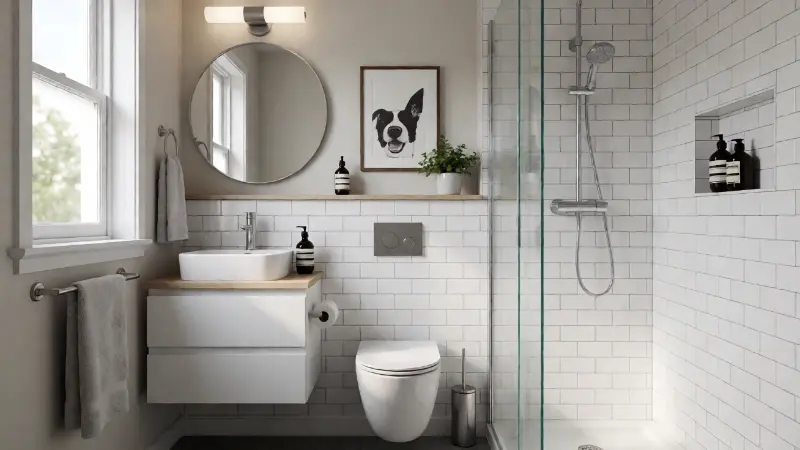
Certain items cost roughly the same whether the room is small or large: the toilet, the sink, the shower valve, the extractor fan, the tile adhesive, and the labour to install them. These fixed costs make up a larger share of the total in a small bathroom, which is why the cost per square foot is often higher than in a larger project.
What does shrink is the material quantity: less tile, less flooring, less drywall, and less paint. Those savings are real, but they are rarely enough to make a small bathroom a budget project.
Hidden problems are common
Older bathrooms frequently have underlying issues. A leaking supply line, a failed wax ring, or a slow drain can mean the subfloor is soft or mouldy. If the subfloor needs replacing, that is a significant additional cost that has nothing to do with the layout. Understanding what it costs to replace a bathroom subfloor is worth checking before you budget, because this is one of the most common surprises in a remodel.
Layout Decisions That Drive the Cost
Layout is the single biggest lever you control. Keeping fixtures in their existing positions is the cheapest approach. Moving them, especially moving the toilet or the main drain, adds cost quickly because it involves cutting into the floor structure and rerouting pipes.
Keep the plumbing in place
If the toilet, sink, and shower drain can stay where they are, you avoid the most expensive part of the job. You can still update the fixtures, tile, lighting, and vanity. This is the single most effective way to control a small bathroom budget without sacrificing the finished look.
Moving a sink is usually manageable because supply lines are flexible and the drain can often be extended within the wall cavity. Moving a toilet is more involved because the waste pipe has a fixed fall and must connect to the stack. Moving a shower drain is similar in difficulty.
Wet room versus shower tray
Choosing between a wet room and a shower tray changes both the cost and the feel of the space. A wet room requires full tanking, a sloped floor or former, and careful drainage design. A shower tray is faster and more forgiving. In a small bathroom, a low-profile tray with a glass screen often gives the most usable space for the least complexity.
If you are weighing up the two, the trade-offs around waterproofing, floor structure, and long-term maintenance are worth understanding before you commit to a wet room specification.
Fixture placement and clearance
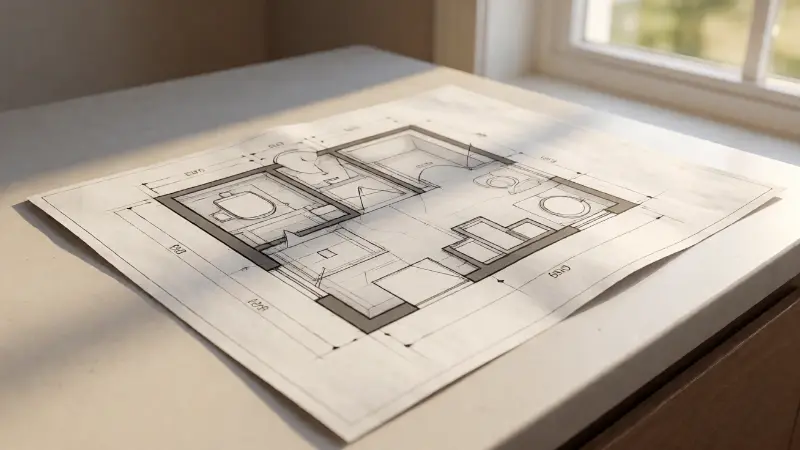
Building codes and good practice require minimum clearances around toilets, sinks, and showers. In a small bathroom, those clearances can be the limiting factor. A layout that looks fine on paper may fail inspection if there is not enough space to open the door, step out of the shower, or access the toilet.
Measure everything, including door swings, and check the requirements for your area. A layout that just barely meets the minimum is likely to feel cramped in daily use.
Storage and vanity choices
Storage is often the trade-off in a small bathroom. A pedestal sink saves floor space but offers nowhere to put anything. A floating vanity frees up the floor and makes the room feel larger, but it costs more to install because it requires blocking in the wall. A compact vanity with drawers is usually the best compromise between storage and floor space.
Breaking Down the Cost by Category
The table below groups the major cost categories for a small bathroom remodel. It assumes a mid-range specification, a room of roughly 35 to 50 square feet, and professional installation. Premium tile, custom cabinetry, and structural changes push the figures higher.
| Category | What It Covers | Where the Budget Goes | Cost Drivers |
|---|---|---|---|
| Demolition and disposal | Removing old fixtures, tile, and flooring | Labour, skip hire, dust control | Whether the old tile is bonded to a substrate that also needs removal |
| Plumbing | Supply lines, drains, valve, and fixture connections | Licensed plumber time, materials | Whether fixtures stay in place or move |
| Electrical | Lighting, exhaust fan, outlets, and switches | Licensed electrician time, fixtures | Whether new circuits are needed or existing ones can be extended |
| Waterproofing | Tanking, membrane, and sealing around wet areas | Materials and careful labour | Whether a full wet room is specified or a shower tray |
| Tile and finishes | Floor tile, wall tile, grout, and sealant | Material cost, tiler day rate | Tile size, material type, and pattern complexity |
| Fixtures and fittings | Toilet, sink, shower, faucet, and accessories | Product cost | Brand, finish, and whether they are stock or special order |
| Vanity and storage | Cabinet, countertop, mirror, and shelving | Material and installation | Custom versus stock, wall-hung versus floor-mounted |
| Ventilation | Extractor fan and ducting | Unit cost and duct routing | Whether ducting can run through an exterior wall or must be routed internally |
| Drywall, paint, and trim | Wall repair, painting, baseboards, and caulking | Labour and materials | Whether walls are being reconfigured or simply refreshed |
Where Layout Changes Add Cost
Every layout change carries a cost consequence. Understanding which ones are worth it helps you prioritise. Moving a fixture for a better flow may be worth the expense. Moving it purely for aesthetics rarely is.
Relocating the toilet
Moving a toilet requires cutting into the floor, rerouting the waste pipe, and ensuring the correct fall to the stack. In a slab-on-grade bathroom, this can mean breaking concrete. In an upper-floor bathroom, it can mean working around joists. Both scenarios add labour, materials, and the risk of discovering something unexpected.
Enlarging the shower
A larger shower is a common request in small bathrooms because it improves daily comfort. Enlarging the shower usually means moving the drain, extending the waterproofing, and possibly relocating a wall. If the shower is already against an exterior wall, extending it outward into the room may be simpler than reconfiguring the plumbing.
Removing or adding a bathtub
Removing a bathtub and replacing it with a walk-in shower frees up floor space and often makes the room feel larger. It also involves capping or rerouting the tub drain and supply lines, and patching the floor and walls. Adding a tub where there was only a shower is more expensive because of the plumbing and structural requirements.
Changing the door swing or type
A door that swings inward eats usable floor space. Switching to a pocket door or an outward-swinging door can make a small bathroom feel significantly bigger. A pocket door requires opening the wall cavity, which is more invasive than replacing a hinged door. A simple solution is to reverse the swing of an existing door, which costs almost nothing.
How to Save Money Without Cutting Corners
- Keep the plumbing layout as close to existing as possible.
- Choose a stock vanity over a custom one.
- Use large-format tile to reduce grout lines and installation time.
- Buy fixtures during sales and keep the same finish across the room.
- Do the demolition and disposal yourself if you are comfortable with it.
- Paint and caulk yourself after the trades have finished.
- Reuse the existing mirror or medicine cabinet if it is in good condition.
- Choose a simple tile pattern rather than a complex mosaic.
Saving on labour is usually the biggest opportunity, but be realistic about what you can do safely. Plumbing and electrical work should be left to licensed professionals. Poor work in those areas can cause water damage, electrical hazards, and failed inspections.
Where not to save
Do not cut corners on waterproofing, ventilation, or the quality of the shower valve. These are the items that are buried behind the finished surface, and fixing them later means demolishing the room again. A cheap valve that fails after two years can cost more to replace than a better one would have cost upfront.
Comparing Small Bathroom Layouts
The layout you choose affects both the cost and the usability. A few common configurations are worth considering.
Three-quarter bathroom
A three-quarter bathroom has a toilet, sink, and shower but no bathtub. It is the most common small bathroom layout and generally the least expensive to remodel because it uses less space and fewer fixtures. It suits guest bathrooms, en-suites, and powder rooms.
Full bathroom
A full bathroom includes a bathtub or a tub-shower combination. It costs more because of the extra fixture and the plumbing involved. In a small space, a tub-shower combo is usually more practical than a separate tub and shower.
Powder room
A powder room has only a toilet and a sink. It is the smallest and least expensive bathroom to remodel, but it still requires the same trades and waterproofing considerations around the sink area. Because there is no shower or tub, the waterproofing requirements are lighter.
Working Around Other Projects
Bathroom remodels rarely happen in isolation. Homeowners often have a list of projects, and budget is the limiting factor. It can help to compare costs across different rooms to decide what to tackle first. For example, if you are also considering a kitchen refresh, understanding the cost of an open-concept kitchen remodel on a budget gives you a baseline for comparison.
Exterior work also competes for the same budget. Foundation maintenance, drainage improvements, and waterproofing are less glamorous than a new bathroom, but they protect the structure. If your basement shows signs of damp or deteriorating parging, addressing that first may be the wiser financial decision, and a basement parging cost guide can help you weigh that against interior renovations.
When to Call a Professional
Some parts of a small bathroom remodel are within reach for a confident DIYer: demolition, painting, installing a vanity, and fitting accessories. Other parts are not. Plumbing, electrical work, waterproofing, and tiling in wet areas are best left to experienced trades.
Waterproofing is the area where DIY mistakes are most costly. A poorly sealed shower pan or a missed corner in the tanking can lead to water damage that requires the entire bathroom to be stripped out again. If you are not certain about the waterproofing details, hire a professional.
Getting quotes
Get at least three quotes, all based on the same written scope of work. Ask each contractor to break down labour and materials separately, and clarify what is excluded. A quote that seems cheap may be missing ventilation, waterproofing, or disposal. Compare the scope, not just the total.
FAQ
How much does a small bathroom remodel cost?
Costs vary widely by region, material choices, and how much of the layout is changed. A cosmetic refresh with fixtures kept in place sits at the lower end, while a full remodel with relocated plumbing and premium finishes sits much higher. Get local quotes based on a defined scope.
Is it cheaper to remodel a small bathroom than a large one?
Generally yes in absolute terms, because there is less material and less surface area to cover. However, the cost per square foot is often higher because fixed costs such as plumbing, electrical, and waterproofing do not shrink with the room size.
What is the most expensive part of a bathroom remodel?
Labour is usually the largest single component, followed by tile and fixtures. Plumbing and electrical work can be significant, especially if fixtures are relocated or new circuits are required.
Can I keep my existing layout to save money?
Yes, and it is one of the most effective ways to control costs. Keeping the toilet, sink, and shower in their current positions avoids the expense of rerouting drains and supply lines, which is often the most invasive part of the job.
How long does a small bathroom remodel take?
A straightforward remodel often takes two to four weeks, depending on the scope, drying times for tile and grout, and how quickly inspections and material deliveries happen. Projects involving structural changes or relocated plumbing take longer.
Do I need a permit for a bathroom remodel?
Permit requirements vary by jurisdiction. Plumbing, electrical, and structural changes usually require permits and inspections. Cosmetic updates such as painting and replacing fixtures may not. Check with your local building department before starting.
Bottom Line
The average cost of a small bathroom remodel layout is driven more by what you change than by how small the room is. Keeping the plumbing in place, choosing stock fixtures, and avoiding structural surprises will do more for your budget than any material selection. Spend where it matters — waterproofing, ventilation, and quality valves — and save on cosmetics and finishes. Get detailed quotes, plan the layout carefully, and expect the unexpected behind the walls. A well-planned small bathroom can look and function beautifully without requiring a large-bathroom budget.