Homewyse is one of the most visited cost-estimating sites for home improvement projects, and it is easy to see why. It is free, it does not require an email address or a phone number, and it produces a detailed cost range for nearly any project you can name. The natural question that follows is whether those numbers can be trusted, and the honest answer is that they are useful for some purposes and misleading for others.
This guide breaks down how Homewyse generates its estimates, where the numbers tend to be reliable, where they drift from real-world pricing, and how to use the site as part of a broader budgeting process. It also covers how Homewyse compares to contractor bids and to other online cost guides, so you can decide how much weight to give its figures.
How Homewyse Builds Its Estimates
Homewyse does not publish actual invoices or historical job data. Instead, it uses a method called unit cost estimating, which is a standard technique in professional construction estimating. The site breaks each project into measurable units, such as square feet of flooring or number of doors, and then assigns a material cost, a labor time, and a wage rate to each unit. The result is a baseline estimate for what Homewyse calls a standard basic project.
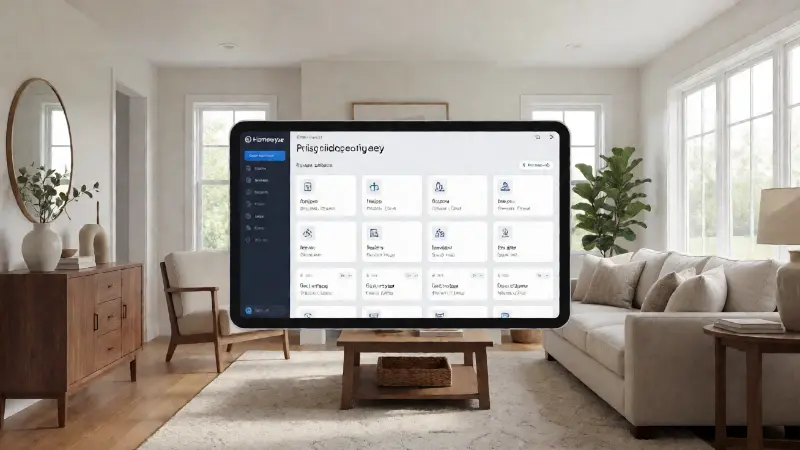
That baseline is then adjusted to your location using the ZIP code you enter. The adjustment reflects broad regional differences in material costs and trade wages. It does not reflect the hyper-local conditions of a specific neighborhood, such as a shortage of electricians after a storm or a surge in demand during a building boom.
The standard basic project assumes mid-range, commonly available materials and favorable working conditions. It assumes the work area is accessible, that no major surprises are hidden behind the walls, and that the project does not require extensive demolition or repair before the main work begins. Those assumptions are reasonable for a planning tool, but they are also the reason estimates can diverge sharply from actual bids.
Where Homewyse Tends to Be Reasonable
For straightforward, well-defined projects, Homewyse often lands in a useful range. Tasks like interior painting, flooring installation, and simple fixture replacements are predictable enough that a unit-cost model can produce a number that is in the same area code as a contractor quote. Homeowners who have compared the site against real bids frequently report that the low-to-mid range is plausible for basic work in average conditions.
Contractors themselves sometimes use the site as a sanity check. Several professionals have noted that they cross-reference Homewyse to confirm that their pricing is not wildly out of line with regional norms, particularly on common repair tasks where the labor and material inputs are well understood. That does not mean the site is a pricing authority, but it does suggest the methodology produces numbers that are not arbitrary.
Homewyse also has the advantage of transparency relative to some competitors. It breaks the estimate into material and labor components and shows a low, mid, and high range. That structure makes it easier to see which part of a quote is driving the cost and to have a more informed conversation with a contractor. If you are planning a larger renovation and comparing costs across categories, resources like this guide to the cost of replacing windows in a house can help you benchmark individual line items against your overall budget.
Where Homewyse Estimates Can Miss the Mark
The most consistent complaint about Homewyse is that its estimates run low, sometimes significantly so. A general contractor in one forum discussion reported multiplying Homewyse figures by roughly 1.5 to land in the right ballpark in their local market. A homeowner in another thread found the site’s estimate for a project came in about 35 percent below a contractor’s price. Those are anecdotes, not universal rules, but the pattern of underestimation is common enough to be worth noting.
Several factors drive that gap. Homewyse’s labor rate includes contractor overhead, insurance, and administrative costs, but it may not fully capture the profit margin that contractors apply to their work. Markups in the range of 13 to 22 percent are typical in the trades, and those margins are not always reflected in a unit-cost baseline.
Permit costs are another omission. Permit fees vary widely by municipality and can add hundreds or thousands of dollars to a project, particularly for structural, electrical, or plumbing work. Homewyse does not always include permit costs in its baseline estimates, which can make a quote look inflated when the contractor has legitimately included them.
Project-specific conditions are the third major variable. A flooring estimate that assumes a flat, clean subfloor will be low if the existing floor has to be torn out, leveled, or repaired. An electrical estimate that assumes open wall cavities will be low if the walls are finished and the wiring has to be fished through. Homewyse cannot see your house, and the standard basic project assumption excludes many of the complications that drive real-world costs.
How Homewyse Compares to Other Cost Guides
Online cost guides fall into a few broad categories, and they do not all measure the same thing. Aggregator sites like Angi and HomeAdvisor often report averages derived from actual project data submitted by homeowners and contractors. Those figures reflect real spending, but they can be skewed by the mix of projects in the dataset and by regional differences that are not fully normalized.
Homewyse sits in a different category. It is a modeling tool rather than a data aggregator. It does not report what people paid; it estimates what a project should cost based on standardized inputs. That distinction matters when you compare numbers across sites. A Homewyse estimate and an Angi average may look similar in magnitude, but they are built from fundamentally different sources.
In practice, the two approaches can complement each other. A contractor bid that falls within the range suggested by multiple independent sources is more likely to be reasonable than a bid that is far outside every benchmark. If you are evaluating a quote for a roofing project and want to understand how material choices affect the total, this explanation of using architectural shingles for starter courses illustrates how specification decisions ripple through both material and labor costs.
| Factor | Homewyse Approach | Practical Implication |
|---|---|---|
| Data source | Unit cost model with national averages adjusted by ZIP code | Good for planning; not a record of actual local prices |
| Material assumptions | Mid-range, commonly available products | Premium or specialty materials will cost more |
| Labor assumptions | Standard productivity under favorable conditions | Difficult access or hidden damage increases labor time |
| Permit costs | Often not included | Budget separately for permits on regulated work |
| Contractor markup | Overhead included; profit margin may be partial | Expect final quotes to run above the low end of the range |
| Local market conditions | Broad regional adjustment only | High-demand areas may price above the model |
When Homewyse Is Most Useful
The site is most useful at the very beginning of a project, before you have spoken to any contractors. At that stage, you need a rough number to decide whether a project is feasible within your budget and whether it is worth pursuing. Homewyse provides that number quickly and without requiring you to hand over contact information to a lead-generation service.
It is also useful as a comparison tool once you have bids in hand. If you receive three quotes and two of them cluster around a similar figure while the third is dramatically higher or lower, Homewyse can help you understand whether the outlier is justified. A contractor who is far below the modeled range may be cutting corners, using lower-grade materials, or underestimating the labor required. A contractor who is far above may be including scope items that the model does not capture.
The site becomes less useful as you move toward a final decision. It cannot replace an on-site assessment, and it cannot account for the specific condition of your home. The older your house, the more likely it is that hidden conditions will affect the final price. A knob-and-tube wiring system, a non-standard plumbing layout, or a previous renovation that was not done to code can all add cost that no remote estimating tool can predict. Even a relatively small repair, such as dealing with a door knob hole that is the wrong size, can reveal how much variability exists in older homes.
How to Use Homewyse Without Being Misled
The first step is to treat the Homewyse number as a starting point, not a target. If the site says a project should cost between a certain low and high figure, use the middle of the range as a rough planning number and then add a contingency buffer. A buffer of 15 to 20 percent is common practice in renovation budgeting, and it exists precisely because surprises are normal.
The second step is to get itemized quotes from at least three contractors. Ask each contractor to break the quote into labor, materials, permits, and any other costs. That level of detail lets you compare bids on an apples-to-apples basis and see where the differences lie. If one bid is significantly lower, ask what assumptions it makes about the condition of the existing structure and the quality of materials.
The third step is to adjust the Homewyse estimate based on what you learn. If the site assumes a standard basic project but your job involves demolishing a finished wall to access the work area, the labor component will be higher. If you are choosing premium materials, the material component will be higher. Making those adjustments yourself gives you a more realistic number than the site’s default output.
The fourth step is to check whether permits are required for the work you are planning. Electrical, plumbing, structural, and some mechanical work typically requires a permit, and the fee is a real cost that should be in your budget. If a contractor’s quote does not mention permits, ask whether they are included.
FAQ
Is Homewyse accurate for budgeting?
It is reasonable for rough budgeting on standard projects in average conditions. It is less reliable for final pricing, particularly on complex or specialized work. Use it as a starting point and validate with local quotes.
Why is Homewyse often lower than contractor quotes?
Homewyse uses a standardized model that assumes favorable conditions, mid-range materials, and standard productivity. It may not fully account for contractor profit margins, permit fees, or the complications that arise in real homes.
Can I rely on Homewyse instead of getting contractor quotes?
No. Homewyse is a planning tool, not a substitute for an on-site assessment. A contractor can see conditions that no remote estimator can detect, and a written quote is the only reliable basis for a final decision.
Does Homewyse use real local data?
It adjusts national cost data to your ZIP code to reflect broad regional differences. It does not use actual invoices or neighborhood-level pricing, so it cannot capture hyper-local market conditions.
What is the best way to use Homewyse?
Use it early in planning to set a rough budget range, then compare contractor bids against that range. Adjust the estimate for your specific project conditions and material choices, and always include a contingency buffer.
Are there other cost guides that are more accurate?
Different tools measure different things. Aggregator sites report averages from actual projects, while Homewyse models costs from standardized inputs. Using multiple sources together gives a more balanced picture than relying on any single one.