
The cost to replace subfloor in a bathroom is one of those numbers that surprises homeowners in both directions. Some projects are modest repairs that take a day, while others reveal rot, joist damage, and plumbing problems that turn a weekend job into a substantial renovation. The difference usually comes down to how long water has been getting where it should not.
This guide breaks the cost down by scope, material, and labour so you can plan realistically. It covers the warning signs that indicate replacement is necessary, the hidden expenses that appear once the floor is opened, and the choices that let you control the budget without cutting corners on a wet area.
Why Bathroom Subfloors Fail
Bathrooms are the most moisture-exposed rooms in a house. Toilets, sinks, showers, and tubs all introduce water, and small leaks can go unnoticed for years. The subfloor sits directly beneath the finish flooring, so by the time damage is visible from above, the problem is often well established.
Common failure modes include wax ring failures under toilets, cracked or loose toilet flanges, failed supply line fittings, slow drain leaks, and grout or caulk failures around tubs and showers. Oversplash from a shower can also seep through poorly sealed joints and reach the subfloor over time.
Once moisture reaches the subfloor, the material swells, loses strength, and becomes a host for mould. Particleboard and oriented strand board are particularly vulnerable because they lose structural integrity quickly when wet. Plywood tolerates some moisture better but still delaminates if it stays damp.
Signs You Need Replacement Rather Than Repair
Not every soft spot requires a full replacement. Sorting the damage into categories helps you decide whether a localised repair or a broader replacement is the sensible path.
- Soft or spongy spots: A floor that gives underfoot has lost structural capacity and needs replacement.
- Visible staining or dark discolouration: Dark patches often indicate long-term moisture and possible mould growth.
- Musty odour: A persistent smell that does not clear with cleaning suggests hidden moisture or mould.
- Loose or cracked tile: Movement in the subfloor causes tile and grout to crack, and the problem is below the surface.
- Bouncing or deflection: A floor that flexes noticeably may have damaged panels or compromised joists.
- Recurring toilet leaks: Repeated wax ring failures often point to a damaged flange or a subfloor that cannot support a proper seal.
- Visible rot or crumbling: Material that crumbles when probed must be removed.
If the damage is limited to a small area around a toilet or tub, a localised repair may be sufficient. If multiple areas are affected, or if the joists have been compromised, a larger replacement is usually the more reliable option.
What the Cost Includes
The total cost of replacing a bathroom subfloor is made up of several components, and understanding them helps you compare quotes fairly. The categories below apply to most projects, though the balance shifts with the scope.
Demolition and Removal
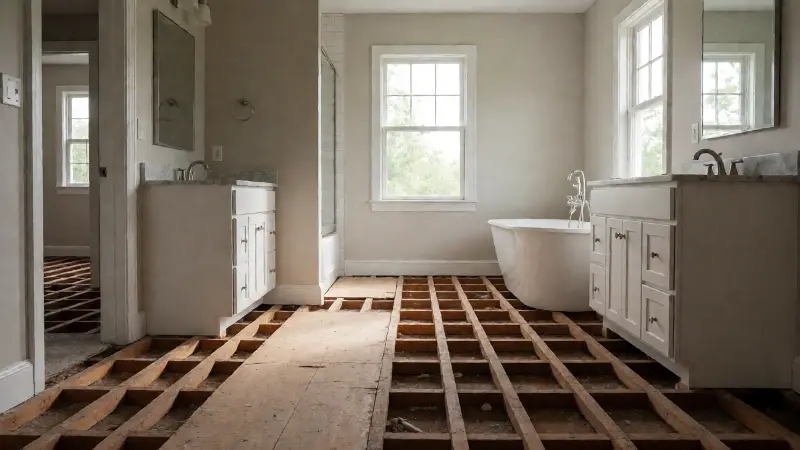
The first step is removing the existing finish floor and the damaged subfloor. This includes tile, vinyl, or laminate, plus any underlayment. Tile over a thick mortar bed is significantly more labour-intensive to remove than a floating floor.
Disposal of the old material adds cost. Tile and mortar are heavy, and tipping fees apply in most areas. Access matters too, since carrying debris down stairs takes more time than a ground-floor removal.
Subfloor Materials
The cost of the new subfloor depends on the material chosen. Plywood and oriented strand board are common options, with plywood generally more moisture-tolerant. Cement backer board is used beneath tile in wet areas, and it adds material cost but improves durability.
Some projects use a waterproof membrane system over the subfloor, particularly in shower areas. These systems add material and labour but provide better long-term protection.
Labour
Labour is often the largest single line item. It covers removal, cutting, fitting, fastening, and preparing the surface for the finish floor. If joists need repair or sistering, that work adds time and cost.
Plumbing and electrical work also fall into this category if fixtures need to be disconnected and reconnected. Moving a toilet or vanity requires additional plumbing labour.
Finish Flooring
Replacing the subfloor usually means replacing the finish floor, because the old flooring cannot be reused after removal. Tile, vinyl, and luxury vinyl plank are common bathroom choices, and each has a different material and installation cost.
If tile is installed, the cost includes thinset, grout, and sealant, plus the labour for layout and cutting. If wall panels are part of the same renovation, it helps to compare options before committing. A comparison of LuxStone vs FlexStone panels is useful if the shower surround is being updated at the same time.
Waterproofing and Sealing
Wet areas require waterproofing at the subfloor level and at wall-to-floor junctions. Liquid membranes, sheet membranes, and sealants all add cost, but they are essential in showers and around tubs. Skipping this step is a false economy that leads to repeat damage.
Permits and Inspection
Some jurisdictions require permits for plumbing alterations or structural repairs associated with subfloor replacement. Permit fees are modest compared with the cost of remediating unpermitted work. Inspections also catch problems that might otherwise be concealed.
Cost Comparison by Scope
The table below compares common subfloor replacement scopes across the factors that affect price. The figures are relative rather than absolute, because regional labour rates and material choices shift them considerably.
| Scope | Typical Work Included | Relative Cost | Key Cost Drivers | Where Budgets Slip |
|---|---|---|---|---|
| Localised patch around toilet | Remove finish floor, cut out damaged panel, install new plywood patch, reset toilet | Lowest | Demolition, new panel, wax ring, labour | Damaged flange, hidden rot extending beyond patch |
| Partial replacement, tub area | Remove flooring and subfloor near tub, replace with plywood and backer board | Low to moderate | Tile removal, backer board, waterproofing | Joist damage, plumbing leaks behind tub |
| Full subfloor replacement, same layout | Remove all finish floor and subfloor, install new panels, prepare for new flooring | Moderate | Demolition, materials, labour, disposal | Widespread rot, joist repair, subfloor levelling |
| Full replacement with joist repair | Above plus sistering or replacing damaged joists | Moderate to high | Structural labour, additional materials | Extent of rot, access to joists, engineering |
| Full replacement with layout change | Above plus moving plumbing, relocating fixtures | High | Plumbing rough-in, electrical, permits | Drain slope, venting, inspection requirements |
| Full replacement with premium finishes | Above plus tile, heated floor, new fixtures | Highest | Finish materials, heated mat, fixtures | Upgraded tile, custom vanity, lighting changes |
Material Costs Explained
Subfloor material choice affects both the upfront price and the long-term performance in a wet room. The options below are the ones most commonly used in bathroom repairs.
Plywood
Plywood is a common choice because it holds fasteners well and tolerates occasional moisture better than some alternatives. Exterior-grade or marine-grade plywood offers better moisture resistance, though it costs more. Thickness matters, and the new panel should match or exceed the original for structural performance.
Oriented Strand Board
Oriented strand board is less expensive than plywood but swells and loses strength quickly when wet. It is a reasonable option in dry areas but is a poor choice for bathroom subfloors where moisture exposure is likely.
Cement Backer Board
Cement backer board is not a structural subfloor on its own. It is installed over plywood or oriented strand board to provide a stable, moisture-resistant base for tile. It adds material and labour cost but improves the durability of the tile installation.
Waterproof Membranes
Liquid-applied and sheet membranes create a waterproof layer over the subfloor and up the walls in wet areas. They are essential in showers and recommended around tubs and toilets. The cost depends on the system and the area covered.
Hidden Costs That Push Budgets Over
Bathroom subfloor projects are prone to surprises because so much of the damage is concealed until demolition begins. The following expenses often appear once the floor is opened.
- Joist damage: Rot in joists requires sistering or replacement, which adds structural labour.
- Plumbing repairs: Leaking supply or drain lines discovered under the floor must be fixed.
- Toilet flange damage: A broken flange may require a repair kit or replacement.
- Mould remediation: Extensive mould growth may require professional treatment.
- Electrical issues: Wiring under the floor may be damaged or out of code.
- Subfloor levelling: Uneven joists may require levelling compound or additional preparation.
- Unexpected finishes: Walls, baseboards, and trim are often damaged during removal.
- Disposal fees: Tile and mortar are heavy and cost more to dispose of than wood.
- Permits and inspections: Required for many plumbing and structural changes.
Building a contingency of roughly fifteen to twenty percent into your budget is a reasonable safeguard. Bathroom subfloor work is unpredictable because the extent of the damage is not fully known until the old floor is removed.
DIY vs Hiring a Contractor
Some parts of a bathroom subfloor replacement are within reach for a confident homeowner, while others are better left to professionals.
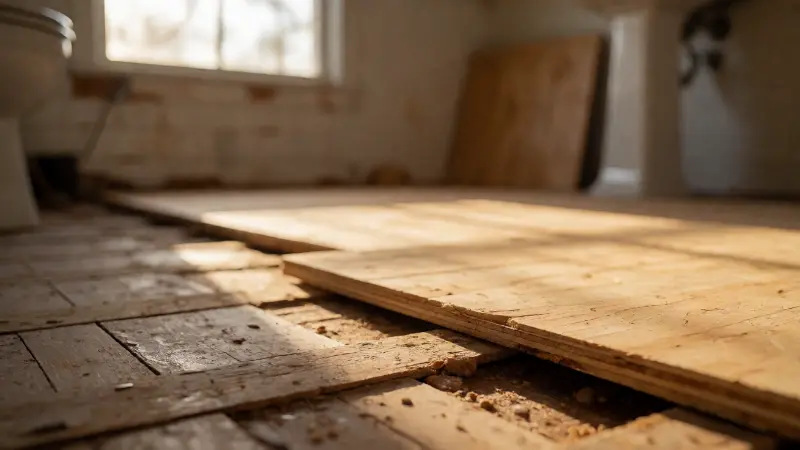
Demolition, disposal, and cutting new panels are tasks many people can handle with basic tools. Installing the subfloor, fastening it properly, and preparing the surface for tile is also achievable if you are comfortable with carpentry.
Plumbing, electrical, and structural joist work generally require licensed trades and permits. Toilet removal and reinstallation is manageable for many homeowners, but a damaged flange or a leaking drain line is better handled by a plumber.
Waterproofing is a step where mistakes are costly. A poorly installed membrane can leak and cause the same damage you just repaired. If you are not confident in your ability to detail the corners, seams, and penetrations correctly, hiring a professional for that step is a sensible decision.
Choosing the Right Finish Flooring
The finish flooring must suit a wet environment and be compatible with the subfloor preparation. Tile is durable and water-resistant but requires a stable subfloor and a waterproofing layer in wet areas. Luxury vinyl plank is easier to install and tolerates moisture, though it needs a flat surface.
Sheet vinyl is a cost-effective option that provides good water resistance when properly sealed at the edges. Engineered wood and laminate are generally poor choices for bathrooms because they swell when exposed to moisture.
If the subfloor has been replaced, the new surface should be flat and sound before any finish flooring is installed. Uneven subfloor is a leading cause of cracked tile and failed grout joints.
Structural Considerations
Subfloor replacement sometimes reveals problems that extend beyond the bathroom. Rot in the subfloor can travel into joists, sill plates, and rim boards, particularly if the leak has been ongoing. Addressing these issues properly is essential for the safety and longevity of the home.
If the damage reaches the sill plate or the framing at the perimeter, the repair becomes a structural project rather than a cosmetic one. Guidance on replacing a sill plate without jacking explains the approach when the damage is at the foundation line rather than the floor.
Foundation moisture can also contribute to subfloor problems, particularly in basements and crawl spaces beneath the bathroom. If the foundation shows signs of deterioration, addressing it may be part of the broader repair. A reference on basement parging cost and foundation repair is useful if the moisture source traces back to the foundation rather than the plumbing.
How to Compare Quotes Fairly
The fastest way to misjudge a quote is to compare totals when the scopes differ. Insist on an itemised estimate that separates demolition, materials, labour, waterproofing, plumbing, and disposal.
Confirm what is excluded. Common exclusions include permit fees, joist repair, mould remediation, and finish flooring. Ask who handles toilet removal and reinstallation, and whether the price includes a new wax ring and flange repair if needed.
Ask about the waterproofing method and the products used. A contractor who cannot explain the membrane system in detail is a risk in a wet area. Request references from similar bathroom projects and check that the work was inspected where required.
Get at least three estimates and be wary of a bid that is significantly lower than the others. A low bid often signals an omission, and the omission tends to surface once demolition is underway.
Preventing Future Damage
Prevention is the most valuable part of a subfloor replacement. The repair itself is straightforward once the damage is exposed, but the conditions that caused it will return if they are not addressed.
- Fix leaks promptly: Address dripping supply lines, running toilets, and slow drains before they cause damage.
- Maintain caulk and grout: Re-seal joints around tubs, showers, and sinks when they crack or shrink.
- Check the toilet seal: Replace the wax ring if there is any sign of leakage or movement.
- Ventilate the bathroom: Run the exhaust fan during and after showers to reduce humidity.
- Use waterproofing systems: Install a proper membrane in wet areas rather than relying on tile and grout alone.
- Inspect periodically: Look for soft spots, staining, and loose tile before they become major problems.
Catching a leak early usually means a localised repair rather than a full replacement. Routine inspection saves considerably more than the cost of repeated subfloor work.
FAQ
How much does it cost to replace a bathroom subfloor?
Costs vary widely by scope and region, so no single figure applies everywhere. A localised patch around a toilet sits at the low end, while a full replacement with joist repair and new finishes costs substantially more. Itemised local quotes are the only reliable guide.
Can I replace a bathroom subfloor myself?
You can handle demolition, disposal, and cutting new panels if you are comfortable with basic carpentry. Plumbing, electrical, structural joist work, and waterproofing are better left to professionals. Mistakes in waterproofing can cause the same damage you just repaired.
How long does a bathroom subfloor replacement take?
Timelines depend on scope, drying time, and trade availability. A localised patch may take a day or two, while a full replacement with joist repair and new tile can run considerably longer. Waterproofing and tile curing add time to the schedule.
Do I need a permit to replace a bathroom subfloor?
Permits are commonly required when plumbing, electrical, or structural work is involved. A simple like-for-like replacement may not require one. Requirements vary by jurisdiction, so confirm with your local building department.
What is the best subfloor material for a bathroom?
Plywood is a common choice because it holds fasteners well and tolerates occasional moisture better than oriented strand board. Cement backer board is installed over the subfloor beneath tile. Waterproof membranes are essential in wet areas regardless of the subfloor material.
How do I know if the joists are damaged?
Visible rot, crumbling wood, or a floor that deflects noticeably underfoot suggest joist damage. The extent is often not fully known until the subfloor is removed. A professional assessment is advisable if structural damage is suspected.
Can I reuse the existing tile after replacing the subfloor?
Reusing tile is rarely practical because removal usually breaks the tiles and damages the edges. Even if some tiles survive, matching them to a new layout is difficult. Planning for new finish flooring is the realistic approach.
Does homeowners insurance cover subfloor replacement?
Coverage depends on the cause and your policy terms. Sudden accidental discharge is often covered, while damage from neglected maintenance may not be. Document the damage, keep receipts, and contact your insurer before starting work if you intend to claim.
Replacing a bathroom subfloor is a project where the visible cost is only part of the story. The material and labour are predictable, but the condition of the joists, plumbing, and framing determines whether the job stays modest or expands. Get itemised quotes, plan for surprises, and treat waterproofing as non-negotiable. Do that, and the new floor will outlast the one it replaced.