Homeowners often face a critical decision when upgrading cooling systems. Choosing between a 120-volt and 240-volt mini split is pivotal. This choice impacts efficiency, cost, and long-term performance.
Many assume that higher voltage is always superior for home comfort. However, the reality is more nuanced and depends on specific needs. Understanding the electrical demands is the first step to a smart investment.
This guide breaks down the technical differences clearly. It provides actionable advice for homeowners planning a renovation. The goal is to help you pick the best system for your specific setup.
Understanding the Voltage Conflict
The core issue lies in how electricity is delivered to your home. Most residential circuits in the US run on 120 volts. However, larger appliances often require 240 volts for better performance.
Mini split heat pumps sit at this intersection. Smaller units can run on 120V, while larger ones need 240V. This distinction causes confusion for many buyers. They worry about installation complexity and extra costs.
Ignorance of these details can lead to poor choices. A mismatched system may underperform or strain your electrical panel. It is essential to understand why voltage matters for cooling power.
Proper installation details matter in every home project. Electrical integrity is part of that broader structure. Ensuring the right foundation is key to preventing future issues.
Why 240V Mini Splits Are Often Preferred for Larger Systems
For many modern homes with larger cooling loads, a 240-volt system is the practical choice. It offers higher power capacity and is commonly used for multi-zone or high-capacity equipment. This makes it ideal for zones needing significant cooling capacity.
Higher voltage allows the same power to be delivered with lower current, which can reduce voltage drop over long runs when the wire is properly sized. It also supports larger compressors without excessive current draw.
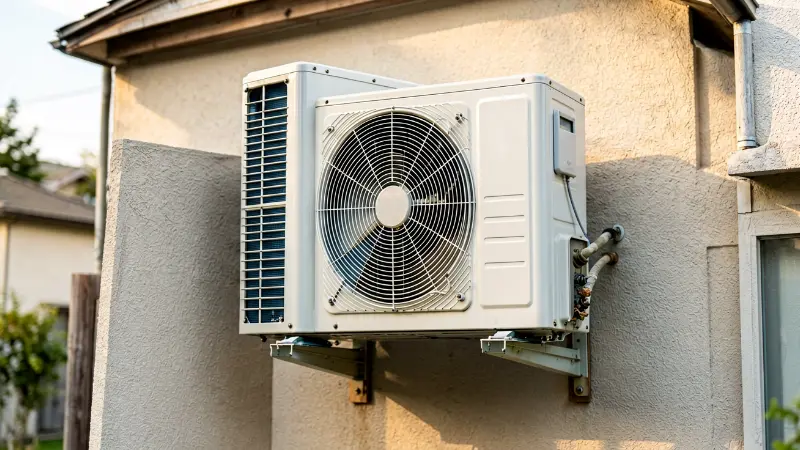
The outdoor unit needs adequate space for ventilation. This image shows a standard setup on a residential wall. Proper placement prevents airflow restriction and ensures longevity of the system.
Efficiency and Performance Benefits
Efficiency is not determined by voltage alone. Higher-capacity 240V systems often achieve higher SEER ratings, but that is because of their compressor, inverter, and system design, not simply because they use 240V. They can handle extreme weather conditions more effectively when properly sized. The compressor runs at optimal levels without unnecessary throttling.
This stability can lead to consistent temperature control. You avoid the short-cycling common in undersized units. It may result in lower electricity bills over time.
Consider the long-term savings against the initial setup. The efficiency gain can pay for itself over time, depending on climate, utility rates, and usage. It is a wise move for energy-conscious homeowners.
Some users prefer high-quality materials for long-term value. The same logic applies to HVAC systems. Investing in better components yields superior results.
Power Capacity and Zone Cooling
Larger homes often require multi-zone cooling systems. Most 240-volt connections support multiple indoor units from one outdoor compressor. This is generally not practical with standard 120-volt lines due to capacity limits.
Think of your garage, office, or bedroom. Each needs tailored climate control. A 240-volt system scales easily to meet these diverse needs.
It prevents the need for multiple separate systems. This simplifies maintenance and control. You manage everything from a single thermostat hub.
When 120V Mini Splits Make Sense
120-volt mini splits are not useless. They have a specific place in the modern home. They are perfect for space-constrained renovations or rentals.
If your electrical panel cannot be altered, this may be your option. Some units can use an existing dedicated circuit, but many still require a new breaker and proper wiring. Do not assume it plugs into a standard outlet.
These units are limited to smaller capacities. Usually, they top out around 9,000 to 12,000 BTU, though some models vary. They work well for single rooms or small spaces.
Installation Simplicity
Homeowners like the relative ease of 120-volt systems. However, a licensed electrician may still be required for the final hookup, especially if a new circuit is needed. This can save labor costs on smaller projects when a suitable circuit already exists.
The wiring is often simpler and cheaper to run. It is ideal for quick installations during tight timelines. You can be up and running in a day with proper planning.
However, simplicity has limits. Do not use these for whole-house cooling. They will struggle to maintain temperature in large spaces. They are point solutions, not systemic ones.
Just as you choose the right supplies for creative projects, choose the right voltage for your space. Match the tool to the task for best results.
Cost Considerations
The upfront cost of a 120-volt system is often lower. The hardware may be cheaper because it requires less electrical infrastructure. You may save on breaker panels and heavy wiring.
But factor in the operating costs. These units may be less efficient per BTU, depending on the model. Your energy bills could be higher for the same cooling output.
Weigh the initial savings against monthly expenses. For small spaces, the math might work out. For large areas, it will not. Calculate the payback period carefully before deciding.
Comparing the Two Systems in Detail
A direct comparison helps clarify the decision. Look at power usage, installation, and ideal applications. This table summarizes the key differences for clarity.
| Feature | 120-Volt Mini Split | 240-Volt Mini Split |
|---|---|---|
| Max Capacity | Typically up to ~12,000–18,000 BTU | Often 18,000–36,000+ BTU |
| Efficiency (SEER) | Depends on model | Depends on model |
| Installation Complexity | Moderate; may need dedicated circuit | Higher; usually needs double-pole breaker and electrician |
| Wiring Cost | Generally lower | Generally higher |
| Best Use Case | Small single rooms/rentals | Large zones/multi-zone systems |
| Long-term Savings | Depends on efficiency and usage | Depends on efficiency and usage |
The data shows a tradeoff. Simplicity vs. capacity. You must prioritize based on your long-term goals. Do not let low upfront cost fool you.
Hidden Factors Most People Ignore
Beyond basic specs, several subtle factors influence this choice. These often determine real-world satisfaction with the system.
Wire Gauge and Voltage Drop
Long runs of wire cause resistance. This is known as voltage drop. In 120-volt systems, this drop can be more significant for a given wire size and current. It can hurt compressor performance.
240-volt systems tolerate longer runs better when wired correctly. The physics of electricity works in their favor. This makes them more reliable in large homes.
Always measure the distance to the outdoor unit. If the run is long, consult the manufacturer’s instructions and an electrician. Voltage drop depends on current, wire gauge, and length, not just voltage.
Future-Proofing Your Home
Homes evolve over time. You might add an attic insulation project later. This changes your cooling load requirements.
A 240-volt system has more headroom. It can handle increased demands from better insulation. A 120-volt system hits its ceiling quickly.
Think about selling the house in five years. High-efficiency systems are a selling point. They attract buyers looking for low utility bills. It adds value to your property.
Noise and Comfort
240-volt units often run quieter at part load. The inverter compressor modulates speed more effectively. You get consistent comfort without loud cycling.
120-volt units may struggle to dehumidify efficiently if they are oversized or non-inverter. They cycle on and off too frequently. This leads to discomfort and mold risks.
Comfort is about humidity control, not just temperature. The better system manages both. Choose the one that provides true climate control.
Step-by-Step Decision Guide
Follow these steps to make the right choice. Each step builds on the previous one. It ensures a logical and safe decision process.
Step 1: Assess Your Cooling Load
Calculate the square footage of the area. Consider the sun exposure and insulation. Use a professional load calculation if possible.
If the zone is under 500 sq ft, 120V might work. If it is larger, consider 240V. Do not guess; measure the actual need.
Step 2: Check Your Electrical Panel
Open your breaker box and look for space. A 240-volt system needs a dedicated double-pole breaker. Ensure you have a free double-pole slot.
If your panel is full, the upgrade cost is high. This may favor the 120-volt option for budget reasons. Get a quote from an electrician first.
Step 3: Consult a Certified Technician
Never rely solely on online opinions. Bring in an HVAC pro for a site survey. They can spot issues you might miss.
Ask them about local code requirements. Some areas restrict certain voltage types. Compliance is non-negotiable for safety and insurance.
Trust their expertise over marketing claims. They see the results of both choices daily. Their advice is grounded in practical experience.
Common Myths About Mini Split Voltage
Misinformation spreads quickly in online forums. Let’s debunk the top three myths about 120 vs 240 units.
Myth: 120V Is Always Safer
Lower voltage does not mean safer if installed wrong. Both require proper grounding and circuits. Safety comes from quality installation.
240V has higher fault current potential. But modern breakers handle this well. Follow NEC codes and you are safe.
Do not fear the voltage if you hire pros. The risk is in DIY mistakes, not the system itself. Always use a licensed electrician.
Myth: 240V Uses More Electricity
This is not true. 240V delivers the same power with less current, which can reduce heat loss in wires. But it does not automatically make the appliance more efficient. You pay for efficiency, not raw power. The system runs cooler and longer when properly sized. It can extend the life of your compressor.
Look at the energy guide labels. Higher-efficiency models usually have better ratings, regardless of voltage. This saves money on your utility bill monthly.
Myth: You Can’t Add 240V Later
Adding a sub-panel is feasible in many homes. It is a manageable construction project. Many homeowners do this during kitchen remodels.
Plan for it in the future. Start with 120V if budget is tight. Then upgrade the panel and system in phases.
This phased approach minimizes upfront cost. It allows for expansion as needs grow. It is a flexible strategy for growing families.
Maintenance and Longevity Tips
Whichever voltage you choose, maintenance is key. Neglecting your system shortens its life. It also reduces efficiency significantly.
Clean the filters every two weeks during peak use. This prevents strain on the compressor. It keeps airflow smooth and effective.
Schedule an annual pro inspection. They will check refrigerant levels and electrical connections. Early detection prevents costly breakdowns.
Keep the outdoor unit clear of debris. Leaves and dust block heat exchange. This forces the system to work harder. It increases your energy bills unnecessarily.
Final Verdict: Which Should You Choose?
For most homeowners, the right choice depends on load and electrical capacity. A 240-volt mini split is often better for larger zones, multi-zone systems, and long runs. It offers superior capacity and scalability. It is the professional choice for serious comfort.
Choose 120-volt only for small, specific needs. Think of a nursery, office, or garage. It is a niche solution, not a universal one.
Evaluate your budget and future plans. The long-term savings depend on efficiency, not voltage alone. It is an investment in your home’s value.
Do not let complexity deter you. Hire the right team and handle it. Your home will thank you for years to come. Make the smart choice for your comfort and wallet.
Remember, proper installation is just as important as the voltage. Check your structural integrity and sealing. Details matter in every home improvement. Quality work ensures lasting results.
Stay informed and make decisions based on facts. Avoid the hype and focus on performance. Your home deserves the best possible solution. Choose wisely and enjoy year-round comfort.