
Your mower died halfway through the lawn. The manual calls for a Champion QC12YC, but the shelf only has an RC12YC. The numbers look almost identical, so the obvious question is whether one can replace the other without hurting the engine.
The short answer is that QC12YC and RC12YC share the same size, thread, reach, heat range, and gap style. The main difference is how each plug suppresses radio frequency interference. That difference matters most on engines with sensitive electronic ignition or CDI systems.
The Real-World Problem: Your Engine Says QC12YC, the Shelf Says RC12YC
Home and garden equipment often sits for weeks between uses. When it finally starts hard or misses under load, the spark plug is one of the first parts to check. Owners then discover that the exact OEM number is not always stocked locally.
Champion makes both QC12YC and RC12YC for small engines. They fit the same 14 mm spark plug hole and use the same 5/8-inch hex. They also share a 3/8-inch reach and a projected tip.
That physical overlap is why so many cross-reference charts list them as interchangeable. It is also why so many people install the wrong suppression type without realizing it. The engine may run, but the ignition system may not be getting the exact protection it was designed to use.
Champion Plug Codes Decoded
Champion spark plug codes pack a lot of information into a few letters and numbers. The first letter usually tells you about suppression. The letter after that describes thread size and reach. The number is the heat range.
In RC12YC, the R stands for resistor. A resistor plug contains a built-in resistor that reduces radio frequency interference. In QC12YC, the Q indicates Champion’s inductive suppressor design. It also reduces interference, but it does so with a different internal component.
The rest of the code is shared. The C12YC portion tells you the plug has a 14 mm thread, a 3/8-inch reach, a 12 heat range, a projected core nose, and a copper core. That means the two plugs are thermal and mechanical siblings.
Specs Side by Side: QC12YC vs RC12YC
The table below shows why these two plugs are so often confused. The only meaningful difference is in the suppression method and the OEM applications that prefer one over the other.
| Feature | Champion RC12YC | Champion QC12YC |
|---|---|---|
| Suppression type | Resistor | Inductive suppressor |
| Thread size | 14 mm | 14 mm |
| Reach | 3/8 inch | 3/8 inch |
| Hex size | 5/8 inch | 5/8 inch |
| Heat range | 12 | 12 |
| Tip style | Projected | Projected |
| Core material | Copper | Copper |
| Seat type | Gasket | Gasket |
| Typical OEM use | Standard small-engine ignition | CDI and RFI-sensitive engines |
| Common interchange | Often yes | Often yes |
The Difference That Matters: Resistor vs Inductive Suppression
A spark plug fires thousands of times per minute. Each firing creates an electrical pulse that can travel through the air and wiring. Without suppression, that pulse can interfere with radios, electronic modules, and even nearby sensors.
RC12YC uses a resistor to soften that pulse. QC12YC uses an inductive suppressor to achieve a similar result. Both protect nearby electronics, but they do not use the same internal design.
On a simple push mower with a basic ignition coil, either plug may work fine. On a garden tractor, generator, or snowblower with electronic ignition, the OEM may specify the Q version for a reason. Using the wrong suppression type may cause rough running, radio static, or erratic ignition behavior.
Are QC12YC and RC12YC Interchangeable?
For many home and garden engines, QC12YC and RC12YC can be used interchangeably because the thread, reach, heat range, and gap are the same. If the engine only needs a suppressed 14 mm plug in heat range 12, either one can usually get it running.
However, interchangeability does not mean identical performance. If the engine manufacturer specifies QC12YC, a QC12YC is the safest choice. If the manufacturer specifies RC12YC, an RC12YC is the correct replacement.
Think of it like using the right oil filter. A different brand may fit, but the engine maker chose a specific part for a reason. The same logic applies to spark plug suppression type.
Why the Wrong Suppression Type Can Cause Strange Symptoms
An incorrect spark plug rarely destroys an engine instantly. Instead, it often causes small problems that owners overlook. The engine may start harder, idle rough, or surge when the blades engage.
Radio interference is another clue. If a radio in the shed buzzes only when the mower runs, the plug may not be suppressing RFI correctly. Electronic ignition systems can also behave strangely when the plug does not match the OEM specification.
These symptoms can look like carburetor problems, fuel problems, or safety switch issues. Before rebuilding a carburetor, verify that the spark plug is the correct suppression type and heat range.
Heat Range 12: What It Means for Garden Equipment
The number 12 in both plugs is a medium heat range. It is common in air-cooled small engines that run at varying loads. A heat range that is too cold can foul, while one that is too hot can cause pre-ignition.
Some owners try to fix fouling by installing a hotter plug. That can mask a dirty air filter, a rich carburetor, or old fuel. The better solution is to restore the fuel and air system first, then use the OEM heat range.
QC12YC and RC12YC are both heat range 12, so switching between them does not change the thermal behavior. Any change in fouling or performance comes from the suppression design or from other engine issues.
Gap, Torque, and Installation
Most small engines that use these plugs specify a gap around 0.030 inch. Always check the engine manual, because some electronic ignition systems use a different gap. A feeler gauge is more accurate than eyeballing the electrode.
Use a spark plug gapping tool to bend the ground electrode gently. Never pry against the center electrode or ceramic insulator. A cracked insulator can cause misfires even if the gap is perfect.
For a 14 mm gasket-seat plug, a torque of about 18 to 22 ft-lbs is typical. Overtightening can crush the gasket and damage the threads. If thread lubricant is used, reduce torque slightly according to the lubricant maker’s instructions.
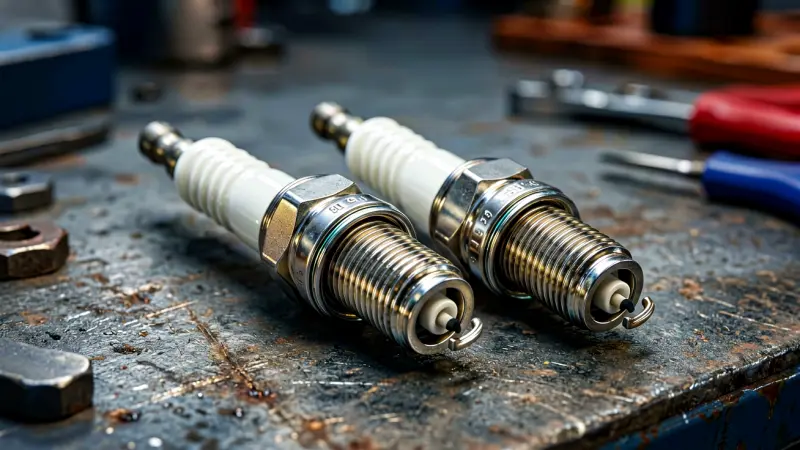
Step-by-Step Replacement for Mowers, Generators, and Snowblowers
Let the engine cool completely before touching the spark plug. A hot engine can burn your hands and damage the plug boot. Remove the spark plug boot by pulling on the boot, not the wire.
Clean the area around the plug with a brush or compressed air. Dirt that falls into the cylinder can score the piston and walls. Use a spark plug socket to remove the old plug, then inspect the electrode and insulator.
Check the new plug’s gap and terminal nut. The terminal nut must match the boot tightly. Install the plug by hand first to avoid cross-threading, then torque it to spec.
Reconnect the boot until it clicks or seats fully. Start the engine and listen for smooth idle and acceleration. If the engine still misses, check the ignition coil, fuel delivery, and safety switches.
If an electric-start mower has a shed outlet with power but the charger will not work, troubleshooting the outlet may be the next step. A guide like outlet has 120V but doesn’t work can help isolate the problem safely.
How to Cross-Reference QC12YC and RC12YC to Other Brands
Cross-reference charts often list both plugs to the same NGK, Bosch, or Autolite numbers. Common equivalents include NGK BPR5ES, Bosch FR8DC, and Autolite 3924. However, not every chart accounts for the Q versus R suppression difference.
When cross-referencing, match thread, reach, hex, heat range, and suppression type. A plug that fits the hole but lacks proper suppression can still cause electronic interference. The OEM number on the engine label is the most reliable guide.
If the engine label is missing, look up the equipment model and serial number online. Parts diagrams usually list the exact spark plug and any approved alternatives.
Common Mistakes and How to Avoid Them
One common mistake is assuming all 12 heat range plugs are identical. Heat range is only one part of the code. Reach, thread, seat type, and suppression all matter.
Another mistake is over-gapping a plug to “get a hotter spark.” A wider gap can stress the ignition coil and cause misfires under load. Use the gap specified by the engine maker.
Counterfeit spark plugs are also a real problem. Cheap plugs sold online may have incorrect heat ranges or poor suppression. Buy from reputable dealers and inspect the packaging for clear branding.
Finally, never install an automotive plug in a small engine just because it threads in. Automotive plugs may have a different reach, heat range, and suppression design. The result can be poor performance or engine damage.
Maintenance Schedule for Home and Garden Spark Plugs
Inspect the spark plug every 25 to 50 hours of use. Clean the electrode and check the gap if the plug is still in good condition. Replace the plug at least once per season for equipment that runs frequently.
For occasional-use equipment, replace the plug annually before the first use of the season. Old fuel and condensation can foul a plug even if the engine has not run many hours.
While servicing the machine, check the air filter, fuel filter, and oil. A dirty air filter can cause rich running and plug fouling. A bad fuel cap or stale fuel can create similar symptoms.
Sharpening blades and sanding rust also matter for seasonal maintenance. Matching the right abrasive to the job is like matching the right plug to the engine; choosing the right sandpaper grit can prevent extra work.
When to Choose QC12YC Over RC12YC
Choose QC12YC when the engine manufacturer specifically calls for it. This is especially important for Kohler and other engines with CDI or electronic ignition. The Q suppressor is designed to protect sensitive ignition electronics from RFI.
Choose QC12YC if the equipment has a history of radio interference or erratic electronic behavior. It is also the safer choice when the OEM parts diagram lists QC12YC as the primary plug.
If the engine originally used RC12YC, there is usually no benefit to switching to QC12YC unless an updated service bulletin recommends it. Use the latest OEM information for the specific engine model.
When RC12YC Is the Better Choice
RC12YC is often easier to find and may cost less than QC12YC. It is a proven plug for many Briggs & Stratton, Tecumseh, and Honda small engines. If the OEM calls for RC12YC, it is the correct choice.
RC12YC also works well in simple ignition systems that do not require inductive suppression. It provides reliable starting and smooth running when the fuel and air systems are in good condition.
If the local store only has RC12YC and the engine specifies QC12YC, it can often be used as a temporary replacement. Replace it with the correct QC12YC as soon as possible, especially if the engine has electronic ignition.
Related Home and Garden Electrical Safety
Spark plugs are part of a larger electrical system. If a garden shed is being wired for lights or a battery charger, the routing method matters. A guide like romex to conduit transition can explain how to make a safe connection.
Outdoor receptacles also take abuse from weather and rodents. If a tool will not charge, test the outlet before replacing the tool. Electrical problems often mimic fuel or ignition problems.
Keep extension cords away from wet grass and sharp mower decks. Use GFCI protection for outdoor outlets. These small steps protect both the equipment and the people using it.
Frequently Asked Questions
Will RC12YC replace QC12YC?
In many engines, yes. They share the same thread, reach, hex, heat range, and gap. For CDI or electronic ignition, QC12YC is the preferred OEM replacement.
What is the gap for QC12YC and RC12YC?
Many small engines specify about 0.030 inch. Check the engine manual because some models use a different gap. Always measure the gap before installing.
Can QC12YC be used in place of RC12YC?
Usually yes if the engine uses a standard 14 mm, 3/8-inch reach, heat range 12 plug. The Q suppressor may provide extra RFI protection, but it is not a performance upgrade.
Do QC12YC and RC12YC have the same thread?
Yes. Both use a 14 mm thread, 3/8-inch reach, and 5/8-inch hex. They fit the same spark plug socket and the same cylinder head opening.
Is QC12YC hotter than RC12YC?
No. Both are heat range 12. Any difference in running temperature comes from engine load, fuel mixture, cooling, and ignition timing, not from the Q or R prefix.
What causes spark plug fouling in lawn mowers?
Common causes include a dirty air filter, rich carburetor, stuck choke, old fuel, and wrong heat range. Fix the root cause instead of installing a hotter plug.
Final Verdict: QC12YC vs RC12YC
QC12YC and RC12YC are close cousins. They share the same physical dimensions, heat range, and copper-core design. The real difference is the suppression method: Q uses an inductive suppressor, while R uses a resistor.
For most home and garden engines, either plug can make the engine run if the specs match. For engines with electronic ignition or CDI, the OEM recommendation should be followed closely. That is the safest way to protect the ignition module and keep equipment starting season after season.
When in doubt, write down the engine model and serial number. Look up the exact plug in the parts diagram, then buy from a trusted source. A five-dollar spark plug is cheap insurance for a mower, generator, or snowblower that needs to start on the first pull.