Ariens snowblower tires are easy to ignore until the machine starts slipping. The tires sit in freezing weather, under heavy loads, and often on uneven pavement. Wrong tire pressure can make an Ariens snowblower feel weak, steer poorly, or fail to climb a small slope.
This guide covers the recommended PSI, common symptoms, cold-weather changes, and a simple pressure routine. It also explains how tire pressure connects to Ariens Auto-Turn performance and when the real problem is not the tire at all.
Quick Answer: What Tire Pressure Does an Ariens Snowblower Need?
Most Ariens Sno-Thro models are designed for 20 psi cold. Some compact or professional models may call for 15-22 psi depending on tire size and model year. The owner’s manual and tire sidewall are the final authority.
“Cold” means before the snowblower has been run or moved far. A heated garage can give a false reading. If pressure is set indoors, it may be too low once the machine reaches freezing outdoor air.
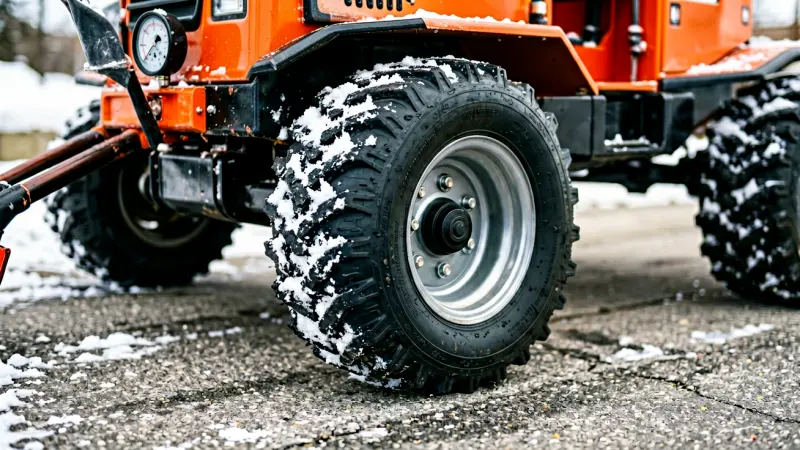
Ariens Snowblower Tire Pressure Chart by Model Type
| Ariens Snowblower Type | Common Tire Size | Typical Cold PSI | Why It Matters |
|---|---|---|---|
| Compact / S18 / S20 | 4.10/3.50-6 or 13×4.00-6 | 20 psi | Balances traction and light steering |
| Deluxe / Platinum | 15×5.00-6 or 16×6.50-8 | 20 psi (some 15-22 psi) | Keeps Auto-Turn predictable |
| Professional / Hydro | 16×6.50-8 | 20-22 psi | Supports heavy chassis and heavy snow |
| Older Ariens 2-Stage | 4.10/3.50-6 | 18-20 psi | Check manual for exact spec |
Use this chart as a starting point, not a replacement for the manual. If the manual says 18 psi, use 18 psi. The goal is an even, firm footprint that supports traction without overloading the tire.
Why Tire Pressure Changes Snowblower Performance
Tire pressure controls the shape of the tire’s contact patch. Low pressure creates a wider, softer footprint. That can add grip on ice, but too low causes sidewall flex, bead leaks, and heavy steering.
High pressure makes a narrow, hard footprint. The tire spins more easily on packed snow. It can also make the machine bounce and lose control on slippery pavement.
Correct pressure balances grip, steering, and ground clearance. It also protects the rims from impact damage when the machine hits a curb or ice chunk.
Signs Your Ariens Snowblower Tire Pressure Is Wrong
Low Tire Pressure Symptoms
Bulging sidewalls, a flattened bottom, and hard pushing are common signs. The machine may rock side to side or feel sluggish when turning. In freezing weather, low pressure can also open a slow bead leak.
Low tires lower the bucket and scraper bar. That increases scraper wear and makes the auger work harder. It can also reduce clearing efficiency because the machine drags instead of rolling.
High Tire Pressure Symptoms
Tires look rock hard and rounded. The snowblower slips on slight slopes and steers with a light, twitchy feel. Snow may be left behind because the bucket rides too high.
High pressure is common after someone uses a car tire gauge and adds 32 psi. Most Ariens snowblower tires are not car tires. That pressure is usually too high for snowblower traction.
Uneven Side-to-Side Pressure
One tire low makes the machine pull to that side. This is especially noticeable on Ariens Auto-Turn models. It can feel like the differential is stuck or the steering is fighting the operator.
Always check both tires. A 3-5 psi difference is enough to affect tracking and traction. Equal pressure is the baseline for accurate diagnosis.
How to Check Tire Pressure on an Ariens Snowblower
Start with the snowblower cold. Remove the valve cap from one tire. Press a dial or digital gauge onto the valve stem firmly.
Read the pressure and write it down. Repeat on the other tire. Compare both numbers before adding air.
On many Ariens wheels, the valve stem sits close to the axle bracket. A straight chuck may not seal. Use a flexible hose or angled chuck for an accurate reading.
Inspect the valve cap and stem for cracks. A missing cap lets ice, salt, and grit enter the valve. That can cause slow leaks all winter.
How to Inflate Ariens Snowblower Tires Correctly
Use a hand pump or compressor with a working gauge. Add air in short bursts. Check the pressure after each burst.
Do not exceed the maximum pressure on the tire sidewall. The sidewall maximum is a safety ceiling, not a recommended operating pressure. Most Ariens snowblower tires run best near the manual’s cold PSI.
If the tire is tubeless, a sudden loss of pressure may mean the bead is unseated. Do not overinflate to force the bead. Seek a shop if the bead will not seal safely.
Replace the valve cap right away. A cap keeps ice, salt, and grit out of the valve core.
Cold Weather and Tire Pressure: The Hidden Problem
Tire pressure drops as temperature falls. A rough rule is 1 psi for every 10°F drop. A snowblower set at 20 psi in a 70°F garage may read about 15 psi at 20°F outside.
That drop can turn a good tire into a soft tire. The machine may slip, pull, or feel heavy. Always recheck pressure outdoors before the first big storm.
If pressure must be set indoors, add about 1 psi for every 10°F difference. Never exceed the sidewall maximum. Verify outdoors when the tire is cold.
The Ariens Auto-Turn and Tire Pressure Connection
Ariens Auto-Turn models rely on both wheels turning at the same effective radius in straight lines. Tire pressure changes that radius. Uneven pressure can make the machine pull or turn unexpectedly.
Many owners blame the friction disc when the machine pulls. In some cases, the real issue is a low tire. Check and equalize tire pressure before adjusting the friction disc.
If pressure is even and traction still fails, inspect the friction disc. A worn or misadjusted disc can cause slipping under load. The guide on Ariens friction disc adjustment can help.
Should You Run Different Pressure in Each Tire?
Some operators lower one tire to improve traction on slopes. That is not a good practice on Ariens Auto-Turn snowblowers. It can confuse the differential and cause unsafe steering.
Keep both tires equal unless the owner’s manual gives a specific exception. If more traction is needed, use chains, weights, or better technique.
Uneven pressure also wears tires differently. One tire may wear faster and develop a slow leak that is hard to find later.
Tire Pressure with Chains, Weights, and Wheel Kits
Tire chains do not require lower pressure. In fact, low pressure can let chains slip or damage the sidewall. Keep the recommended cold pressure when using chains.
Wheel weights add downward force. They do not change the correct PSI. Check pressure after installing weights because handling may reveal a low tire.
If chains hit the frame or fender, stop. The tire may be oversized or the pressure may be too low. Correct the fit before use.
Tubeless vs. Tube-Type Ariens Snowblower Tires
Most modern Ariens snowblower tires are tubeless. They seal at the bead and valve stem. Cold rubber can shrink and cause slow leaks at the bead.
Some older models use inner tubes. A tube can leak at the valve core or from a puncture. Tube-type tires may hold pressure differently in cold weather.
For repeated bead leaks, a tire shop can clean and seal the bead. Do not use fix-a-flat as a long-term repair. It can clog the valve and make future service difficult.
How Tire Pressure Affects Clearing and Scraper Wear
Low tires lower the bucket and scraper bar. That can scrape pavement clean, but it also wears the bar fast. It increases drag and fuel use.
High tires lift the bucket. The machine may leave a thin layer of snow. This is common when pressure is above 25 psi on small tires.
The best pressure keeps the scraper bar level and the auger housing slightly above the pavement. That protects both the machine and the driveway.
How to Read Ariens Snowblower Tire Size and Sidewall Info
Tire numbers like 4.10/3.50-6 or 16×6.50-8 tell you size, not pressure. The last number is rim diameter in inches. The sidewall may list a maximum pressure, not a recommended operating pressure.
Use the owner’s manual for the recommended PSI. The sidewall max is a safety ceiling for the tire construction. Operating at the maximum all the time can reduce traction and wear.
If the manual is missing, search by Ariens model and serial number. A dealer can also confirm the correct pressure for your exact tire size.
Step-by-Step: Winter Tire Pressure Routine for Ariens Snowblowers
Step 1: Park the snowblower on a level, cold surface. Let it sit for at least an hour if it was in a warm garage.
Step 2: Check both tires with a reliable gauge. Record the readings. Step 3: Inflate each tire to the manual’s cold PSI, usually 20 psi.
Step 4: Recheck both tires after 10 minutes. Step 5: Install valve caps. Step 6: Roll the machine forward and back to seat the tires.
Step 7: Check for bulges, cracks, or bead leaks. Step 8: Repeat before each major storm and after sharp temperature swings.
Common Mistakes That Cause Snowblower Tire Problems
Using a car tire gauge that is hard to read at low pressure is a common mistake. Snowblower tires need a gauge that reads 0-30 psi accurately.
Another mistake is checking pressure after driving the machine. Friction warms the tire and raises the reading. That gives a false “good” number.
Ignoring one tire is also common. A slow leak on the hidden side can cause pulling for weeks. Always check both tires.
Finding a Slow Leak in an Ariens Snowblower Tire
Inflate to 20 psi. Mix soap and water in a spray bottle. Spray the valve stem, valve core, bead, and tread.
Look for bubbles that grow. A bubble at the valve core means tighten or replace the core. Bubbles at the bead may need a tire shop to reseat and seal the bead.
If the leak is in the tread, a plug may work for a temporary repair. For a reliable fix, use a patch from the inside or replace the tire.
Slope Traction and Tire Pressure
On slopes, correct pressure is more important than soft tires. Low pressure can make the machine wallow and lose steering. High pressure can make it slide sideways.
Use slow speeds, engage the drive gently, and keep both tires equal. If the slope is steep, use chains or consider a track model.
Never reduce pressure below the manual’s minimum to gain traction. That risks bead leaks and rim damage.
Storage and Off-Season Tire Pressure Tips
Before off-season storage, inflate to recommended cold PSI. Park on a hard surface or use blocks to avoid flat spots. Check pressure again before the next winter.
If the snowblower sits for months, a slow leak may drain a tire. A flat tire can crack the sidewall or unseat the bead. Store it with valve caps tight.
Keep the machine away from chemicals, oil, and direct sun. These can dry out rubber and make future leaks more likely.
When Tire Pressure Is Not the Problem
If pressure is correct and equal but the machine still slips, look deeper. A worn friction disc, bad belt, or seized bearing can mimic a tire problem.
Grinding or frozen gears can also stop movement. Proper snowblower gearbox grease helps prevent that kind of damage.
If the engine stalls or runs poorly, the issue may be fuel delivery. A gas leaking from primer bulb can flood the engine and make the machine seem powerless.
How Often Should You Check Ariens Snowblower Tire Pressure?
Check pressure before the season starts. Check again before the first storm. After that, check monthly and after any big temperature drop.
If a tire needs air every week, find the leak. Check the valve core, bead, and tread for nails or cracks. A slow leak will only get worse.
Keep a small gauge and pump in the garage. That makes it easy to correct pressure before a storm instead of during one.
Frequently Asked Questions
What is the recommended tire pressure for an Ariens snowblower?
Most Ariens snowblowers use 20 psi cold. Some models may specify 15-22 psi. Check your owner’s manual and tire sidewall.
Should both Ariens snowblower tires have the same pressure?
Yes. Equal pressure keeps the machine tracking straight. Uneven pressure can cause pulling and Auto-Turn issues.
Can I use 30 psi in my snowblower tires?
Usually no. That is too high for most Ariens snowblower tires. It reduces traction and can make the bucket ride too high.
Why do my snowblower tires lose pressure in winter?
Cold air contracts and lowers pressure. Rubber also shrinks, which can open small bead or valve leaks. Check pressure outdoors before use.
Do I need to add air if the tire looks fine?
Yes. A tire can look normal and still be 5 psi low. Always use a gauge instead of judging by appearance.
Can low tire pressure damage an Ariens snowblower?
It can cause bead leaks, rim damage, scraper wear, and extra load on the drivetrain. It also makes the machine harder to control.
Final Thoughts on Ariens Snowblower Tire Pressure
Tire pressure is a small setting with a big effect. For most Ariens snowblowers, 20 psi cold is the target. Equal pressure on both tires protects traction, steering, and Auto-Turn performance.
Check pressure outdoors, before the storm, and after temperature swings. If traction still fails, inspect the friction disc, gearbox, and fuel system before forcing the machine.
With the right PSI, an Ariens snowblower moves better, steers straighter, and clears more snow with less effort.