A garage refrigerator adds useful storage for drinks, bulk groceries, and holiday extras. It also works in one of the harshest spots in the home: a space with dust, humidity, pests, and wild temperature swings. That combination creates garage refrigerator problems that rarely happen in a climate-controlled kitchen.
Most failures follow a pattern. Heat stresses the compressor, cold confuses the thermostat, moisture feeds rust and mold, and poor airflow turns small issues into expensive repairs. This guide explains the causes and gives practical fixes that protect food and extend the fridge’s life.
Why Garage Refrigerators Have More Problems Than Kitchen Fridges
Garages often swing from below freezing in winter to above 100°F in summer. A standard refrigerator is usually designed for indoor temperatures between roughly 60°F and 90°F. When the garage moves outside that range, cooling performance, defrost cycles, and compressor lubrication can all suffer.
Dust and humidity make the situation worse. Condenser coils clog faster, door gaskets collect grime, and metal cabinets sweat. Pests may chew wires or insulation, while a long extension cord can drop voltage and make the compressor overheat.
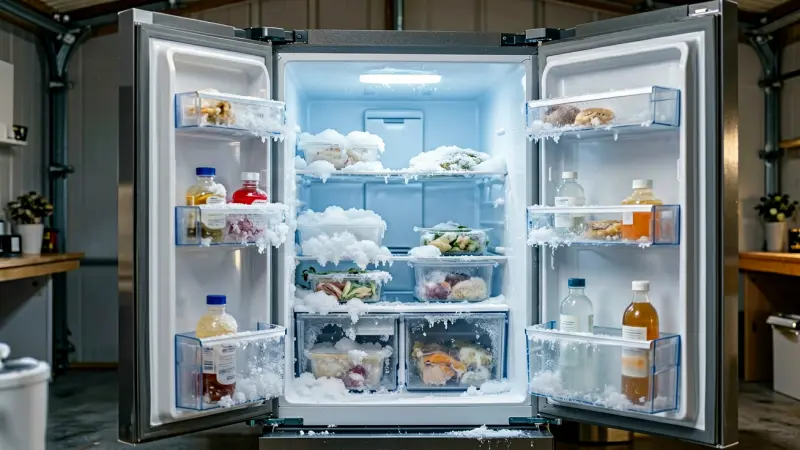
A garage-ready refrigerator includes heaters and better insulation to handle these extremes. However, even a garage-ready model needs clearance, clean coils, a stable outlet, and sensible temperature settings to avoid garage refrigerator problems.
The Most Common Garage Refrigerator Problems
Refrigerator Not Cold Enough While Freezer Works
This is one of the most common garage refrigerator problems. Cold air travels from the freezer to the fridge compartment through a damper or fan. If that path is blocked by ice, food, or a failed fan, the freezer stays cold while the fridge section warms.
High garage heat also forces the compressor to run longer. Dirty condenser coils, a weak door seal, or a fridge packed too tightly can prevent the cabinet from reaching a safe 40°F or below. Use a separate thermometer instead of trusting the dial.
In winter, the opposite can happen. The thermostat may sense a cold fridge compartment and keep the compressor off, which allows freezer food to thaw. That is a design limitation, not simply a bad compressor.
Freezer Thaws or Refrigerator Freezes
A freezer thaw in a cold garage points to ambient temperature control. Many refrigerators have the thermostat in the fresh-food section. When the garage is near freezing, that section already feels cold, so the compressor does not run enough to keep the freezer at 0°F.
A refrigerator that freezes food in the fridge section may have a damper stuck open, a thermostat error, or a temperature setting that is too low. In hot weather, a failing compressor or dirty coils can also create uneven temperatures.
Check both compartments with separate thermometers for at least 24 hours. Record morning, afternoon, and nighttime readings to see whether the problem is seasonal or constant.
Frost, Ice, and Water on the Floor
Frost buildup reduces airflow and forces the system to work harder. A clogged or frozen defrost drain is a frequent culprit. Meltwater then pools inside, freezes into ice, or leaks under the fridge.
Humidity makes this worse. Every door opening brings moist garage air into the cabinet. A poor gasket, a door left ajar, or a cracked hinge can create enough condensation to form ice within days.
Check the drain pan and drain tube during a manual thaw. If water flows freely after thawing but returns later, inspect the gasket and the defrost heater or timer.
Compressor Runs Constantly or Is Hot
A compressor that never shuts off is trying to remove heat that keeps entering the cabinet. Dusty coils, blocked vents, direct sunlight, and hot garage air are common causes. The compressor may feel very hot, and energy use can jump sharply.
Poor voltage is another hidden trigger. A long extension cord or shared circuit can drop voltage during compressor startup. That makes the motor draw more current, overheat, and eventually fail.
Clean the coils, improve airflow, and plug the fridge directly into a dedicated outlet. If the compressor still runs nonstop, the sealed system or control board may need professional testing.
Breaker Tripping or Outlet Issues
Garage receptacles are often GFCI-protected because the space can be damp. Moisture, a failing fridge defrost heater, or a compressor startup surge can trip the GFCI. Repeated trips are a warning, not a nuisance to ignore.
Never solve this with an oversized breaker or a cheater plug. If the circuit is shared with tools, lights, or a freezer, the load may simply be too high. A dedicated circuit may be the safest fix.
If the main panel is old or crowded, an electrician may discuss a service upgrade. For safety details, review Replace Load Center? Your Ultimate Safety & Upgrade Guide before approving major electrical work.
Outlet type also matters. A fridge should not share a standard duplex outlet with high-draw garage equipment. Learn the practical differences in whats the difference between a duplex outlet and a regular outlet.
Odors, Rust, and Pests
Garage air carries exhaust fumes, lawn chemicals, and damp odors. A refrigerator circulates that air and can absorb smells through plastic liners and gaskets. Spills in the drain pan can also create a persistent sour odor.
Rust usually starts at the bottom, door frame, or hinge where condensation collects. Rodents may nest near the compressor because it is warm. Chewed wires can cause intermittent power loss or dangerous shorts.
Clean the drain pan, wipe gaskets, and inspect the compressor area monthly. Keep the area free of cardboard, birdseed, and grass clippings that attract pests.
Food Safety and Temperature Monitoring
Food safety depends on temperature, not appearance. The refrigerator should stay at or below 40°F, and the freezer should stay at 0°F. A garage fridge that is “cool” but above 40°F can still grow dangerous bacteria.
Use two inexpensive thermometers: one in the fridge and one in the freezer. A smart thermometer with alerts can warn about power loss while the family is away or asleep.
During an outage, keep doors closed. A full freezer holds temperature longer than an empty one. If the fridge was above 40°F for more than two hours, discard perishable food.
A Diagnostic Table for Quick Garage Fridge Troubleshooting
Use this table to match symptoms with likely causes. It is not a substitute for professional repair, but it helps prioritize safe checks before calling a technician.
| Symptom | Likely Cause | Quick Check | Best Next Step |
|---|---|---|---|
| Fridge warm, freezer cold | Blocked airflow, damper, or evaporator fan | Look for ice or food blocking vents | Clear vents, test fan, thaw if iced |
| Freezer thaws in winter | Garage too cold for thermostat | Measure garage and freezer temps | Use garage kit, heater, or move fridge |
| Frost or water inside | Clogged defrost drain or bad gasket | Check drain tube and door seal | Thaw, flush drain, replace gasket |
| Compressor runs hot | Dirty coils, poor airflow, low voltage | Inspect coils and outlet voltage | Clean coils, add clearance, use dedicated outlet |
| Breaker or GFCI trips | Moisture, startup surge, shared load | Reset once and observe | Call electrician for dedicated circuit |
| Odor or rust | Moisture, spills, pests, condensation | Check drain pan, gasket, cabinet bottom | Clean, dehumidify, pest-proof |
Step-by-Step Fixes for Garage Refrigerator Problems
Step 1: Confirm Temperatures and Power
Start with facts, not guesses. Place a thermometer in the fridge and freezer, then check the outlet with a simple voltage tester. Confirm the breaker and GFCI are reset before assuming the fridge has failed.
Write down the fridge and freezer temperatures every few hours. This log reveals whether the issue follows outdoor temperature, door use, or compressor cycles.
Step 2: Improve Clearance and Airflow
Refrigerators need breathing room. Leave at least two to three inches around the sides and back, and keep the top clear. Do not push the cabinet tight against a wall or shelving unit.
Hot air must escape the compressor area. If the garage has no ventilation, add a small fan or vent to reduce ambient heat. Shade the fridge from direct sunlight whenever possible.
Step 3: Clean Condenser Coils and Fans
Unplug the refrigerator before cleaning. Use a coil brush or vacuum attachment to remove dust from the condenser coils. On many models, the coils are behind a kick plate or underneath the cabinet.
Check the condenser fan as well. If the blade is dirty, stuck, or noisy, airflow drops and the compressor overheats. A soft brush and vacuum can restore performance without special tools.
Step 4: Inspect Door Seals and Alignment
A leaking door gasket is a silent energy thief. Close the door on a dollar bill and pull it out. If it slides easily at several points, the seal is weak or the door is misaligned.
Clean gaskets with warm soapy water and check hinges for looseness. Replace a cracked or stiff gasket rather than trying to tape or glue it. A good seal reduces frost, odors, and compressor runtime.
Step 5: Manage Defrost Drain and Ice
For heavy ice, unplug the fridge and let it thaw completely with towels and pans in place. Never chip ice with a knife, because the evaporator tubing is easy to puncture. A punctured line can release refrigerant and require professional repair.
After thawing, flush the defrost drain with warm water. Check that the drain pan is level and not cracked. If the fridge tilts backward too much, meltwater may pool instead of draining.
Step 6: Adjust Settings for Garage Temperature
Set the fridge near 37°F and the freezer near 0°F, then verify with thermometers. Do not turn the dial to the coldest setting as a permanent fix. That wastes energy and can freeze food in the fridge section.
In cold garages, a garage kit or heater can keep the thermostat active. Some models support a kit; others do not. If winter thawing happens every year, a garage-ready refrigerator is the more reliable solution.
Step 7: Fix Electrical and Circuit Problems
Plug the refrigerator directly into a wall outlet. Avoid extension cords, power strips, and shared circuits with saws, compressors, or space heaters. Voltage drop can damage the compressor motor over time.
If the fridge shares a duplex outlet with other equipment, a dedicated outlet is safer. The duplex vs. regular outlet guide explains why outlet layout matters for high-draw appliances.
Repeated breaker trips may require a dedicated circuit or panel work. Do not ignore signs of overheating at the plug or outlet. An electrician can measure voltage drop and confirm whether the wiring is safe.
If a technician suspects a sealed-system issue, refrigerant handling is not a homeowner task. The principles in R134a charge as liquid or vapor explain why charging method and system conditions matter. Still, refrigerant work should be left to certified professionals.
Step 8: Know When to Call a Technician
Call a professional for sealed-system problems, compressor failure, control board faults, or repeated electrical trips. These repairs require gauges, electrical meters, and refrigerant certification. DIY attempts can damage the fridge and create safety hazards.
Before calling, note the model number, symptoms, temperature readings, and any unusual noises. A clear history helps the technician diagnose faster and avoid unnecessary parts replacement.
Garage-Ready vs Standard Refrigerator: What Actually Matters
A garage-ready refrigerator is not simply marketing. It usually has a heater for the freezer or fridge compartment, extra insulation, and corrosion-resistant parts. These features help it run when the garage is cold or humid.
The hidden component is often a mullion heater or door-frame heater. It prevents condensation on the outside of the cabinet. If that heater fails, the fridge may sweat, rust, or freeze unevenly.
Some standard refrigerators can use a garage kit, but many cannot. Check the manual and model number before buying a kit. A used kitchen fridge moved into the garage may work for years, yet it will always be more vulnerable to extreme temperatures.
How to Prevent Garage Refrigerator Problems Long-Term
Prevention starts with airflow, cleanliness, and stable power. Vacuum the coils two to four times a year in dusty garages. Check the door gasket monthly and keep the drain pan dry.
Control humidity with a dehumidifier or small ventilation fan. Moisture drives rust, mold, frost, and pest problems. Keep cardboard, pet food, and lawn supplies away from the compressor area.
Never store gasoline, propane, solvents, or other flammable vapors near a garage refrigerator. A standard fridge is not ignition-protected, and a spark from a switch or compressor could be dangerous. This safety point is often overlooked when garages double as storage rooms.
Use a smart plug with energy monitoring to spot short cycling or rising power draw. A sudden increase can signal dirty coils, a failing compressor, or a door-seal leak before food spoils.
Energy Costs, Food Safety, and Replacement Decisions
A struggling garage refrigerator can add significantly to electricity bills. Long compressor runtimes, bad seals, and dirty coils all waste power. An old inefficient unit may cost more to run than a newer garage-ready model.
Use a plug-in energy monitor for a week to measure actual use. Compare that cost with repair estimates and the price of a replacement. If the repair exceeds half the cost of a new garage-ready fridge, replacement often makes sense.
Food safety should drive the final decision. If temperatures are unstable, the fridge is not safe for meat, dairy, or leftovers. It may still chill sealed drinks, but that is a limited role and not a full solution.
When to Repair vs Replace a Garage Refrigerator
Repair makes sense for simple issues: gaskets, fans, thermostats, defrost drains, and starting relays. These parts are accessible, and the repair can restore reliable performance if the cabinet is otherwise sound.
Replace when the compressor fails, the sealed system leaks, the cabinet is rusted through, or repairs repeat every season. A garage-ready replacement designed for extreme temperatures will usually outperform another used kitchen fridge.
Also consider the garage itself. Insulating the garage door, adding ventilation, or moving the fridge to a protected corner can reduce future garage refrigerator problems. The best refrigerator still struggles in a 110°F garage with no airflow.
Final Thoughts on Garage Refrigerator Problems
Garage refrigerator problems are usually caused by environment, maintenance, or electrical supply. Start with temperature readings, airflow, coils, seals, and power. Those checks solve many issues before a technician is needed.
If the garage regularly drops below freezing or climbs above 100°F, choose a garage-ready model and monitor performance with thermometers. That approach protects food, lowers energy waste, and extends the life of the appliance.