The snowblower starts on the first pull. The engine idles perfectly. But the moment the auger bites into a deep drift, the motor sputters, coughs, and dies. This is the classic “snowblower stalls under load” problem, and it is incredibly common.
The pattern is always the same. The operator has to restart the engine, clear the auger housing, and try again with a lighter cut. Even then, the stall repeats every few feet. This turns a 20-minute driveway clearing job into an all-day struggle.
The good news is that this problem is very often a simple fix that a homeowner can complete with basic hand tools. Most of the time, the cause is a small but critical component that just needs attention.
Why Does a Snowblower Stall Under Load?
Understanding the meaning of “stall under load” is essential. When the auger engages and bites into snow, the mechanical resistance increases dramatically. The engine must produce more torque to keep the auger rotating at full speed.
If any component of the engine system fails to meet this extra demand, the engine bogs down. The combustion process becomes inefficient, the engine loses its momentum, and the machine stalls out completely.
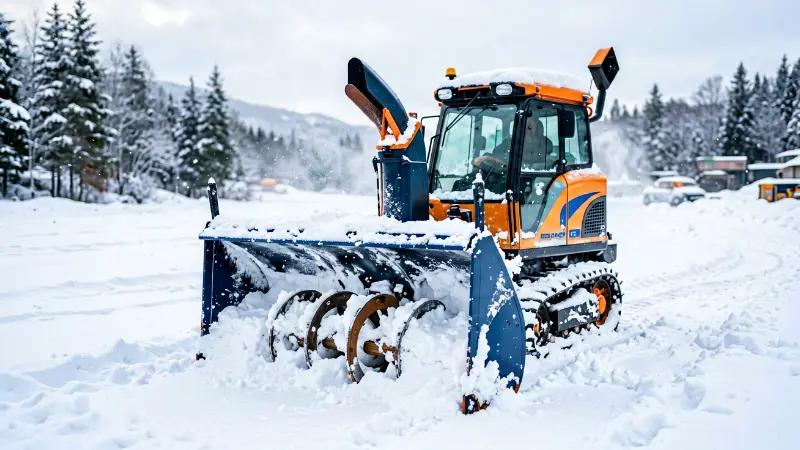
The underlying issues always come down to one of three things: insufficient fuel flow, weak ignition, or excessive mechanical resistance. Diagnosing which one is at play in a particular machine is the core challenge.
Add to this the environmental factors. Cold temperatures, high humidity, and wet snow can all place additional stress on an engine. This is the reason a machine can run brilliantly on a mild day and then fail during a heavy snowstorm.
The 7 Most Common Causes of Snowblower Stalling Under Load
After years of field experience and input from small-engine mechanics, a list of seven causes stands out. These are the first things to check on any snowblower that dies when throwing snow.
1. Clogged or Dirty Carburetor
The carburetor, a compact device mounted on the engine, is responsible for mixing air and fuel in the correct proportion. It also atomizes the fuel so it can ignite easily. Over time, the small jets and passages inside the carburetor become clogged with a varnish-like residue left behind by old gasoline.
A partially clogged jet may still deliver enough fuel at idle. When the throttle opens to draw in more fuel for heavy work, the restriction starves the engine. This leads to the classic symptom of the engine running smoothly in neutral, then dying under load.
2. Old or Contaminated Fuel
The shelf life of modern gasoline is surprisingly short. Ethanol-blended fuel starts breaking down within a few weeks. The ethanol absorbs moisture out of the air, and this water eventually separates from the gasoline and sinks to the bottom of the fuel tank.
The fuel tank of a snowblower can also accumulate condensation as temperatures fluctuate. This water can be drawn into the engine, disrupting combustion and causing the engine to stall out. A strong bad smell from the fuel is a telltale sign it has gone stale.
3. Clogged Fuel Filter or Fuel Line
The fuel filter is a small, inline component, often made of paper or felt, that catches dirt and rust before they can enter the carburetor. A filter that is packed with sediment will restrict fuel flow. When the engine needs high fuel volume during heavy snow throwing, the restriction has an immediate impact.
Fuel lines, however, are made of flexible rubber. They can collapse, kink, or swell from prolonged exposure to ethanol. Both conditions are easy to overlook during a visual inspection but have the same result: the engine runs out of gas under load.
4. Worn or Fouled Spark Plug
The spark plug has one job: to deliver a strong, timed spark to ignite the fuel-air mixture. As a spark plug wears out, the gap between its electrodes widens. The spark becomes weaker and less consistent.
On top of that, carbon deposits can foul the tip of the plug, further degrading the spark. A weak spark can be adequate at idle but insufficient when the engine is under heavy load. The result is a snowblower that stalls practically every time the auger engages.
5. Sheared Shear Pins or Auger Problems
Shear pins are the safety devices that connect the auger shaft to the drive system. They are engineered with a weak point to break if the auger strikes a rock, an ice chunk, or a curbside newspaper. When a shear pin breaks, the auger stops completely. But a partially sheared pin can also cause problems.
A cracked or partially sheared pin allows the auger to slip, which creates resistance and vibration. The engine must fight against this inconsistency, which can cause it to stall. Ice and debris packed around the auger shaft creates similar mechanical drag.
6. Slipping or Worn Drive Belt
The drive belt is the piece of rubber that transfers the engine power to the auger and the wheels. It runs between two pulleys. Over time, the belt stretches, grows slick from wear, or develops cracks.
A loose belt cannot transfer full torque. The engine revs, but the power bleeds off as the belt slips. This slipping can cause a sudden load increase that stalls the engine, especially in deep or heavy snow.
7. Carburetor Icing
Carburetor icing is often missed because it is invisible and weather-related. When the temperature is between roughly 20°F and 40°F, and the humidity is high, moisture in the air can freeze inside the carburetor throat. The ice restricts the air intake, creating a dangerously rich fuel mixture.
The engine will start, run poorly, and then die as soon as the throttle is opened for work. Carburetor icing is also a hazard because the operator often keeps adding throttle or choke, which worsens the condition.
How to Diagnose Which Cause Is Affecting Your Snowblower
Diagnosis is best approached in a logical order. Every snowblower owner can follow these checks with minimal tools and knowledge. Do not just start buying parts. Observe and identify the exact cause first.
Start by checking the easy things: the fuel age, the spark plug condition, and the belt tension. Then move to the carburetor and shear pins. The symptom a machine shows often points directly at a single culprit.
A critical observation trick involves the choke. If the engine recovers or runs better when the choke is partially applied, that is a clear sign of fuel starvation. If the engine gets worse, the problem could be ignition or mechanical resistance.
The following table is based on the symptoms reported most often by owners. Match the machine’s behavior to the likely cause and then perform the necessary fix.
| Symptom | Likely Cause | Quick Check | Solution |
|---|---|---|---|
| Engine dies immediately when auger engages | Carburetor jet blockage or fuel starvation | Apply choke and see if the engine recovers | Clean carburetor or replace fuel |
| Engine surges and hunts before stalling | Old or contaminated fuel | Smell the gas and check for water | Drain and refill with fresh fuel |
| High-pitched squeal before stalling | Slipping drive belt | Inspect belt for cracks and glazing | Adjust or replace drive belt |
| Metal grinding noise followed by stall | Sheared or damaged shear pins | Check auger rotation manually | Replace shear pins |
| Engine runs rough and backfires | Worn spark plug | Remove plug and inspect gap and condition | Replace the spark plug |
| Stalls only in damp, cold weather | Carburetor icing | Check temperature and humidity | Use winter fuel and consider an icing kit |
Use this table as a roadmap. It narrows the problem down to the most likely cause and prevents wasted effort.
Step-by-Step Fixes for a Snowblower That Dies Under Load
Each fix below is tied to a specific cause. Work slowly and carefully through the steps. Remember that a snowblower is a simple machine, and most repairs are straightforward.
Fix 1: Clean or Rebuild the Carburetor
Before removing the carburetor, make sure the fuel tank is empty or the fuel shutoff valve is closed. Place a rag underneath to catch spillage. Remove the carburetor from the engine, then detach the float bowl from the bottom.
Spray the jets and passages with a quality carburetor cleaner. Small blockages in the main jet require a fine wire to dislodge. Never use a drill bit or enlarge the jet opening.
Reassemble the carburetor. If the gaskets are hardened or cracked, install a rebuild kit. Small-engine repair shops report that this is the real fix in about 70 percent of stalling-under-load cases.
Fix 2: Drain Old Fuel and Replace with Fresh
It is amazing how many problems disappear when the old gas is removed. Look for the fuel line and disconnect it from the carburetor. Drain the tank into an approved container.
Replace the fuel with fresh, preferably premium, gasoline that contains no more than 10 percent ethanol. Some owners also add a fuel stabilizer to every tank throughout the season. This habit alone prevents many carburetor issues.
Fix 3: Replace the Fuel Filter and Inspect the Fuel Line
The fuel filter sits in the fuel line between the tank and carburetor. A new filter is inexpensive, so replacing it periodically is a wise move. Note that the filter has an arrow indicating the direction of the fuel flow. Install it with the arrow pointing toward the carburetor.
The fuel lines should be squeezed gently, but firmly. A healthy fuel line is flexible and returns to its shape. A deteriorated one might be brittle or sticky. Replace the line if there is any doubt about its integrity.
Fix 4: Replace the Spark Plug
A new spark plug is a cheap and effective investment. Remove the spark plug boot, then use a socket wrench to remove the old plug. Check the owner’s manual for the correct part number and the proper gap specification.
Use a spark plug gap tool to set the gap on the new plug. Thread the plug in by hand a few turns to avoid thread damage, then tighten it snugly. Reconnect the spark plug boot and press it firmly onto the plug.
Fix 5: Inspect and Replace Shear Pins
First, remove any snow or ice from the auger housing. Attempt to rotate the auger by hand. If it moves freely without the engine, the shear pins are likely intact. If the auger does not turn, or turns with a rough, grinding feel, check the pins.
Locate the shear pin holes in the auger shaft. Remove any broken portions of the pins and install new pins. It is absolutely essential to use the exact shear pins specified by the manufacturer. Never substitute a standard bolt, because a bolt will not break and can damage the gearbox.
Fix 6: Adjust or Replace the Drive Belts
Release the drive control handle to reduce tension on the belt. Visually inspect the belt for signs of wear, such as cracks, a shiny glaze, or frayed edges. A belt that looks burned or has a polished surface has been slipping.
Loosen the engine mounting bolts and adjust the belt tension per the manual. If the belt is damaged, replace it. This is a simple task, usually requiring only a wrench to remove the belt cover and access the pulleys.
Fix 7: Prevent and Fix Carburetor Icing
Icing requires immediate action to thaw the carburetor. Move the machine into a warm garage or shed. Once the engine is warm, inspect the carburetor for ice and remove any excess moisture.
To prevent recurrence, use winter-grade fuel. That type of fuel contains additives that resist icing. There are also aftermarket carburetor heaters available for many models that keep the carburetor warm in extreme weather.
A simple piece of open-cell foam covering the carburetor intake can also help. It lets the engine pull warm air from around the engine manifold instead of freezing air from the outside.
Preventive Maintenance to Avoid Stalling All Season
The best way to handle “snowblower stalls under load” is to never let it happen in the first place. That starts with a comprehensive fall maintenance routine.
Begin by replacing the spark plug and cleaning or replacing the carburetor. Then drain last year’s fuel completely and refill with fresh fuel. Run the machine for five minutes to verify it is in good working order.
Homeowners can also use this time to check the storage environment. A garage that is dry and well-ventilated makes a huge difference for equipment longevity. Proper spacing and airflow are as important indoors as they are outdoors, so paying attention to the minimum space between two windows can help a homeowner understand airflow dynamics. Keeping a tidy garage is just as important for protecting tools.
Safety checks matter in every part of the home. Just as an electrical issue such as why a light switch is glowing orange should never be ignored inside the house, a snowblower that shows warning signs should never be left unrepaired before winter.
Pest prevention is another part of a solid routine. Rodents and insects love to nest in warm, sheltered spaces such as an idle snowblower. Check for droppings, chewed wires, and nesting material. Some homeowners have dealt with unexpected critters and eggs in storage spaces, similar to finding brown rice-shaped bug eggs in a pantry, and this serves as a reminder to inspect all stored equipment.
A simple checklist includes these steps: fresh fuel, clean carburetor, new spark plug, properly tensioned belt, smooth auger rotation, and a dry storage space. This entire routine takes less than an hour and saves a lot of frustration.
When to Call a Professional
Relentless stalling can indicate more serious problems. If all of the fixes listed above fail, the issue may be internal. Worn piston rings, a scored cylinder, a defective ignition coil, or a damaged valve can all cause the same symptoms.
A professional small-engine mechanic can perform a compression test and an ignition coherence check. This type of diagnostic work requires a torque wrench, a compression gauge, and years of experience.
The cost of a professional inspection is usually reasonable. Sometimes a professional identifies a quick fix that was not obvious. Other times, they find a failing engine. Either way, a professional assessment is valuable.
For homeowners who are not comfortable performing minor surgery on an engine, taking the snowblower to a certified repair shop is a safe and practical decision. A professional has the correct tools and parts in stock.
Frequently Asked Questions About Snowblower Stalling
A wealth of experience is shared across online communities and forums. The following questions come up repeatedly and deserve clear, direct answers.
Can bad gas cause a snowblower to stall under load?
Absolutely. Bad gas is a leading cause of performance issues. Ethanol-blended gasoline is the main culprit because it attracts moisture and breaks down rapidly. The simplest experiment is to drain the fuel tank, fill it with fresh gas, and test the machine.
Why does a snowblower run at idle but dies when throwing snow?
The idle circuit in the carburetor supplies only a small amount of fuel. The main circuit supplies the larger amount of fuel needed to throw snow. If the main circuit is clogged or restricted, the engine will run at idle but cannot handle load. That is a textbook sign of carburetor blockage.
Can a dirty air filter cause the engine to stall?
Yes. Many newer snowblowers have a foam or paper air filter. When the filter is clogged, it blocks the incoming supply of air, upsetting the air-fuel ratio. Check the air filter and clean or replace it as needed.
What do worn shear pins sound and feel like?
Mechanics often describe worn shear pins as a clicking sound coming from the auger area. Also, the auger might rotate in a jerky or uneven way. The best way to check is by hand, because no external tool can detect a hairline crack.
How do you unstick a stuck snowblower engine?
Do not force the flywheel with a large breaker bar. Remove the spark plug and squirt a small amount of penetrating oil into the cylinder. Let it sit for a few hours or overnight, then carefully rotate the flywheel by hand to break the seal. After that, reinstall the plug and start the engine.
Final Thoughts
Every snowblower stall under load has a root cause that can be found and eliminated. Patience and observation are critical. Do not rush the diagnosis or throw random parts at the problem. Use the diagnostic table, follow the fixes in order, and test after each step.
A reliable snowblower is an essential home tool in regions with heavy snowfall. When the machine works correctly, clearing the driveway becomes a quick and satisfying chore. When it stalls, the entire day can be disrupted.
The knowledge shared in this article gives every homeowner the confidence to troubleshoot and repair their own machine. The satisfaction of repairing the snowblower with one’s own hands, and then watching it chew through a heavy drift, is well worth the effort.