When wiring electrical receptacles in your home, you will encounter two primary methods: daisy chaining and pigtailing. While both can technically meet building codes in many situations, professional electricians overwhelmingly favor one for its safety and long-term reliability. The direct answer is that pigtailing is the superior method because it prevents a single loose connection from causing failure in every outlet downstream.
Understanding the mechanics behind these wiring techniques is crucial for any homeowner attempting DIY electrical work. Choosing the wrong method can lead to annoying power outages, difficult troubleshooting, and in rare cases, fire hazards. This guide breaks down the physics, code requirements, and practical steps to help you wire your home correctly.
Understanding the Basics: What Are They?
Before diving into the safety comparisons, it is important to visualize how these two wiring styles function inside your electrical box. Both achieve the goal of powering multiple outlets on a single circuit, but the path the electricity takes is fundamentally different.
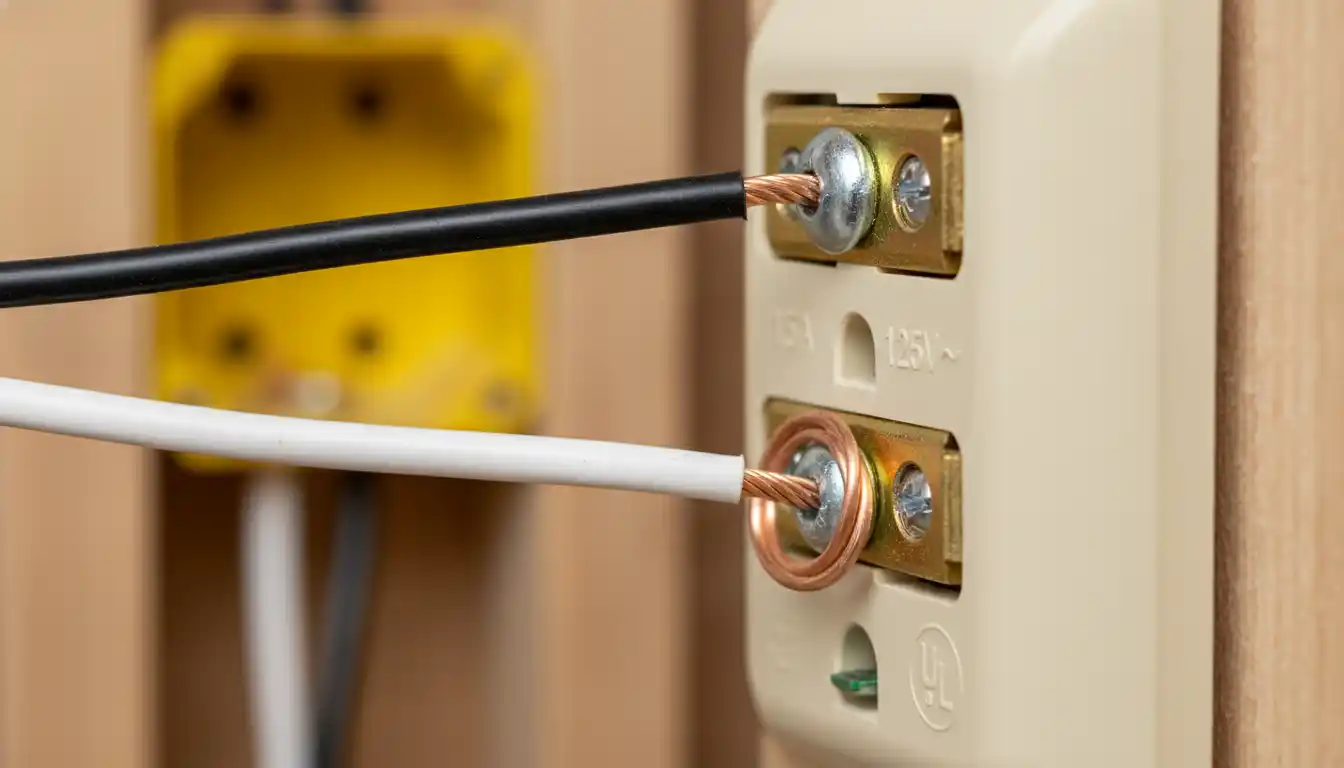
Daisy Chaining (often called running in series, though electrically parallel) involves connecting the incoming hot and neutral wires to one set of screws on the receptacle, and the outgoing wires to the second set of screws. The electricity flows through the metal connecting tabs of the outlet to reach the next device in the line.
Pigtailing is a method where the incoming and outgoing wires are joined together with a wire nut or lever connector inside the box. A short length of wire (the “pigtail”) connects this bundle to the outlet. In this setup, the current flows directly from wire to wire, bypassing the device itself.
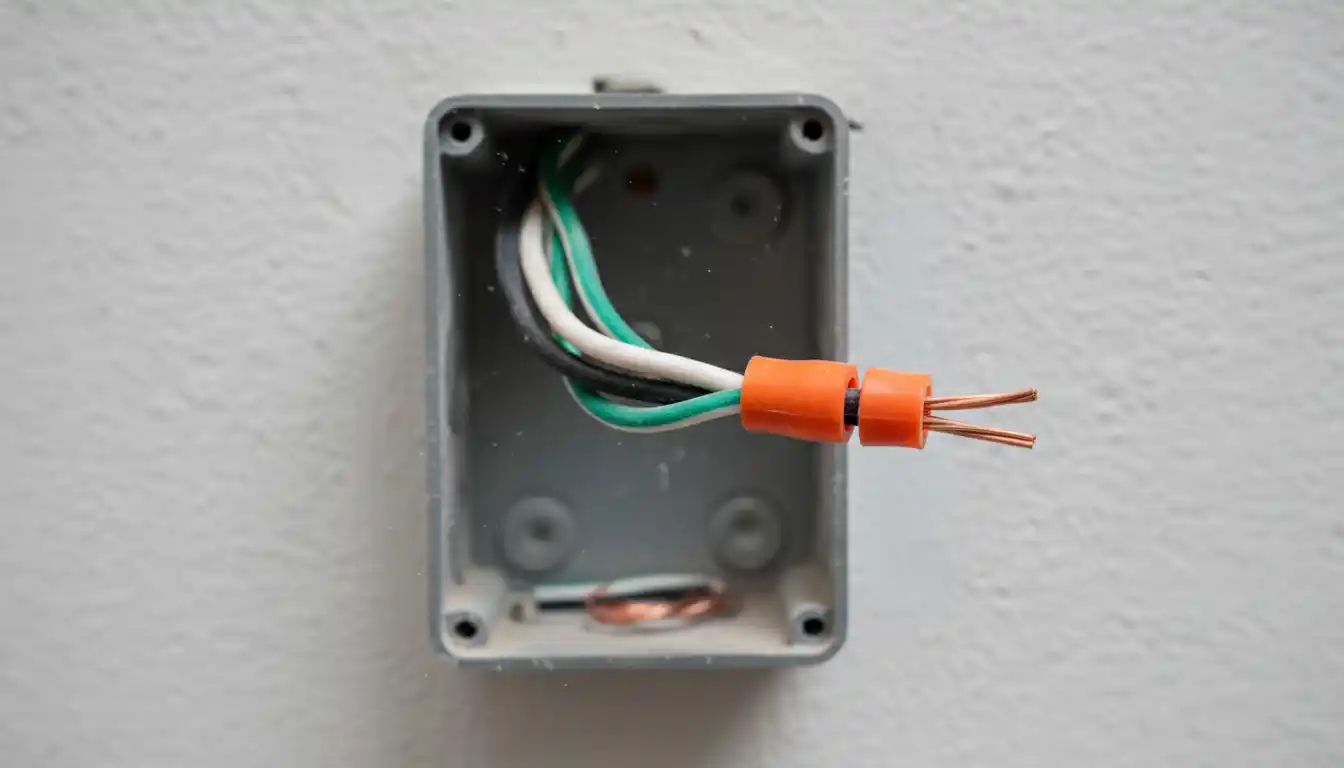
The Hidden Dangers of Daisy Chaining
Daisy chaining is common in older homes and “builder-grade” new construction because it is faster and uses slightly less material. However, this speed comes at a cost to the system’s integrity.
The “Christmas Light” Effect
The most significant flaw in daisy chaining is the dependency it creates. Because power must flow through the conductive plates of each receptacle to reach the next, a failure in the first outlet kills power to the entire circuit. If the metal tab inside outlet #1 snaps or a screw loosens, outlets #2, #3, and #4 will essentially go dead.
Heat Accumulation and Resistance
Every connection point introduces a small amount of electrical resistance. In a daisy-chained circuit, the current for a high-power appliance plugged into the last outlet must pass through the screw terminals and breakaway tabs of every previous outlet. This accumulated resistance can generate excess heat at the upstream receptacles, potentially melting the plastic faceplate or insulation.
The Backstab Problem
Daisy chaining is frequently combined with “backstabbing,” a technique where wires are pushed into spring-loaded holes in the back of the outlet. These springs weaken over time causing loose connections. When you combine backstabbing with daisy chaining, you create a high-risk failure point that is notoriously difficult to diagnose.
Why Pigtailing is the Superior Choice
Professional electricians prefer pigtailing because it isolates each receptacle from the rest of the circuit. This method treats the outlet as a branch off the main road rather than a bridge the road must cross.
Enhanced Reliability
With pigtails, the main circuit wires are spliced together independently of the device. If one outlet fails or you remove it to paint the wall, the electricity continues to flow uninterrupted to the rest of the room. This isolation makes troubleshooting significantly easier since a dead outlet is likely the only problem, rather than a mystery located somewhere else in the wall.
Safer Current Loads
Pigtailing ensures that the receptacle only carries the current for the devices plugged directly into it. The heavy lifting of carrying current to the rest of the house happens in the wire nut, which is designed specifically for that purpose. This reduces thermal stress on the receptacle’s fragile internal components.
The One Exception: GFCI Wiring
There is one specific scenario where daisy chaining is not only acceptable but required: wiring a Ground Fault Circuit Interrupter (GFCI). GFCI outlets have two sets of terminals labeled “LINE” and “LOAD.”
To protect standard outlets downstream from a GFCI, you must connect the outgoing wires to the “LOAD” terminals. This forces the current to flow through the GFCI’s internal sensor. If a ground fault is detected anywhere in the chain, the GFCI cuts power to all connected outlets. In this specific case, the “daisy chain” effect is a safety feature, not a bug.
Step-by-Step Guide to Installing a Pigtail
Switching from daisy chain to pigtail is a great upgrade for your home’s electrical system. Just as you might join PVC pipe with a rubber coupling to ensure a leak-free plumbing seal, a proper wire splice ensures a leak-free electrical flow.
1. Safety First
Turn off the main breaker to the circuit. Use a non-contact voltage tester to confirm the power is dead. Never assume a wire is safe just because the switch is off.
2. Prepare the Wires
If the box is crowded, you may need to organize the wires carefully. Cut a 6-inch piece of scrap wire (matching the gauge of your circuit, usually 12 or 14 AWG) to serve as your pigtail. Strip about 3/4 inch of insulation from both ends.
3. Create the Splice
Gather the incoming hot wire (black), the outgoing hot wire, and your new black pigtail. Twist them together clockwise using a lineman’s plier, then secure them with a high-quality wire nut. Repeat this process for the neutral (white) wires and the ground (copper/green) wires.
4. Connect the Device
Connect the free end of your black pigtail to the gold screw on the receptacle. Connect the white pigtail to the silver screw. Finally, connect the ground pigtail to the green screw. Tighten all screws securely.
Common Challenges and Solutions
While pigtailing is better, it does require more space inside the electrical box. This is often referred to as “box fill.”
Crowded Junction Boxes
Older metal boxes can be small. Adding three wire nuts and extra wire lengths can make it difficult to push the outlet back in. If you force it, you risk pinching a wire or causing a short. In extreme cases, you may need to replace the old box with a deeper “old work” box. This might involve minor wall surgery, so be prepared to patch things up. If you are worried about the mess, knowing how drywall behaves and how to repair it is valuable knowledge.
Short Wires
Sometimes the existing wires in the wall are too short to strip and splice effectively. In this case, you can use push-in lever connectors (like Wagos) which require less wire length than traditional twisting wire nuts. These are compact and reliable, making them perfect for retrofitting tight boxes.
Comparison Summary
Below is a quick reference table to help you decide which method fits your current project needs.
| Feature | Pigtail Method | Daisy Chain Method |
|---|---|---|
| Reliability | High (Independent connection) | Low (Dependent on upstream devices) |
| Safety | Best (Reduces heat at device) | Good (If screw terminals are used) |
| Installation Time | Slower (Requires splicing) | Faster (Direct connection) |
| Troubleshooting | Easy (Isolates faults) | Difficult (Faults affect entire circuit) |
| Box Space | Requires more space | Requires less space |
Code Requirements to Watch For
The National Electrical Code (NEC) has specific rules regarding these connections. Section 300.13(B) specifically requires pigtailing for the neutral wire in Multi-Wire Branch Circuits (MWBC). In an MWBC, two hot wires share a single neutral. If you daisy chain the neutral and remove the device, you could inadvertently send 240 volts to 120-volt appliances on the other circuit, instantly frying them.
While the code does not explicitly ban daisy chaining for standard 2-wire circuits, the requirement for MWBCs highlights the inherent safety advantage of pigtailing. It is a professional standard that goes beyond the bare minimum compliance.
Final Thoughts on Home Wiring
Whether you are installing outdoor outlets near your portico gutters or updating the receptacles in your living room, taking the time to pigtail your connections is worth the effort. It creates a robust electrical system that is cooler, safer, and easier to maintain.
While daisy chaining might save you ten minutes today, pigtailing saves you hours of frustration years down the road. If you are unsure about your ability to create secure splices or manage box fill, always consult with a licensed electrician.
Frequently Asked Questions: Daisy Chain vs. Pigtail Wiring Methods
1. What is the fundamental difference between daisy chaining and pigtailing outlets?
The primary difference lies in how the electrical current flows through the circuit. In a daisy chain (or pass-through) configuration, the circuit wires attach directly to the outlet’s terminals, meaning the electrical current flows through the device itself to reach the next outlet. In a pigtail configuration, the incoming and outgoing wires are connected with a wire connector (wire nut) inside the box, and a short wire (the “pigtail”) connects that bundle to the outlet. This means the current flows past the outlet rather than through it.
2. Is pigtailing safer than daisy chaining?
Yes, most professional electricians consider pigtailing to be the safer and superior method. By using pigtails, you ensure that the electrical load for downstream outlets does not pass through the metal tabs and terminals of the receptacles before it. This reduces thermal stress on the outlet, minimizes voltage drop, and creates a more reliable connection that is less prone to overheating.
3. Is daisy chaining outlets a violation of the National Electrical Code (NEC)?
Generally, daisy chaining is not a violation of the NEC for standard 120-volt circuits, provided the outlets are wired correctly using the screw terminals (not “backstabbed”) and the circuit is not a multi-wire branch circuit. However, while it is code-compliant, it is often viewed as the “minimum standard” rather than the “best practice” by electrical professionals.
4. What happens if a daisy-chained outlet fails?
If an outlet in the middle of a daisy chain fails or is removed, every outlet downstream from that point will also lose power. This is because the electrical path relies on the integrity of that specific device to continue the circuit. This makes troubleshooting difficult, as you must identify exactly which outlet in the series has broken the connection.
5. When is pigtailing absolutely required by electrical code?
Pigtailing is mandatory under NEC 300.13(B) when dealing with the grounded conductor (neutral wire) in a Multi-Wire Branch Circuit (MWBC). In an MWBC, two hot wires share a common neutral. If you daisy chain the neutral and remove the device while the circuit is live, you could break the neutral path, potentially sending 240 volts to 120-volt appliances on the rest of the circuit, causing immediate damage.
6. Why do professional electricians prefer pigtailing over daisy chaining?
Professionals prefer pigtailing because it creates a robust, independent connection for each device. If one outlet burns out or breaks, the rest of the circuit remains functional. Furthermore, because wire connectors (wire nuts) are designed specifically to maintain low-resistance continuity between copper wires, the connection is generally tighter and more secure than relying on the breakaway tabs on the side of a receptacle.
7. Does pigtailing take up more space in the electrical box?
Yes, pigtailing consumes more volume inside the junction box because it requires the use of wire connectors and extra lengths of wire. In older homes with shallow or crowded metal boxes, this can make it difficult to push the device back into the wall. You must ensure your “box fill” calculation remains within code limits to prevent overcrowding and accidental short circuits.
8. Is it safe to use the “push-in” or backstab holes for daisy chaining?
While often code-compliant, using the “push-in” or backstab holes on the back of an outlet is widely considered the least safe wiring method. These connections rely on a small spring to hold the wire, which can loosen over time due to heating and cooling cycles. If you must daisy chain, it is much safer to curl the wire around the side screws or use “back-wire” clamps (where a screw tightens a plate onto the wire) rather than spring-loaded backstabs.
9. Which method handles high-load appliances better?
Pigtailing is better suited for circuits involving high-load appliances (like space heaters or vacuum cleaners). Receptacles are rated for specific amperages, but passing the entire circuit’s load through the thin connecting tabs of a cheap receptacle generates unnecessary heat. Pigtailing ensures the heavy current moves through solid copper wire splices, which handle high loads more efficiently than the receptacle’s internal bridge.
10. Is pigtailing difficult for a DIY homeowner to install?
Pigtailing requires slightly more skill and dexterity than daisy chaining. You must be comfortable stripping multiple wires, twisting them together securely, and applying the wire connector correctly to pass the “tug test.” While it takes more time and material, learning to pigtail is highly recommended for DIYers who want to ensure the long-term safety and reliability of their home wiring.