That biting chill on your kitchen or bathroom floor can make even the coziest home feel uncomfortable. You shuffle across the cold tiles, trying to get your morning coffee, and wonder why this one spot remains stubbornly frigid. This is a common problem in rooms where wall space is at a premium, making traditional radiators or vents impractical additions. Bulky heating solutions can disrupt clean design lines and take up valuable square footage.
Fortunately, there’s a discreet and powerful solution designed for these exact situations: the toe kick heater. These compact units tuck away into the unused space beneath your cabinets, providing targeted warmth right where you need it most. This article offers a comprehensive breakdown of toe kick heater pros and cons, helping you decide if this clever heating solution is the right fit for your home.
What Exactly Is a Toe Kick Heater and How Does It Work?
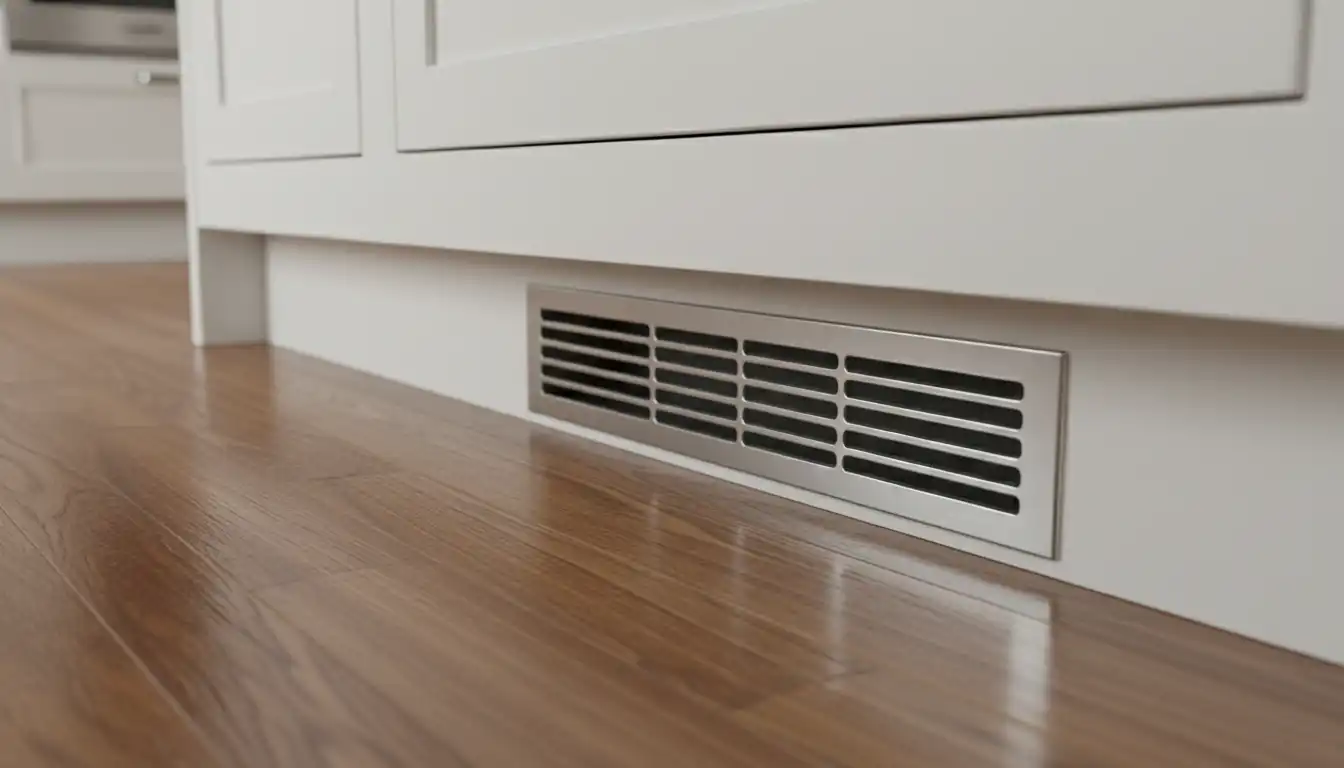
A toe kick heater, also known as a kickspace heater, is a small, fan-forced heating unit designed to be installed in the recessed area at the base of cabinets—the “toe kick.” Its purpose is to provide supplemental heat in areas like kitchens, bathrooms, and laundry rooms where conventional heating methods are insufficient or impractical. By utilizing this otherwise wasted space, they deliver warmth without sacrificing any floor or wall area.
These heaters operate by drawing in cool air from the room, passing it over a heated element, and then using a fan to blow the warm air back out at floor level. There are two primary types:
- Electric Toe Kick Heaters: These units use an electric resistance coil to generate heat, similar to a standard portable space heater. They are generally easier and less expensive to install.
- Hydronic Toe Kick Heaters: These models connect to your home’s existing hot water heating system, like a boiler. Hot water circulates through a small coil in the unit, and a fan blows air over the heated fins. They are more energy-efficient to run but have a more complex installation.
Targeted Heat for Problem Areas
The primary function of a toe kick heater is to solve the problem of cold spots. Because heat naturally rises, placing the heat source at the lowest point in the room is highly effective for creating a comfortable environment. They are not intended to be the primary heat source for a large space but excel at providing supplemental, zone-specific warmth.
The Unmistakable Pros: Why Homeowners Love Toe Kick Heaters
Toe kick heaters offer a unique set of advantages that make them an ideal choice for specific heating challenges. Their design and function solve problems that other heating systems simply cannot address as effectively.
A True Space-Saving Marvel
The most significant benefit is their incredibly compact and hidden design. In a kitchen or bathroom, every inch of wall space is precious, often occupied by cabinetry, appliances, or fixtures. Toe kick heaters require zero wall or floor space, integrating seamlessly into the base of your cabinets. This allows for complete design freedom without compromising on comfort.
Powerful and Targeted Warmth
Don’t let their small size fool you. These heaters are capable of producing a significant amount of heat quickly. The fan-forced delivery system pushes warm air directly across cold floor surfaces like tile or hardwood, creating an immediate feeling of comfort. This targeted approach is perfect for warming your feet while you stand at the sink or counter.
Cost-Effective Zone Heating
Why heat the entire house when you only need to warm up the kitchen for an hour in the morning? Toe kick heaters allow for efficient zone heating, which can lead to energy savings. By providing heat only where and when it’s needed, you can keep your main thermostat set at a lower temperature, reducing overall energy consumption.
Seamless Aesthetic Integration
A major drawback of many heating solutions is their appearance. Radiators can be bulky and outdated, and space heaters add clutter. Toe kick heaters are designed to be inconspicuous. With grilles available in various colors and finishes, they can blend into your cabinetry design, becoming virtually invisible while still providing powerful heating.
The Critical Cons: What You MUST Consider Before Installing
Despite their many benefits, toe kick heaters are not without their drawbacks. It’s crucial to understand these potential issues to avoid disappointment and ensure the heater meets your expectations.
Potential for Noise
One of the most common complaints about toe kick heaters is noise. Because they rely on a fan to distribute heat, they are not completely silent. While many modern units are designed for quiet operation, cheaper models or improperly installed units can produce a noticeable humming or whirring sound. The hard surfaces found in kitchens and bathrooms can amplify this sound, which might be bothersome to noise-sensitive individuals.
A Magnet for Dust and Debris
Their position at floor level makes toe kick heaters susceptible to collecting dust, pet hair, food crumbs, and other debris. The fan can draw these particles into the unit, which can clog the heating element and fan blades. This not only reduces efficiency and becomes a potential fire hazard but can also circulate allergens throughout the room if not cleaned regularly.
Installation Complexity and Cost
While an electric toe kick heater is a relatively straightforward project for a qualified electrician, it’s not always a simple plug-in affair. It may require a new, dedicated circuit to handle the electrical load. Dealing with wiring can be challenging, especially if you find that a mounting bracket doesn’t fit the junction box. Hydronic models are significantly more complex, requiring a professional plumber to tap into your existing hot water heating lines, which adds considerable expense and complexity to the installation.
Uneven Heat Distribution in Larger Spaces
Toe kick heaters excel at warming a specific area, but they are not designed to heat an entire large room evenly. They create a pocket of warmth near the unit, but the far corners of a large, open-concept kitchen may remain cool. They are best understood as a supplemental, not a primary, heat source for bigger spaces.
Key Factors to Consider Before You Buy
Choosing the right toe kick heater involves more than just picking one off the shelf. You need to assess your specific needs, the type of system your home uses, and what features are most important to you.
Hydronic vs. Electric: The Deciding Factor
Your choice between a hydronic and an electric model is the most critical decision. An electric heater is cheaper to purchase and easier to install, making it a great option for targeted retrofits. However, its running cost can be high if used frequently, as electric resistance heating is less efficient than using an existing boiler.
A hydronic heater has a much lower running cost but comes with a higher upfront installation expense due to the required plumbing work. This option is ideal for new constructions or major remodels where plumbing lines are already exposed, or for homes that already rely on a boiler system for heat.
Sizing and Power (BTU/Wattage)
Toe kick heaters come in various wattages (for electric models) and BTU ratings (for hydronic models). It’s essential to choose a unit with an appropriate output for your room size. A heater that is too small will struggle to make a noticeable difference, while an oversized unit may cycle on and off too frequently. As a general rule, you need about 10 watts of heating power for every square foot of space you want to heat in a room with average insulation.
Controls and Smart Features
Consider how you want to control the heater. Some models come with a simple two-speed switch (high/low/off) built into the unit’s grille. Others can be connected to a wall-mounted thermostat for more precise temperature control. Advanced models may even offer smart features, allowing for control via a mobile app, which is perfect for warming up the kitchen before you get out of bed.
| Feature | Pros | Cons |
|---|---|---|
| Space Usage | Takes up zero wall or floor space; completely hidden. | Requires available space under cabinets. |
| Heating Performance | Provides fast, direct heat at floor level. Excellent for targeted warmth. | Not effective for heating large rooms evenly. Creates a “hot spot.” |
| Noise Level | Higher-end models are designed for quiet operation. | Fan is never completely silent; can be noticeable in quiet rooms. |
| Cost (Electric) | Lower initial purchase price and simpler installation. | Higher long-term running costs due to electricity prices. |
| Cost (Hydronic) | Very low running costs; leverages existing boiler. | High upfront cost due to complex plumbing installation. |
| Maintenance | Simple cleaning can be done by the homeowner. | Requires frequent cleaning to prevent dust buildup and maintain efficiency. |
Maintenance and Cleaning: The Secret to Longevity
To keep your toe kick heater running efficiently and quietly, regular maintenance is non-negotiable. Neglecting this simple task is the primary cause of decreased performance, increased noise, and potential overheating issues. A poorly maintained unit will not only work harder and use more energy but can also fail prematurely.
At least twice a year (before the heating season begins and after it ends), you should perform a thorough cleaning. First, always turn off the power to the heater at the circuit breaker for safety. Carefully remove the front grille. Use a vacuum with a soft brush attachment to gently clean the fan blades and the delicate metal fins of the heating element. Ensuring these components are free of dust and pet hair is crucial for optimal airflow and heat transfer.
The Verdict: Is a Toe Kick Heater the Right Choice for Your Home?
A toe kick heater is an excellent problem-solver for the right situation. It is an ideal choice if you are renovating your kitchen or bathroom and want to eliminate a bulky radiator, or if you simply need to add a boost of warmth to a persistently cold area with limited space. They provide unparalleled value in terms of saving space while delivering effective, targeted heat.
However, it may not be the best solution if you are highly sensitive to background noise or if you need to heat a large, open-plan living area. It’s also important to factor in the installation costs, especially for hydronic models. Just as you want a smooth finish when you fix texture left by a paint roller, you want a heating solution that seamlessly integrates into your home both functionally and aesthetically. For many projects, particularly those involving tricky layouts like installing lattice under a sloped deck, finding a specialized solution is key.
Ultimately, by weighing the toe kick heater pros and cons against your specific needs, you can confidently decide if this clever, space-saving device is the perfect way to bring warmth and comfort to the coldest corners of your home.