
Condensation on walls in winter is a visible sign that moisture in the indoor air is reaching a cold surface and turning into water. It often appears on exterior walls, in corners, behind furniture, inside closets, and near the floor or ceiling line. A small amount may seem minor, but repeated wetting can damage paint, soften drywall, and create conditions for mold.
The cause is usually a combination of indoor humidity, a cold wall surface, and limited air movement. Cold weather makes exterior walls and uninsulated sections colder, while closed-up homes trap moisture from showers, cooking, laundry, and damp basements. This guide explains how to find the source, reduce the moisture, and repair the wall before the damage spreads.
Why Condensation Forms on Walls in Winter
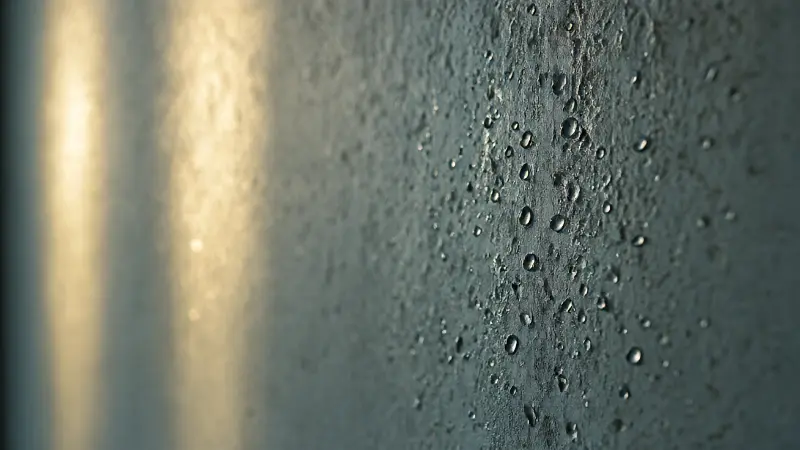
Air contains water vapor, and the amount it can hold depends on temperature. When moist indoor air touches a surface that is colder than the dew point, some of the vapor condenses into liquid water. Exterior walls are a common target because they separate warm indoor air from cold outdoor conditions. Corners, wall bases, and areas behind furniture can be even colder because air movement is limited.
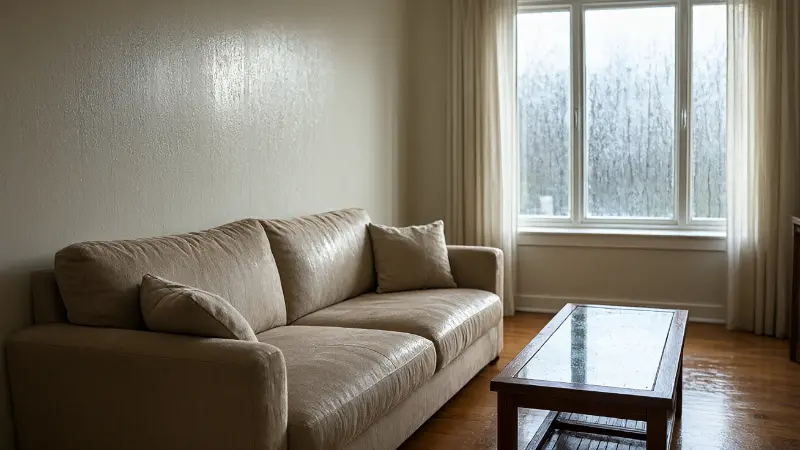
Winter increases the contrast between indoor and outdoor temperatures, so wall surfaces can drop below the dew point more often. At the same time, homes tend to be closed up, and everyday moisture has fewer ways to escape. The result is a wall that looks dry one day and wet the next, especially on the coldest mornings or after a long shower.
Condensation is different from a leak. A leak usually has a localized source, such as a roof, window, or pipe, and may leave staining or bubbling paint. Condensation tends to appear more evenly across a cold surface or in patterns related to temperature and airflow. Both problems can coexist, so it helps to inspect carefully before deciding on a repair.
The wall assembly matters as well. A wall with missing insulation, a gap in the sheathing, or a thermal bridge can have cold spots that attract condensation. A wall that is covered by heavy furniture or a tight curtain may stay colder and wetter because air cannot circulate. The fix often involves both moisture control and improving the wall’s surface conditions.
Identify Where and When the Moisture Appears
Start with a careful look at the affected wall. Note whether the moisture is on the upper wall, near the floor, around a window, in a corner, or behind furniture. Check the back of pictures, mirrors, and wall hangings. Those surfaces can trap moist air and hide condensation until the wall behind them is damaged.
Record when the wetness appears. Does it show up after showers, cooking, laundry, or on cold mornings? Does it dry during the day and return at night? A pattern helps separate a local moisture source from a whole-house humidity problem. It also helps you judge whether ventilation or insulation changes are more likely to help.
Feel the wall surface and compare it with other walls. A cold exterior wall may feel noticeably cooler, especially in a corner or near the floor. Use the back of your hand to check for dampness, and look for paint peeling, bubbling, or a white powdery deposit called efflorescence. Those signs suggest moisture is moving through or collecting on the wall.
Check nearby windows as well. Condensation on windows and walls often share the same cause, but the window may be the first place you notice it. For a focused diagnosis of glass and frames, see window condensation inside in winter. If the windows are wet but the walls are dry, the issue may be limited to the window surfaces.
Common Sources of Indoor Moisture in Winter
Everyday activities add water vapor to the air. Bathrooms, kitchens, and laundry areas are common sources. A long shower without an exhaust fan can raise humidity in nearby rooms. Cooking without a range hood, boiling water, and drying clothes indoors can do the same. Even houseplants and wet firewood can add moisture to a closed-up home.
Damp basements and crawlspaces can send moisture upward into the living space. A wet foundation, poor grading, or a missing vapor barrier can keep the lower levels humid. That moisture may show up as condensation on walls upstairs, especially on exterior walls and in closets. Fixing the lower-level moisture can reduce the problem on the main floors.
Heating and cooling equipment can also be part of the picture. A humidifier set too high can raise indoor humidity. A condensate line or pump that is frozen or blocked may affect how the system manages moisture. For related checks, review HVAC condensate line frozen fixes and keep the equipment diagnosis separate from the wall repair.
A frozen condensate pump can also affect humidity and system operation. If you suspect that problem, see condensate pump frozen fixes before assuming the wall is the only issue. Correcting the equipment may reduce moisture in the air, while wall fixes address where that moisture collects.
Measure Humidity and Surface Conditions
A hygrometer is a small device that measures relative humidity. Placing one in the affected room can help you decide whether the air is unusually moist. Without a measurement, it is easy to guess wrong. The reading also helps you judge whether a dehumidifier or ventilation change is working.
Relative humidity depends on temperature. Warm air can hold more moisture, so the same amount of water vapor produces a lower relative humidity in a warm room and a higher relative humidity in a cool room. A cool bedroom, basement, or closet may show condensation even when the rest of the house feels comfortable. That is why cold surfaces are often the first place moisture appears.
Take readings at different times of day and in different rooms. Check after showers, after cooking, and on the coldest mornings. A single reading may not tell the whole story. A pattern of high humidity in one area points to a local source or a ventilation problem rather than a whole-house issue.
Do not rely on feeling alone. Condensation on a wall is a visible clue, but it does not tell you the humidity level or the source. Measuring helps you avoid overcorrecting with a dehumidifier or undercorrecting by wiping the wall. The goal is a balanced indoor environment, not an artificially dry house.
Fix 1: Reduce Moisture at the Source
Reducing indoor humidity is often the most effective way to control wall condensation. Start with the sources you can control. Run the bathroom exhaust fan during and after showers. Use the kitchen range hood when cooking. Vent the dryer to the outside and avoid drying damp clothes indoors when possible. Cover pots when boiling water.
Keep the humidifier setting moderate and turn it down if walls sweat. A humidifier that is too high can create condensation on walls and cold surfaces. If you use a whole-house humidifier, check its setting and maintenance. A dirty or malfunctioning humidifier can add more moisture than intended.
Address damp basements and crawlspaces. A dehumidifier in the basement can help, but it works best when the space is reasonably closed and the water source is controlled. Fix gutter problems, grading issues, and plumbing drips that keep the lower levels damp. Moisture from below can travel upward and show up on walls.
If the house feels dry and you need humidification, aim for a balance. Some condensation on the coldest mornings may be acceptable, but standing water on a wall is not. Adjust the humidifier gradually and observe the walls. A small change in humidity can make a visible difference without making the house uncomfortable.
Fix 2: Improve Ventilation and Air Circulation
Ventilation removes moist air and brings in drier air from outside. In winter, outdoor air is often drier, so a controlled exchange can reduce indoor humidity. Use exhaust fans in bathrooms and kitchens, and make sure they vent outdoors rather than into an attic or crawlspace. A fan that is noisy but ineffective may not move enough air.
Air circulation also matters. Ceiling fans on a low setting can help mix air and reduce cold spots near walls. Keep furniture and curtains from blocking airflow. A closed door can trap moist air in a bedroom or closet. Leaving the door open after a shower or using a fan can help the moisture disperse.
Do not seal a house too tightly without a plan for fresh air. Modern homes are built tighter, and some form of mechanical ventilation may be needed. A heat recovery ventilator or energy recovery ventilator can exchange air while limiting heat loss. These systems are not a DIY install for most homeowners, but they can be part of a whole-house moisture strategy.
If condensation appears on cold water pipes as well as walls, the issue may be broader than the wall surface. The same humidity and temperature balance applies to pipes, toilet tanks, and other cold surfaces. Addressing the whole-house moisture level can reduce condensation in several places at once.
Fix 3: Address Cold Spots and Insulation
Cold spots on a wall can attract condensation even when the room humidity is moderate. A missing section of insulation, a thermal bridge at a stud, or a gap around a window can lower the surface temperature. Check for cold areas by feeling the wall or using an infrared thermometer if you have one. Note the pattern and compare it with the wall assembly.
Adding insulation or air sealing can raise the wall surface temperature, but it is often a larger project. Use a contractor for major envelope work, especially if it involves removing drywall or working around electrical components. Do not stuff insulation into a wall cavity without understanding vapor movement and fire safety. The goal is a consistent, dry wall assembly.
Furniture placement can make a cold spot worse. A heavy bookcase or a tight curtain can trap moist air against the wall and reduce airflow. Move furniture slightly away from the wall, and leave a gap behind curtains. A small fan or a dehumidifier in the room can help move air and dry the surface.
Do not block weep holes, vents, or drain channels in nearby windows or walls. Those openings allow water to escape and air to move. If they are clogged, water can pool and damage the wall. Clean them carefully according to the manufacturer’s instructions. Do not drill new holes without guidance.
Fix 4: Manage Condensation-Prone Areas
Some areas are more prone to wall condensation than others. Closets on exterior walls, corners behind furniture, basement walls, and areas near bathrooms or kitchens often have cooler surfaces and less airflow. Check those areas regularly, especially in winter. A small amount of moisture can go unnoticed until mold or paint damage appears.
In a closet, leave the door open occasionally and avoid packing items tightly against the wall. A small dehumidifier or a ventilated shelf can help. In a basement, keep stored items off the floor and away from exterior walls. A dehumidifier can reduce humidity, but it works best when the space is reasonably closed and the water source is controlled.
Bathrooms and kitchens need working exhaust fans. Make sure the fan is sized for the room and vents outdoors. Run it long enough to remove moist air after showers and cooking. A fan that runs for only a minute may not be enough. A timer or humidity sensor can help keep it running for the right amount of time.
If a wall is wet behind a picture, mirror, or headboard, remove the item and dry the wall. Do not rehang it until the moisture source is addressed. A repeated wet-dry cycle can damage the paint and drywall. In some cases, a small spacer behind the item can improve airflow and reduce condensation.
Fix 5: Repair Leaks and Water Intrusion
Not all wall moisture is condensation. A leak from the roof, window, flashing, or a pipe can wet a wall from the inside. Look for stains, bubbling paint, soft drywall, or water trails that run down from a specific point. Those signs point to water intrusion rather than humidity. Repairing the leak is the first priority.
Check the exterior of the wall if you can do so safely. Look for missing caulk, damaged flashing, cracked siding, or clogged gutters. Water that enters the wall can freeze and expand, causing more damage. Do not climb on icy ladders. Use binoculars from the ground or hire help if the exterior needs inspection.
If the wall is soft or the damage is extensive, call a qualified contractor. Mold can grow inside the wall cavity, and a surface repair may not address the source. A moisture meter and a careful inspection can help determine whether the wall needs to be opened. Do not ignore a persistent damp spot, especially near electrical outlets or switches.
If the wall is near a plumbing fixture, check for a slow leak. A drip under a sink or behind a washing machine can wet the wall without being obvious. Fix the plumbing first, then dry the wall thoroughly. Do not paint over a damp wall, because the paint may peel and the moisture may be trapped.
Mold, Paint, and Wall Damage
Repeated condensation can lead to mold growth, paint peeling, and drywall damage. Mold needs moisture, so controlling the moisture is the first step. Clean small areas of surface mold with a method appropriate for the surface, and address the source. Wear gloves and eye protection, and ventilate the area while cleaning.
Do not paint over mold or a damp wall. The paint may fail, and the moisture may be trapped. Repair the moisture source, dry the wall, and then repair the finish. Use a primer and paint intended for the surface and the conditions. Follow the product’s temperature and humidity recommendations.
If the drywall is soft, crumbly, or stained through, it may need to be replaced. A small repair can be a DIY project, but larger damage may require a contractor. Check for insulation damage and hidden moisture before closing the wall. A moisture meter can help confirm that the assembly is dry.
If you see mold over a large area or smell a musty odor that persists, consider a professional inspection. Mold can affect indoor air quality and may indicate a hidden moisture problem. Do not rely on paint or bleach alone to solve a recurring issue. The source needs to be corrected.
Compare Causes and Fixes
| What You See | Likely Cause | What to Check | Suggested Fix |
|---|---|---|---|
| Even dampness on an exterior wall | High indoor humidity meeting a cold surface | Hygrometer readings, shower and cooking habits | Reduce humidity, ventilate, improve air circulation |
| Wet corner or wall behind furniture | Cold spot with limited airflow | Furniture placement, insulation, surface temperature | Move furniture, add airflow, address insulation |
| Moisture in a closet on an exterior wall | Trapped humid air and a cool surface | Door position, storage density, humidity | Open the door, reduce clutter, use a dehumidifier |
| Damp wall near a bathroom or kitchen | Moisture source with weak exhaust | Fan operation, vent path, run time | Run the fan longer, repair the vent, reduce steam |
| Localized stain or bubbling paint | Leak or water intrusion | Roof, window, flashing, plumbing | Repair the leak, dry the wall, replace damaged material |
| Musty odor with recurring dampness | Hidden moisture or mold | Wall cavity, basement, crawlspace | Find the source, clean or remove damaged material |
Prevention Before the Next Winter
Prevention starts with moisture control. Keep exhaust fans working, vent the dryer outdoors, and avoid drying clothes indoors when possible. Fix plumbing leaks and gutter problems before winter. Check the basement and crawlspace for dampness, and use a dehumidifier if needed. A dry house is less likely to show condensation on walls.
Improve air circulation in prone areas. Leave gaps behind furniture and curtains. Open closet doors occasionally. Use ceiling fans on a low setting to mix air. Do not block registers or returns. A small fan can help move air in a damp corner, but it is not a substitute for reducing the moisture source.
Inspect the exterior of the house before cold weather. Check caulking, flashing, siding, and gutters. Repair small issues before they become leaks. Keep snow away from the foundation and walls. If water pools near the house, correct the grading or drainage. Water management is part of wall protection.
Monitor humidity through the winter. A hygrometer can help you keep the indoor humidity in a reasonable range. Adjust the humidifier if you use one. Watch for condensation on windows and walls, and act early. Small changes in habits can prevent a larger repair later.
FAQ
Is condensation on walls in winter a sign of a serious problem?
It can be a minor issue or a sign of excess humidity, a cold spot, or a hidden leak. Persistent dampness, mold, or soft drywall suggests a larger problem. Start by measuring humidity and checking for water intrusion.
Should I wipe the walls every day?
Wiping can remove the visible moisture, but it does not fix the cause. Use it as a temporary measure while you reduce humidity and improve airflow. If the wall stays wet, address the source rather than wiping indefinitely.
Will a dehumidifier stop condensation on all walls?
A dehumidifier can help in a closed room or basement, but it may not solve whole-house condensation. The source of moisture matters. Ventilation, exhaust fans, and leak repairs are often more effective for everyday moisture.
Can I paint over a wall with condensation?
Do not paint over a damp wall or mold. The paint may peel, and moisture may be trapped. Fix the source, dry the wall, clean any mold, and then repair the finish. Use a primer and paint suitable for the surface.
What should I do if the wall is wet behind furniture?
Move the furniture away and dry the wall. Check for a cold spot, limited airflow, or a leak. Improve circulation and reduce humidity. If the dampness returns or the drywall is soft, investigate further or call a contractor.
Conclusion
Condensation on walls in winter is usually a balance problem between indoor moisture and cold surfaces. Start by checking where and when the moisture appears, then measure humidity and look for everyday sources such as showers, cooking, laundry, and damp basements. Ventilation and source control often make a visible difference.
If the wall stays wet, address cold spots, furniture placement, and any signs of a leak. Repair damaged paint or drywall only after the moisture source is corrected. Persistent dampness, mold, or soft walls call for a professional inspection.
The practical recommendation is to measure first, fix the moisture source, and improve airflow before the next cold snap. That approach protects the wall assembly and helps prevent mold and paint damage through the winter.