Deck boards lifting in winter can be alarming. A board that sat flat all summer may suddenly rise at an end, cup across its width, pop a fastener, or feel springy underfoot after a stretch of freezing and thawing weather. In many cases the movement is a moisture and ice problem rather than a sign that the entire deck is failing.
That said, lifted boards are also a trip hazard, and they can point to drainage, fastener, spacing, or framing issues that deserve attention. This guide explains why deck boards lift in cold weather, how to tell a board problem from a framing problem, what you can safely do in winter, and how to prevent a repeat next season.
What Deck Boards Lifting in Winter Usually Means
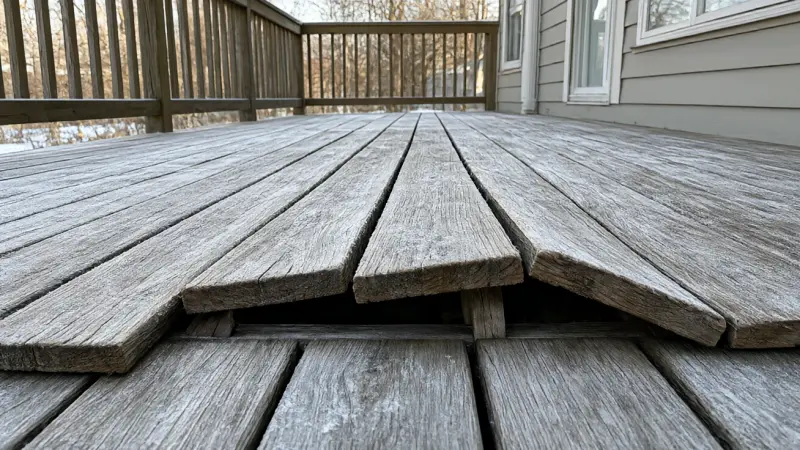
When homeowners say a deck board is lifting, they often mean one of several things. The board may be rising above the joist at one end, cupping so its edges stand proud, buckling against a neighboring board, or popping nails and screws so the heads sit above the surface. Sometimes the movement is limited to a single board, while other times several boards move in the same area.
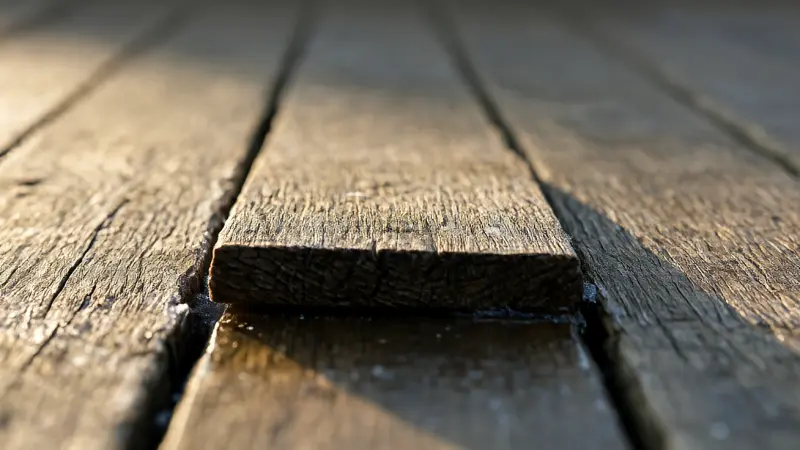
Winter makes these problems more visible because moisture, ice, and temperature changes act on the deck in different ways. Wood can absorb moisture and swell, ice can form in narrow gaps, and freeze-thaw cycles can work fasteners loose. Composite decking does not absorb water like wood, but it can still move with temperature changes and trap ice or debris in gaps.
Why Deck Boards Lift in Winter
The main causes are moisture, freeze-thaw movement, trapped snow and ice, inadequate spacing, loose fasteners, and movement in the supporting structure. In practice, more than one cause may be present at the same time. A board with a tight gap and a loose screw near a poorly drained corner is more likely to lift than a board with good spacing and sound fasteners.
1. Freeze-Thaw Cycles and Moisture in the Wood
Wood decking can take on moisture from rain, snow, and humid air. When that moisture freezes, it expands, and when it thaws, it contracts. Repeated cycles can push boards upward, loosen fasteners, and widen small cracks. Pressure-treated wood is common for decks because it resists rot, but it can still swell and shrink as moisture levels change.
End grain is especially vulnerable because it absorbs moisture more readily than the face of the board. If the ends of boards are not protected or are sitting in snow, they may swell and lift. This is one reason lifted board ends are common near steps, railing posts, and the outer edge of the deck.
2. Snow and Ice Trapped in Board Gaps
Snow can pack into the gaps between deck boards and then refreeze into solid ice. Ice occupies more space than the snow that formed it, so it can push against the sides of boards. If the gaps are narrow or partially blocked by debris, the pressure has nowhere to go and the board may rise or cup.
Ice can also form under the board where it meets the joist. When that ice expands, it can lift the board slightly and create a gap where more water enters. The next freeze pushes again. Over time, the board may sit noticeably higher than its neighbors.
3. Inadequate Spacing Between Boards
Deck boards need a gap for drainage and movement. The exact gap depends on the decking material, board width, moisture content at installation, and the manufacturer’s instructions. If boards were installed too tightly, or if they swelled after installation, the gaps can close. Water then sits between boards instead of draining away.
Tight spacing is especially troublesome in winter. Once ice forms in a narrow gap, it can grip both boards and push them apart or upward. If you notice several boards buckling against each other in the same area, spacing is one possible cause.
4. Fasteners Backing Out or Corroding
Nails and screws hold deck boards to the joists, and they can loosen over time. Wood movement, freeze-thaw cycles, and foot traffic can cause fasteners to back out slightly. A popped nail head or a screw that no longer grips can let the board rise at one edge.
Corrosion is another factor, particularly in coastal areas or where deicing products are used. Corroded fasteners may lose holding power or break. Hidden fastener systems can also be affected if clips loosen, break, or fill with debris. When a board lifts near a fastener, inspect the fastener and the surrounding wood before simply driving it back down.
5. Frost Heave and Movement in the Deck Structure
Not every lifted board is a board problem. In cold climates, soil can freeze and expand, which may move deck footings, posts, or the framing above them. This is often called frost heave. If a footing rises slightly, the joists attached to it can move, and the deck boards above may lift or become uneven.
Frost heave is more serious than a single loose board. Signs include movement near posts, gaps at the ledger or framing connections, doors or railings that no longer line up, and boards that rise and fall together in one area. If you suspect structural movement, keep people off the deck until it can be inspected.
How to Tell Whether It Is the Boards or the Framing
A careful inspection can help you decide whether the problem is cosmetic or structural. Look at the pattern of movement. One board lifting near a popped screw is often a fastening issue. Several boards rising in a line near a post may point to framing movement. Boards cupping across their width often suggest moisture changes in the board itself.
| What You May See | Likely Cause | First Safe Step |
|---|---|---|
| One board end lifted near a nail or screw | Loose or corroded fastener, board swelling | Keep weight off the board and inspect the fastener after thaw |
| Several boards buckled against each other | Tight spacing, debris, or ice in the gaps | Clear snow and debris carefully, then check gaps when dry |
| Boards cupped across the width | Moisture imbalance in wood decking | Note the area and plan refinishing or replacement after the deck dries |
| Boards rising in one area near a post | Possible frost heave or framing movement | Limit access and arrange an inspection before making repairs |
| Lifted boards near the house wall | Ledger, flashing, or drainage issue | Check for water intrusion and consult a deck professional if widespread |
Also check for rot, soft wood, and water stains. A board that is soft or crumbly may need replacement rather than re-fastening. Rot near the ledger or joists is a structural concern, not just a surface defect.
Safety Before You Repair Winter Deck Damage
Winter repairs on a deck carry extra risks. Surfaces can be icy, tools can be hard to handle with gloves, and frozen boards can be brittle. Avoid prying on a frozen board, because the force can crack the board, damage the joist, or cause you to lose balance. Keep children and pets off the deck if any board is lifted enough to create a trip hazard.
Use a plastic shovel or broom to clear snow rather than a metal shovel that can gouge the decking. Avoid chopping ice with an axe or hammer. If you need to remove ice, use a plastic scraper and a deicing product that is compatible with your decking material, following the label directions.
Do not walk on a deck with obvious structural movement, a sagging section, or a loose railing. If a post appears to have risen or the deck feels unstable, stop and call a qualified professional. The same caution applies to winter conditions elsewhere in the home; if you notice a wood stove not drafting in winter, that also deserves prompt attention because it can affect safety and indoor air quality.
Step-by-Step: What to Do About Deck Boards Lifting in Winter
In cold weather, the goal is usually to reduce the immediate hazard and prevent further damage, not to complete a full repair. Major repairs are often better scheduled for a thaw when the wood is drier and fasteners can be set properly. Use the following steps as a safe framework.
1. Clear Snow and Loose Ice
Remove snow from the lifted area and the surrounding deck so you can see the boards and fasteners. Use a plastic shovel or broom and work gently. Do not pile snow against the house, railing, or deck posts, because meltwater can refreeze in those areas.
Clear the gaps between boards if you can do so without forcing anything. A soft brush or plastic tool can remove loose debris. Avoid metal scrapers, which can scratch composite decking or gouge wood.
2. Inspect Without Walking on Lifted Boards
Look at the lifted board from a safe position. Note whether the board is lifted at an end, cupped across its width, or loose along its length. Check for popped fasteners, cracks, soft spots, and water stains. Look along the line of the board to see whether the joist below appears straight.
If the board is near a post or the house, inspect the surrounding framing visually. Do not crawl under a deck that may be unstable. If you see separation at connections or movement at a post, stop and seek professional advice.
3. Avoid Forcing Frozen Boards
A frozen board can be brittle, and prying it can cause more harm than good. Do not stand on the lifted board to push it down. Do not hammer a frozen fastener. If the board is blocking a door or creating a trip hazard, mark the area and restrict access until conditions improve.
If the board is only slightly raised and the deck is otherwise sound, you may be able to leave it until the thaw. Place a temporary marker or barrier so people do not trip on it.
4. Check Drainage and Debris
Water is often the root of winter deck movement. Make sure snowmelt can drain away from the deck and the house. Check that gutters are not overflowing onto the deck, and clear debris from areas where water collects. If gutters are not doing their job, this guide to a gutter guard not working in winter can help you identify common causes.
Look for low spots where water ponds on the deck or splashback from the roof lands on the boards. Persistent moisture in one area can lead to repeated freezing, swelling, and fastener problems.
5. Plan Repairs for a Thaw
Most board repairs should wait until the deck is free of ice and the wood has had a chance to dry. At that point, you can inspect fastener condition, check board spacing, and decide whether to reset, replace, or refinish. If a board is cracked or rotten, replacement is often more reliable than re-fastening.
Keep a record of which boards lifted and where. If the same board lifts every winter, the cause may be a tight gap, a damaged fastener, or a drainage issue that needs a permanent fix.
Repair Options for Lifted Deck Boards
Once the deck thaws, you can choose a repair based on the cause. A loose fastener may need to be replaced with a fastener suitable for the decking material and exposure. A board with a closed gap may need to be trimmed or re-spaced if the manufacturer’s instructions allow it. A cupped or cracked board may need replacement.
When re-fastening wood decking, use fasteners that match the existing system and are rated for the environment. Drive screws carefully so the heads sit flush without crushing the board. If the old hole is enlarged or damaged, a slightly different fastening point or a proper repair may be needed. For composite decking, follow the manufacturer’s fastening instructions closely, because composite boards can be damaged by overdriving fasteners or using the wrong clip.
If the lifted board is near the house, check the ledger flashing and the area where the deck meets the siding. Water that gets behind the ledger can cause rot and movement. This is a job for a deck professional if you are not confident in assessing flashing and structural connections.
Preventing Deck Boards From Lifting Next Winter
Prevention focuses on keeping water out of the deck assembly and allowing the deck to move as it was designed. Clear snow promptly, but avoid piling it against the deck or house. Keep gaps between boards free of debris so water can drain. Check the deck after storms and remove any ice that is bonding boards together.
Inspect fasteners before winter and replace corroded or loose ones. Clean and refinish wood decking according to the manufacturer’s recommendations, and make sure the deck has adequate ventilation underneath. If the deck is close to the ground or surrounded by vegetation, improve airflow where possible.
Watch for indoor moisture clues as well. Winter condensation can show up in unexpected places, such as a toilet tank sweating in winter, and it can also signal humidity or ventilation issues that affect wood elsewhere in the home. Keep the deck and the house exterior on a seasonal inspection schedule so small drainage and fastener problems are caught early.
When to Call a Deck Professional
Call a professional if the deck has widespread board movement, a loose railing, a sagging section, or visible movement at posts and footings. These signs can indicate frost heave, framing damage, or a connection problem that should not be handled as a simple board repair. Also call for help if you find soft wood, water stains near the ledger, or flashing that appears damaged.
A professional can assess the deck structure, drainage, and fastening system and recommend a repair plan. Winter is a good time to arrange an inspection so the work can be scheduled for a thaw. If the deck is unsafe, keep it closed off until repairs are completed.
Conclusion
Deck boards lifting in winter are often caused by moisture, ice in the gaps, tight spacing, loose fasteners, or frost movement in the deck structure. A single lifted board may be a minor repair, but several boards moving together deserve a closer look.
In cold weather, clear snow gently, avoid forcing frozen boards, and restrict access to any trip or structural hazard. Save most fastening, spacing, and replacement work for a thaw when the deck is dry and safe to inspect.
Prevention comes down to drainage, spacing, sound fasteners, and seasonal inspection. If you see signs of structural movement or rot, stop and call a qualified deck professional rather than relying on a temporary fix.