
A dishwasher that will not drain after Thanksgiving dinner turns a messy kitchen into a stressful one. The sink is full, the counter is covered in plates, and the appliance that was supposed to handle the cleanup is sitting with cloudy water in the bottom. Most post-holiday drain failures come from a short list of causes, and many of them are safe for a homeowner to check before calling a technician.
The key is to work methodically and respect the combination of water and electricity inside the appliance. This guide covers the controls, the filter and sump, the drain hose and disposal connection, the pump, and the holiday-specific debris that causes most of these failures. It also explains when a repair moves beyond a DIY check and into professional territory.
Safety First: Cut Power and Deal With Standing Water
Before opening the dishwasher or reaching into any part of it, disconnect the power. Many units plug into an outlet under the sink, so unplugging is straightforward when the cord is accessible. If the dishwasher is hardwired, switch off the dedicated breaker at the panel and label it so no one turns it back on while you are working.
Standing water in the tub is not just an inconvenience. It can spill onto the floor, seep under the cabinet, and create a slip hazard. Use a cup or a turkey baster to bail most of the water into a bucket, then soak up the rest with towels. A wet/dry vacuum rated for water can speed this up, but only if the unit is designed for liquid pickup and the dishwasher power is off.
Do not pour chemical drain cleaner into the dishwasher. These products can damage internal components and create a splash hazard when the appliance is later opened or serviced. They also do little for a clog that sits in the drain hose or at the disposal connection, which is where many dishwasher blockages actually live.
Check the Simple Controls and Float Switch
Some “not draining” complaints are really control problems. Confirm that the cycle actually finished or was canceled properly. Press the cancel or drain button and give the unit a few minutes to run its drain sequence. A cycle that was interrupted mid-wash may leave water in the tub by design until the drain command completes.
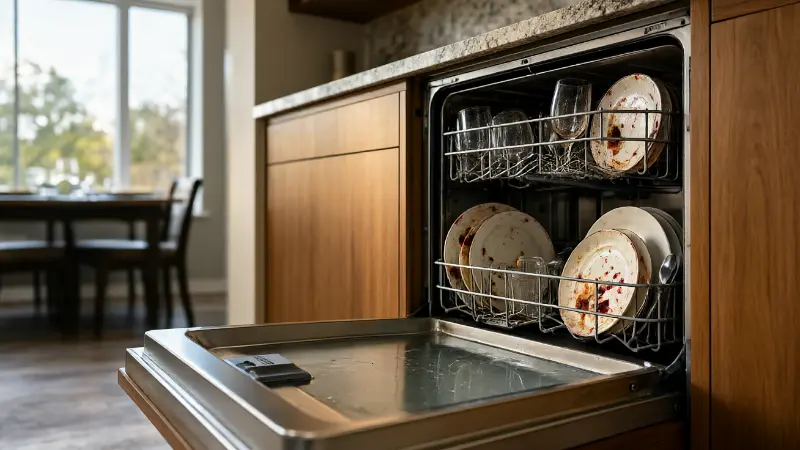
Next, locate the float switch. It is usually a small plastic float inside the tub, often near the front or in a corner, designed to stop the fill valve when water reaches a certain level. If the float is stuck by a piece of food debris or a bent utensil, the control may behave unpredictably. With the power off, gently lift the float and confirm that it moves freely, then remove any debris around it.
Check the door latch and the control panel for error codes. A door that is not fully latched can stop the cycle before the drain phase, and some models display a code that points directly to a drain or pump fault. Look up the code in the owner’s manual rather than guessing. If the panel is dark or the buttons do not respond, the problem may be power or a control board rather than the drain system.
Clean the Filter and Sump Area
The filter and sump are the most common collection points for holiday debris. With the power off and the racks removed, take out the filter assembly according to the manual. Many units have a cylindrical filter and a flat filter screen that lift out together. Rinse them under warm running water and use a soft brush to remove grease, starch, and fibrous bits.
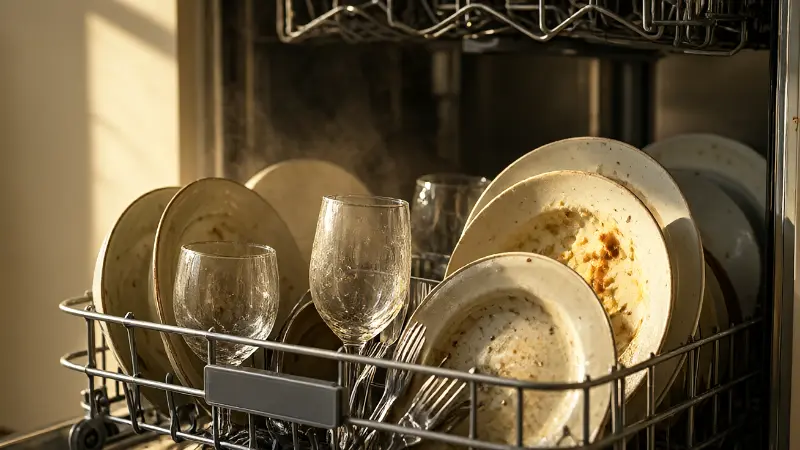
Look into the sump cavity after the filter is out. Turkey fat, potato peels, rice, and small shards of glass or bone can collect there and restrict flow to the drain pump. Remove what you can reach with a spoon or tongs, but do not put your fingers into the pump impeller area. The impeller can have sharp edges, and the pump may still have residual water around it.
If the sump is coated in grease, a warm soapy wash and rinse helps break it down. Avoid scraping the plastic with metal tools, since scratches give debris a place to cling. Reinstall the filter carefully and confirm that it seats fully. A filter that is loose or installed backward can let debris bypass the screen and reach the pump.
Inspect the Drain Hose, Air Gap, and Disposal Connection
Follow the drain path from the dishwasher to the sink. The drain hose usually runs from the pump outlet, up to a high loop under the counter, and then to the disposal or a sink drain fitting. Look for kinks, crushed sections, or a hose that has slipped down and lost its high loop. A sagging hose can trap water and debris, and a kink can stop flow entirely.
If your sink has an air gap on the counter, remove the cap and clean the small passages inside. An air gap that is clogged with grease or food residue can cause water to back up into the sink or leave standing water in the dishwasher. Reassemble it carefully and check for leaks when you run the next cycle.
At the disposal connection, confirm that the dishwasher drain hose is connected to the proper port and that the knockout plug was removed if the disposal was recently installed. A disposal that is clogged or full of food can also prevent the dishwasher from draining, because both appliances share the same drain path. Run the disposal with cold water before starting the dishwasher, and check that the disposal is not jammed or tripped.
Quick checks at the sink
- Confirm the drain hose has a high loop above the disposal connection.
- Look for kinks or crushed sections along the visible hose run.
- Clean the air gap if water backs up at the sink during draining.
- Run the disposal with cold water before starting a dishwasher cycle.
- Check the disposal knockout plug if the unit was recently replaced.
Test the Drain Pump and Check Valve
If the filter, hose, and disposal connection are clear, the next suspect is the drain pump. Start a cycle and listen near the bottom of the dishwasher when it should be draining. A pump that hums but does not move water may be jammed by debris. A pump that is silent may have lost power, failed, or be blocked by a control issue.
With the power off, inspect the pump inlet for obstructions if the manual shows an accessible cover. Remove any visible debris with tongs, not your fingers. Some pumps have a small check valve or flapper that prevents water from flowing back into the tub. A piece of food or a broken piece of plastic can hold that valve open or closed, and the result is poor draining or water returning after the cycle.
Do not attempt to test the pump with exposed wiring or a multimeter unless you are comfortable working around water and line voltage. If the pump does not respond, or if the check valve is damaged, a technician can replace the pump assembly and confirm that the control board is sending the correct signal. Replacing a pump is usually a manageable repair for a technician, but diagnosing the control side is not a beginner task.
Understand Why Thanksgiving Dinners Clog Dishwashers
Thanksgiving cooking sends a particular mix of debris into the dishwasher. Turkey fat and pan drippings congeal as they cool, gravy thickens, potato starch settles, and fibrous trimmings wrap around filter screens. A dishwasher is designed to handle normal food soil, not a concentrated load of fats and starchy liquids from a large meal.
Overloading the racks can also play a role. When plates are packed too tightly, water cannot reach every surface, and food debris has fewer paths to the filter. A heavily loaded unit may run a longer cycle and use more water, which gives grease more opportunity to cool and stick inside the sump and hose. Scraping plates into the bin before loading is more effective than pre-rinsing every dish, because scraping removes the solids that cause clogs.
| Symptom | Likely cause | Safe homeowner check | Next step |
|---|---|---|---|
| Water stands in the tub after the cycle | Clogged filter, kinked hose, or blocked air gap | Clean filter, inspect hose, clean air gap | Clear the obstruction and run a drain cycle |
| Water backs up into the sink | Clogged disposal or shared drain restriction | Run disposal with cold water, check knockout plug | Clear disposal or call a plumber for the sink line |
| Drain pump hums but water does not move | Debris jammed in the pump inlet | Power off, remove visible debris with tongs | Call a technician if the pump remains jammed |
| Drain pump is silent | Failed pump, control fault, or power issue | Confirm power and cancel/drain setting | Call an appliance technician for diagnosis |
| Water returns after draining | Check valve stuck open or drain hose sagging | Inspect hose high loop and visible valve | Repair hose routing or replace the valve |
| Error code on the panel | Model-specific drain or sensor fault | Look up the code in the manual | Follow the manual or call for service |
Prevent the Next Post-Holiday Drain Failure
Prevention starts before the plates reach the dishwasher. Scrape food into the bin, pour cooled fat into a container rather than down the sink, and wipe greasy pans with a paper towel. Run hot water in the sink for a short time before starting the dishwasher so the drain line is clear. These habits reduce the grease and solids that cause most post-holiday blockages.
Use the correct amount of detergent and the appropriate cycle for a heavy load. More detergent is not better, and excess suds can interfere with the drain sequence. Check the filter after a large meal and rinse it before the next run. If your model has a self-cleaning filter, still inspect the sump area for large debris that the system cannot handle.
While the kitchen is the focus, holiday hosting touches other rooms and equipment. If guests will gather around the dining table, a few minutes spent on a wobbly chair pays off; this guide to fixing a squeaky dining chair covers the common causes. Before guests arrive, a seasonal Thanksgiving furnace check can keep the house comfortable while the kitchen works overtime. And once the holiday rush is over, winter equipment deserves attention too, including draining gas from a snowblower before storage.
When to Call an Appliance Technician
Call a technician if the drain pump does not run after you have confirmed power and cleared visible obstructions. Also call for service if water leaks from the bottom of the dishwasher, if the control panel shows a repeated error code, or if the unit trips the breaker when the drain cycle begins. These symptoms point to components that need testing with a meter and replacement with model-specific parts.
A technician is also the right choice if you are uncomfortable removing the filter assembly or reaching into the sump. Dishwasher interiors have sharp edges and residual water, and the pump area is not a place to explore by feel. If the appliance is older and the repair cost approaches a significant fraction of a replacement, ask for an honest assessment before authorizing the work.
FAQ
Why does my dishwasher fill with water after Thanksgiving dinner?
Large meals send extra grease, starch, and food debris into the filter and drain path. When the filter or drain hose is partly blocked, the pump cannot move water out, and it remains in the tub after the cycle.
Can I use a plunger on a dishwasher drain line?
Plunging a dishwasher is not a standard repair and can force water into places it should not go. It is safer to clean the filter, inspect the hose, and check the disposal connection first.
Should I run the disposal before starting the dishwasher?
Running the disposal with cold water before starting the dishwasher helps clear the shared drain path. This is especially useful after a heavy meal when the disposal may hold food scraps.
Is a little standing water in the dishwasher normal?
A small amount of water in the sump can be normal on some models, but a noticeable pool above the filter is not. If the water smells or returns after draining, check the filter, hose, and check valve.
Conclusion
A dishwasher that will not drain after a holiday meal is usually dealing with debris in the filter, a kinked or clogged hose, a blocked disposal connection, or a jammed pump. Working through the controls, filter, drain path, and pump in that order solves many cases without a service call. Power off and standing water removal come first, because the appliance combines water and electricity in a small space.
If the pump is silent, the breaker trips, or water leaks from the base, stop and call a technician. For the next holiday, scrape plates, bin the fat, clean the filter, and run the disposal before starting the dishwasher. Those habits cost little time and greatly reduce the chance of repeating the same cleanup problem.