Hanging holiday lights is one of the most enjoyable parts of the holiday season, but it is also one of the easiest ways to cause expensive roof damage if you are not careful. Clips that grip too tightly, staples driven into shingles, and ladders leaned against gutters can all leave behind problems that cost far more than the lights themselves. The good news is that you can create a bright, festive display without putting a single hole in your roof or compromising your shingles.
This guide explains the methods that protect your roofing materials, the fasteners that are safe to use, and the habits that prevent damage during installation and removal. It also covers ladder safety, load limits, and what to do if you discover existing damage while you are up there. With the right approach, you can decorate confidently and take everything down in the spring without leaving a mark.
Why Roof Damage Happens During Holiday Light Installation
Most roof damage from holiday lights comes from three sources: fasteners that penetrate the roofing material, pressure that cracks or loosens shingles, and abrasion from cords rubbing against surfaces. Staples and nails are the worst offenders because they create holes in the shingle mat and the underlayment beneath it. Even a small puncture can allow water to enter the roof assembly, and the damage may not become visible until the next heavy rain or snowmelt.
Clips that grip the edge of a shingle can also cause problems if they are too tight or if they are removed carelessly. Shingles become brittle in cold weather, and forcing a clip under the edge can crack the tab or break the sealant strip. Walking on the roof adds another risk: foot traffic can loosen granules, crack shingles, and compress insulation. The safest approach is often to work from a ladder at the eaves rather than walking on the roof at all.
Cords and light strings themselves can cause abrasion damage. A cord that vibrates against a shingle edge in the wind can wear away the granule surface over time. A light string that is pulled tight across a ridge or a vent can put stress on both the roofing material and the wiring. Planning the route of the lights so that they hang freely without rubbing is an important part of protecting the roof.
Choose the Right Clips and Fasteners
The safest fasteners for holiday lights are those that attach without penetrating the roof. Several types are widely available, and each has a suitable application. Understanding the differences helps you choose the right product for your roof type and the way your lights are installed.
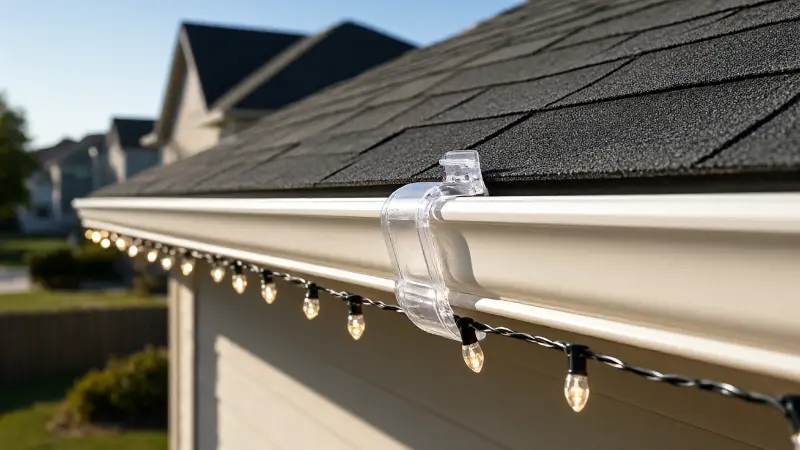
Shingle tabs and edge clips are designed to slide under the edge of a shingle or grip the drip edge without piercing the material. They work best on standard asphalt shingles and should be sized to fit the shingle thickness. Plastic clips are preferable to metal ones because they are less likely to scratch the shingle surface and they will not rust. Always check that the clip is not forcing the shingle to bend or lift, because that can break the sealant strip and allow wind-driven rain to enter.
Gutter clips are another option for lights that run along the eaves. They attach to the gutter lip rather than the roof, which keeps the fastening point away from the shingles. This is a good choice if your gutters are securely attached and in good condition. Do not hang heavy light strings or extension cords from a gutter that is loose or sagging, because the added weight can pull the gutter away from the fascia.
Adhesive hooks are useful for soffits and fascia boards, but they should not be relied on for outdoor use in cold or wet conditions. The adhesive may not bond well to a dirty or damp surface, and a hook that fails can drop the lights onto the roof or the ground. If you use adhesive hooks, clean the surface thoroughly, apply them when the temperature is within the product’s recommended range, and check them periodically. Magnetic hooks can work on metal gutters and trim, but they are not suitable for shingles or wood.
Avoid staples, nails, and screws entirely. They puncture the roofing material and create leak paths that may not show up for months. If you have used them in the past, inspect those areas for damage before installing new lights. A small hole can often be sealed with a suitable roofing sealant, but a larger area of damage may require a professional repair. Do not cover a damaged area with lights and hope for the best.
Plan the Layout Before You Climb the Ladder
Good planning reduces the amount of time you spend on the ladder and the number of times you have to move it. Start by measuring the runs where you want lights and deciding where the power will come from. If you are not sure how to reach an outlet safely, a guide to hanging holiday lights without an outlet can help you plan an alternative. The goal is to avoid stretching cords across walkways or relying on overloaded extension leads.
Sketch the route of the lights and note where the clips will go. Keep the string slightly loose rather than taut, because lights contract in cold weather and a tight string can pull on the clips or the roofing material. Leave a small drip loop where the cord enters the outlet or extension lead so that water runs away from the connection. Plan the connections so that they are not sitting in a puddle or buried in snow.
Check the load rating of the light strings and the extension cords. Most light strings have a maximum number of strings that can be connected end to end, and exceeding that limit can overload the wiring. If you are adding a large display, review the circuit capacity before you plug everything in. A breaker that trips repeatedly is a sign that the load is too high, and an article on holiday string lights tripping a breaker explains how to diagnose common electrical faults safely.
Ladder Safety and Working at the Eaves
Most holiday light installations can be completed from a ladder at the eaves without walking on the roof. This is the safer approach for several reasons. Roof surfaces can be slippery, especially when frost or morning dew is present, and a fall from height can cause serious injury. Working from a ladder also reduces the risk of damaging shingles underfoot.
Set the ladder on firm, level ground and use a stabiliser or a second person to foot it if possible. Keep the ladder at a safe angle and extend it far enough above the working height that you have something to hold onto. Do not overreach; move the ladder instead. Wear shoes with good grip and avoid working in wet, windy, or icy conditions. If you are not comfortable working at height, hire a professional or ask a confident friend to help.
When you are at the eaves, avoid leaning the ladder against the gutter unless the gutter is designed for that load. A ladder that presses on a gutter can bend it or pull it loose from the fascia. Use a standoff stabiliser if you need to work close to the roofline. Keep your tools in a belt or a bag so that you do not have to climb with your hands full, and never carry a light string up a ladder while it is plugged in.
Protect Shingles and Roofing Materials
Shingles are designed to shed water, not to support clips or bear weight. When you attach a clip, check that it sits under the shingle edge without lifting the tab. If the shingle is brittle or the sealant strip is weak, the clip may cause more harm than good. In cold weather, shingles are more likely to crack, so take extra care and consider waiting for a milder day if the forecast is very cold.
Keep cords and light strings away from roof vents, skylights, and chimney flashing. These areas are common leak points, and a cord that rubs against flashing can wear away the sealant. Do not hang lights from a vent or a chimney cap, because the weight can damage the component and the lights may be exposed to excessive heat. Route cords so that they do not trap water against the roof surface.
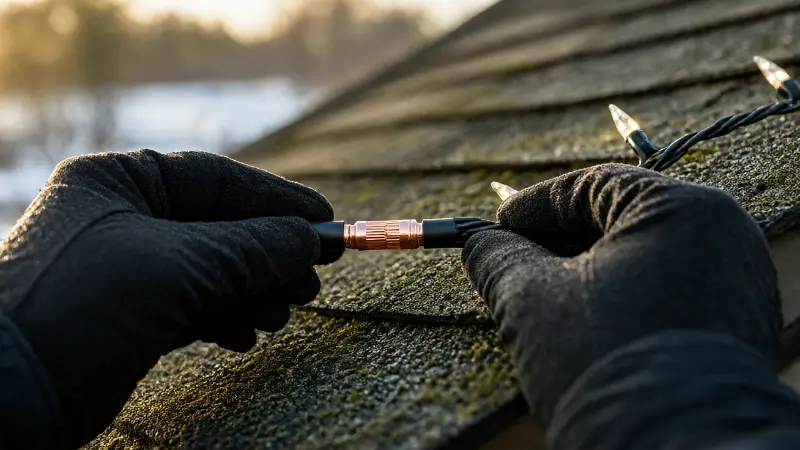
If you need to cross a ridge or a hip, use a clip that is designed for that purpose rather than draping the cord over the edge. A cord that is pulled across a ridge can rub against the shingles in the wind and wear away the granule surface. A clip that holds the cord slightly above the surface reduces abrasion. Check the route after installation and adjust any point where the cord is in firm contact with the roof.
Do not use tape, adhesive, or sealant to stick lights directly to shingles. These products can leave a residue that is difficult to remove and may damage the shingle surface. If a clip will not stay in place, find a different attachment point rather than forcing it. A loose clip that falls off is better than a clip that damages the roof.
Manage Cords, Connections, and Electrical Load
Extension cords should be rated for outdoor use and sized appropriately for the load. A cord that is too thin for the current will overheat, and a cord that is too long will suffer voltage drop that can affect the lights. Keep connections off the ground and protected from water. A simple drip loop and a weatherproof connection box can reduce the risk of a ground fault.
Do not overload a single circuit with too many light strings. If the lights trip a breaker, do not keep resetting it; investigate the cause. A guide to common electrical faults can help you understand what to check. If a string is damaged, do not repair it with tape or twisted wires. Safe methods for splicing 3 wire holiday lights exist, but replacement is often the better choice for a damaged string.
Check that all plugs and connectors are fully engaged. A plug that is partly out can arc and overheat, which is a fire risk. If a plug feels loose, replace the cord or the connector rather than trying to bend the pins. Keep the connections where they will not sit in snow or standing water, and unplug the lights when you are not home or when the display is unattended for long periods.
Comparison Table: Safe vs Unsafe Fastening Methods
| Method | Roof impact | Best use |
|---|---|---|
| Plastic shingle clips | No penetration; may lift shingle edge if oversized | Asphalt shingle eaves and tabs |
| Gutter clips | No roof penetration; load on gutter | Lights along eaves with secure gutters |
| Adhesive hooks | No penetration; residue risk on some surfaces | Soffits and fascia in mild, dry conditions |
| Magnetic hooks | No penetration; suitable for metal only | Metal gutters and trim |
| Staples or nails | Punctures shingles and underlayment | Not recommended on any roof |
| Screws into fascia | Creates holes; may allow water entry | Only with sealed, appropriate fasteners and caution |
Removing Lights Without Causing Damage
Taking the lights down is as important as putting them up. Do not pull on the cords to remove clips, because that can tear the clip from the shingle or damage the light string. Work along the run and release each clip gently. If a clip is stuck, use a flat tool to ease it out rather than forcing it. In cold weather, warm the clip slightly with your hand before releasing it to reduce the risk of cracking the shingle.
Inspect the roof after removal. Look for lifted shingle tabs, cracked shingles, loose granules, and any sign of water intrusion. If you find a problem, address it before the next storm. A small area of lifted sealant can often be resealed with a suitable roofing adhesive, but larger damage should be assessed by a roofing professional. Do not ignore a problem because it is small; water damage can spread.
Store the lights and clips neatly so that they are ready for next year. Tangled strings are more likely to be damaged when they are pulled apart, and lost clips lead to improvised fasteners that may damage the roof. Label the strings by length and location if you have a complex display. Good storage habits extend the life of the lights and reduce the temptation to use unsafe shortcuts.
When to Call a Professional
Call a professional if you are not comfortable working at height, if your roof is steep or fragile, or if you have discovered existing damage that needs repair. A roofing contractor can assess the condition of the shingles and recommend a safe attachment method. An electrician can advise on circuit capacity if you are planning a large display. Do not take risks with ladders or electrical work just to save the cost of a call-out.
If you have a metal roof, a tile roof, or a flat roof with a membrane, the attachment methods are different from asphalt shingles. Some clips are not suitable for these surfaces, and walking on them can cause damage that is expensive to repair. Consult the roofing manufacturer’s guidance or a specialist before installing lights. A small investment in advice can prevent a costly repair.
FAQ
Can I use staples to hang holiday lights on my roof?
Staples puncture the shingles and create leak paths, so they are not a safe choice for roofing materials. Use clips that grip the shingle edge or gutter without piercing the surface. If you have used staples in the past, inspect those areas for damage and seal any holes with a suitable roofing sealant.
Will clips damage my shingles over time?
Clips that are correctly sized and gently installed should not cause significant damage. Problems arise when clips are too tight, when they lift the shingle tab, or when they are removed carelessly. Check the clips periodically and replace any that are forcing the shingle to bend.
How do I hang lights on a metal roof without drilling?
Magnetic hooks can work on some metal roofs, but they are not suitable for all profiles. Adhesive hooks may be an option on clean, dry surfaces, but they can fail in cold or wet weather. Consult the roof manufacturer for guidance and avoid any method that penetrates the metal panels.
Is it safe to walk on the roof to install lights?
Walking on a roof carries a fall risk and can damage shingles, especially in cold or wet conditions. Many installations can be completed from a ladder at the eaves. If you need to access the roof, use appropriate safety equipment and avoid steep or fragile surfaces.
Conclusion
Hanging holiday lights without damaging your roof comes down to choosing non-penetrating fasteners, planning the layout, and working safely from a ladder rather than walking on the shingles. Plastic shingle clips, gutter clips, and suitable adhesive or magnetic hooks can all hold lights securely without creating holes. Avoiding staples and nails is the single most important step in protecting the roofing material.
Inspect the roof before and after installation, keep cords from rubbing against shingles, and manage the electrical load so that breakers do not trip. Remove the lights gently and store them neatly so that next year’s installation is easier and safer. If you are unsure about working at height or your roof type, call a professional rather than taking a risk.
With a little care and the right equipment, you can enjoy a bright holiday display and a roof that stays in good condition for years to come. The key is to treat the roofing material as a surface to protect, not a structure to attach to.