You wake up one morning, pull back the curtains, and notice a strange, milky white haze or powdery residue trapped inside your glass. You try to wipe it off from the inside, then the outside, but it doesn’t budge. It is sitting in the “no man’s land” between the two panes of your double-glazed window. This is one of the most frustrating issues for homeowners because it looks dirty, blocks your view, and seems impossible to reach.
The immediate panic often leads to questions: Is it toxic mold? Is my window about to shatter? Did I use the wrong cleaner? The reality is often less biological and more mechanical. The white material is most likely degraded silica desiccant dust or mineral deposits left behind by condensation due to a permanent failure of the window’s thermal seal.
While it is tempting to ignore the issue or look for a “miracle spray,” this white residue is a symptom of a much larger failure within your home’s thermal envelope. Ignoring it can lead to higher energy bills, rot in the window frames, and eventually, a total loss of insulation value. This guide will walk you through exactly what that white stuff is, why it appeared, and the only proven ways to banish it for good.
Diagnosing the White Residue: What Exactly Is It?
Before you can fix the problem, you need to identify what you are looking at. Not all “white stuff” is the same, and the specific texture and pattern of the residue can tell you a lot about the severity of the seal failure. Most homeowners assume it is simple condensation, but the white solid matter indicates a chemical or physical change has occurred inside the Insulated Glass Unit (IGU).
The “Snow” Effect: Desiccant Dust
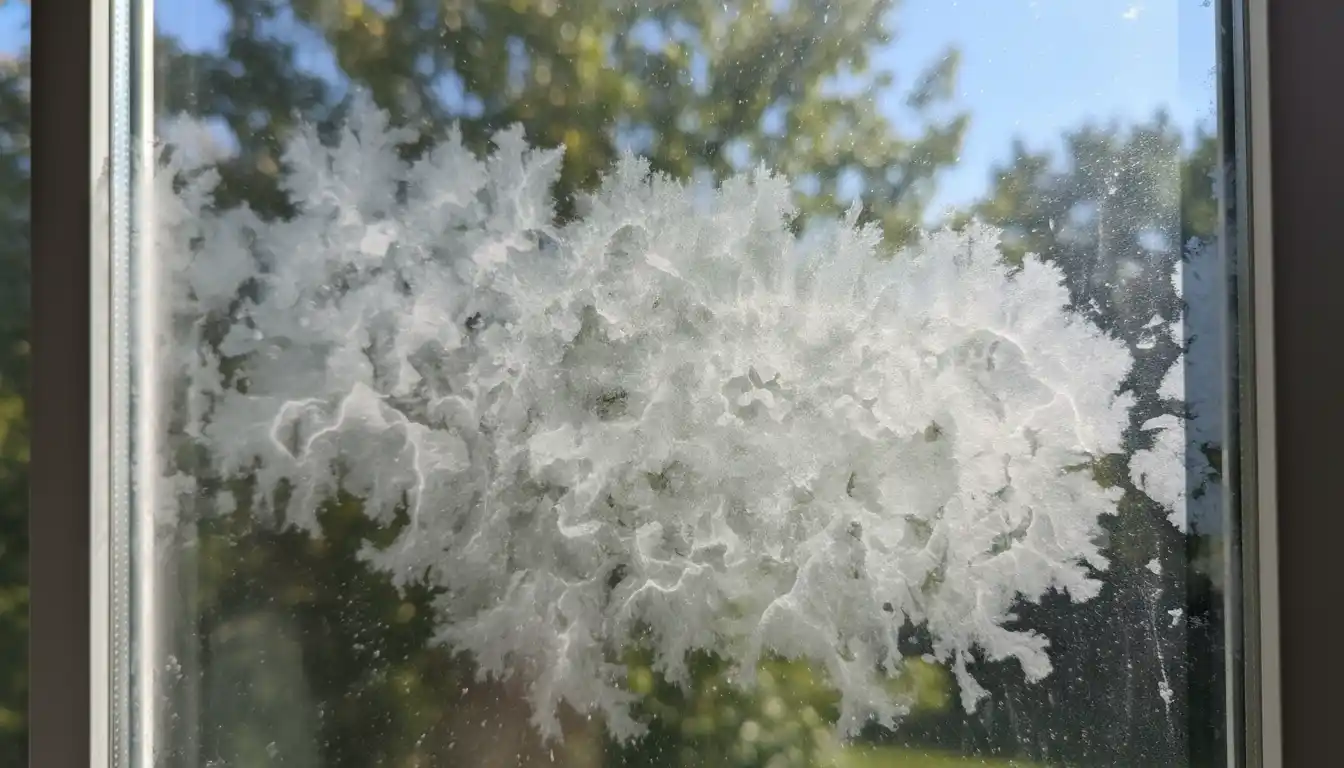
If the white material looks like a fine powder, almost like snow or piles of talcum powder at the bottom of the window frame, you are likely dealing with desiccant failure. Inside the metal spacer bar that separates your two panes of glass, manufacturers place small silica beads. These beads are designed to absorb any moisture that gets trapped during manufacturing.
Over years of thermal expansion and contraction, the window vibrates. If the spacer bar is lower quality, it can deteriorate, or the silica beads can pulverize into a fine chalky dust. As the window “breathes” (pumps air in and out due to temperature changes), this dust is blown up between the panes, settling on the glass and piling up at the bottom. This is a definitive sign that your IGU has reached the end of its lifespan.
Mineral Haze and Hard Water Stains
Sometimes the white stuff isn’t a powder but a cloudy, etched haze that looks like hard water stains on a shower door. This occurs when the seal breaks and allows outside air carrying moisture to enter the space between the panes. When the temperature drops, this moisture condenses into water droplets on the inner glass surfaces.
When the sun hits the window, that water evaporates, but it leaves behind dissolved minerals (calcium and magnesium) from the water or the glass itself. Over time, these repeated wet-dry cycles etch the glass surface chemically. Once the glass is etched, no amount of cleaning—even if you could reach it—will restore its transparency.
Is It White Mold?
While less common than desiccant or minerals, mold can grow between window panes. Usually, mold in windows is black or green, but white mold varieties exist and thrive in damp, stagnant environments. If the residue appears fuzzy, circular, or organic in shape rather than streaky or powdery, it could be biological growth. This is a health concern, as it indicates a significant amount of moisture is trapped and stagnant within your walls or glazing system.
Why Double Pane Windows Fail
Understanding why this happened is critical to preventing it in your next set of windows. Double pane windows are essentially a sandwich of glass and gas (usually Argon) sealed with a rubbery compound. This system is not designed to last forever, but premature failure is often caused by specific environmental stressors.
Thermal Pumping and Seal Stress
Your windows endure a brutal cycle every day. During the day, the sun heats the gas between the panes, causing it to expand and push outward against the glass and seals. At night, the gas cools and contracts, pulling the panes inward. This constant “pumping” action flexes the seals thousands of times a year.
Eventually, the material hardens and develops microscopic cracks. Once the seal is breached, the heavy Argon gas leaks out and is replaced by regular air containing humidity. The desiccant gets overwhelmed and saturated, leading to the white residue you see. This is why south-facing windows often fail first; they experience the most extreme thermal swings.
The Role of Spacer Bars
The spacer bar is the unsung hero—or villain—of your window assembly. Old aluminum spacers conduct heat and cold, worsening the expansion/contraction cycle. Modern “warm edge” spacers made of foam or composite materials are more flexible. If you have older windows with metal spacers, the white stuff is almost inevitable as the metal corrosion and desiccant breakdown occur simultaneously.
Solar Pumping: The phenomenon where the sun heats the air space, pressurizing the unit and forcing gas out, then cooling sucks moist air in. This ratchet effect fills the window with moisture over time.
Can You Clean Between the Panes?
This is the question every homeowner asks: “Can’t I just take it apart and clean it?” The short answer is generally no, but there are nuanced “hacks” that exist, though they come with significant caveats. The sealed unit is glued together with high-strength polyisobutylene or silicone; prying it apart usually shatters the glass.
The Drilling and Defogging Method
Some companies offer a “defogging” service. This involves drilling tiny holes into the glass (usually the corners), spraying in cleaning solutions to rinse out the minerals or dust, and then installing tiny vents to allow the window to “breathe” and dry out. While this removes the visual obstruction, it does not restore the insulation value.
In fact, by drilling holes, you are permanently converting your expensive double-pane window into a single-pane window thermally. The insulating gas is gone forever. This is purely a cosmetic fix. If you are selling the house and want it to look nice quickly, it might be an option, but for long-term living, it is a poor investment.
The DIY Risk
Internet forums are full of bad advice suggesting you break the seal, clean the glass, and reseal it with duct tape or silicone. Do not do this. You will never achieve the vacuum-tight seal required to keep moisture out. You might find yourself needing to transport large materials for a full replacement later, perhaps even needing to carry 16 foot lumber on a roof rack to frame out a new opening if you damage the sash.
The Real Solution: Glass vs. Window Replacement
If you want to fix the problem correctly, you have two main paths: replacing just the glass unit (IGU) or replacing the entire window frame and sash. The right choice depends on the condition of your window frames and your budget.
Replacing the IGU (Insulated Glass Unit)
This is the “Goldilocks” solution for 90% of homeowners. You do not need to rip the window frame out of the wall. A glass professional can pop off the glazing beads (the vinyl or wood strips holding the glass), remove the failed double-pane unit, and drop in a brand new, factory-sealed one.
This retains your existing trim, paint, and siding. It is significantly cheaper than a full tear-out and restores the full thermal efficiency of the window. You essentially get a new window without the construction mess. This is the only way to truly get rid of the white stuff and get your R-value back.
When to Replace the Entire Window
If your frames are rotting, the hardware is broken, or the vinyl is warped, putting new glass in is like putting a new engine in a rusted-out car. In this case, a full-frame replacement is necessary. This is a much bigger project, involving removing interior trim and exterior siding adjustments. If you are doing this as part of a larger renovation, ensure you have the right tools and supplies—like using strong Gorilla tape for deck joists or window flashing to ensure the new rough opening is watertight.
Cost Comparison: Fix vs. Replace
To help you decide, here is a breakdown of the costs and benefits of each method.
| Method | Estimated Cost (Per Window) | Visual Result | Thermal Efficiency | Longevity |
|---|---|---|---|---|
| Defogging (Drilling) | $60 – $150 | Clear (mostly) | Low (Gas is gone) | 2-5 Years (Cosmetic only) |
| IGU Glass Replacement | $150 – $400 | Perfect | High (Factory Sealed) | 10-20 Years |
| Full Window Replacement | $700 – $1,500+ | Perfect | Highest (New Tech) | 20-30 Years |
| DIY Cleaning Attempt | $20 (Supplies) | Poor / Streaky | None | Months (Will fog again) |
Prevention and Maintenance
Once you have resolved the immediate issue, you want to ensure your other windows don’t suffer the same fate. While seal failure is eventually inevitable for all double pane units, you can significantly extend their life.
Manage Indoor Humidity
High indoor humidity puts extra pressure on vapor barriers and seals. If you notice condensation on the inside surface of your glass (not between the panes), your home is too humid. This can eventually drive moisture into the seal. Ensure your HVAC system is running correctly. If you see warning signs on your furnace, such as a Trane XV80 red light flashing, address them immediately, as HVAC malfunctions can lead to poor humidity control in the home.
Inspect Seals Annually
Walk around your home once a year and check the caulk and glazing strips on your windows. If the exterior caulking is cracked, water can sit against the bottom of the glass unit, rotting the seal from the outside in. Keeping water away from the IGU edge is the single best way to prolong its life. Clean the weep holes at the bottom of the frame to ensure water drains out freely after a rainstorm.
Warranty Claims
Before spending a dime, find your window manufacturer’s label (usually inside the top track). Many major window brands offer 20-year or even lifetime warranties on seal failure. The white stuff is the definitive proof of seal failure required to trigger a warranty claim. They will often ship you a new glass unit for free, leaving you to pay only for the labor to install it.