Notice your lights get brighter when AC turns on? This is not a ghostly quirk or a simple power fluctuation to ignore. Unlike lights dimming, which is a common annoyance, lights flaring up or getting brighter indicates a dangerous electrical fault known as an Open Neutral or Floating Neutral. This condition unbalances your home’s electrical voltage, sending dangerous surges of electricity into some outlets while starving others. If you see this, you must treat it as an emergency, as it poses a significant fire hazard and can instantly destroy expensive electronics.
The Mechanics of the Surge: Why Lights Brighten
To understand why lights surge, you must understand how residential power works. Most homes in North America use a split-phase system delivering 240 volts, split into two 120-volt legs. The neutral wire acts as the center tap, keeping both legs balanced at 120 volts. Think of the neutral wire as the pivot point on a seesaw. As long as the pivot is secure, both sides remain level and stable, regardless of how much weight (electrical load) you put on either side.
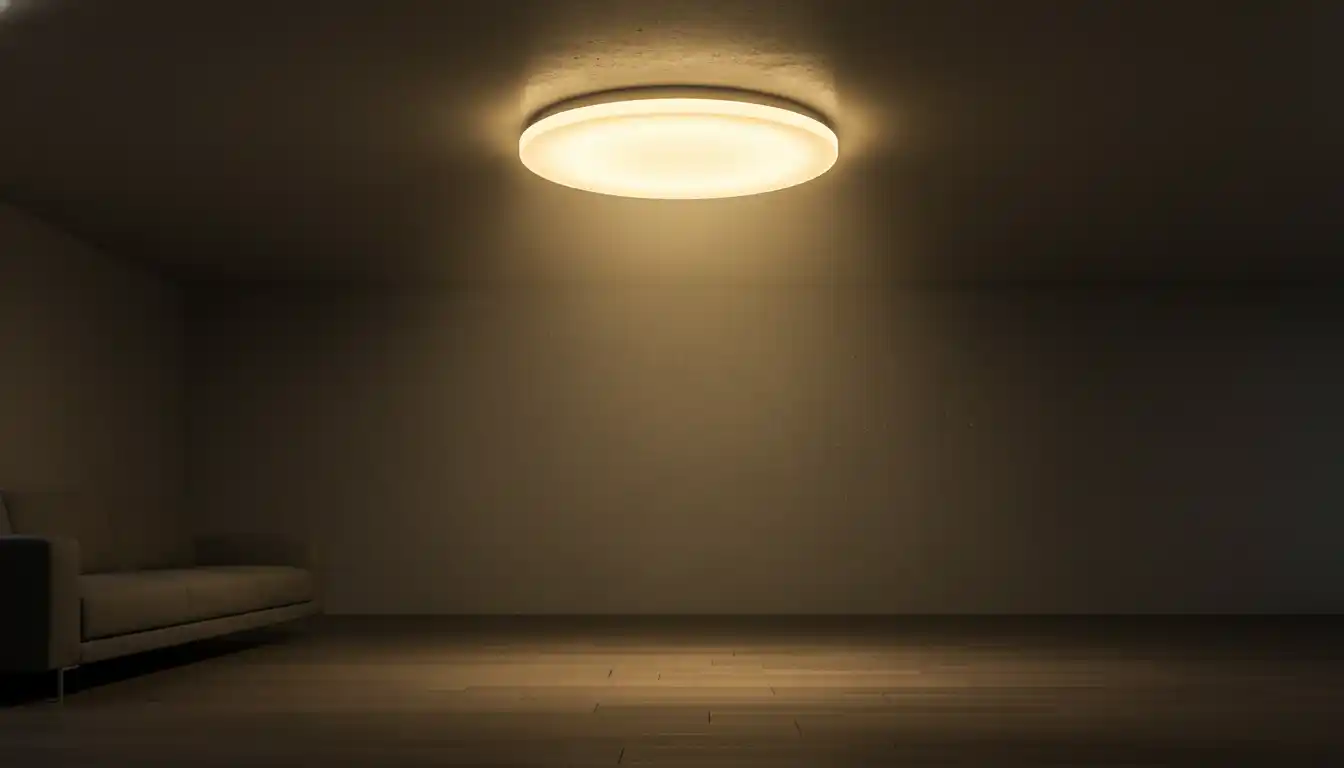
When the neutral wire breaks or comes loose, that pivot point disappears. The two 120-volt legs become a series circuit totaling 240 volts, but they no longer split evenly. The voltage “floats” based on the resistance of the devices plugged in. If your Air Conditioner (a heavy load) kicks on, it shifts the balance violently. One leg might drop to 80 volts (causing dimming), while the other leg shoots up to 160 volts or more.
The “Seesaw Effect” Explained
Imagine your electrical panel is a seesaw with the neutral wire as the fulcrum. On one side, you have your AC unit and a few lights; on the other, you have your TV and refrigerator. Under normal conditions, the neutral wire forces both sides to stay at 120 volts. However, once that neutral is disconnected, the voltage is free to swing. The side with the lighter load (less resistance) will experience a massive voltage spike, making those lights get brighter when AC turns on.
Voltage Swell vs. Voltage Sag
Most homeowners are familiar with voltage “sag” or dimming. This happens when a heavy appliance draws a lot of current, causing a temporary drop in available power. It is annoying but generally safe. Voltage swell, or brightening, is the opposite and is far more destructive. Standard light bulbs and electronics are designed for 120 volts, with a tolerance of maybe +/- 10%. A swell pushing 150+ volts will burn out filaments instantly and fry circuit boards.
identifying the Root Causes
While an open neutral is the primary suspect, the location of the fault determines who fixes it. The issue can stem from inside your home or from the utility company’s equipment. Identifying the source early can save you hundreds of dollars in electrician fees if the problem lies with the power provider. Always prioritize safety and never touch live wires during your investigation.
Utility Side Connection Failures
A surprising number of open neutral cases occur outside the house. The “service drop”—the wires running from the street pole to your house—is exposed to the elements. High winds, falling tree limbs, and even squirrels chewing on the insulation can sever the neutral line. If the break is at the pole or the meter base, the utility company is responsible for the repair. Call your power company immediately and report a “possible open neutral” before hiring an electrician.
Loose Connections in the Main Panel
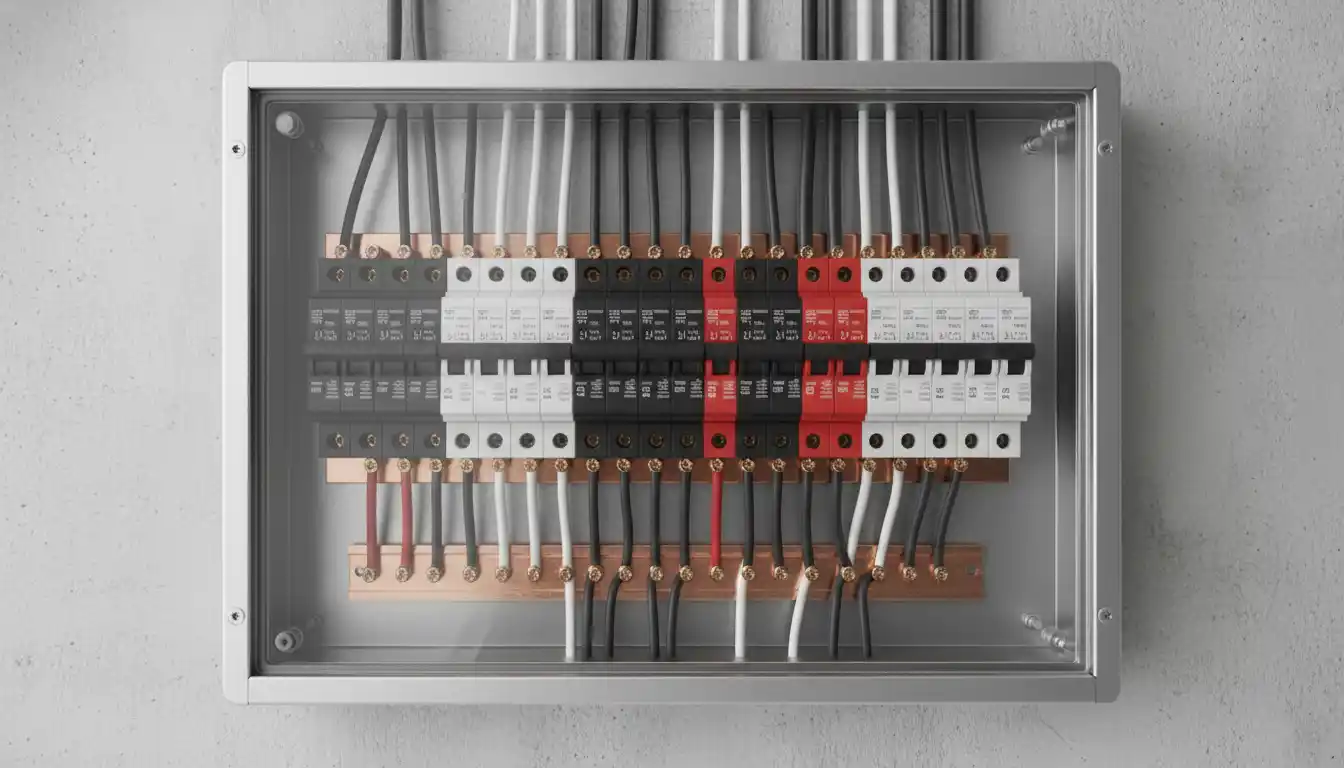
Inside your breaker panel, the main neutral wire connects to a large lug on the neutral bus bar. Over time, thermal expansion and contraction can loosen this connection. If the lug is not torqued to spec, the wire can pull away, creating a floating neutral condition. Vibrations from nearby machinery or settling of the house foundation can also contribute to this dangerous loosening. This requires a licensed professional to retorque or replace the lug.
Poor Branch Circuit Wiring
Sometimes the issue is localized to a specific circuit rather than the main service. If you have “multi-wire branch circuits” (where two hot wires share one neutral), a loose neutral pigtail can cause devices on that circuit to interact strangely. This is often where poor wiring techniques, such as loose wire nuts or bad back-stabbed connections, reveal themselves. Proper wiring methods are essential; for example, knowing when to use pigtail vs daisy chain outlets can prevent localized neutral failures.
Immediate Dangers and Risks
Ignoring this problem is not an option. The consequences range from financial loss to life-threatening situations. When voltage spikes, it seeks a path to ground, often through the sensitive electronics in your smart appliances. Your refrigerator, microwave, and computer are at high risk of permanent damage. The excess heat generated by over-voltage bulbs can also melt fixtures and ignite surrounding materials.
Fire Hazards from Overheating
When a light bulb receives 160 volts instead of 120, it burns extremely hot. This intense heat can melt the plastic socket or scorch the ceiling insulation. Furthermore, the fluctuating voltage can cause arcing at the site of the loose connection. Arcing creates temperatures exceeding 10,000 degrees Fahrenheit, which is more than enough to start an electrical fire behind your walls or inside your main panel.
Catastrophic Appliance Failure
Modern appliances rely on sensitive control boards. A sudden surge to 180 volts can blow capacitors and fry microchips instantly. You might notice your washing machine acting erratically or your furnace shutting down unexpectedly. If you are troubleshooting heating issues, such as Carlin gas conversion burner troubleshooting, ensure the electrical supply is stable first. An open neutral can mimic equipment failure, leading to unnecessary and expensive part replacements.
Troubleshooting and Diagnostic Steps
Before you call for help, you can perform safe observations to confirm the diagnosis. Do not remove the panel cover unless you are qualified. Observe the behavior of 240V appliances versus 120V appliances. If turning on a 240V dryer or AC unit causes 120V lights to get brighter, the open neutral is almost certainly in the main service line.
Visual Inspection Checklist
Check your overhead lines for visible damage. Look for a wire swinging in the breeze that looks disconnected or a tree branch resting heavily on the service drop. Inspect your meter box for signs of rust or burn marks. Inside the home, listen for sizzling or buzzing sounds coming from the breaker panel. These auditory cues often accompany the arcing of a loose connection.
Using a Multimeter Safely
If you are comfortable using a multimeter, you can measure the voltage at your outlets. A healthy outlet should read between 115V and 125V. If you see readings like 105V on one outlet and 135V on another, you have confirmed a floating neutral. Stop testing immediately and turn off the main breaker. Understanding voltage drop is crucial for long runs, as seen in guides about what size wire to run 500 feet, but voltage increases are a sign of critical failure.
Comparing Voltage Symptoms
It is vital to distinguish between normal fluctuations and dangerous surges. Use this table to interpret what your lights are telling you about your electrical system.
| Symptom | Voltage Behavior | Likely Cause | Danger Level |
|---|---|---|---|
| Lights Dim Briefly | Sag (Drop of 5-10V) | Heavy Load Startup (Normal) | Low |
| Lights Get Brighter | Swell (Rise of 20V+) | Open/Floating Neutral | Extreme |
| Rapid Flickering | Unstable Fluctuations | Loose Wire / Arcing | High |
| Lights Burn Out Fast | Sustained Over-Voltage | High Main Voltage / Bad Neutral | High |
How to Fix the Problem
Once you suspect an open neutral, your path to resolution involves professionals. This is rarely a DIY fix because the fault often lies upstream of your main disconnect, where power cannot be turned off by the homeowner. Taking the right administrative steps can expedite the repair and ensure your safety.
Step 1: Contact Your Utility Provider
Call your electric company’s emergency line. State clearly: “I suspect I have an open neutral; my lights are getting brighter when appliances turn on.” Most utility companies treat this as an urgent dispatch because of the liability and fire risk. They will send a line crew to check the connections at the pole and the meter. If the problem is theirs, the fix is free. If they find their side is good, they will tell you to hire an electrician.
Step 2: Hire a Licensed Electrician
If the utility clears their equipment, the fault is between the meter and your panel, or inside the panel itself. A licensed electrician will torque down all neutral connections and inspect the main service entrance cables. They may need to replace the service riser or the main panel interior if heat damage has occurred. Ask them to inspect the grounding system as well, as a poor ground can exacerbate neutral issues.
Step 3: Install Whole-Home Protection
After the repair, consider installing a whole-home surge protector. While it cannot prevent an open neutral, it can clamp down on the voltage spikes to protect your appliances while the neutral is failing. This is a wise investment for any modern home filled with expensive electronics. Ensure your grounding electrode system is also up to code, as the surge protector relies on a good ground to divert excess energy.
Summary: Lights getting brighter when your AC turns on is a severe warning sign. It almost always points to a broken or loose neutral wire, creating a “seesaw” effect with your voltage. This condition destroys electronics and starts fires. Do not ignore it. Turn off your main breaker if the swings are violent, and call your utility company immediately to check their lines.