Every homeowner dreams of a lawn that looks like a putting green: perfectly level, manicured, and cut to a precise, low height. However, few things are more frustrating than setting your lawn mower to its lowest notch, only to find the grass is still standing tall. You push the lever down, but the blades just won’t get close enough to the soil.
If you are struggling with a lawn mower not cutting low enough, the issue is rarely that the grass is “too tough.” It is almost always a mechanical misalignment or a worn-out component preventing the deck from sitting where it should. The most common causes are uneven tire pressure, bent or worn height adjustment levers, a deck that has not been properly leveled, or simply a buildup of debris preventing the mower from dropping fully.
Before you rush out to buy a reel mower or specialized equipment, walk through these troubleshooting steps. Most of these fixes can be done in your garage with basic tools, saving you money and helping you finally achieve that carpet-like finish.
Understanding Cutting Height Mechanics
To fix the problem, you first need to understand how your mower determines its cutting height. On a standard rotary mower, the “height” is simply the distance between the cutting blade and the ground. This distance is controlled by the wheels and the suspension deck.
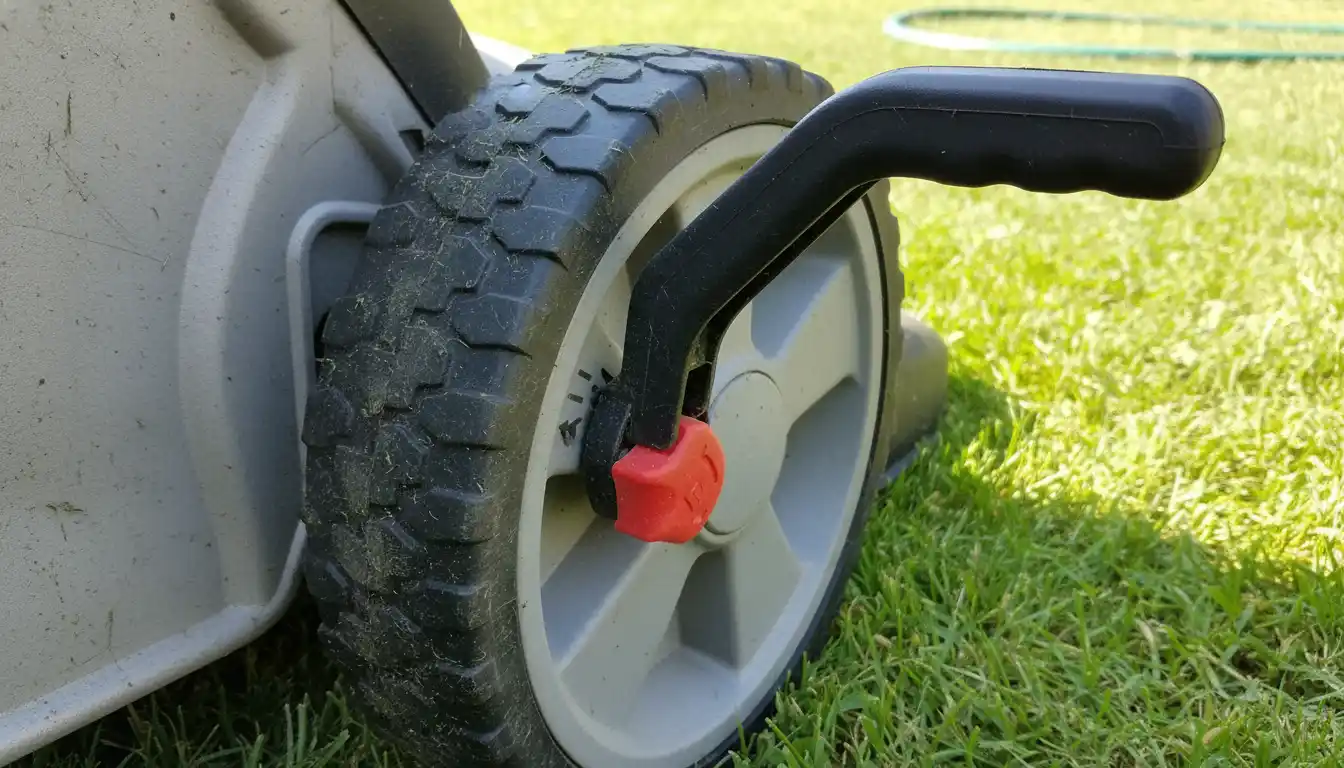
When you move the adjustment lever, you are physically raising the wheels relative to the deck (which lowers the blade) or lowering the wheels (which raises the blade). If any part of this linkage is loose, bent, or worn, the physical position of the blade won’t match the setting on your lever. Over time, metal fatigues and plastic wears down, causing “height drift” where the lowest setting today is actually half an inch higher than it was when the mower was new.
Common Causes for High Cuts
Diagnosing why your lawn mower is not cutting low enough usually involves checking the geometry of the machine. Here are the most frequent culprits that prevent a close cut.
The Tire Pressure Trap
This is the most overlooked issue on riding mowers and zero-turns. If your tires are under-inflated, the mower deck sits lower to the ground, which sounds like it would help, but it often causes the deck to pitch unevenly. However, the opposite is also true: if you have replaced tires with slightly larger aftermarket ones, or if they are over-inflated, the entire machine rides higher.
More critically, uneven tire pressure causes the deck to tilt. If one side is cutting low enough but the other isn’t, check your tire pressure immediately. It is the foundation of your deck’s level.
Worn or Loose Height Adjustment Levers
On push mowers, the height adjustment is controlled by a lever that locks into notched teeth on the wheel assembly. These teeth are often made of stamped metal or plastic. After years of vibration, these notches can wear down.
Just like a dryer blower wheel that has stripped and lost its efficiency, a worn height adjustment plate allows the lever to slip out of the lowest notch and settle into a higher one without you noticing. Even if it stays in the “low” slot, a bent lever arm might not be pulling the wheel up as high as it should, effectively leaving the deck closer to the ground than intended.
Deck Obstructions and Clogs
Think of your mower’s deck airflow like a plumbing vent on an exterior wall; if it is blocked, the system cannot function properly. A mower deck packed with dried, caked-on mud and grass reduces the vacuum effect that lifts the grass blades before cutting.
Furthermore, physical buildup under the deck can act as a stop. If there is an inch of concrete-hard mud under the chassis, the deck might physically hit the wheel axles or stops before it can reach its lowest mechanical setting. Scrape the deck clean to ensure full range of motion.
Step-by-Step Solutions to Lower Your Cut
Once you have identified the likely cause, it is time to apply the fix. These steps range from simple adjustments to more involved mechanical repairs.
Adjusting the Deck Level (Riding Mowers)
For riding mowers, the “low” setting on your lever is controlled by threaded linkage rods underneath the chassis. If these rods have vibrated loose over time, the deck will hang lower or higher than the factory spec.
Consult your manual for the “deck leveling” procedure. Generally, you will park on a flat surface and adjust the nuts on the suspension arms. To get a lower cut, you may need to loosen the adjustment nuts to lengthen the linkage (or tighten them to shorten, depending on the design), allowing the deck to drop further down. Note: Ensure the front of the deck is slightly lower (about 1/8 to 1/4 inch) than the rear. This “rake” reduces engine strain, but for the absolute lowest cut, some enthusiasts prefer a dead-level deck.
Inspecting and Replacing Worn Wheels
Wheels play a massive role in cutting height. If the tread on your plastic wheels has worn down significantly, the mower effectively sits lower, which is good for a low cut. However, if the axle holes in the wheels have worn out and become ovals, the wheels will wobble and ride higher up on the axle, dropping the deck inadvertently—or conversely, causing an uneven, high cut if the linkage is sloppy.
When replacing wheels, consider the material quality. Much like the debate between an ABS vs PVC toilet flange regarding durability, choosing between cheap plastic wheels and robust steel or high-quality composite wheels determines how long your height adjustments will remain accurate.
Blade Maintenance and Straightening
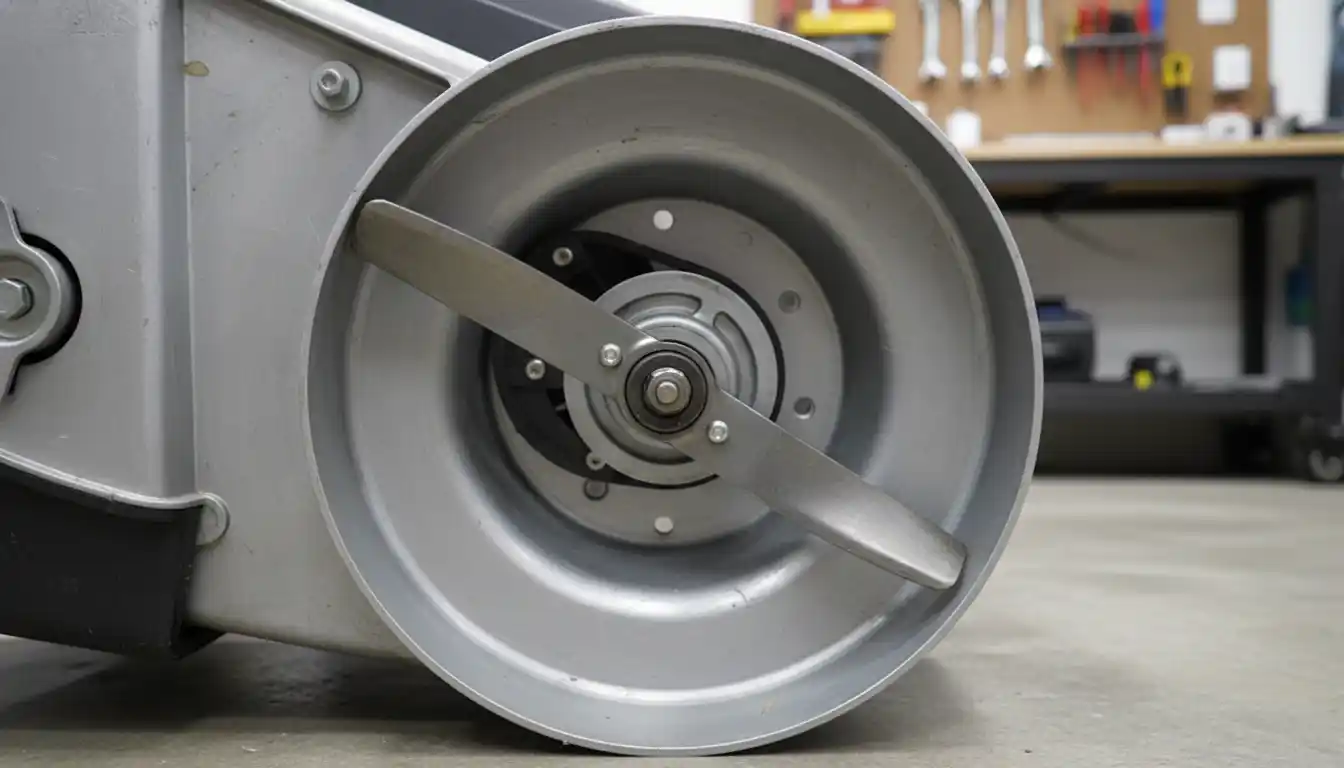
A bent blade will not only vibrate but also cut unevenly. If the blade tips are bent upward (away from the ground), you are losing cutting depth. Remove the spark plug wire, tip the mower (carburetor side up), and inspect the blade. If it looks like a frown (tips pointing down), it’s bent. If the tips curl up, it might be a “high-lift” blade designed for bagging, which sometimes sits effectively higher than a standard mulching blade.
Advanced Modifications for an Ultra-Low Cut
If the factory settings simply aren’t low enough for your needs—perhaps you are maintaining a bermudagrass lawn that thrives at 0.5 to 1 inch—you may need to look at modifications. Proceed with caution: modifying your mower can void warranties and increase the risk of the blade striking the ground.
Installing Blade Spacers
This is a trick used by landscaping pros. You can install metal spacers or washers between the blade and the spindle mounting point. By adding a spacer, you physically push the blade closer to the ground without moving the deck.
Warning: You must ensure enough thread engagement remains on the bolt to safely secure the blade. Never compromise the safety of the blade attachment. If you add a 1/4-inch spacer, you are lowering the cut by exactly 1/4 inch. This is often enough to make a huge difference.
Smaller Diameter Wheels
If you have a push mower, swapping your 8-inch wheels for 7-inch or 6-inch wheels will physically lower the entire chassis by half of the difference in diameter (e.g., swapping 8-inch for 6-inch wheels lowers the mower by 1 inch).
This is highly effective but comes with a catch: the deck skirt may now be too close to the ground, causing it to drag and scrape on uneven terrain. This works best on lawns that are already relatively smooth.
Troubleshooting Guide
Use this quick reference table to diagnose your specific symptoms.
| Symptom | Likely Cause | Recommended Fix |
|---|---|---|
| Lever at lowest setting, grass still high | Governor spring loose or deck obstruction | Scrape deck clean; check linkage cable tension. |
| Uneven cut (steps or ridges) | Low tire pressure or bent blade | Inflate tires to spec; replace bent blade. |
| Lever won’t stay in low notch | Worn adjustment plate teeth | Bend lever back for tension or replace adjustment plate. |
| Riding mower won’t drop fully | Deck suspension stops misadjusted | Adjust deck hanger bolts to lengthen travel. |
| Mower drags on ground | Wheels too small or deck bent | Raise height one notch or replace with OEM size wheels. |
Troubleshooting Specific Mower Types
Push Mowers vs. Riding Mowers
On push mowers, the problem is usually simple: bent wheel axles or worn notches. A quick visual inspection of the wheel alignment usually reveals the issue. If one wheel looks cambered (tilted in or out), the axle is bent, throwing off the height.
On riding mowers, the issue is often the “deck lift assist” springs or the electric PTO clutch interfering with the drop. Check underneath to ensure no branches or debris are wedged between the deck and the frame, physically preventing it from lowering.
Reel Mowers
If you are truly chasing a cut below 1 inch, a rotary mower (the standard type with a spinning horizontal blade) might be the wrong tool. Rotary mowers struggle to create suction below 1.5 inches. For heights of 0.5 inches or lower, a reel mower (cylinder mower) is superior. If your rotary mower isn’t cutting low enough, it might just be reaching the limit of its design capability.
Maintenance Tips to Prevent Future Issues
To ensure your mower continues to cut at the height you expect, make deck leveling a part of your seasonal maintenance. At the start of every spring, check your tire pressure and measure the blade tip height on a flat driveway.
Keep the undercarriage clean. Grass buildup is the silent killer of cutting performance. Not only does it rot the deck, but it also creates layers of crust that alter the aerodynamics and mechanical movement of the machine. With a little attention to detail, you can force even a stubborn mower to deliver that tight, professional cut your lawn deserves.