There are few kitchen tasks as deceptively simple yet prone to impatience as boiling water. Whether you’re craving pasta, blanching vegetables, or preparing a cup of tea, the minutes spent staring at a pot can feel like an eternity. This common frustration is the first hurdle in many recipes, often delaying the entire cooking process.
The problem is straightforward: you need boiling water, and you need it now. But factors you might not have considered, from the type of pot you use to the very air in your kitchen, can conspire to slow things down. Fortunately, by understanding the science at play, you can turn that agonizing wait into a swift and efficient process.
The Science of Boiling: Understanding Heat Transfer on a Gas Stove
To speed up boiling, it helps to know what’s happening on a molecular level. Boiling occurs when a liquid, in this case water, is heated to a temperature (212°F or 100°C at sea level) where it converts into a vapor. On a gas stove, this heat is transferred through three primary methods: conduction, convection, and radiation.
Understanding how these forces work together is the key to optimizing your setup for the fastest possible boil. Each element, from the flame to the pot to the water itself, plays a crucial role.
Conduction: The Critical Role of Your Pot
Conduction is the transfer of heat through direct contact. Your gas stove’s flame heats the bottom of the pot, and that heat is then conducted through the pot’s material to the water inside. The material and design of your pot are therefore paramount for efficient heat transfer.
Materials with high thermal conductivity, like copper and aluminum, heat up much faster than materials like stainless steel or cast iron. A pot with a copper or aluminum core will transfer the flame’s energy to the water more rapidly, significantly cutting down on boiling time.
Convection: How Water Heats Itself
As the water at the bottom of the pot heats up via conduction, it becomes less dense and rises. The cooler, denser water at the top then sinks to take its place, gets heated, and rises in turn. This circular movement, known as a convection current, is how heat is distributed throughout the water.
A wider pot encourages more efficient convection currents, allowing more water to come into contact with the heated surface at the bottom. This process ensures that all the water reaches the boiling point more uniformly and quickly.
Radiation: The Flame’s Direct Impact
Your gas stove also transfers heat through thermal radiation in the form of infrared waves from the flame. A strong, well-distributed flame maximizes the amount of radiant heat that hits the bottom of your pot. The efficiency of your stove’s burners directly impacts how quickly this energy transfer occurs.
Optimizing these three forms of heat transfer is the foundation for making water boil faster. It’s not about a single magic trick but a combination of smart techniques grounded in science.
9 Genius Hacks to Make Water Boil Faster
Armed with an understanding of the physics, you can now apply practical strategies to accelerate the boiling process. These tips range from simple adjustments to choosing the right equipment, all designed to get you cooking sooner.
1. Always Use a Lid
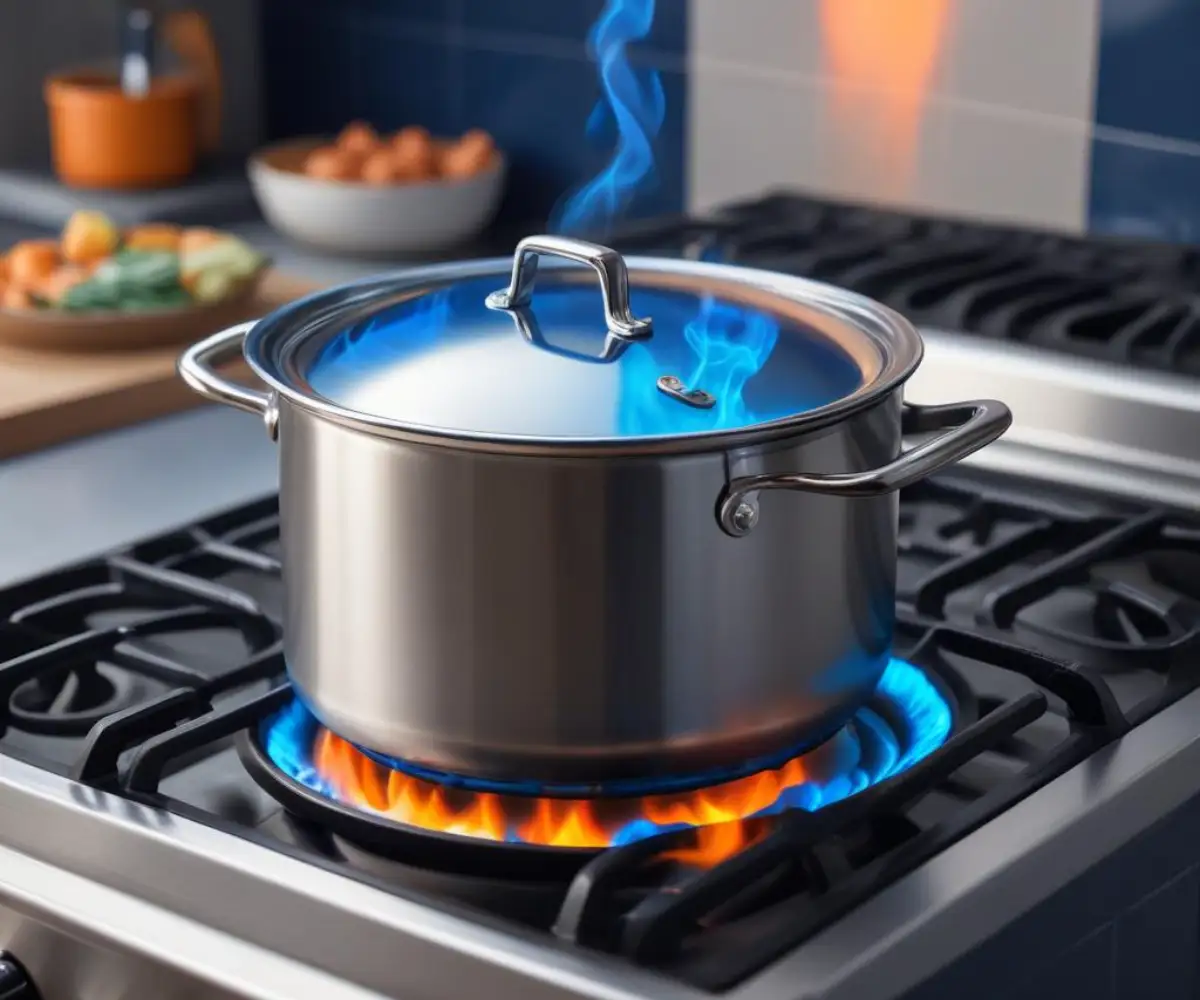
This is the single most effective thing you can do. Placing a lid on your pot traps heat that would otherwise escape as steam. This captured heat increases the air pressure inside the pot and helps the water retain energy, bringing it to a rolling boil much more quickly.
A watched pot may never boil, but a covered one certainly does faster. If your pot doesn’t have a matching lid, a baking sheet or another flat, heat-proof cover can work in a pinch.
2. Use Less Water
It sounds obvious, but many people use far more water than necessary. The more water you have, the more energy and time it will take to heat. Before filling your pot, consider the minimum amount of water your recipe requires.
For pasta, you only need enough water to cook it evenly without it sticking together. For blanching vegetables, a shallower pool of water in a wide pan will do the job perfectly and boil in a fraction of the time.
3. Choose a Wider, Thinner Pot
A wider pot increases the surface area of the water exposed to the direct heat at the bottom. This maximizes the rate of conduction and allows for more efficient convection currents. Think of it as giving the flame a bigger target to heat.
The material of the pot is just as important. Pots made from materials with high thermal conductivity will heat up faster. Here is a comparison of common cookware materials:
| Material | Heat Conductivity | Heating Speed | Best For |
|---|---|---|---|
| Copper | Excellent | Very Fast | Precision cooking and rapid boiling. |
| Aluminum | Very Good | Fast | Everyday use, lightweight and heats quickly. |
| Stainless Steel (Clad) | Good (with core) | Moderate | Durable and versatile, especially with a copper or aluminum core. |
| Cast Iron | Poor (but retains well) | Slow | Searing and slow cooking, not ideal for speed. |
4. Start with Hot Water from the Tap
Giving your water a head start in temperature will always reduce the time it takes to boil. Starting with hot tap water can shave several minutes off the process because the stove has less work to do to reach 212°F.
While some people have concerns about dissolved minerals from hot water pipes affecting taste, for most modern plumbing systems, this is not an issue. The water is being boiled anyway, which will kill any potential bacteria.
5. Maximize Flame Contact
Match the size of your pot to the size of your gas burner. Using a small pot on a large burner wastes a significant amount of heat as the flames lick up the sides of the pot instead of heating the bottom. Conversely, a large pot on a small burner won’t receive enough concentrated heat.
For the fastest boil, use the largest burner that fits the base of your pot without the flames extending beyond the edges. Turn the flame to high to deliver the maximum amount of energy in the shortest amount of time.
6. Ensure an Efficient, Clean Flame
The color of your gas stove’s flame is a direct indicator of its efficiency. A healthy, efficient flame should be blue with a small yellow or orange tip. A mostly yellow or orange flame indicates incomplete combustion, meaning the gas isn’t burning efficiently and is producing less heat.
Clogged burner ports are often the culprit. Regularly clean your gas stove’s burner heads and ports with a stiff brush or a paperclip to clear away food debris and ensure a clean, hot, blue flame. Efficient heat transfer is crucial, not just in the kitchen but throughout your home; poor performance can be a sign of a larger issue, much like when the room furthest from the furnace is cold due to blockages or system inefficiencies.
7. Use an Electric Kettle for a Head Start
For ultimate speed, consider a hybrid approach. Electric kettles are specifically designed to boil water with extreme efficiency. You can boil water in an electric kettle first and then pour it into your pot on the stove.
This method is especially useful when you need a large volume of boiling water quickly. The kettle handles the initial heating, and the stove keeps it at a rolling boil for cooking.
8. Understand the Impact of Altitude
Water’s boiling point changes with atmospheric pressure. At higher altitudes, the air pressure is lower, so water boils at a lower temperature. For example, at 5,000 feet, water boils at around 203°F instead of 212°F.
While the water will reach its boiling point faster, the lower temperature means food will actually take longer to cook. This isn’t a “hack” to cook faster, but understanding it explains why boiling times and cooking instructions can vary dramatically depending on your location.
9. Don’t Add Salt to Speed Things Up
It’s a persistent kitchen myth that adding salt to water makes it boil faster. In reality, salt slightly increases the boiling point of water, a phenomenon known as boiling point elevation. While the effect is negligible for the small amounts used in cooking, it technically makes the water take longer to reach a boil.
You should absolutely salt your water for flavor, especially when cooking pasta or vegetables, but add it after the water has already started boiling if time is your primary concern.
Optimizing Your Kitchen for Speed: Beyond the Boil
Developing efficient habits and maintaining your equipment can make every aspect of cooking faster, not just boiling water. A well-organized and maintained kitchen is a fast kitchen.
Regular Gas Stove Maintenance for Peak Performance
Just as you’d address a stubborn fixture when you can’t remove your Kohler faucet handle, you should regularly maintain your stove. Beyond keeping the burners clean, ensure the gas supply is optimal and that there are no leaks or blockages that could affect performance. A periodic professional check-up can ensure your appliance is working at peak efficiency.
Choosing the Right Cookware Matters
Investing in high-quality cookware with excellent heat conductivity is a long-term strategy for faster cooking. A good pot is a tool that saves you time and energy every time you use it. Using the right tool for the job is always critical. In home systems, for instance, professionals know that certain materials should never be combined, raising questions like can you mix yellow and white Romex in electrical circuits. The same principle applies in the kitchen: the right pot material makes all the difference.
Conclusion: From Simmer to Boil in Record Time
The wait for water to boil doesn’t have to be a slow-moving kitchen ritual. By combining a few key principles of physics with practical kitchen know-how, you can drastically reduce the time it takes to get a pot to a rolling boil. Remember the most critical steps: always use a lid, start with hot water, and use a wide pot on a properly sized, clean burner.
By implementing these strategies, you’ll not only save precious minutes but also cook more efficiently, conserving energy and getting meals on the table faster. Master these simple techniques, and you’ll never be stuck watching a pot again.