Exposed electrical wiring is a common home-maintenance concern. Whether you discovered NM cable during a renovation or noticed it after drywall damage, leaving cable where it can be physically damaged creates a safety problem and an eyesore. The correct way to cover exposed Romex depends on whether the cable’s outer sheath is intact, where it is installed, and what local code requires.
Homeowners often ask how to hide these cables quickly. Painting or taping over exposed wiring does not provide the required mechanical protection, and ordinary decorative covers are not automatically code-approved. If the outer sheath or conductor insulation is damaged, de-energize the circuit and have a licensed electrician inspect it rather than simply covering the damage.
Why Does Romex Become Exposed?
Romex, a commonly used brand name for nonmetallic-sheathed (NM) cable, can become visible for several predictable reasons. Renovation work frequently leaves cables exposed when walls or ceilings are opened. Homeowners removing old fixtures may also encounter cable that was routed through an opening or left accessible for later work. During construction, electricians may install cable before drywall or other finishes are completed.
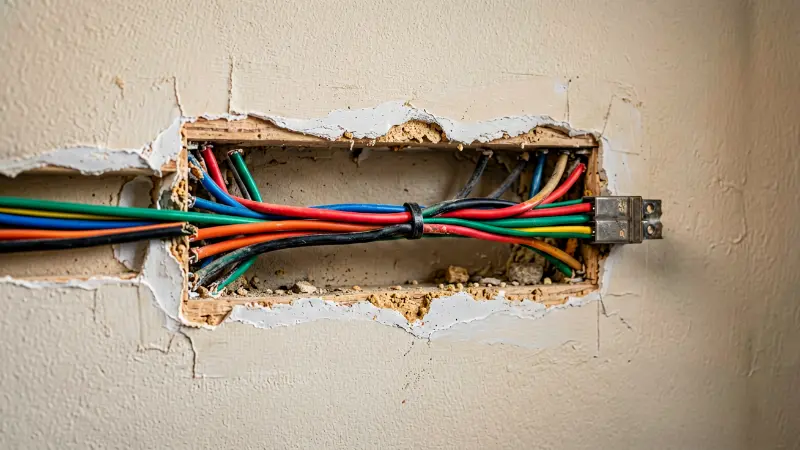 Exposed Romex electrical cable mounted on a wall stud, awaiting covering with wall material.
Older homes present another scenario. Some wiring was installed along accessible surfaces in basements, garages, attics, and utility areas. Whether that installation remains acceptable depends on the cable type, location, physical-damage risk, and code requirements that applied when the work was performed and any requirements for later modifications. Surface-mounted cable is not automatically unsafe simply because it is visible.
Accidental damage can also expose wiring unexpectedly. Furniture movement, drilling, cutting, or demolition can damage drywall and reveal cable. Water damage can remove wall finishes while leaving wiring in place but exposed to additional hazards. Pest activity can damage surrounding materials and, in some cases, cable coverings.
Safety Risks of Exposed Electrical Wiring
Leaving NM cable exposed where it is subject to physical damage can create serious safety concerns. The cable’s outer sheath helps protect the insulated conductors from abrasion and impact. If the sheath or conductor insulation is cut, crushed, or otherwise damaged, the circuit should be evaluated before the area is covered.
Physical damage is one of the main concerns. Children, pets, moving objects, tools, and later renovation work can crush, puncture, or abrade exposed cable. Sharp tools can damage insulation during drilling or cutting. Heavy items stored against a cable can also create stress or abrasion over time, particularly in garages, basements, and workshops.
Moisture can also be a problem when cable is installed in a location or enclosure that is not suitable for it. Bathrooms, laundry areas, basements, and other damp locations may have additional wiring requirements. Leaks, flooding, and condensation can damage electrical equipment and connections. The appropriate cable type, protection method, and wiring system depend on the actual location and conditions.
Code compliance can create additional concerns. Local electrical codes generally require wiring to be protected from physical damage and installed using approved methods for the location. An exposed cable installation that is acceptable in one area may not be acceptable in another, and requirements can vary by jurisdiction. Proper correction also helps avoid problems during inspections or future remodeling.
Understanding Electrical Codes for Wire Coverage
The National Electrical Code provides requirements for NM cable installation and for protecting wiring from physical damage. These rules are intended to keep cables secure and reduce the chance of damage from nails, screws, tools, impact, and other hazards. Local authorities may adopt the NEC with amendments, so the requirements that apply to a specific home should be verified locally.
NM cable must be installed and protected according to the conditions of the installation. Where cable passes through framing, protective plates may be required where nails or screws could penetrate it. Where cable is installed on an exposed surface, the chosen support or protection method must be suitable for the location and approved for the intended use. Junction and device boxes must remain accessible and properly positioned in relation to the finished surface.
Clearance and protection requirements vary by installation. Cables routed through studs or joists may need protection from fasteners, while surface-mounted cable in a garage, workshop, or other exposed area may need additional mechanical protection. Damp or wet locations may require wiring methods specifically listed for those conditions. These details should be checked against the current local code and the cable manufacturer’s instructions.
Seven Methods to Cover Exposed Romex
Method 1: Running Boards for Surface-Mounted Cables
Running boards can provide a neat way to organize and visually conceal surface-mounted cable in suitable areas such as utility rooms, basements, or garages. A board by itself is not automatically an approved electrical raceway or protective enclosure, so the cable still needs to be secured and protected in a code-compliant manner.
Installation may involve establishing a straight route, securing the cable with approved fasteners, and using a suitable cover or enclosure where additional protection is required. Decorative boards can be painted or stained to match the room. Any fasteners used for the board or cable must be selected and positioned so they do not damage the wiring.
Material costs vary widely with lumber, trim, fasteners, and the type of electrical protection used. Labor time also depends on cable length, access, and the condition of the wall. This approach works especially well for romex-to-conduit-transition scenarios when the wiring method changes, provided the transition is made with the appropriate fittings and installation methods.
Method 2: Surface Mount Conduit for Modern Protection
Surface-mounted raceway or conduit can provide additional mechanical protection where a cable is exposed to potential impact. Rigid metal or PVC systems may be appropriate in different environments, but the raceway must be listed for the application and installed with compatible fittings. In some installations, NM cable itself may not be permitted inside a particular raceway or location without considering conductor fill, ampacity adjustment, temperature limitations, and other code requirements.
Installation involves planning the route, selecting a suitable raceway and fittings, and securing the system according to the manufacturer’s instructions. Metal raceways may require bonding or grounding provisions; PVC raceway does not provide an equipment-grounding path. Because the exact requirements depend on the wiring method and installation, an electrician should verify the design before work is enclosed.
Material costs vary with raceway type, fittings, boxes, and cable length. Professional labor also varies by region and project complexity. This method can be useful alongside approaches used in flat-roof-joist-hangers installations where the surrounding construction requires durable protection.
Method 3: Drywall Coverage for Permanent Solutions
Drywall can permanently conceal properly installed NM cable when the cable is routed and supported correctly before the wall is closed. Simply covering a damaged or improperly installed cable with drywall does not make it compliant. Any electrical defects should be corrected before the wall is finished.
The process typically includes securing cable with approved staples or straps, maintaining required protection from fasteners, and positioning electrical boxes correctly for the finished wall thickness. Drywall panels can then be installed over the completed wiring. Where the finished surface changes the depth of a box, an approved box extension may be needed so the device or cover sits correctly.
Drywall and finishing costs depend on the size of the area, material type, and labor rates. Small repairs may require only a portion of a sheet, while larger renovations can cost substantially more. This approach works well alongside bryant-plus-90-furnace-filter-replacement projects when wall access is already required.
Method 4: Wood Guard Plates for Wall Protection
Protective plates or guard strips can shield cable from fasteners where wiring passes through or near framing. They are primarily intended to prevent physical penetration, not to serve as a universal decorative cover for cable running along an open wall. The protection must be installed in a way that matches the electrical code requirements for the location.
Installation requires placing an approved protective plate or other suitable guard at the vulnerable area and ensuring that it does not damage or pinch the cable. Paint or stain may improve appearance where appropriate, but finish materials should not replace required electrical protection. Any existing damage to the cable should be repaired or evaluated before it is concealed.
Material costs depend on the type and size of protective hardware used. Installation time is usually modest for an isolated protection point, but larger repairs can take longer. This method is most useful where the main concern is protecting wiring from screws, nails, or other fasteners.
Method 5: Cable Covers for Temporary Solutions
Commercial cable covers can organize and visually conceal exposed wiring during a temporary setup or renovation. However, a generic adhesive cable-management channel is not automatically an approved substitute for an electrical raceway or other required protection. For permanent installations, use a product specifically listed for electrical wiring and suitable for the location.
Available products vary in size, construction, mounting method, and intended use. Adhesive-backed channels may work for light-duty cable management, while screw-mounted systems can provide more secure attachment when permitted. Follow the product instructions and local electrical requirements rather than assuming any plastic cover is sufficient.
Material costs vary by product and length. Professional installation costs also depend on access and the electrical work involved. These covers can be useful for organizing cable while a permanent, code-compliant correction is being arranged, but they should not be used to conceal damaged wiring.
Method 6: Baseboard Covers for Hidden Routing
Baseboard-style raceway systems can route certain wiring along the wall-floor junction while maintaining a finished appearance. These systems are different from ordinary decorative baseboards because electrical raceway products are designed and listed for wiring management or protection. Their suitability depends on the specific product and the circuits being routed.
Installation may require removing existing trim, positioning the raceway, making approved transitions around corners and openings, and reinstalling or replacing the trim. Electrical boxes, device locations, and access points must remain properly installed and accessible. Follow the raceway manufacturer’s instructions and local code requirements for the complete system.
Material costs depend on the raceway, fittings, trim, and length of the installation. Professional labor varies with the amount of finish carpentry and electrical work required. This method can work well in finished rooms when an appropriate listed raceway system is selected.
Method 7: Electrical Box Extensions for Proper Depth
Electrical box extensions are used when a finished wall, tile, panel, or other surface changes the relationship between an electrical box and the finished surface. They do not protect exposed cable by themselves. Their purpose is to bring the box opening to the correct position and preserve proper installation of switches, receptacles, and cover plates.
Installation involves selecting an extension that is compatible with the existing box and finished surface, then securing it according to the product instructions. Power should be turned off before electrical work, and the circuit should be verified de-energized before touching wiring. Box fill, grounding, and device installation must remain compliant after the extension is installed.
Material costs are generally modest but vary by box type and extension. Professional labor depends on access and the amount of rewiring or box correction required. Box extensions are often one part of a larger wall-finishing project rather than a standalone method for covering exposed cable.
Choosing the Right Method for Your Situation
Selecting the appropriate covering method depends on the cable type, location, exposure to physical damage, condition of the wiring, and desired appearance. Basements and garages may favor a listed raceway or other durable protection where impact is possible. Finished living spaces may be better suited to properly installed drywall or an approved surface raceway that blends with the room.
| Method | Best For | Cost Range | Duration | Difficulty |
|---|---|---|---|---|
| Running Boards | Surface cable organization | Varies by materials | Project dependent | Easy to moderate |
| Surface Conduit | Mechanical protection | Varies by raceway and fittings | Project dependent | Moderate |
| Drywall Coverage | Permanent wall finishing | Varies by area and materials | Project dependent | Moderate to hard |
| Wood Guard Plates | Protection from fasteners | Varies by protective hardware | Short for isolated areas | Easy |
| Cable Covers | Temporary organization or approved raceway use | Varies by product | Project dependent | Easy |
| Baseboard Covers | Finished-room surface routing | Varies by raceway and trim | Project dependent | Moderate |
| Box Extensions | Correct box depth at finished surfaces | Varies by box and extension | Short for simple installations | Moderate |
When to Call a Professional Electrician
Some situations require professional electrical work regardless of the covering method. Older wiring systems such as knob-and-tube may require specialized evaluation before modification. Aluminum branch-circuit wiring may also need specific repair methods and compatible devices. Ungrounded circuits and other older installations should be evaluated before adding or relocating outlets and equipment.
Major renovations involving multiple circuits benefit from professional planning and inspection. Homeowners should never work on energized circuits or assume a breaker is off without verifying that the circuit is de-energized. Structural changes that affect walls or framing can also require coordination with the electrician and other trades. Permit and inspection requirements vary by location.
Professional electrical rates vary substantially by region, project size, licensing requirements, and complexity. Permit and inspection fees also vary by jurisdiction. Obtain local pricing and confirm whether a permit is required before starting work.
Maintenance Tips for Covered Wiring
Properly installed and protected NM cable generally requires little routine maintenance, but periodic visual checks can identify problems early. Inspect accessible areas for loose covers, damaged raceways, corrosion, discoloration, or signs of overheating, especially in garages, basements, and other demanding locations. Do not remove electrical covers or disturb wiring unless you are qualified to do so.
Keep surrounding areas clean and dry, particularly where moisture or dust could affect electrical equipment. Avoid harsh chemicals or activities that could damage cable coverings, raceways, or electrical enclosures. Promptly investigate any visible damage, unusual heat, buzzing, burning odor, or repeated breaker trips.
Documenting the location of covered wiring can help with future renovations and repairs. Photos taken before a wall is closed can provide a useful reference, and notes about circuit routing or accessible boxes can save time later. Keep any permit or inspection records with the home’s maintenance documents.
Preventing Future Exposure Issues
Preventive measures can reduce the chance of future cable damage. Before drilling, nailing, or cutting into walls, identify likely cable routes and avoid areas around electrical devices and known wiring paths. A stud finder with electrical-detection capability can help, but no detector is infallible. Use caution and follow safe drilling practices.
Regular home inspections can identify deteriorated covers, loose raceway components, or other exposure risks before they become larger problems. Check unfinished areas such as basements, garages, attics, and utility spaces as part of normal home maintenance. Address leaks and moisture problems promptly so they do not affect electrical installations.
Proper storage and organization also reduce physical damage. Keep stored items from pressing against exposed electrical installations, and avoid fastening shelves, trim, or other materials where cables may be present. Maintain clear access to electrical panels, disconnects, and required junction or device boxes.
Cost Considerations and Budget Planning
Budgeting for cable coverage requires considering both materials and labor. Small surface-protection projects can be relatively inexpensive, while opening and repairing finished walls can cost much more. The total depends on cable length, accessibility, wall or ceiling finishes, the required wiring method, and local labor rates.
DIY approaches can reduce labor costs, but electrical work should only be attempted when the specific task is permitted, you understand the applicable code, and you can safely de-energize and verify the circuit. Basic tools may be inexpensive compared with the cost of correcting damaged wiring or improper work. When in doubt, use a licensed electrician.
Long-term value comes primarily from correcting the installation properly rather than simply making the wiring less visible. Appropriate protection can reduce the chance of physical damage and help keep the installation compliant with applicable requirements. Any change to an existing circuit should account for the cable type, overcurrent protection, grounding, and the conditions of use.
Final Thoughts on Exposed Romex Coverage
Covering exposed Romex should start with determining whether the cable is properly installed and whether its outer sheath and conductor insulation are intact. The appropriate solution may be drywall, an approved surface raceway, protective hardware, or another code-compliant wiring method. A decorative cover alone is not enough when the cable is damaged or vulnerable to physical injury.
Proper protection reduces the chance of electrical damage while allowing the finished installation to fit the space. The right approach depends on the location, cable type, exposure level, and applicable local requirements. For damaged wiring, unfamiliar wiring systems, or work involving circuit changes, a licensed electrician can determine the safest correction.
Whether the goal is a clean finished wall or durable protection in a garage or basement, addressing exposed wiring is important. Start by assessing the condition of the cable and the hazards around it, then choose a protection method that is appropriate for the installation and permitted by local code. Following manufacturer instructions and local electrical requirements helps ensure the finished work remains safe and accessible.