If your home relies on a Heil 5000 furnace, you are likely operating a piece of equipment that has served faithfully for over two decades. Known for their rugged construction and straightforward mechanical design, these units were the workhorses of the 1990s and early 2000s.
The Heil 5000 is a legacy gas furnace series, typically featuring an 80% AFUE rating and a durable aluminized steel heat exchanger, though units today are often nearing the end of their operational life and require specific maintenance for ignition and blower motor issues.
While newer models boast higher efficiency and complex electronics, the simplicity of the Heil 5000 means many are still running strong. However, age brings inevitable mechanical failures. This guide covers everything from troubleshooting common ignition problems to deciding whether it is time to retire your trusty heating unit.
Understanding the Heil 5000 Series
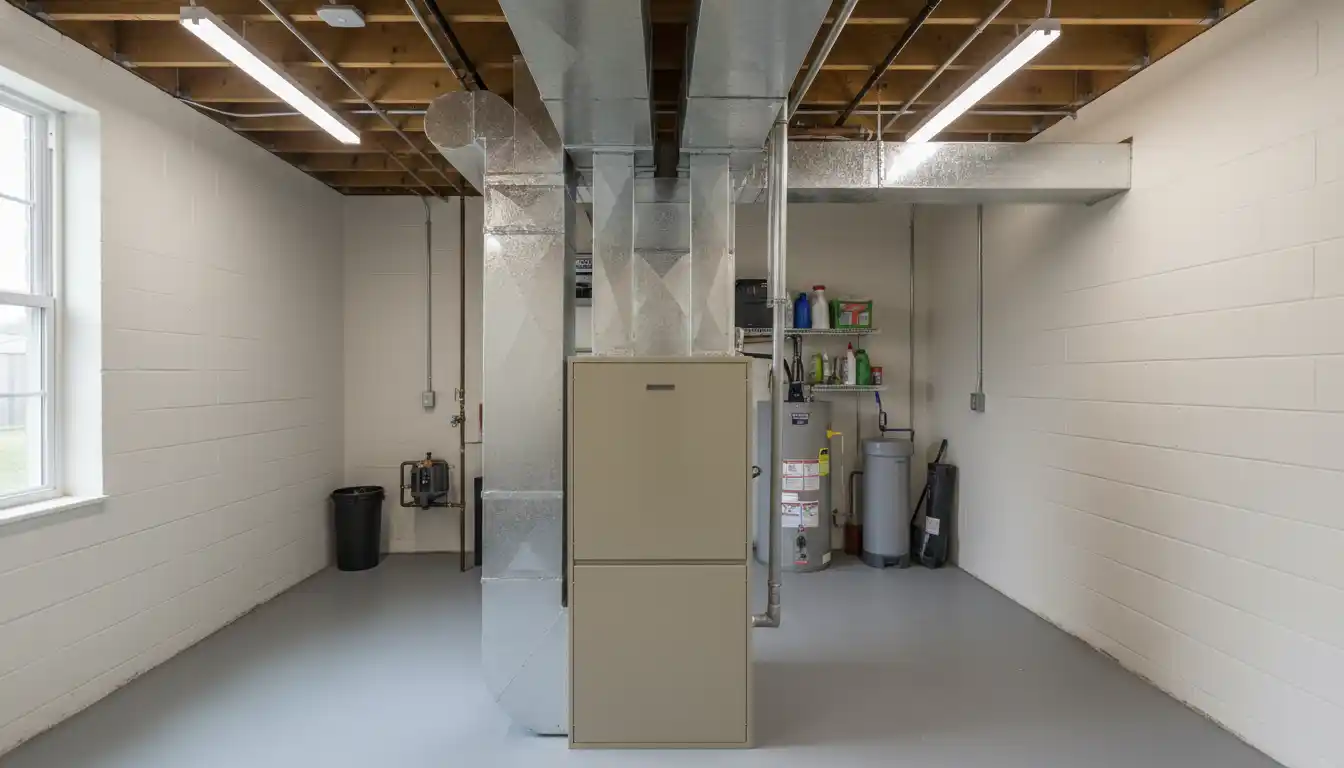
The “Heil 5000” designation often refers to a marketing tier used by International Comfort Products (ICP) during the 1990s. Homeowners frequently see this branding on their outdoor air conditioning units and assume the indoor furnace carries the exact same model number. In reality, your indoor unit is likely an N80 or N90 series gas furnace installed as a matched system.
Technical Specifications and Efficiency
Most furnaces installed under this banner are standard efficiency models, typically offering 80% AFUE (Annual Fuel Utilization Efficiency). This means that for every dollar you spend on gas, 80 cents goes toward heating your home, while 20 cents is lost through the flue. While this is lower than modern 96% efficiency units, these older models have fewer sensitive sensors, making them somewhat easier to troubleshoot.
Key Components and Durability
The core of the Heil 5000 is its aluminized steel heat exchanger. Unlike the stainless steel versions found in some premium modern units, these exchangers are prone to corrosion over long periods, especially if the furnace is located in a damp basement. However, the crimped design was revolutionary for its time, providing decent heat transfer without the premature cracking found in earlier generations.
Expected Lifespan
The average lifespan of a gas furnace is 15 to 20 years. If you are reading this, your Heil 5000 is likely exceeding that benchmark. Longevity depends heavily on maintenance. Units that have had regular filter changes and flame sensor cleanings can often push past the 25-year mark, although fuel efficiency will degrade over time.
Common Heil 5000 Problems and Solutions
Even the most reliable machines falter. Owners of this series frequently report a specific set of recurring issues. Identifying these symptoms early can save you from an expensive emergency service call in the dead of winter.
Furnace Won’t Ignite (Pilot and Igniter Issues)
The most frequent complaint is a furnace that runs the blower fan but produces no heat. In the Heil 5000 series, this is often due to the ignition system. Older models may use a standing pilot light, while slightly newer ones use a Hot Surface Igniter (HSI) or a spark ignition system.
If you have a standing pilot, the thermocouple is the usual suspect. This small copper rod sits in the flame and tells the gas valve it is safe to open. If the pilot won’t stay lit, the thermocouple is likely worn out. For HSI models, the igniter is a fragile ceramic element that can crack over time. If you see it glowing but the gas doesn’t catch, check the alignment; if it doesn’t glow at all, the element is likely burnt out.
Blower Motor Failure and Capacitors
If your furnace hums but doesn’t move air, your blower motor capacitor has likely failed. This is a cheap and easy fix. However, if the motor makes a screeching metal-on-metal sound, the bearings are shot. Unlike modern ECM motors, the PSC motors in the Heil 5000 are generally affordable to replace.
Symptoms of airflow issues can sometimes mimic other problems. For instance, if you notice weak airflow, it might not be the motor itself but a restriction. This is similar to the diagnostic process for other brands; if you’ve ever dealt with a Goodman furnace blowing lukewarm air, you know that restricted airflow often triggers limit switches that shut down the burners prematurely.
Short Cycling and Limit Switches
Short cycling occurs when the furnace turns on and off rapidly. On a Heil 5000, this is almost always a safety mechanism triggered by the high limit switch. This switch cuts the gas if the heat exchanger gets too hot.
Common causes for short cycling include:
- Clogged or dirty air filters restricting intake air.
- Blocked return vents (furniture covering grilles).
- A dirty blower wheel reducing fan efficiency.
- A failing limit switch that trips at lower temperatures than designed.
Troubleshooting and Maintenance Guide
Before calling a professional, there are several safe checks you can perform. Always ensure the power is off before opening the cabinet, and never attempt to repair gas lines yourself.
Reading the Diagnostic Codes
Most Heil furnaces from this era are equipped with a control board that features a blinking LED light. This light flashes a specific code to tell you what is wrong. Locate the small glass viewport on the blower door or remove the door (tape the safety switch closed if necessary to observe) to count the flashes.
| LED Flash Code | Probable Cause | Suggested Action |
|---|---|---|
| Steady On | Control board failure | Check 24V transformer or replace board. |
| 1 Flash | Ignition lockout | Clean flame sensor; check gas supply. |
| 2 Flashes | Pressure switch stuck closed | Check for blocked flue pipe or faulty switch. |
| 3 Flashes | Pressure switch stuck open | Check inducer motor and vacuum tubing. |
| 4 Flashes | Limit switch open (Overheating) | Replace dirty filter; check ductwork. |
Cleaning the Flame Sensor
One of the easiest fixes for a furnace that lights but immediately shuts off is cleaning the flame sensor. Over time, this small metal rod builds up carbon deposits (soot), which insulates it from the flame. The control board stops detecting fire and shuts the gas valve for safety.
To clean it: Shut off power, remove the sensor (usually held by one screw), and gently rub the metal rod with fine steel wool or a dollar bill until it is shiny. Do not use sandpaper, as silica residue can melt and form glass on the sensor.
Finding Replacement Parts
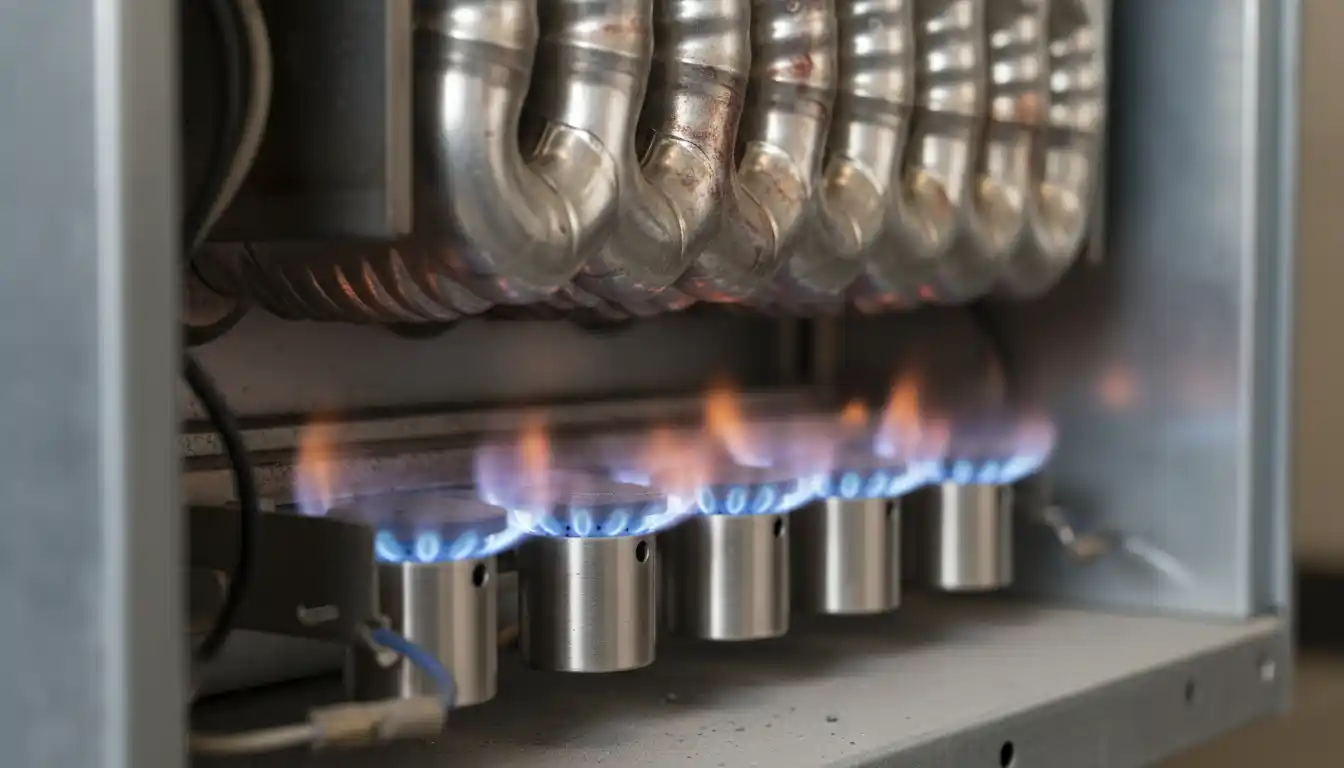
Finding parts for a 20+ year old furnace can be tricky, but Heil (ICP) used many standard components. The most critical step is locating your model number inside the burner compartment, not just the “Heil 5000” sticker on the front.
SmartValve Issues
Some Heil units from this generation utilized the Honeywell SmartValve system. This was an all-in-one gas valve and ignition control. These are notorious for failure and can be expensive to replace ($200-$400 just for the part). If your SmartValve has failed, it is often a strong signal that it might be time to replace the entire furnace rather than repair it.
External Maintenance Considerations
While focusing on the internal mechanics, don’t ignore the environment around your furnace. If your unit is in a crawlspace or basement, ensure the area is dry and well-ventilated. Just as installing lattice under a deck on a slope helps protect the underside of your home while allowing airflow, ensuring your utility room has proper combustion air intake is vital for the safe operation of an 80% efficiency furnace.
Additionally, if you are renovating your utility area, be mindful of chemicals. Fumes from paint or cleaning products can be drawn into the combustion chamber and corrode the heat exchanger. If you are painting nearby, you might wonder how long does paint stay mixed; similarly, you should ask how long those fumes will linger and potentially harm your HVAC system.
Repair vs. Replace: Making the Call
The ultimate question for Heil 5000 owners is when to stop repairing and start shopping. This decision involves balancing safety, efficiency, and cost.
The Heat Exchanger Safety Test
The deal-breaker for any furnace is a cracked heat exchanger. Because the Heil 5000 uses aluminized steel, thermal stress over 20 years can cause hairline cracks. A cracked exchanger can leak deadly carbon monoxide into your home. If a technician condemns your furnace due to a crack, do not operate it. Replacement is the only safe option.
Cost Benefit Analysis
If the repair is minor—like a $20 capacitor or a $150 blower motor—keeping the Heil 5000 running is a solid financial choice. It is a simple machine with few expensive circuit boards. However, if the repair approaches $500 (like a gas valve or inducer motor) and the unit is over 18 years old, the money is better spent on a modern unit.
Newer furnaces offer 95%+ efficiency, which can lower your gas bill by 15-20%. While the Heil 5000 was a great unit for its time, modern technology has surpassed it in fuel economy and quiet operation. Ultimately, if your Heil 5000 is safe and heating well, keep it. But start setting aside funds now for the upgrade that will inevitably be needed in the next few years.