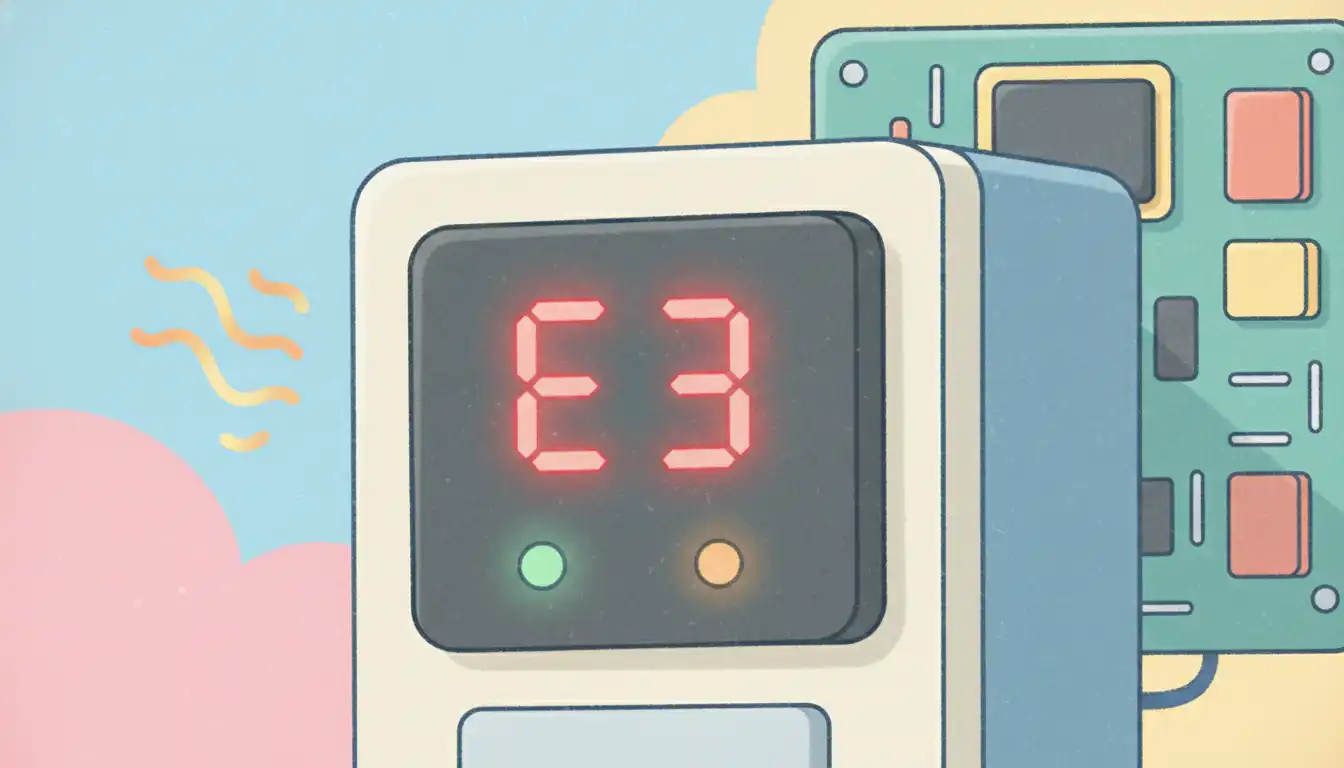
There’s nothing more frustrating than your furnace quitting on a cold day. You feel the chill creeping into your home, and a quick check of the furnace reveals a blinking light and a cryptic “E3” error code. This sight can cause immediate stress, sparking worries about costly repairs and uncomfortable nights.
But don’t panic. The Goodman E3 error code is a common issue that often points to specific, and frequently solvable, problems within your furnace’s safety systems. This guide is designed to empower you with the knowledge to understand, diagnose, and in many cases, fix this error yourself, saving you time and money.
What Exactly is the Goodman E3 Error Code?
At its core, the Goodman E3 error code signifies a problem with the furnace’s combustion air system. More specifically, it indicates that a crucial safety device called the pressure switch is not operating correctly during the startup sequence. This isn’t a suggestion of a problem; it’s a command from your furnace’s control board to shut down to prevent an unsafe condition.
Your furnace relies on a precise sequence of events to heat your home safely. A key part of this is ensuring that harmful exhaust gases, like carbon monoxide, are properly vented outside. The draft inducer motor kicks on first to create a negative pressure, essentially a vacuum, that proves the venting path is clear. The pressure switch is the component that confirms this draft is sufficient; if it doesn’t detect the correct pressure, it won’t close the circuit and allow the ignition process to continue. The E3 code means this check has failed.
Uncovering the Root Causes of an E3 Fault Code
Several underlying issues can prevent the pressure switch from closing and trigger the E3 code. Understanding these potential culprits is the first step toward a successful repair. The problem almost always lies within one of these key areas.
Obstructed Venting or Flue Pipes
This is the most frequent cause of an E3 error, especially after a storm or at the beginning of the heating season. High-efficiency furnaces use PVC pipes for both intake (bringing fresh air in for combustion) and exhaust (sending flue gases out). If either of these pipes becomes blocked, the draft inducer motor cannot create the necessary pressure change.
Common obstructions include bird nests, leaves, drifting snow, ice accumulation, or even insects building a home in the pipe. A thorough inspection of where your plumbing vent exterior wall terminations are located is a critical first step. Ensure both pipes are completely clear of any visible blockage.
Clogged Condensate Drain System
High-efficiency furnaces extract so much heat from the combustion process that the exhaust gases cool and create condensation. This water is collected and removed via a condensate drain line and trap. If this drain system becomes clogged with sediment or algae, water can back up into the draft inducer housing, directly affecting the pressure switch and triggering an E3 code.
Faulty Draft Inducer Motor
The draft inducer is a small but powerful fan that must run at the correct speed to pull air through the heat exchanger. If the motor’s bearings are failing, if the fan wheel is damaged or clogged with debris, or if the motor itself has an electrical fault, it won’t be able to generate the required draft. A humming or grinding noise from the motor upon startup is a clear sign of a problem.
Malfunctioning Pressure Switch
While often the messenger, the pressure switch itself can sometimes be the problem. These switches can get stuck in the open position due to age or internal failure. Additionally, the small rubber or silicone hose that connects the switch to the inducer motor housing can become cracked, brittle, or clogged with moisture, preventing an accurate pressure reading.
Your Step-by-Step Guide to Fixing the Goodman E3 Code
Now, let’s walk through the actionable steps to diagnose and resolve this error. This process is designed to move from the simplest and most common solutions to the more complex ones. Follow these steps methodically for the best chance of success.
IMPORTANT: Safety First!
Before you open any panels or touch any components, you must turn off all electrical power to your furnace. Locate the circuit breaker for the furnace in your home’s main electrical panel and switch it to the “OFF” position. For added safety, also turn off the light-switch-style service switch often located on or near the furnace itself.
Step 1: Inspect All Venting
Start your investigation outside. Locate where your furnace’s PVC vent pipes exit your home. Carefully inspect the openings for any signs of blockage. Use a flashlight to look inside the pipes for debris and gently clear away anything you find with a gloved hand or a shop vacuum.
Step 2: Check the Condensate System
Inside, at the furnace, locate the clear or white plastic tubing that makes up the condensate drain. Look for a trap—a U-shaped section of pipe designed to hold water. If you see standing water backed up in the lines or the trap appears full of gunk, it needs to be cleared. You can often disconnect the tubing (have a shallow pan ready to catch water) and flush it out with a mixture of water and vinegar to clear the blockage.
Step 3: Examine the Pressure Switch and Hoses
With the furnace panels removed, locate the pressure switch. It is typically a small, round or rectangular component with one or two small rubber hoses attached to it and a few wires. Gently inspect the hose(s) for any cracks, kinks, or loose connections. Remove the hose from the port on the inducer motor housing and carefully insert a paperclip or small wire to ensure the port itself is not blocked with debris.
Step 4: Observe the Draft Inducer Motor
With the power still off, reach in and try to spin the fan blades of the draft inducer motor. They should spin freely without resistance or grinding noises. If the fan is stiff or won’t move, the motor has likely failed and will need to be replaced. If it spins freely, you can proceed to the next step, which involves briefly restoring power.
Step 5: Test the Startup Sequence
Use extreme caution for this step. Ensure all tools are cleared away. Reconnect the power at the breaker. Press and hold the safety switch (the small button that the furnace door normally holds down) and have someone else turn up the thermostat to call for heat. You should hear a click, and the first thing that happens is the draft inducer motor should start spinning. If it starts and runs quietly but the furnace still shows an E3 code after a minute, the issue likely points to the pressure switch or control board. If the motor just hums or doesn’t start at all, it confirms a bad motor or a problem with the control board not sending it power.
Proactive Maintenance: Preventing the E3 Code’s Return
Once you’ve resolved the immediate issue, the best strategy is to prevent it from happening again. A few simple, regular maintenance tasks can dramatically reduce the likelihood of seeing an E3 error in the future.
Make it a habit to check your exterior vent terminations seasonally, especially during the fall when leaves are abundant and in winter after heavy snowfall. Additionally, pouring a cup of a 50/50 water and vinegar solution down your condensate drain every few months can prevent algae and sludge buildup. Finally, nothing beats an annual professional tune-up from a qualified HVAC technician who can spot failing components before they leave you in the cold.
Understanding Your Furnace’s Startup Sequence
To truly grasp why an E3 error occurs, it helps to understand the furnace’s normal sequence of operations. This process is a series of safety checks that must happen in a specific order. When you know the sequence, you can better pinpoint where the failure is happening.
The typical startup sequence is as follows:
1. The thermostat calls for heat, sending a signal to the furnace control board.
2. The control board runs a self-check and activates the draft inducer motor.
3. The inducer motor creates a draft, and the pressure switch closes to confirm the vent is clear.
4. Once the pressure switch closes, the control board energizes the igniter.
5. After the igniter heats up, the gas valve opens, and the burners ignite.
6. A flame sensor confirms a successful ignition.
7. After a short delay to allow the heat exchanger to warm up, the main blower fan starts, circulating warm air through your home.
The Goodman E3 code specifically indicates a failure at step number 3. The control board is waiting for the signal from the pressure switch, but it never receives it, forcing a safety shutdown.
| Goodman Error Code | Common Meaning | Potential Cause |
|---|---|---|
| E0 / 1 Flash | Ignition Lockout | Too many failed ignition attempts. |
| E2 / 2 Flashes | Pressure Switch Stuck Closed | Pressure switch is closed before inducer starts. |
| E3 / 3 Flashes | Pressure Switch Stuck Open | Venting issue, bad inducer, or faulty switch. |
| E4 / 4 Flashes | Open High-Limit Switch | Overheating due to restricted airflow (e.g., dirty filter). |
| E7 / 7 Flashes | Low Flame Signal | Dirty or faulty flame sensor. |
When to Call a Professional HVAC Technician
While this guide covers many DIY-friendly solutions, it’s crucial to recognize your limits. Furnace systems involve high voltage and combustible gas, and safety should always be your top priority. It’s time to call a professional if you encounter any of the following situations.
If you’ve performed all the checks and the E3 error persists, if you diagnose a bad draft inducer motor or suspect a faulty control board, or if you are simply not comfortable performing any of these steps, do not hesitate to contact a qualified technician. The cost of a professional service call is a small price to pay for safety and peace of mind.
Understanding Professional Repair Costs
Should you need a professional, expect a standard diagnostic fee for the visit. If the problem is a simple clog they can clear quickly, the cost will be minimal. Replacing a pressure switch is a relatively inexpensive repair, while replacing a draft inducer motor will be more significant due to the cost of the part and the labor involved.
Conclusion: Taking Control of Your Comfort
The Goodman E3 error code can be an intimidating sight, but it is often a solvable problem. By systematically checking the most common causes—from blocked exterior vents and condensate lines to the function of the inducer motor and pressure switch—you can often diagnose and fix the issue without a service call.
Armed with this knowledge, you can approach the problem with confidence. You understand the safety systems at play and the logical steps required for a solution. By taking these proactive measures, you not only fix the immediate problem but also ensure your furnace operates safely and reliably for years to come.