Choosing a shower wall system can feel overwhelming. LuxStone and FlexStone both promise a stone look without grout scrubbing.
They are not interchangeable. The right choice depends on your budget, DIY comfort, wall condition, and long-term plans.
This guide breaks down materials, installation, waterproofing, maintenance, and value. It also highlights details most comparisons miss.
The Real Problem: Grout-Free Does Not Mean Worry-Free
Many homeowners switch to panel systems to escape moldy grout. That goal is valid, but panels are only part of the waterproofing assembly.
Water can still reach the substrate through seams, corners, and penetrations. If the wall behind the panels stays wet, damage continues unseen.
So the question is not just LuxStone versus FlexStone. The question is which system fits your walls, climate, and maintenance habits.
What Is LuxStone?
LuxStone is a shower wall system often installed through authorized professionals. It uses a solid, composite material made to mimic stone and tile.
The surface is designed to resist mold, mildew, and staining. It has a substantial feel and fewer visible seams than many panel kits.
LuxStone is usually sold as part of a complete shower remodel. Installation, templating, and support are often bundled with the product.
This makes it attractive for homeowners who want a high-end finish without managing every installation detail.
LuxStone Strengths
LuxStone offers a premium look and a solid feel. Its non-porous surface is easy to wipe clean and does not require grout sealing.
It can handle daily shower use well when installed correctly. The professional installation model can also reduce DIY mistakes.
For a primary bathroom with a long renovation horizon, that combination can justify the higher price.
LuxStone Trade-Offs
LuxStone typically costs more than DIY panel systems. The final price depends on shower size, removal, plumbing changes, and local labor.
Availability may be limited to authorized dealers or installers. That can slow a fast remodel or a rental turnover.
Because the system is professionally installed, future repairs may require professional help rather than a simple panel swap.
What Is FlexStone?
FlexStone is a shower wall panel brand known for DIY-friendly installation. Its panels are thinner and more flexible than solid surface systems.
Many kits are designed to install over existing shower walls or backer board. That can reduce demolition and shorten project time.
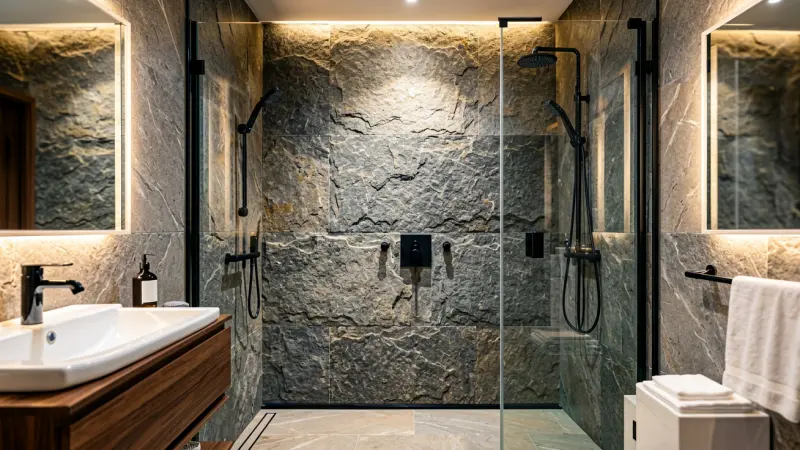
FlexStone offers stone, tile, and slate looks with molded grout lines. The panels themselves are waterproof, but seams still need proper sealing.
It appeals to homeowners who want a quick refresh, a rental upgrade, or a lower-cost bathroom makeover.
FlexStone Strengths
FlexStone is often more affordable and easier to source. Big-box stores and online retailers may carry panel kits and trim pieces.
Installation can be within reach for confident DIYers. Panels can be cut with common tools and installed with manufacturer-approved adhesive and sealant.
For a guest bath, basement shower, or rental property, that speed and cost can matter more than a solid-surface feel.
FlexStone Trade-Offs
FlexStone panels can sound hollow and feel thinner under hand pressure. Poor wall prep can make every bump and bow visible.
Seams and corners remain the weak points. If sealant fails, water can migrate behind the panels.
Some styles may look less realistic up close than premium solid surface. Lighting and sheen make a big difference.
LuxStone vs FlexStone: Key Differences at a Glance
Use this table as a starting point, not a final verdict. Local quotes, wall condition, and installation quality can change the outcome.
| Factor | LuxStone | FlexStone |
|---|---|---|
| Material feel | Solid, substantial composite | Thin, flexible panel system |
| Installation | Usually professional | Often DIY-friendly |
| Upfront cost | Higher installed cost | Lower material cost |
| Wall prep | Critical for flat, plumb walls | Critical; flexible panels hide less than expected |
| Waterproofing | Depends on substrate and seams | Depends on substrate and seams |
| Maintenance | Non-porous, easy wipe-down | Easy clean, but seams need care |
| Repair strategy | Often professional repair | Panel replacement may be simpler |
| Best for | High-end primary bath | Budget, rental, or quick update |
The Hidden Issue: Substrate and Waterproofing
Most shower wall failures are not caused by the visible panel. They start behind it, where moisture meets framing, drywall, or old tile.
LuxStone and FlexStone both need a sound substrate. The wall must be clean, dry, structurally solid, and suitable for the chosen adhesive or fastener system.
Waterproofing must be continuous behind the panels. That includes corners, niches, valve openings, and the shower pan connection.
Thinset alone is not a waterproofing layer. If you are unsure whether a product is waterproof, review whether thinset is waterproof before relying on it.
Why Flat Walls Matter More Than Brand
Flexible panels can follow minor wall irregularities, but they do not fix severe bows. LuxStone may require even stricter tolerances for a premium finish.
Shims, furring strips, and new backer board can correct out-of-plumb walls. Skipping that step can lead to gaps, stressed seams, and cracked sealant.
A straightedge and level are more useful than brand loyalty during planning. Check walls before ordering any panel kit.
Seams, Corners, and Sealant
The weakest points in any panel shower are the seams and corners. Movement, heat, and cleaning chemicals can break a poor seal.
Use the manufacturer’s specified sealant and follow cure times. Do not substitute a generic caulk just because it is available.
Leave a small gap where required, then seal with flexible material. A tight, rigid joint can crack when the house moves.
Installation: DIY vs Professional
FlexStone is often chosen for DIY installation. That can save labor, but it transfers risk to the installer.
A flawed DIY install can leak, look uneven, or void a warranty. The panels may be forgiving, but waterproofing is not.
LuxStone usually comes with professional installation. That adds cost, but it can deliver better seams, trim, and finish details.
If the bathroom is part of a larger remodel, coordinate shower walls with plumbing and flooring. Even a small detail like toilet flange height can affect the final floor and fixture layout.
When DIY FlexStone Makes Sense
DIY FlexStone makes sense for a simple alcove shower with good existing walls. It also suits rentals, cabins, and short-term property updates.
The installer must be comfortable cutting panels, measuring openings, and sealing edges. Rushing the prep will show in the final result.
Order extra trim and sealant. Touching up a seam later is easier when matching materials are on hand.
When Professional LuxStone Makes Sense
Professional LuxStone makes sense for a primary bath with a long ownership plan. It also helps when the shower is large, tiled, or oddly shaped.
A pro can correct wall issues, handle plumbing rough-ins, and manage waterproofing details. That reduces the chance of hidden moisture damage.
Get multiple quotes and ask about substrate repair, waterproofing, and warranty terms. The cheapest quote may exclude critical prep.
Cost and Value: Look Beyond the Panel Price
LuxStone usually has a higher installed price than FlexStone. That difference reflects material, templating, labor, and dealer support.
FlexStone can be cheaper upfront, especially for a DIY install. But hidden costs include backer board, waterproofing, sealant, trim, and tools.
If the old shower has rot or mold, both systems require remediation. No panel can safely cover wet framing or failing drywall.
Compare quotes with the same scope. Ask whether demolition, disposal, waterproofing, and permit fees are included.
Resale and Home Value
A clean, modern shower can help a home feel updated. Buyers may not know LuxStone from FlexStone, but they notice water stains and sloppy seams.
LuxStone may appeal to buyers seeking a premium finish. FlexStone may appeal to buyers who value a clean, low-maintenance update at a lower price.
Document the installation and keep warranty papers. That can build trust during a future sale.
Maintenance and Cleaning
Both systems reduce grout scrubbing, but neither is maintenance-free. Soap scum, hard water, and body oils still build on the surface.
Use a mild cleaner and a soft cloth or sponge. Avoid abrasive pads and harsh chemicals that can dull the finish.
Dry the walls with a squeegee after showering. That simple habit reduces mineral spots and keeps seams cleaner longer.
Check caulk lines twice a year. Reseal any cracked or peeling areas before water finds a path behind the panels.
Moisture Control for Home and Garden
Bathroom moisture affects more than the shower. It can move into walls, attics, and adjacent rooms if ventilation is poor.
Run the exhaust fan during and after showers. Confirm the duct exits outdoors, not into an attic or soffit.
If the duct terminates near a soffit, repair openings correctly. A proper patch for a hole in a soffit helps keep pests and moisture out.
Good ventilation is not optional. It protects the investment and keeps the bathroom healthier.
Durability and Repair Reality
LuxStone is designed as a durable solid surface system. It resists chips and stains better than thin laminates in many cases.
FlexStone panels can handle normal shower use, but impact and abrasion may affect them more. Heavy objects and abrasive cleaners can cause damage.
Repair options differ. LuxStone repairs may need a trained technician, while FlexStone may allow a single damaged panel to be replaced.
Ask the manufacturer about replacement panels before installation. Matching dye lots and textures can become harder years later.
Design Options: Stone, Tile, and Slate Looks
LuxStone tends to offer a curated, high-end look. Color and texture choices may be limited compared with tile, but they are coordinated.
FlexStone often provides more styles and price tiers. Some mimic subway tile, slate, or travertine with molded grout lines.
Order samples and view them in your bathroom lighting. A color that looks warm in a showroom can look gray under cool LED bulbs.
Check the sheen level. High-gloss panels show water spots more than matte or satin finishes.
How to Choose: A Practical Decision Framework
1. Assess Your Walls and Plumbing
Remove loose tile or failing drywall before choosing panels. Check for moisture, rot, and out-of-plumb framing.
Decide whether the shower valve or drain will move. Moving plumbing increases cost and complexity for either system.
2. Confirm Waterproofing Details
Panels are the wear layer, not the waterproofing. Use a compatible backer board, membrane, or waterproof substrate as required.
Seal all penetrations and transitions. The shower pan connection deserves special attention because it holds standing water.
3. Match Installation to Your Skills
Choose FlexStone if careful DIY work is realistic and the walls are flat. Choose LuxStone if a professional finish is the priority.
Be honest about time, tools, and patience. A rushed weekend install can cost more to fix than a professional job.
4. Plan for Repairs and Upgrades
Think about access to plumbing and future style changes. Panel systems can be difficult to remove without damage.
Keep spare trim, sealant, and documentation. Future repairs are easier when parts and instructions are available.
5. Budget for Ventilation and Extras
Include a fan, light, niche, bench, and grab bars in the plan if needed. These details affect blocking and waterproofing.
Good ventilation is not optional. It protects the investment and keeps the bathroom healthier.
Common Mistakes to Avoid
Do not install panels over wet or moldy drywall. Do not skip waterproofing because the panels are waterproof.
Do not use the wrong adhesive or sealant. Do not ignore wall flatness, especially around seams and corners.
Do not hide a leaking valve behind new panels. Fix plumbing first, then close the walls.
Do not assume a warranty covers installation errors. Read the terms before buying.
Final Verdict: LuxStone vs FlexStone
LuxStone wins on premium feel, professional finish, and low-maintenance solid surface performance. It suits homeowners who want a long-term primary bath upgrade.
FlexStone wins on upfront cost, DIY friendliness, and speed. It suits rentals, guest baths, and budget-conscious refreshes.
Neither brand can beat poor substrate prep. The best shower wall is the one installed over dry, flat, waterproofed walls.
Compare samples, quotes, and warranty terms. Then choose the system that fits your bathroom, budget, and repair plan.