A new deck is a significant investment in your home. The thought of its foundation rotting away prematurely is a homeowner’s nightmare. This fear leads many to search for a simple, effective way to protect the underlying joists from moisture, the primary enemy of any wooden structure.
It’s a common question: can a tough, waterproof product like Gorilla Tape be used to seal deck joists? While it seems like a clever shortcut, this approach can lead to catastrophic failure. Understanding the science behind wood rot and the specific materials designed to prevent it is crucial for building a deck that lasts a lifetime.
Why Your Deck’s Foundation Is a Ticking Time Bomb
The fundamental problem with any deck is the interface between the deck boards and the joists they rest on. This small gap is a perfect trap for water, leaves, and debris. Over time, this trapped moisture creates the ideal environment for fungal growth, which is the root cause of wood rot.
Even pressure-treated lumber, which contains chemicals to resist rot, has a weakness. Every screw or nail used to fasten the deck boards creates a puncture wound, a direct pathway for water to seep into the core of the wood. This is where the protective chemical treatment is often weakest, allowing decay to start from the inside out.
The consequences are severe. Rotted joists compromise the structural integrity of the entire deck, making it unsafe and leading to thousands of dollars in repairs. The lifespan of your expensive composite or hardwood deck boards is rendered meaningless if the frame beneath them fails in just a few years.
The Alluring but Flawed Logic of Using Gorilla Tape
On the surface, using Gorilla Tape sounds plausible. It is renowned for its aggressive adhesive and tough, weather-resistant shell. The idea is to create a waterproof barrier over the top of the joist, preventing water from ever touching the wood. However, this is a critical misunderstanding of the product’s design and the forces at play.
Gorilla Tape is a fabric-based tape with a rubber-based adhesive. It is designed for temporary to semi-permanent repairs, not for permanent encapsulation of structural timber. The constant exposure to moisture, fluctuating temperatures, and the chemicals in pressure-treated wood will cause its adhesive to break down over time. When it inevitably begins to peel, it creates a new problem: it now funnels water underneath the tape, trapping it against the wood and accelerating rot far faster than if there were no tape at all.
Furthermore, Gorilla Tape is not a true vapor barrier. It can trap moisture vapor that naturally moves through the wood, creating a humid microclimate. This enclosed, damp space is a perfect incubator for the very fungus you are trying to prevent.
The Professional Solution: Why Butyl Joist Tape Is the Only Answer
The industry standard for protecting deck substructures is not a general-purpose repair tape, but a specially engineered product called butyl joist protection tape. This product is designed with a single purpose in mind: to create a permanent, impenetrable barrier that protects joists for decades.
The magic of butyl tape lies in its composition. It uses a butyl-based adhesive, a synthetic rubber that is far more stable and has a much longer lifespan than the rubber adhesives found in products like Gorilla Tape. This adhesive is designed to bond permanently to wood and is compatible with the chemicals used in modern pressure-treated lumber.
Most importantly, butyl tape possesses a critical property that Gorilla Tape lacks: it is self-sealing. When a screw penetrates butyl tape, the pliable, sticky adhesive immediately flows around the screw’s threads, creating a watertight gasket. This completely eliminates the primary point of water intrusion, ensuring the wood core remains protected. A nail or screw simply punctures Gorilla Tape, leaving a hole for water to get in.
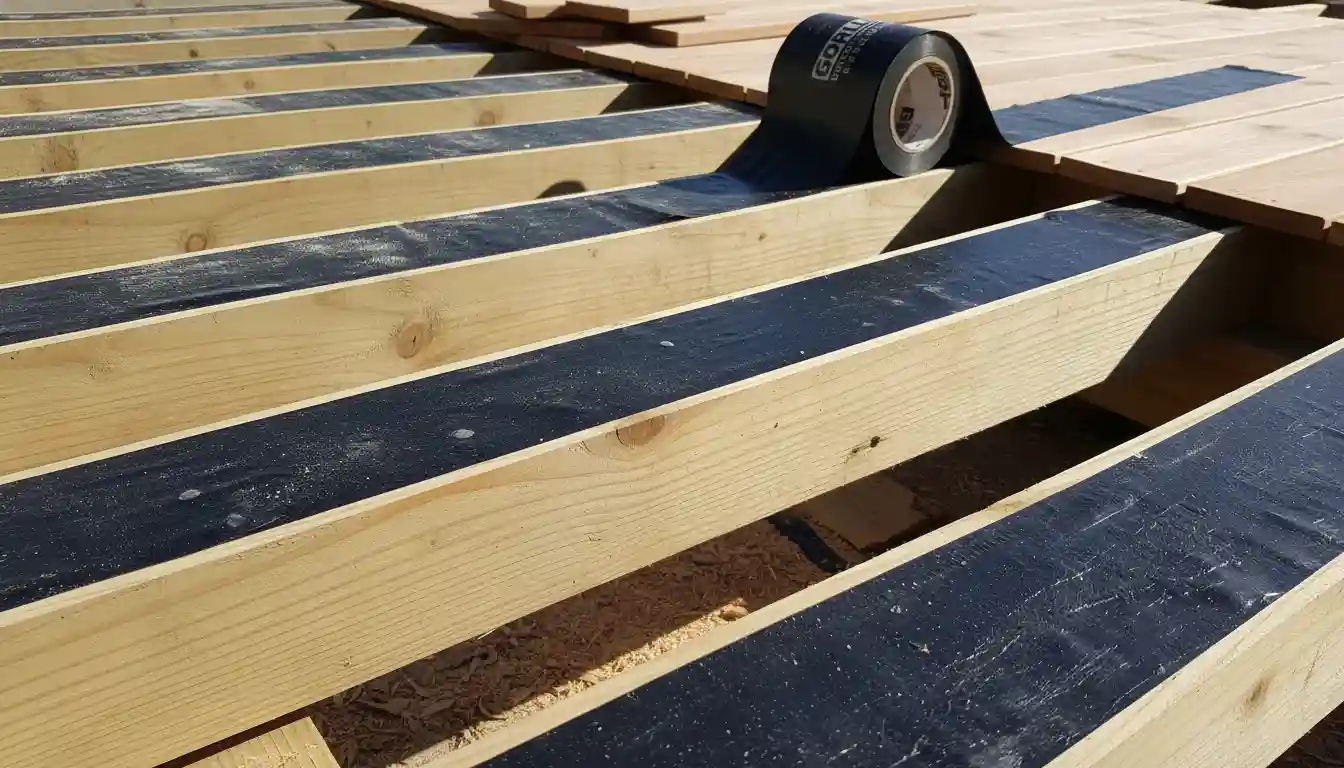
Gorilla Tape vs. Butyl Joist Tape: A Critical Comparison
The difference between using a general-purpose tape and a specialized joist tape is not minor; it is the difference between premature failure and long-term durability. Understanding these differences is key to making the right choice for your investment.
Making the right material selection at the start of a project prevents costly future headaches. For instance, the considerations for protecting an outdoor deck frame are just as critical as knowing what 3/8″ sheetrock is used for in an interior project—using the wrong product for the application leads to poor results.
| Feature | Gorilla Tape | Professional Butyl Joist Tape |
|---|---|---|
| Primary Material | Fabric-backed with rubber adhesive | Butyl adhesive with a high-density polyethylene (HDPE) top layer |
| Sealing Around Fasteners | Punctures, creating a water entry point | Self-seals tightly around screws and nails |
| Long-Term Adhesion | Can dry out, peel, and delaminate over time | Forms a permanent, waterproof bond that won’t lift |
| Moisture Management | Can trap moisture vapor, accelerating rot | Acts as a true vapor barrier, blocking all moisture |
| Chemical Compatibility | Not designed for contact with treated wood chemicals | Engineered to be compatible with ACQ, CA, and other treatments |
| Cost | Lower initial cost per roll | Higher initial cost, but prevents thousands in future repairs |
| Primary Intended Use | General household and outdoor repairs | Specifically designed for protecting deck substructures |
The Right Way: A Step-by-Step Guide to Installing Joist Tape
Applying joist tape is a simple, straightforward process that adds minimal time to your deck build but pays massive dividends in longevity. For the best results, it must be done correctly.
Step 1: Prepare the Joist Surface
The joists must be clean, dry, and free of sawdust or debris. Use a stiff brush or leaf blower to clear all surfaces where the tape will be applied. The wood should not be freshly saturated from a recent rainfall.
Step 2: Apply with Consistent Pressure
Start at one end of the joist. Peel back a few feet of the release liner and center the tape on top of the joist. Using a J-roller or firm hand pressure, press the tape down firmly as you unroll it, ensuring there are no air bubbles or creases.
Step 3: Cover All Horizontal Wood
Apply the tape to the tops of all joists, rim joists, stringers, and blocking. Any horizontal wood surface that can trap water should be covered. For double or triple-stacked beams, run tape over each board before assembly for maximum protection.
Step 4: Wrap the Post
A lesser-known but critical technique is to wrap the top of support posts with tape before installing the beams. This isolates the end-grain of the post, preventing water from wicking up and causing premature rot from the inside out.
A Holistic Approach to a Long-Lasting Deck
Joist tape is a cornerstone of a durable deck, but it is part of a larger system. To truly maximize the life of your structure, you must also consider other factors. Proper ventilation is one of the most important.
A deck needs adequate airflow beneath it to allow moisture to evaporate. Enclosing the underside of a deck without providing for ventilation can create a damp, stagnant environment. For those with sloped yards, learning the right way of installing lattice under a deck on a slope can provide both a clean look and the necessary airflow to keep the substructure dry. The same principles of moisture management and structural integrity apply to larger projects as well, from decks to outbuildings, making it vital to understand foundation and enclosure techniques, such as those used when you enclose a pole barn.
Frequently Asked Questions About Deck Joist Protection
Is joist tape really necessary for pressure-treated wood?
Absolutely. While pressure-treating helps, it is not foolproof. The thousands of tiny holes created by screws and the constant moisture load from the deck boards create points of failure. Joist tape provides a crucial extra layer of defense that extends the frame’s life to match the 25-50 year warranties of modern decking.
Can I use window flashing tape instead of joist tape?
While some high-end flashing tapes use butyl adhesive, they are often thinner and less robust than dedicated joist tape. Joist tapes are engineered to be the correct thickness to properly seal around deck screws and to withstand the foot traffic and tool impacts during construction. It is always best to use a product specifically designed for the application.
What is the true cost-benefit of using joist tape?
The cost to tape the joists of an average-sized deck is typically a few hundred dollars. A complete deck rebuild due to a rotted frame can cost tens of thousands of dollars. The return on investment is one of the highest of any building product available.
The Final Word: Don’t Improvise on Your Foundation
Gorilla Tape is an excellent product for countless repairs, but it has no place on the structural foundation of your deck. Its material composition is fundamentally wrong for permanent contact with treated lumber in a high-moisture environment.
The proven, professional solution is a high-quality butyl joist tape. It is the single most effective measure you can take during construction to prevent joist rot. By investing a small amount of time and money in properly protecting your deck’s frame, you ensure that your outdoor living space remains safe, secure, and beautiful for decades to come.